So you’ve decided to ditch the kibble and go full chef mode for your pup. Respect. But now you’re staring at a bowl of freshly cooked chicken and rice wondering, “How much of this do I actually serve?” Don’t worry — I’ve been there, and I’ve got you covered.
Feeding your dog homemade food isn’t just a trend. It’s a real commitment to their health, and getting the portions right matters more than most people realize. Too little and your dog loses muscle mass. Too much and you’re basically running an all-inclusive resort for a golden retriever. Let’s get this right.
Why Homemade Dog Food Portions Are Trickier Than You Think
Here’s the thing: kibble takes all the guesswork out of feeding. Every bag has a handy little chart on the back. Homemade food? You’re flying a bit more solo.
Homemade meals vary wildly in caloric density. A bowl of lean chicken and veggies hits very differently than a batch made with beef, rice, and egg yolks. If you just eyeball it and assume “a cup is a cup,” you could easily overfeed or underfeed your dog without realizing it.
The good news is the math behind it isn’t that complicated once you understand the basics. And I promise — no advanced calculus required. 🙂

The Free Homemade Dog Food Calculator
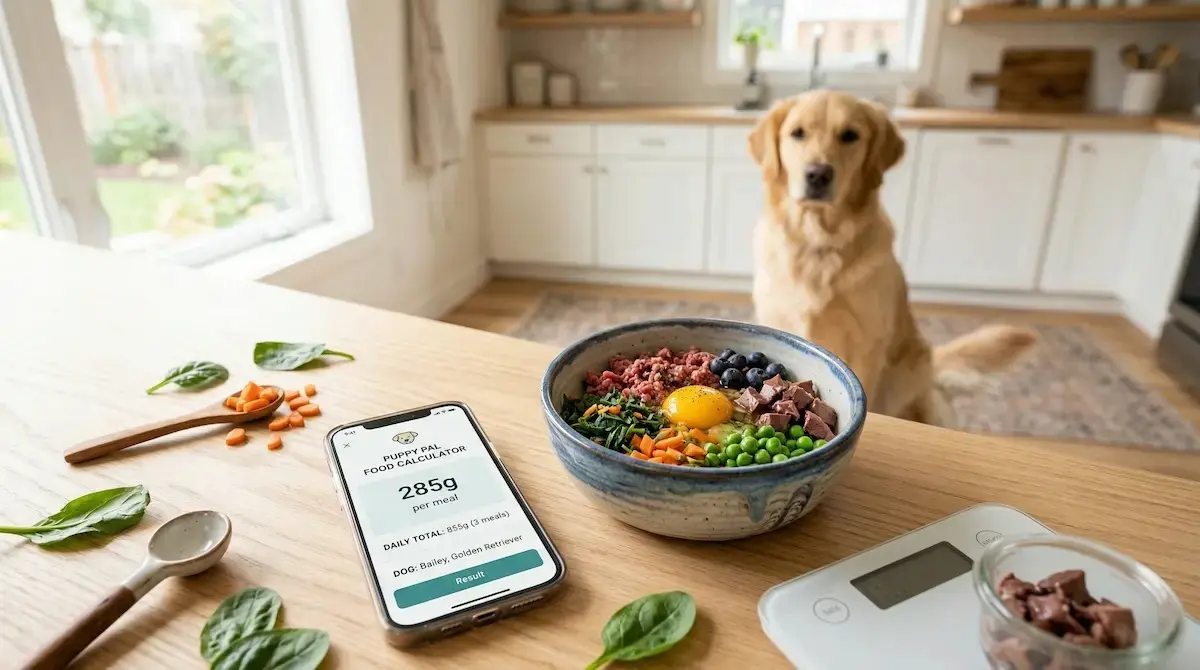
Before we get into the formulas, here’s what you really came for — a simple way to calculate how much to feed your dog.
Use this quick calculator framework:
- Find your dog’s Resting Energy Requirement (RER)
- Multiply it by an activity factor to get their daily calorie need
- Divide those calories by the caloric density of your recipe
That’s it. Three steps. Let’s break each one down.
Step 1: Calculate Your Dog’s Resting Energy Requirement (RER)
The RER is the number of calories your dog needs just to exist — breathing, digesting, keeping the lights on internally. Think of it as their “do-nothing” calorie baseline.
Formula:
| RER = 70 × (body weight in kg)^0.75 |
Don’t have a scale that reads in kilograms? Just divide your dog’s weight in pounds by 2.2.
Example: A 30-pound dog weighs about 13.6 kg. RER = 70 × (13.6)^0.75 = approximately 70 × 6.55 = ~459 calories/day
If you hate math (no judgment), plug your dog’s weight into any basic RER calculator online — there are tons of free ones. FYI, most vet nutrition sites have one baked right in.
Step 2: Multiply by the Activity Factor (MER)
Your dog’s actual daily calorie need — called the Maintenance Energy Requirement (MER) — depends on how active they are, their age, and whether they’ve been spayed or neutered.
Multiply RER by the appropriate factor:
| Dog Type | Multiplier |
| Neutered adult | 1.6 |
| Intact adult | 1.8 |
| Inactive / obese-prone | 1.2–1.4 |
| Active working dog | 2.0–5.0 |
| Puppy (under 4 months) | 3.0 |
| Puppy (4 months to adult) | 2.0 |
| Senior dog | 1.4 |
| Pregnant dog | 1.6–2.0 |
| Nursing dog | 2.0–6.0 |
Back to our 30-pound example: Say she’s a neutered adult with moderate energy. RER is ~459, multiplied by 1.6 = ~734 calories per day.
That’s your daily calorie target. Now you just need to know how many calories are in your recipe.
Step 3: Calculate the Caloric Density of Your Recipe
This is where a lot of home cooks get tripped up. Every ingredient contributes calories, and you need to know the caloric density of your finished recipe to serve the right amount.
Here’s a simple way to do it:
- Log every ingredient in your recipe using a calorie-counting app (Cronometer works great for this — it even lets you set recipes)
- Get the total calories for the full batch
- Divide by the number of cups or grams in that batch
- Now you know calories per cup (or per 100g, whatever works for you)
Example: You made a batch of chicken, brown rice, carrots, and zucchini. Total batch = 1,200 calories. Batch makes 6 cups. That’s 200 calories per cup.
Your 30-pound dog needs 734 calories/day ÷ 200 calories/cup = about 3.7 cups per day, split across two meals.
Easy, right? Once you build your go-to recipes, this becomes second nature.
General Feeding Guidelines by Weight (Quick Reference)
If you want a starting point before you’ve crunched your specific recipe numbers, here’s a rough ballpark based on common homemade dog food recipes averaging around 400–500 calories per pound of food:
| Dog Weight | Daily Food Amount (Approx.) |
| 10 lbs (4.5 kg) | 1/3 – 1/2 lb (150–225g) |
| 20 lbs (9 kg) | 1/2 – 3/4 lb (225–340g) |
| 40 lbs (18 kg) | 3/4 – 1 lb (340–450g) |
| 60 lbs (27 kg) | 1 – 1.5 lbs (450–680g) |
| 80 lbs (36 kg) | 1.5 – 2 lbs (680–900g) |
Important: These are estimates. Use them as a starting point, not gospel. Actual amounts depend heavily on your specific recipe’s caloric content.
Don’t Forget: Homemade Food Needs to Be Nutritionally Balanced
Can we talk about the elephant in the room for a second? A lot of people start making homemade dog food with the best intentions, then accidentally end up serving something that looks nutritious but is missing key nutrients. IMO, this is the biggest mistake people make.
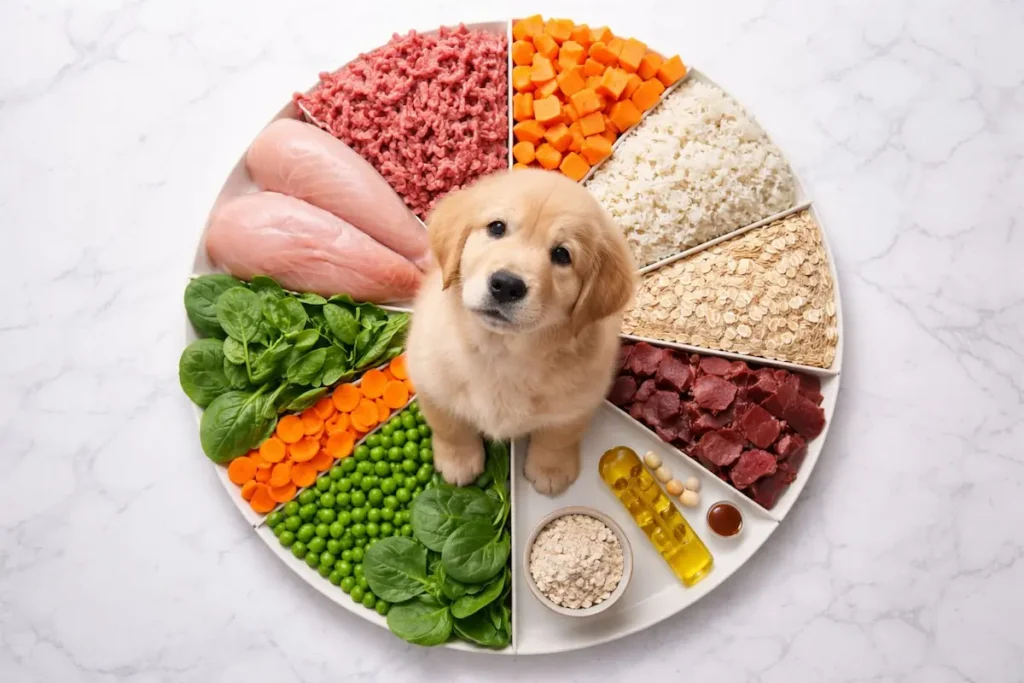
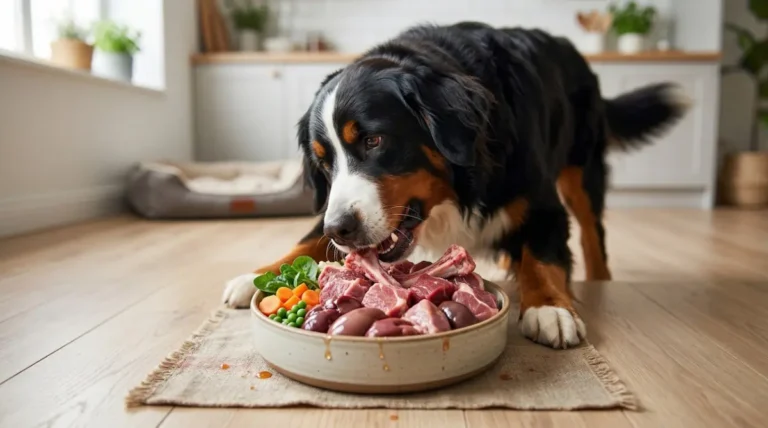
A nutritionally complete homemade dog food should include:
- Protein (40-50%) — muscle meat as the base (chicken, beef, turkey, fish)
- Organ meat — liver especially; aim for about 10% of the diet
- Carbohydrates (30-40%) — rice, sweet potato, oats (optional but helpful for energy)
- Vegetables (10-15%) — leafy greens, carrots, peas (skip onions, grapes, avocado — toxic to dogs)
- Calcium — bone meal or eggshell powder to balance phosphorus in meat
- Supplements — fish oil, vitamin E, and a dog-specific multivitamin to fill gaps
Working with a board-certified veterinary nutritionist to formulate or review your recipe is genuinely worth it, especially if your dog has health conditions. It’s a one-time consultation that pays off long-term.
How to Monitor if You’re Feeding the Right Amount
The calculator gives you a great starting point, but every dog is an individual. Watch for these signs to fine-tune portions over time:
| Signs you’re feeding too much | Signs you’re feeding too little |
| Weight gain You can’t feel their ribs without pressing firmly Low energy or lethargy | Weight loss Ribs are prominent without pressing Increased hunger, restlessness around meal times |
The rib test is the easiest check: run your fingers along your dog’s side. You should feel ribs easily without them poking out visually. That’s a healthy weight. If you’re having to dig to find them :/ — dial back portions. If they’re super visible — add more.
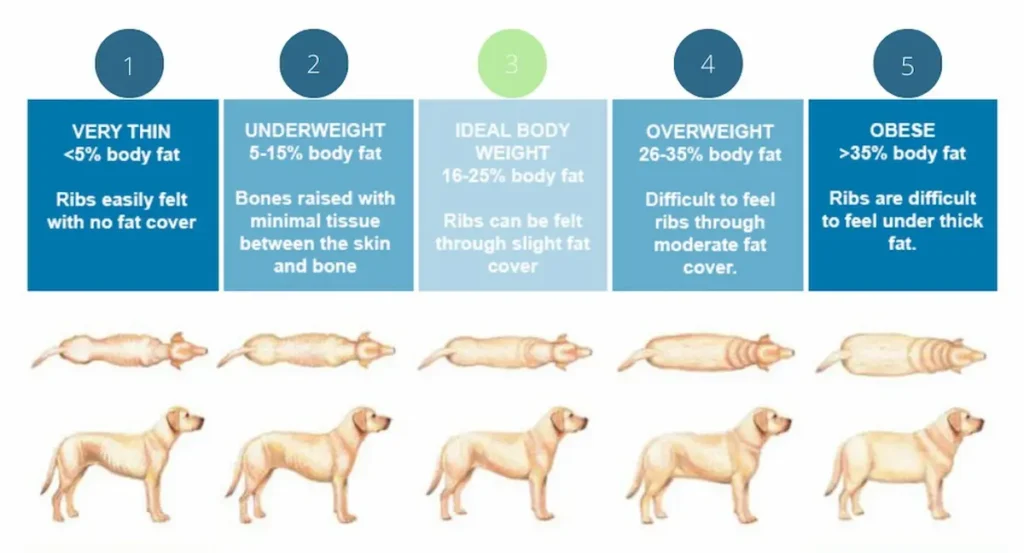
Weigh your dog every 2–4 weeks when you first start out. Adjust portions by 10–15% up or down based on what you see. Simple as that.
How Often Should You Feed Your Dog Homemade Food?
Most adult dogs do well with two meals per day — morning and evening. Split the daily portion roughly 50/50 between meals.
Puppies need more frequent feeding:
- Under 3 months: 4 meals/day
- 3–6 months: 3 meals/day
- 6 months and up: 2 meals/day
Large breeds especially benefit from split meals to reduce the risk of bloat. If you have a deep-chested dog (Great Dane, Weimaraner, standard Poodle), always split meals — this is non-negotiable.
Transitioning to Homemade Food: Don’t Rush It
If your dog currently eats kibble, don’t switch cold turkey. Their digestive system needs time to adjust. A sudden change can cause upset stomach, loose stools, and a very unhappy dog (and a very unhappy you, cleanup-wise).
Transition schedule:
- Days 1–3: 75% kibble, 25% homemade
- Days 4–6: 50/50
- Days 7–9: 25% kibble, 75% homemade
- Day 10+: 100% homemade
Go slower if your dog has a sensitive stomach. Some dogs take 3–4 weeks to fully adjust, and that’s completely fine.
Free Homemade Dog Food Calculator Tools
Let’s be real—most of us aren’t going to pull out a calculator every single day. Here are some tools that make life easier:
Online calculators like BalanceIT or PetMD’s calorie calculator can give you quick estimates based on your dog’s weight, age, and activity level. Just remember these are estimates—your dog didn’t read the manual and might need different amounts.
Apps like Pet Diet Planner let you track portions, weight, and even calculate recipe nutritional values. Some are free, others cost a few bucks, but they’re worth it if you’re serious about homemade feeding.
Spreadsheet templates are what I personally use. I created one that factors in Pepper’s weight, activity level, and treats, then tells me exactly how many ounces of each meal component he needs. Nerd alert? Maybe. Effective? Definitely.
You can create a simple version in Google Sheets:
- Column A: Date
- Column B: Dog’s weight
- Column C: Activity level (Low/Medium/High)
- Column D: Calculated daily food amount
- Column E: Per-meal amount
- Column F: Notes
When to Consult a Veterinary Nutritionist
Look, I’m all for the DIY approach, but sometimes you need a professional. Consider consulting a veterinary nutritionist if:
- Your dog has health conditions (kidney disease, diabetes, allergies, etc.)
- You’re feeding a puppy or pregnant/nursing dog
- Your dog isn’t maintaining healthy weight despite portion adjustments
- You’re creating your own recipes from scratch
- Your dog develops digestive issues on homemade food
A one-time consultation typically costs $100-300, but it’s worth every penny for the peace of mind. They’ll create a customized meal plan and portions specific to your dog’s needs. When Pepper developed some minor kidney issues last year, our nutritionist adjusted his protein levels and portions accordingly—something I definitely couldn’t have figured out on my own.
Putting It All Together
Here’s a quick recap of everything we covered:
- Calculate RER using the formula: 70 × (weight in kg)^0.75
- Multiply by the activity factor to get daily calorie needs
- Determine your recipe’s caloric density using a food tracking app
- Divide daily calories by calories per cup to get your serving size
- Monitor weight and adjust portions by 10–15% as needed
- Transition slowly from kibble to avoid digestive upset
- Ensure nutritional balance — don’t skip the supplements and organ meat
Making homemade dog food is one of the most loving things you can do for your pup. It takes a bit more effort than scooping kibble, sure — but the payoff in health, energy, and that look of absolute joy on your dog’s face when they smell a fresh meal? Completely worth it.
Now go fire up that pot, do your math, and watch your dog become your biggest fan. You’ve got this. 🐾