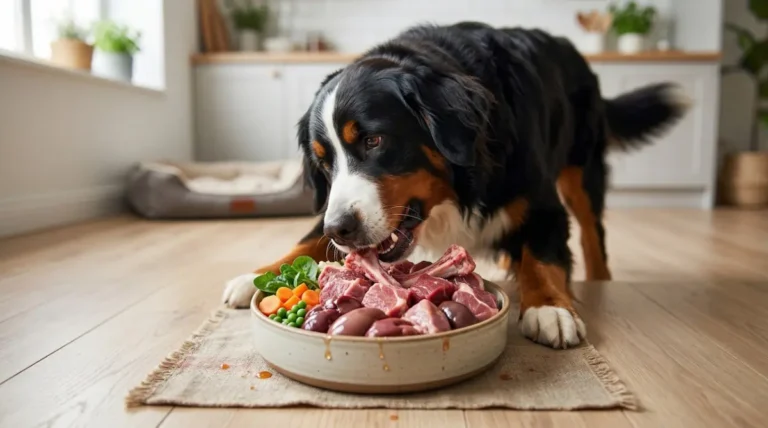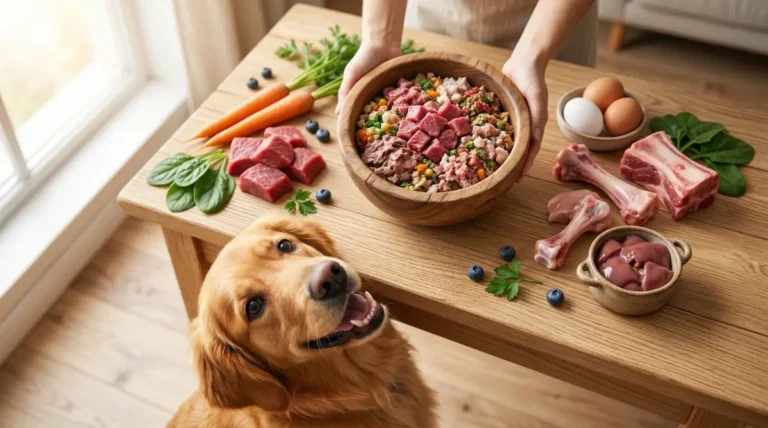
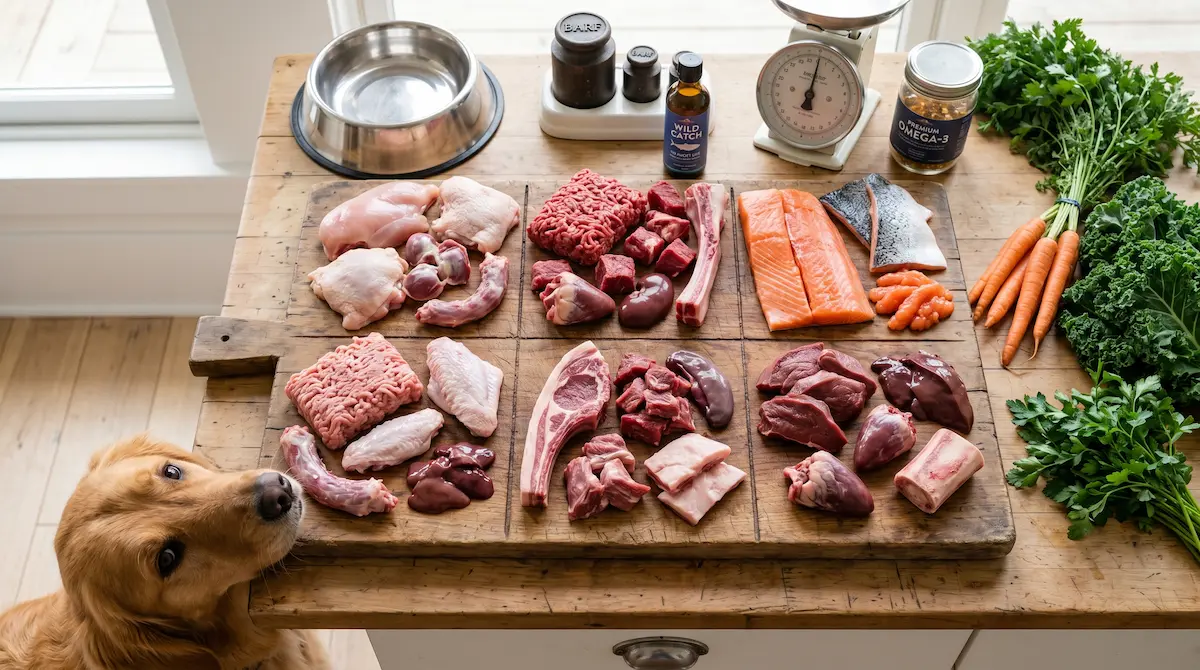
Raw feeding is one of the most debated topics in the dog nutrition world — and also one of the most misunderstood. The conversation tends to split into two camps:
- People who swear by it as the most natural, transformative thing they’ve ever done for their dog,
- And people who are convinced it’s a fast track to salmonella and nutritional chaos.
The truth, as it usually does, sits somewhere more nuanced than either extreme.
Raw food for dogs — when done correctly — is a legitimate, evidence-supported feeding approach that many dogs thrive on.
The “when done correctly” part carries real weight. Raw feeding done carelessly is genuinely risky. Raw feeding done with proper knowledge, sourcing, and balance is a different story entirely.
This guide covers both sides honestly, gives beginners the foundation they need, and includes recipes to start with safely. 🙂
⚠️ Always consult a vet or veterinary nutritionist before switching your dog to a raw diet full-time. Age, breed, and existing health conditions all affect whether raw feeding is appropriate and how it should be structured.
The nutritional guidelines and supplements referenced throughout this guide are essential components of a balanced raw diet — not optional additions. Skipping them can create deficiencies that cause real harm over time.
Raw Food Recipes for Dogs
| A quick note before diving in: every recipe below follows the 80/10/10 raw feeding model — 80% muscle meat, 10% raw meaty bones, 10% organ meat. |
This is the most widely used framework in raw feeding and the one most veterinary nutritionists reference when evaluating homemade raw diets. More on why this ratio works in the educational section below.
All recipes are formulated for a 30–50 lb adult dog as a base. Scale up or down proportionally for different sizes.
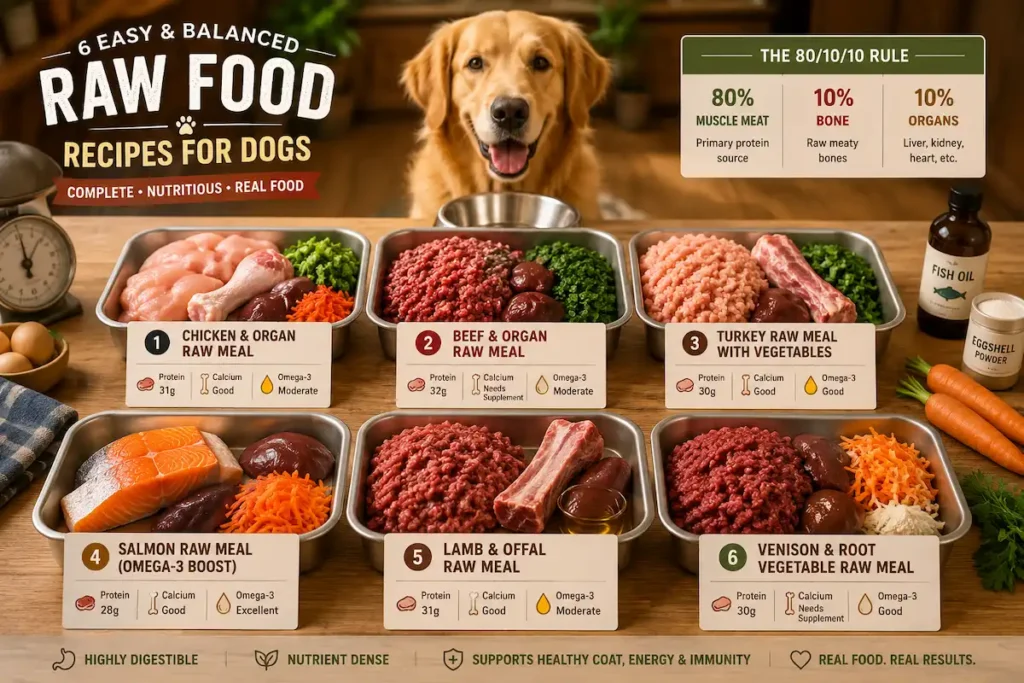
Recipe #1. Beginner Chicken Raw Meal
Chicken is the standard starting point for raw feeding beginners — widely available, affordable, and the protein most dogs tolerate well on their first introduction to raw food.
Beginner Chicken Raw Meal
A simple starter raw meal featuring chicken, liver, and a beginner-friendly raw meaty bone.
Ingredients
4 oz boneless chicken thigh
2 oz raw chicken neck or chicken wing
0.5 oz chicken liver
2 tbsp grated carrot (optional)
1 tsp fish oil
Instructions
Source ingredients from a reputable butcher or raw pet food supplier.
Keep all ingredients refrigerated until ready to serve.
Weigh ingredients accurately using a kitchen scale.
Place chicken, liver, bone, and carrot into a bowl.
Drizzle fish oil over the meal.
Serve immediately at refrigerator temperature.
💡 Raw Feeding Tip: Never feed cooked poultry bones. Only use raw meaty bones appropriate for your dog’s size.
✅ Scaling: For a 10 lb dog, halve all quantities. For an 80 lb dog, approximately double all quantities.
✅ Nutrition note: Chicken necks and wings are the safest raw meaty bones for beginners — they’re soft enough to be consumed safely by most dogs and don’t pose the same risk as larger, denser bones.
Recipe #2. Beef & Organ Raw Meal
Beef muscle meat is denser and more calorie-rich than chicken — better suited to active dogs or those needing more caloric density. The liver addition makes this one of the most micronutrient-dense raw meals available.
Beef & Organ Raw Meal
A nutrient-dense raw beef meal with liver, kidney, spinach, and coconut oil.
Ingredients
4 oz lean ground beef or trimmed beef chuck
0.5 oz beef liver, sliced thin
0.5 oz beef kidney, sliced thin
2 tbsp chopped spinach
1 tsp coconut oil
Instructions
Slice the beef liver and kidney into thin pieces so they are easier for dogs new to organ meat.
Combine the ground beef, liver, and kidney in a bowl.
Add the chopped spinach and coconut oil.
Mix gently to distribute the organ meat throughout the meal.
Serve immediately at refrigerator temperature.
💡 Important: This boneless raw meal needs calcium. Add ¼ teaspoon eggshell powder or a vet-approved calcium supplement before serving.
✅ Note on boneless beef meals: This recipe doesn’t include a raw meaty bone component.
When feeding boneless raw meals, calcium supplementation is essential — add ¼ teaspoon of eggshell powder (baked and ground eggshells) or a vet-recommended raw diet calcium supplement per meal.
Calcium-phosphorus balance is one of the most important and most commonly missed aspects of raw feeding.
Recipe #3. Turkey Raw Meal with Vegetables
Ground turkey is a lean, easily digestible protein that works well for dogs transitioning from commercial food to raw — the lower fat content is gentler during the adjustment period.
Turkey Raw Meal with Vegetables
A lean, beginner-friendly raw turkey meal with blended greens and omega-3-rich fish oil.
Ingredients
5 oz ground turkey
0.5 oz turkey liver
1 oz turkey neck piece
1 tbsp blended leafy greens (spinach or kale)
1 tsp fish oil
Instructions
Pulse the leafy greens briefly in a blender or food processor until finely chopped.
Combine the ground turkey, turkey liver, and turkey neck piece in a bowl.
Add the blended greens and fish oil.
Mix lightly and serve immediately at refrigerator temperature.
💡 Tip: Lightly blending leafy greens helps dogs access more nutrients than feeding large raw leaves whole.
Recipe #4. Salmon Raw Meal (Omega-3 Boost)
Salmon is one of the highest-value proteins in raw feeding — exceptional omega-3 content, high protein density, and powerful anti-inflammatory properties. One important safety note applies to this recipe specifically.
Salmon Raw Meal (Omega-3 Boost)
A protein-rich raw salmon meal with probiotics and natural omega-3 support.
Ingredients
5 oz fresh or frozen salmon fillet (skin on is fine)
0.5 oz chicken liver
2 tbsp grated carrot
1 tbsp plain Greek yogurt
Instructions
Use only commercially frozen salmon or salmon that has been frozen at -4°F (-20°C) for at least 7 days.
Thaw the salmon in the refrigerator overnight. Never thaw at room temperature.
Check carefully for pin bones and remove any you find.
Combine salmon, chicken liver, grated carrot, and Greek yogurt in a bowl.
Serve immediately at refrigerator temperature.
💡 Safety Tip: Always use properly frozen salmon and inspect carefully for pin bones before serving.
💡 Critical safety note:
- Never feed raw Pacific salmon or trout without prior freezing — these species can carry Neorickettsia helminthoeca, the organism responsible for salmon poisoning disease in dogs, which can be fatal. Commercial freezing kills this organism.
- Atlantic salmon from reputable suppliers is generally lower risk but freezing remains best practice.
Recipe #5. Lamb & Offal Raw Meal
Lamb is an excellent novel protein for raw feeding — particularly for dogs with sensitivities to chicken or beef. The higher fat content in lamb makes it a strong choice for very active dogs or those needing caloric density.
Lamb & Offal Raw Meal
A rich, novel-protein raw meal featuring lamb, liver, heart, and a raw meaty bone.
Ingredients
4 oz ground lamb or trimmed lamb shoulder
0.5 oz lamb liver
0.5 oz lamb heart
1 oz lamb rib (raw meaty bone)
1 tsp olive oil
Instructions
Trim any visible excess fat from the lamb, especially for dogs prone to pancreatitis or weight gain.
Slice the lamb heart thinly and combine it with the lamb and liver in a bowl.
Add the lamb rib as the raw meaty bone component.
Drizzle with olive oil.
Serve immediately at refrigerator temperature.
💡 Tip: Trim excess fat before serving if your dog is overweight or prone to digestive issues.
Recipe #6. Venison & Root Vegetable Raw Meal
Venison is the premium novel protein of raw feeding — lean, iron-rich, and essentially never found in commercial dog food. Ideal for dogs with multiple food sensitivities or those that have exhausted more common protein options.
Venison & Root Vegetable Raw Meal
A lean novel-protein raw meal featuring venison, liver, root vegetables, and natural omega-3 support.
Ingredients
5 oz ground venison
0.5 oz beef or chicken liver
2 tbsp finely grated parsnip and carrot
1 tsp flaxseed oil
¼ tsp eggshell powder
Instructions
Combine the ground venison and liver in a bowl.
Add the finely grated parsnip and carrot.
Drizzle with flaxseed oil.
Sprinkle the eggshell powder evenly over the meal and mix thoroughly.
Serve immediately at refrigerator temperature.
💡 Tip: Finely grate root vegetables to make them easier for dogs to digest and utilize.
📚 Related Articles:
Quick Reference Guide: All 6 Recipes
| # | Recipe | Protein | Bone Component | Best For |
|---|---|---|---|---|
| 1 | Beginner Chicken | Chicken | Chicken neck/wing | Raw feeding beginners |
| 2 | Beef & Organ | Beef + liver/kidney | Eggshell powder | Active dogs, nutrient density |
| 3 | Turkey & Vegetables | Turkey | Turkey neck | Gentle transition protein |
| 4 | Salmon Omega Meal | Salmon | Eggshell powder | Coat, joint & recovery |
| 5 | Lamb & Offal | Lamb + heart | Lamb rib | Active dogs, novel protein |
| 6 | Venison & Root Veg | Venison | Eggshell powder | Allergy dogs, lean protein |
What Is Raw Food for Dogs?
Raw feeding — sometimes called BARF (Biologically Appropriate Raw Food) or the prey model diet — is an approach to dog nutrition based on feeding unprocessed, uncooked whole foods that mirror what dogs’ wild ancestors consumed.
The underlying principle is that dogs evolved eating raw meat, bones, and organs, and their digestive systems are optimized for processing these foods rather than the heavily processed grains and additives found in commercial kibble.
🐾 The two most common raw feeding frameworks are:
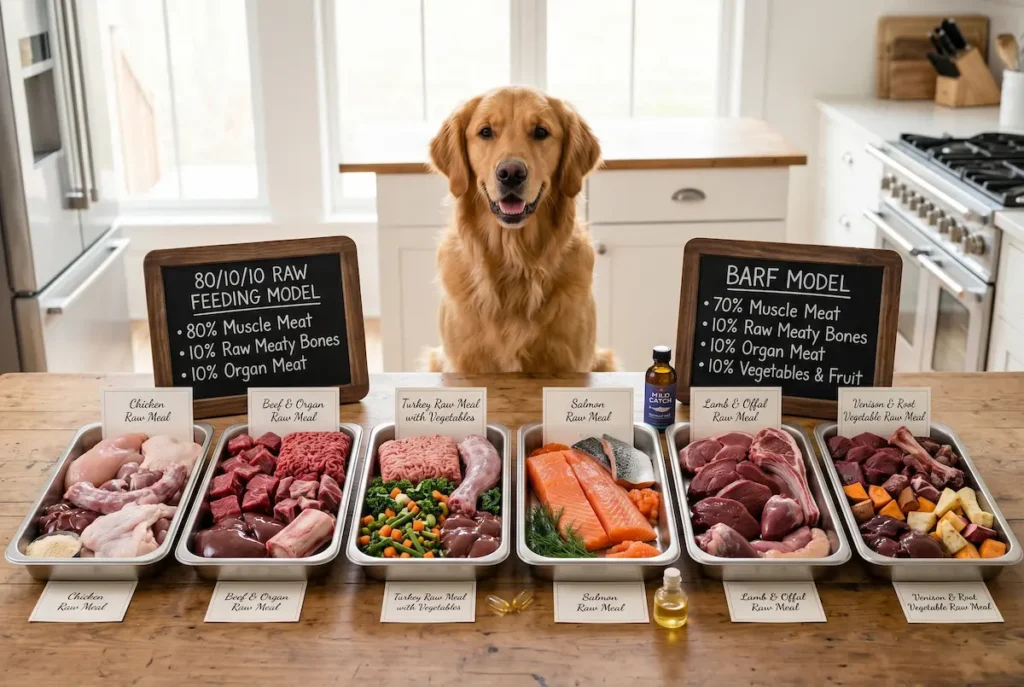
✔️ The BARF model — 70% muscle meat, 10% raw meaty bones, 10% organ meat, 10% vegetables and fruit. This approach incorporates plant material on the basis that prey animals’ stomach contents provided plant matter to ancestral dogs.
✔️ The Prey Model — 80% muscle meat, 10% raw meaty bones, 10% organ meat, no plant material. This model is stricter and argues that dogs have no biological need for plant matter.
Both models have proponents and both produce healthy dogs when properly implemented. The recipes in this guide follow the 80/10/10 framework with optional vegetable additions — giving beginners flexibility while maintaining the essential ratio.
The Evidence on Raw Feeding
Raw feeding sits in a genuinely contested space in veterinary science — and being honest about that matters more than overselling either side.
✅ What the evidence supports: Studies have found that raw-fed dogs show measurable improvements in coat quality, stool volume and consistency, dental health, and body composition compared to kibble-fed controls.
A 2020 study published in Veterinary Record found higher levels of beneficial gut bacteria in raw-fed dogs.
Many veterinarians who work with raw-fed dogs report consistently positive outcomes in skin, coat, and digestive health.
⚠️ What the evidence cautions: The primary concerns are pathogen risk and nutritional imbalance. Raw meat — particularly chicken and pork — can carry Salmonella, Campylobacter, E. coli, and Listeria.
Dogs are generally more resistant to these pathogens than humans, but shedding in faeces creates household transmission risk, particularly for immunocompromised people, young children, and the elderly.
Nutritional imbalance is the other significant concern — homemade raw diets without proper formulation are frequently deficient in calcium, vitamin D, iodine, and trace minerals.
📝 The bottom line: Raw feeding done properly is a legitimate choice. It requires more knowledge, more sourcing attention, and more nutritional awareness than opening a bag of kibble.
The investment is worth it for many dog parents and dogs — but going in informed is non-negotiable.
Is Raw Feeding Right for Every Dog?
Raw feeding works well for most healthy adult dogs. It is not recommended for:
- Immunocompromised dogs — dogs undergoing chemotherapy, on immunosuppressive medications, or with immune disorders face elevated pathogen risk
- Dogs with pancreatitis — raw diets tend to be higher in fat; requires careful management and vet guidance
- Very young puppies — immune systems are still developing; consult a veterinary nutritionist before raw feeding puppies under 12 weeks
- Dogs with certain kidney or liver conditions — high protein diets require vet clearance for these dogs
- Households with immunocompromised humans — the zoonotic transmission risk is a genuine consideration
For any dog with an existing health condition, a conversation with a vet before switching to raw is essential — not optional.
The 80/10/10 Ratio Explained
The 80/10/10 framework is the foundation of balanced raw feeding:
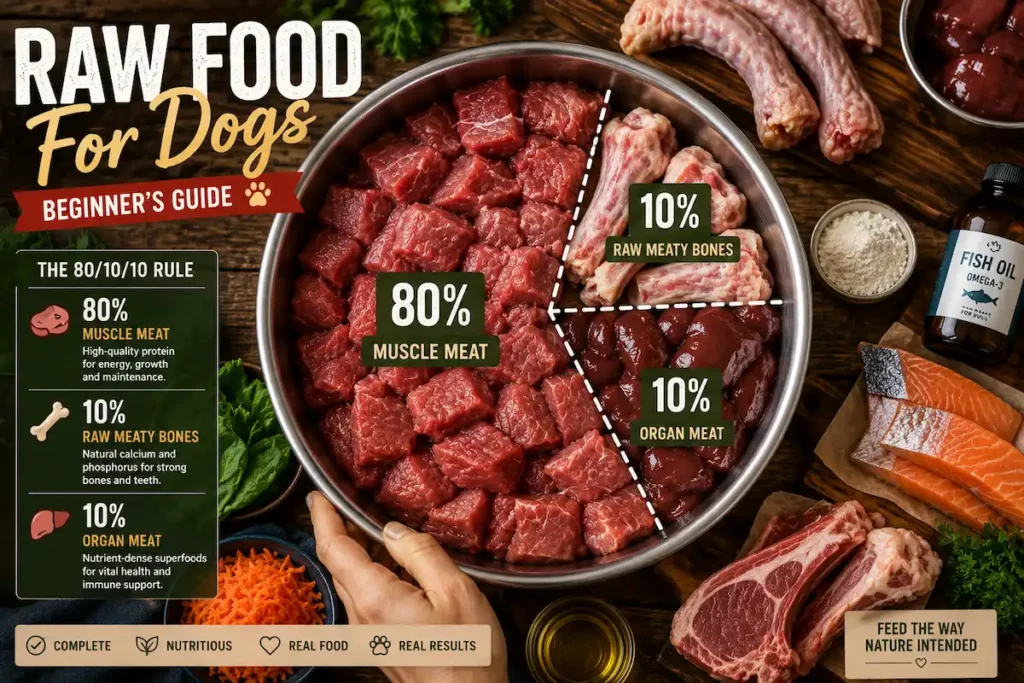
1️⃣ 80% Muscle Meat
This is the primary protein and energy source. Includes all lean meat cuts — chicken thigh, ground beef, turkey breast, pork tenderloin, salmon, venison. Also includes heart (technically a muscle) and gizzard.
Variety across multiple protein sources over the course of a week provides the broadest amino acid coverage.
2️⃣ 10% Raw Meaty Bones
Provides calcium and phosphorus in the correct ratio — the single most important mineral balance in a raw diet.
Safe raw meaty bones include chicken necks, chicken wings, duck necks, turkey necks (for large dogs), and rabbit bones. Never feed weight-bearing bones of large animals (beef femur, knuckle bones) — these are too dense and risk tooth fractures.
3️⃣ 10% Organ Meat
The most micronutrient-dense component. At least half of this 10% should be liver — the most nutritionally complete organ. The remaining 5% can be kidney, spleen, pancreas, or brain.
Organs deliver vitamins A, B12, D, K, iron, copper, zinc, and selenium in concentrations unmatched by any other food source.
Raw Feeding Safety: The Non-Negotiables
Safe raw feeding comes down to consistent hygiene and smart sourcing:
✔️ Sourcing:
- Buy from reputable butchers or dedicated raw pet food suppliers
- Human-grade meat is the safest starting point
- Freeze fish for a minimum of 7 days before serving raw
- Never feed raw pork without vet guidance — risk of Aujeszky’s disease (pseudorabies) in some regions
✔️ Hygiene:
- Wash hands thoroughly before and after handling raw meat
- Disinfect all surfaces, bowls, and utensils after every meal
- Stainless steel or ceramic bowls are easier to disinfect than plastic
- Store raw food in sealed containers; keep separate from human food
- Dispose of uneaten portions within 30 minutes
✔️ Household considerations:
- Immunocompromised household members represent a genuine risk factor — assess honestly
- Children should not handle raw dog food or dog bowls
- Consider the dog’s feeding area — outdoor feeding eliminates most indoor contamination risk
Transitioning to Raw Food
Switching from commercial food to raw requires a gradual approach — rushing the transition causes digestive upset that gets blamed on the raw diet rather than the speed of the switch.
The recommended transition approach:
- Days 1–3: One raw meal per day alongside regular food; monitor stool consistency
- Days 4–7: 50/50 split between raw and regular food
- Days 8–14: 75% raw, 25% regular
- Day 15 onwards: 100% raw
Some raw feeders recommend starting with a single protein (typically chicken) for the first 2–4 weeks before introducing additional proteins.
This makes it easier to identify any sensitivity reactions and gives the digestive system time to adjust to the new bacterial environment of raw meat.
🐾 What to expect during transition:
- Loose stools in the first few days are normal and usually resolve within a week
- Stool volume decreases significantly on raw — less undigestible filler means less waste
- Increased water consumption is normal initially
- Coat changes (improved shine, reduced shedding) typically appear within 4–6 weeks
Supplements for Raw-Fed Dogs
The 80/10/10 model covers most nutritional bases when properly implemented — but a few supplements add meaningful value:
- Fish oil — EPA/DHA omega-3s; add to every meal post-preparation
- Vitamin E — antioxidant support; particularly important when feeding high omega-3 diets
- Kelp or iodine supplement — raw diets can be low in iodine; kelp powder is the most convenient source
- Probiotics — support gut microbiome during and after transition
- Eggshell powder — free calcium source for boneless meals; ¼ teaspoon per meal for medium dogs
Portion Guide for Raw Feeding
Raw feeding portions are calculated as a percentage of body weight rather than cups:
| Dog Size | Weight | Daily Raw Amount | Meals Per Day |
| Extra Small | Under 10 lbs | 2–3% body weight | 2 |
| Small | 10–20 lbs | 2–2.5% body weight | 2 |
| Medium | 20–50 lbs | 2–2.5% body weight | 2 |
| Large | 50–90 lbs | 1.5–2% body weight | 2 |
| Extra Large | 90+ lbs | 1.5–2% body weight | 2 |
Example: A 40 lb dog eating 2.5% of body weight daily needs 1 lb (16 oz) of raw food per day — split across two meals of 8 oz each.
Active dogs and puppies trend toward the higher end of their range. Senior dogs and less active dogs trend lower. Monitor body condition monthly and adjust accordingly.
Final Thoughts
Raw food for dogs is neither the miracle some claim nor the danger others insist it is — it’s a feeding approach that works exceptionally well for many dogs when implemented with knowledge, proper sourcing, and consistent hygiene.
The results — improved coats, better digestion, leaner body composition, cleaner teeth — are real and observable. So are the risks of doing it carelessly.
Start with the beginner chicken meal. Keep the portions simple, the sourcing reputable, and the hygiene consistent. Introduce one new protein at a time. Pay attention to the 80/10/10 ratio. Get a vet or veterinary nutritionist involved if feeding raw long-term.
A well-fed raw dog is genuinely impressive to see. Glossy coat, lean muscle, small stools, clean teeth, and energy that matches the diet. It takes more effort than opening a bag — but for the dogs and dog parents that commit to it, the effort is absolutely worth it. 🙂