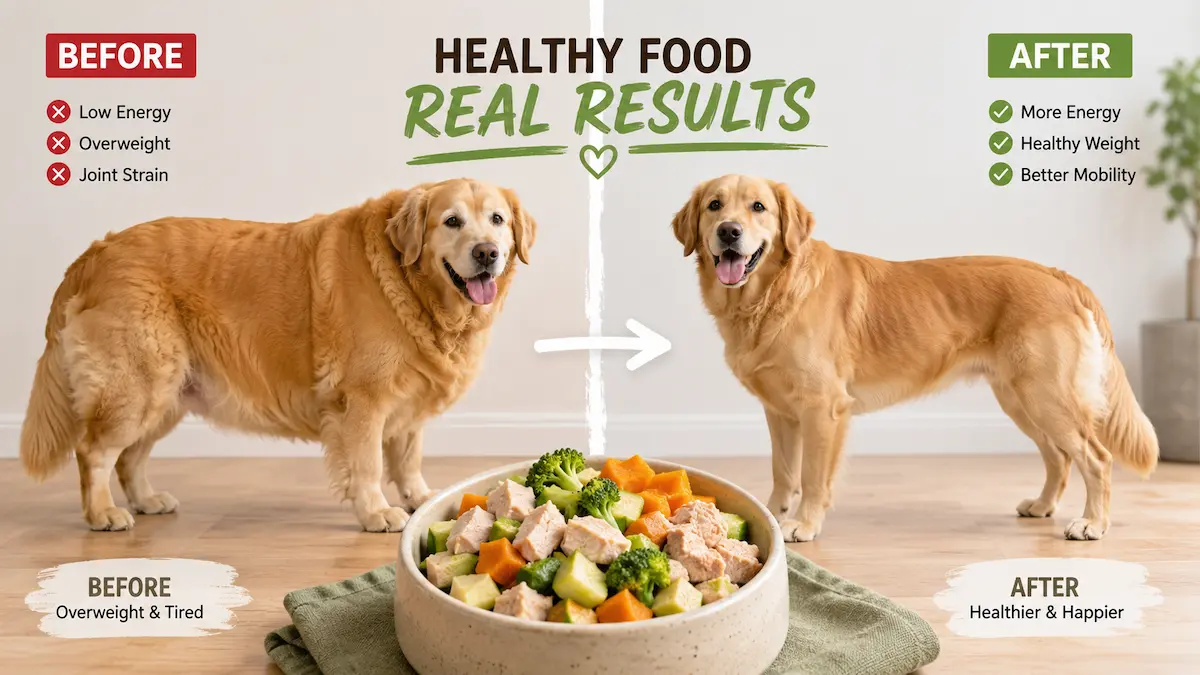
A dog carrying extra weight is dealing with more than appearance. Extra pounds can put added stress on the joints, heart, and other organs while increasing the risk of health problems over time.
The good news is that healthy weight management often starts with what’s in the food bowl. Choosing homemade meals made with lean proteins and fiber-rich vegetables can help reduce calories while keeping your dog feeling satisfied.
In this guide, you’ll find 12 low fat dog food recipes that are simple to make, easy to meal prep, and designed to support healthy weight management without sacrificing nutrition.
Important: These homemade recipes may not be complete and balanced for long-term feeding. Check with your veterinarian or a board-certified veterinary nutritionist before replacing your dog’s regular diet, especially if your dog has a medical condition.
What Makes a Good Low Fat Dog Food Recipe?
A healthy low fat meal isn’t just about cutting fat. It’s about choosing ingredients that keep your dog full while supporting healthy weight management.
Every healthy low fat meal starts with the same simple formula:
🥩 Lean Protein
Chicken breast, turkey, cod, tilapia, rabbit, venison, pork tenderloin, or egg whites.
🥦 Fiber-Rich Vegetables
Green beans, broccoli, zucchini, cabbage, cauliflower, celery, spinach, and pumpkin help dogs feel full while adding very few calories.
💧 High Water Content
Ingredients with plenty of moisture naturally reduce calorie density and make meals more satisfying.
⚖️ Portion Control
Even healthy homemade food should be served in the right amount to support safe, gradual weight loss.
Tip: The recipes below combine these four elements to create filling meals without unnecessary fat or excess calories.
Quick Reference Table: All 12 Recipes
Not sure which recipe to try first? Use the quick reference table below to compare all 12 low fat dog food recipes by protein, fat level, and the type of dog each meal may suit best.
| # | Recipe | Primary Protein | Fat Level | Best For |
|---|---|---|---|---|
| 1 | Chicken & Green Bean Base | Chicken breast | Very low | All weight management dogs |
| 2 | White Fish & Broccoli | Cod/tilapia | Lowest | Maximum calorie restriction |
| 3 | Turkey & Cabbage | Turkey | Very low | High-volume, filling meals |
| 4 | Salmon & Asparagus | Salmon | Low-moderate | Metabolism, inflammation |
| 5 | Chicken & Pumpkin Satiety | Chicken | Very low | Hungry dogs, satiety |
| 6 | Venison & Zucchini | Venison | Very low | Lean muscle, red meat option |
| 7 | Turkey & Cucumber | Turkey | Very low | Hydration + weight loss |
| 8 | Rabbit & Green Veg | Rabbit | Very low | Allergies + weight loss |
| 9 | Egg White & Vegetable | Egg whites | Lowest | Strictest calorie restriction |
| 10 | Chicken & Kelp | Chicken | Very low | Hypothyroid dogs (vet guidance) |
| 11 | Pork & Cauliflower | Pork tenderloin | Very low | Low-carb weight management |
| 12 | Mixed Protein & Greens | Chicken + turkey | Low | Weight maintenance phase |
💡 Looking for the leanest option? Recipe #2 and Recipe #9 are the lowest in fat, while Recipe #1, #3, and #5 are excellent everyday choices for healthy weight management.
12 Low-Fat Dog Food Recipes for Weight Management
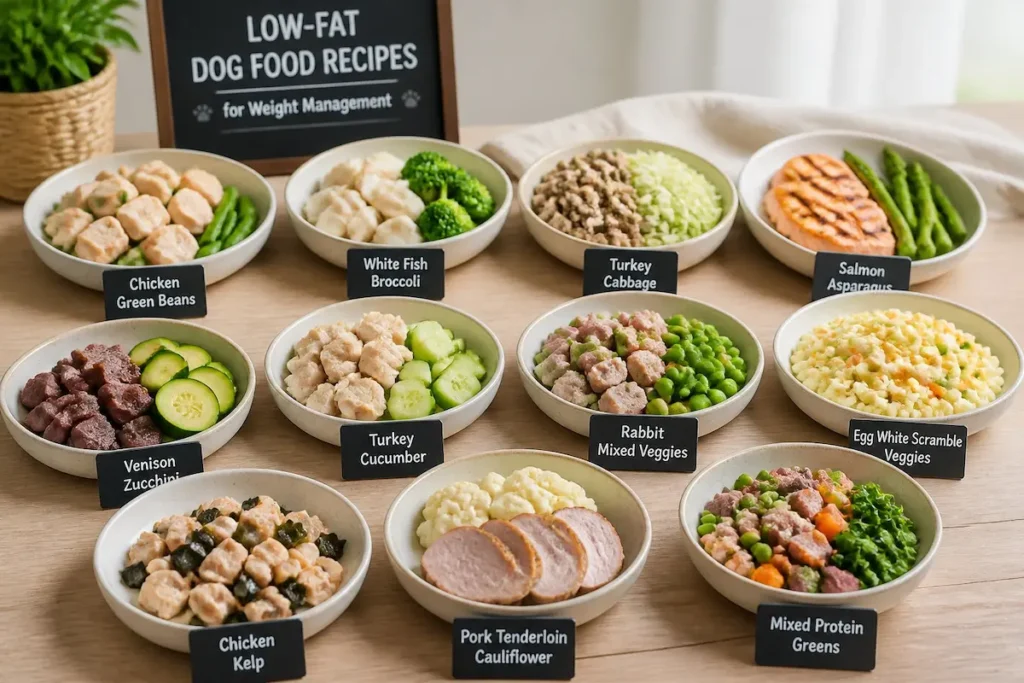
Nutrition note: Calories and fat are estimates per cup based on the ingredients listed and the stated finished yield. Actual values may vary depending on ingredient brands, meat leanness, trimming, cooking loss, and the final amount of food produced.
1. Skinless Chicken & Green Bean Base Recipe
Lean, filling, and easy to prepare, this simple recipe is a practical starting point for dogs beginning a healthy weight management plan. Green beans add fiber and volume without relying on a large serving of rice or potatoes.
🥩 Ingredients (makes ~8 cups):
🎯 Estimated nutrition per cup: ~175 calories | ~25 g protein | ~3.9 g fat
- 2 lbs boneless, skinless chicken breast
- 2 cups green beans, trimmed and chopped
- 1 cup chopped carrots
- 1 cup chopped zucchini
- ½ cup frozen peas
- 4 cups low-sodium chicken broth (no onion, no garlic)
- 1 teaspoon olive oil (minimal fat addition)
👩🍳 Instructions:
- Add the chicken and broth to a large pot and bring to a boil.
- Reduce the heat to a simmer, cover, and cook for about 18 minutes or until the chicken is fully cooked.
- Remove the chicken from the pot, shred it into small pieces, and return it to the broth.
- Add green beans, carrots, zucchini, and peas.
- Simmer for a further 8 minutes until vegetables are tender.
- Stir in olive oil off the heat. Cool completely before serving.
💚 Why This Recipe Works:
Chicken breast provides plenty of lean protein, while green beans and zucchini add fiber, moisture, and volume without many calories. This creates a filling meal without relying heavily on rice, potatoes, or added fat.
2. White Fish & Broccoli Lean Meal
White fish is naturally low in fat and provides plenty of protein without making the meal overly calorie-dense. Broccoli, carrots, zucchini, and celery add color, texture, fiber, and moisture.
🥩 Ingredients (makes ~7 cups):
🎯 Estimated nutrition per cup: ~115–145 calories | ~24 g protein | ~0.9–2.4 g fat (depends on the fish used)
- 2 lbs boneless cod, tilapia, or haddock
- 2 cups chopped broccoli
- 1 cup chopped carrots
- 1 cup chopped zucchini
- ½ cup chopped celery
- 4 cups water
👩🍳 Instructions:
- Add the carrots, zucchini, celery, and water to a large pot.
- Bring the mixture to a boil and cook for about 8 minutes, or until the vegetables begin to soften.
- Place the fish fillets on top of the vegetables.
- Add the broccoli around the fish.
- Cover and cook over low heat for 7 to 8 minutes, or until the fish flakes easily with a fork.
- Flake the fish thoroughly and check carefully for any remaining bones.
- Stir everything together and allow the meal to cool completely before serving.
💚 Why This Recipe Works:
White fish is naturally lean and protein-rich, while broccoli, zucchini, carrots, and celery add fiber and food volume. The result is a light, high-moisture meal that works well in a lower-fat rotation.
3. Turkey & Cabbage Weight Management Batch
Ground turkey is the lean protein workhorse of weight management recipes. It is lower in fat than beef, higher in protein than many alternatives, and generally well accepted by dogs.
Cabbage is an outstanding low-calorie filler because it is extremely low in calories, high in fiber, and genuinely filling.
🥩 Ingredients (makes ~8 cups):
🎯 Estimated nutrition per cup: ~155 calories | ~28 g protein | ~1.2 g fat
- 2 lbs lean ground turkey (99% fat-free where available)
- 2 cups shredded cabbage
- 1 cup chopped green beans
- 1 cup grated carrot
- ½ cup chopped zucchini
- 4 cups water
👩🍳 Instructions:
- Sauté ground turkey in a large pot until fully cooked through. Drain any fat.
- Add green beans, carrot, zucchini, and water. Bring to a boil.
- Reduce to a simmer, cover, and cook for 12 minutes.
- Add cabbage for the final 5 minutes — it wilts quickly and doesn’t need long.
- Stir well and cool completely before serving.
💚 Why This Recipe Works:
Extra-lean ground turkey provides protein with much less fat than many beef options. Cabbage adds generous volume and fiber for very few calories, helping measured portions feel more satisfying.
4. Salmon & Asparagus Recipe
Low fat does not mean eliminating every source of dietary fat. Salmon contains omega-3 fatty acids, so this recipe can add variety to a rotation when served occasionally and in appropriately measured portions.
This recipe is slightly higher in fat than others on the list but the fat is specifically beneficial rather than empty.
🥩 Ingredients (makes ~7 cups):
🎯 Estimated nutrition per cup: ~215 calories | ~23 g protein | ~13.2 g fat
- 1.5 lbs boneless salmon fillets, skin removed
- 1 cup chopped asparagus
- 1 cup chopped broccoli
- 1 cup chopped zucchini
- ½ cup grated carrot
- 3 cups water
👩🍳 Instructions:
- Add asparagus, broccoli, zucchini, carrot, and water to a large pot. Bring to a boil.
- Cook for 8 minutes until vegetables begin to soften.
- Place salmon on top of the vegetable mixture.
- Cover and steam over low heat for 8–10 minutes until salmon flakes easily.
- Flake salmon thoroughly and check for any remaining bones.
- Stir everything together and cool completely.
💚 Why This Recipe Works:
Salmon provides protein and beneficial omega-3 fatty acids, while asparagus, broccoli, and zucchini keep the vegetable base light.
Because salmon is higher in fat than the other proteins in this collection, this recipe is best included occasionally rather than used as an everyday weight-loss meal.
5. Chicken & Pumpkin Satiety Bowl
Pumpkin adds soluble fiber and moisture to this lean chicken recipe. It is a useful option for dogs that always seem ready for another meal, even after they have finished eating.
🥩 Ingredients (makes ~8 cups):
🎯 Estimated nutrition per cup: ~160 calories | ~24 g protein | ~3.1 g fat
- 2 lbs boneless chicken breast
- 1 cup plain canned pumpkin (not pie filling)
- 1 cup chopped green beans
- 1 cup chopped celery
- ½ cup grated carrot
- ½ cup chopped zucchini
- 4 cups water
👩🍳 Instructions:
- Add the chicken and water to a large pot and bring to a boil.
- Reduce the heat to a simmer, cover, and cook for about 18 minutes.
- Remove the chicken, shred it into small pieces, and return it to the pot.
- Add the green beans, celery, carrot, and zucchini.
- Simmer for another 8 minutes, or until the vegetables are tender.
- Remove the pot from the heat.
- Stir in the pumpkin until it is evenly distributed.
- Allow the food to cool completely before serving.
💚 Why This Recipe Works:
Pumpkin is an easy way to add fiber and moisture to a homemade meal. Combined with lean chicken, green beans, celery, and zucchini, it creates a satisfying bowl without unnecessary added fat.
6. Venison & Zucchini Lean Muscle Meal
Venison offers a lean red meat alternative for dog parents who want to rotate beyond chicken and turkey. Zucchini, green beans, carrots, and spinach round out the meal with fiber and moisture.
For overweight dogs that need to lose fat while maintaining muscle mass, venison is close to the ideal protein source.
🥩 Ingredients (makes ~8 cups):
🎯 Estimated nutrition per cup: ~155 calories | ~24 g protein | ~2.9 g fat
- 2 lbs ground venison
- 2 cups chopped zucchini
- 1 cup chopped green beans
- 1 cup grated carrot
- ½ cup chopped spinach
- 4 cups water
👩🍳 Instructions:
- Brown venison in a large pot over medium heat. Drain all excess liquid.
- Add zucchini, green beans, carrot, and water. Bring to a boil.
- Reduce to a simmer, cover, and cook for 15 minutes.
- Add spinach for the final 3 minutes until wilted.
- Stir well and cool completely before serving.
💚 Why This Recipe Works:
Venison offers a lean red meat alternative to traditional beef. Zucchini, green beans, carrots, and spinach add fiber and moisture, creating a lighter meal with plenty of protein and vegetable volume.
7. Turkey & Cucumber Hydration Meal
Cucumber contains approximately 95% water by weight, making it a great low-calorie addition for dogs that need weight management and increased fluid intake.
Its mild flavor pairs naturally with turkey and cooked vegetables, and adding it after cooking helps preserve its texture.
🥩 Ingredients (makes ~7 cups):
🎯 Estimated nutrition per cup: ~175 calories | ~29 g protein | ~1.4 g fat
- 2 lbs 99% lean ground turkey, when available
- 1 cup chopped cucumber (peeled)
- 1 cup chopped zucchini
- 1 cup chopped green beans
- ½ cup grated carrot
- ½ cup chopped celery
- 3 cups water
👩🍳 Instructions:
- Cook the ground turkey in a large pot over medium heat until no pink remains.
- Drain any visible excess fat.
- Add the zucchini, green beans, carrot, celery, and water.
- Bring the mixture to a boil.
- Reduce the heat, cover, and simmer for about 12 minutes.
- Remove the pot from the heat.
- Stir in the chopped cucumber after the cooked mixture has cooled slightly.
- Mix well and allow the meal to cool completely before serving.
Meal Prep Note: If you plan to freeze this recipe, freeze the cooked turkey and vegetable mixture without the cucumber. Add freshly chopped cucumber after thawing, since frozen cucumber can become soft and release excess water.
💚 Why This Recipe Works:
Extra-lean turkey keeps the protein base low in fat, while cucumber, zucchini, and celery add moisture and volume. Adding the cucumber after cooking also gives the finished meal a fresher texture.
8. Rabbit & Green Vegetable Hypoallergenic Lean Meal
Rabbit is one of the leanest proteins available and is naturally hypoallergenic, making it a smart choice for overweight dogs that also struggle with food sensitivities.
Pairing it with green vegetables adds a solid dose of fiber and micronutrients without significantly increasing the calorie count.
🥩 Ingredients (makes ~7 cups):
🎯 Estimated nutrition per cup: ~150 calories | ~24 g protein | ~5.6 g fat
- 1.5 lbs boneless rabbit meat
- 1 cup chopped broccoli
- 1 cup chopped green beans
- 1 cup chopped zucchini
- ½ cup chopped asparagus
- ½ cup chopped spinach
- 3 cups water
👩🍳 Instructions:
- Add rabbit and water to a large pot. Bring to a boil.
- Skim foam, reduce to a simmer, and cook for 20 minutes until rabbit is fully cooked.
- Remove rabbit and shred finely. Return to the pot.
- Add broccoli, green beans, zucchini, and asparagus.
- Simmer for 8 minutes until vegetables are tender.
- Stir in spinach for the final 2 minutes. Cool completely.
💚 Why This Recipe Works:
Rabbit provides a lean alternative to more common meats, while the green vegetables add fiber, moisture, and variety. However, no ingredient is automatically hypoallergenic.
Dogs with suspected food allergies should follow a veterinarian-supervised elimination diet using ingredients they have not previously eaten.
9. Egg White & Vegetable Low-Calorie Scramble
Cooked egg whites provide protein with very little fat, while the vegetables add color, fiber, and food volume. This recipe is best used as part of a properly planned rotation rather than as a complete everyday diet by itself.
🥩 Ingredients (makes ~5 cups):
🎯 Estimated nutrition per cup: ~70 calories | ~13 g protein | ~0.4 g fat
- 10 egg whites (approximately 10 eggs separated)
- 1 cup chopped broccoli
- 1 cup grated carrot
- 1 cup chopped green beans
- ½ cup chopped spinach
- ½ cup frozen peas
- 2 cups water
👩🍳 Instructions:
- Steam broccoli, carrot, and green beans in water for 8 minutes until tender.
- Remove from heat and stir in spinach and peas — residual heat wilts and warms them.
- In a separate non-stick pan, scramble egg whites with no oil or seasoning until fully cooked.
- Fold scrambled egg whites through the vegetable mixture.
- Cool completely before serving.
Meal Prep Note: This recipe can be frozen, but cooked egg whites may become firmer or release a little water after thawing. For the best texture, prepare a smaller batch and refrigerate it for up to 3 days when possible.
💚 Why This Recipe Works:
Removing the yolks significantly reduces the fat content while preserving much of the egg protein. Cooking the egg whites is important because raw egg whites contain avidin, which can interfere with biotin absorption when consumed regularly.
Because the yolk also contains important nutrients, this egg-white-only recipe is better used occasionally and under professional guidance rather than as a long-term standalone meal.
10. Chicken & Kelp Meal
This chicken and vegetable meal includes a very small amount of kelp powder. Because kelp can contain highly variable amounts of iodine, it should only be used with veterinary guidance.
🥩 Ingredients (makes ~7 cups):
🎯 Estimated nutrition per cup: ~170 calories | ~25 g protein | ~3.5 g fat
- 2 lbs boneless chicken breast
- ½ teaspoon dried kelp powder
- 1 cup chopped broccoli
- 1 cup chopped zucchini
- 1 cup chopped green beans
- ½ cup grated carrot
- 4 cups water
👩🍳 Instructions:
- Add chicken and water to a large pot. Bring to a boil.
- Reduce to a simmer, cover, and cook for 18 minutes.
- Remove chicken and shred finely. Return to the pot.
- Add broccoli, zucchini, green beans, and carrot.
- Simmer for 8 minutes until vegetables are tender.
- Remove from heat and stir kelp powder evenly through. Cool completely.
Important: Do not use kelp as a home treatment for hypothyroidism. Dogs with thyroid disease require veterinary diagnosis, medication, and carefully controlled iodine intake. Kelp products can vary considerably in iodine concentration.
💚 Why This Recipe Works:
The chicken and vegetable base provides a simple low-fat meal. Kelp can supply iodine, but more is not better. Too much iodine may also affect thyroid function, which is why this ingredient requires professional guidance.
11. Pork Tenderloin & Cauliflower Low-Carb Meal
Pork tenderloin is much leaner than pork shoulder, ribs, or belly. Paired with cauliflower and green beans, it creates a lower-starch option with plenty of food volume.
🥩 Ingredients (makes ~8 cups):
🎯 Estimated nutrition per cup: ~155 calories | ~23 g protein | ~4.1 g fat
- 2 lbs pork tenderloin, trimmed
- 2 cups chopped cauliflower
- 1 cup chopped green beans
- 1 cup grated carrot
- ½ cup chopped zucchini
- 4 cups water
👩🍳 Instructions:
- Add pork and water to a large pot. Bring to a boil.
- Skim foam, reduce to a simmer, and cook for 15 minutes.
- Add cauliflower, green beans, carrot, and zucchini.
- Cover and cook for a further 10 minutes until everything is tender.
- Remove pork and shred finely. Return to pot, stir well, and cool completely.
💚 Why This Recipe Works:
Pork tenderloin provides a leaner alternative to fattier pork cuts. Cauliflower, green beans, and zucchini add volume without using a large serving of rice or potatoes.
Always use plain pork with no seasoning, sauces, garlic, or onion.
12. Mixed Protein & Greens Maintenance Meal
This final recipe combines chicken and turkey with a small amount of brown rice. It is intended as a slightly more energy-dense option for dogs that have reached their target weight or are returning to higher activity levels.
🥩 Ingredients (makes ~8 cups):
🎯 Estimated nutrition per cup: ~200 calories | ~27 g protein | ~4.7 g fat
- 1.5 lbs boneless chicken breast
- ½ lb lean ground turkey
- ¼ cup brown rice
- 1 cup chopped broccoli
- 1 cup chopped green beans
- ½ cup grated carrot
- ½ cup frozen peas
- 4 cups low-sodium chicken broth with no onion or garlic
👩🍳 Instructions:
- Add the chicken, turkey, brown rice, carrot, and broth to a large pot.
- Bring the mixture to a boil.
- Reduce the heat, cover, and simmer for about 20 minutes.
- Remove the chicken, shred it into small pieces, and return it to the pot.
- Add the broccoli, green beans, and peas.
- Cook for another 8 minutes, or until the vegetables and rice are tender.
- Stir well and allow the meal to cool completely before serving.
💚 Why This Recipe Works:
Chicken and turkey provide lean protein, while the small amount of brown rice adds additional energy. This makes the meal more appropriate for weight maintenance than for strict calorie reduction.
Choosing the Right Ingredients for Low Fat Dog Food Recipes
The secret to a great low fat dog food recipe isn’t simply cutting fat. It’s choosing ingredients that keep calories under control while still providing plenty of protein, fiber, and volume to help your dog feel satisfied.
Best Lean Proteins
Lean proteins provide the building blocks dogs need to maintain muscle while reducing excess body fat. If you’re preparing homemade meals for weight management, these are some of the best options.
| Protein | Approximate Fat (per 100 g cooked) |
|---|---|
| Egg whites | ~0.17 g |
| Haddock | ~0.6 g |
| Cod | ~0.7 g |
| 99% lean ground turkey | ~2.0 g |
| Tilapia | ~2.1 g |
| Venison | ~2.4 g |
| Rabbit | ~3.5 g |
| Skinless chicken breast | ~3.6 g |
| Turkey breast | ~4.5 g |
| Pork tenderloin | ~4.8 g |
Always trim visible fat, remove poultry skin, and drain excess grease after cooking ground meat.
White fish and egg whites are the leanest protein choices in this guide, while salmon contains more fat and is better suited to occasional rotation rather than everyday weight-loss meals.
High-Volume, Low-Calorie Vegetables
Vegetables help increase food volume without adding many calories, making meals feel more satisfying while supporting healthy weight management.
| Vegetable | Approximate Calories (per cup) |
|---|---|
| Spinach | ~7 |
| Cucumber | ~16 |
| Celery | ~16 |
| Zucchini | ~20 |
| Cabbage | ~22 |
| Cauliflower | ~25 |
| Asparagus | ~27 |
| Green beans | ~31 |
| Broccoli | ~31 |
| Plain canned pumpkin | ~83 |
Green beans, zucchini, cabbage, and pumpkin are especially useful for dogs that always seem hungry because they add bulk without dramatically increasing calories.
Cucumber and celery add moisture, while broccoli, spinach, and asparagus provide variety.
Introduce new vegetables gradually. Too much fiber added at once may cause gas, loose stool, or digestive discomfort in some dogs.
Ingredients to Limit
Not every nutritious ingredient is ideal during active weight loss. Some foods are naturally more calorie-dense and are best used in moderation.
| Ingredient | Why Limit It? |
|---|---|
| Sweet potato | Nutritious but higher in carbohydrates and calories than most vegetables in this guide |
| Brown rice | Helpful for maintenance diets but more calorie-dense than non-starchy vegetables |
| Olive oil | A healthy fat, but calorie-dense. Use only small amounts when needed |
| Coconut oil | High in calories and saturated fat. Avoid adding more than necessary |
Remember, low fat doesn’t mean fat free. Dogs still need essential fatty acids for healthy skin, coat, and overall wellbeing. The goal is to reduce excess calories while maintaining a balanced diet, not eliminate fat completely.
Low Fat Does Not Mean Fat Free
Dogs still require essential fatty acids and other nutrients that very low-fat homemade recipes may not provide in appropriate amounts. Avoid feeding only white fish or egg-white meals for extended periods unless the diet has been professionally formulated.
For long-term homemade feeding, ask your veterinarian or a board-certified veterinary nutritionist to evaluate the complete recipe, including any required calcium, vitamins, minerals, and essential fats.
Is Your Dog Overweight?
A quick way to check your dog’s body condition is to look for a visible waist from above and feel the ribs with gentle pressure.
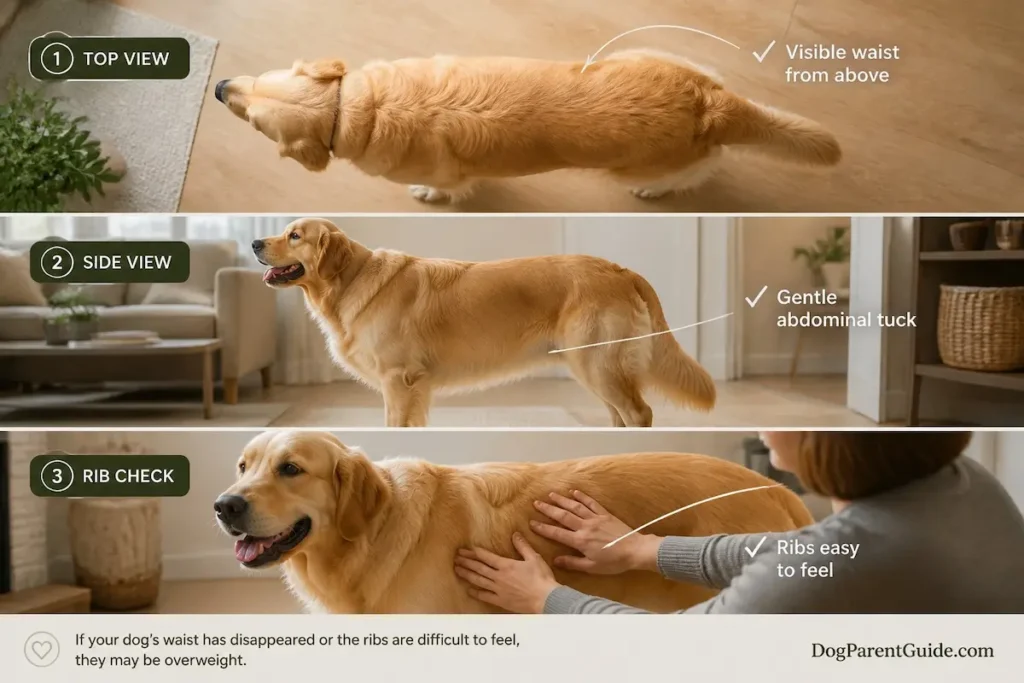
- You should be able to feel the ribs without pressing hard, but they shouldn’t be clearly visible.
- If your dog’s waist has disappeared or the ribs are difficult to feel under a thick layer of fat, it may be time to talk with your veterinarian about a safe weight management plan.
How Much Low Fat Dog Food Should You Feed?
There is no single portion size that works for every dog. Age, activity level, body condition, metabolism, and overall health all influence how much food your dog needs each day.
The table below provides a general starting point for healthy adult dogs, but individual needs may vary.
| Dog Weight | Target Loss | Per Meal | Meals Per Day |
|---|---|---|---|
| 10–20 lbs | Active loss | ⅓–½ cup | 2–3 |
| 10–20 lbs | Maintenance | ½–¾ cup | 2 |
| 20–50 lbs | Active loss | ¾–1 cup | 2 |
| 20–50 lbs | Maintenance | 1–1½ cups | 2 |
| 50–90 lbs | Active loss | 1½–2 cups | 2 |
| 50–90 lbs | Maintenance | 2–2½ cups | 2 |
Important: These serving sizes are general guidelines only. The actual amount your dog needs depends on the recipe used, the calorie content per cup, activity level, body condition, and your veterinarian’s recommendations.
A safe rate of weight loss for dogs is 1–2% of body weight per week. Faster weight loss risks muscle loss alongside fat loss — the goal is fat reduction while preserving lean muscle mass.
✅ For the best results:
- Measure every meal instead of estimating portions.
- Count treats and chews as part of your dog’s daily calories.
- Weigh your dog regularly and adjust portions gradually if needed.
- Provide regular exercise that’s appropriate for your dog’s age and health.
If your dog is significantly overweight or has a medical condition such as diabetes, pancreatitis, thyroid disease, or kidney disease, speak with your veterinarian before starting a weight management program or changing to a homemade diet.
How to Transition to Homemade Low Fat Dog Food
A sudden food change can upset a dog’s stomach, even when the new ingredients are simple. Unless your veterinarian advises otherwise, transition gradually over about 7 days.
| Days | Current Food | New Food |
|---|---|---|
| 1–2 | 75% | 25% |
| 3–4 | 50% | 50% |
| 5–6 | 25% | 75% |
| 7 | 0% | 100% |
Dogs with sensitive digestion may need a slower transition. Watch for changes in stool, appetite, energy, itching, or vomiting, and pause the transition if problems appear.
Common Weight Management Mistakes
Even healthy homemade meals can slow progress if portions are too large or extra calories are overlooked. The most common mistakes include:
- Estimating portions instead of measuring them
- Forgetting calories from treats, chews, and table scraps
- Adding too much oil, rice, or other calorie-dense ingredients
- Switching foods too quickly
- Cutting fat too aggressively without professional guidance
Measure meals carefully, make dietary changes gradually, and track your dog’s weight consistently. If progress stalls or your dog begins losing weight too quickly, ask your veterinarian whether the portions or calorie target should be adjusted.
How to Store Homemade Low Fat Dog Food
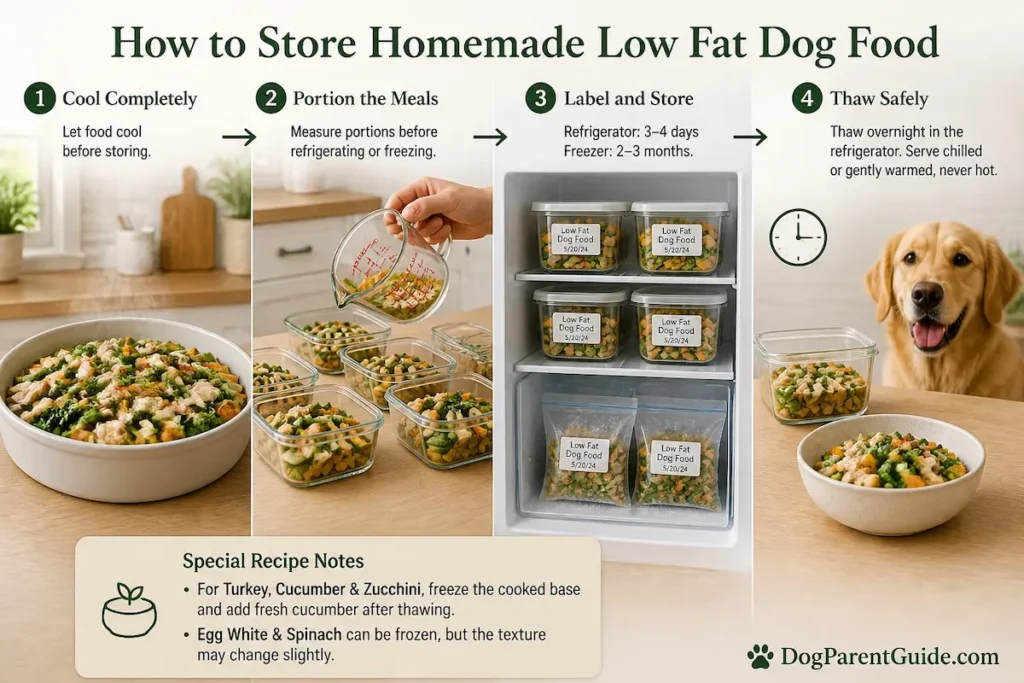
Allow cooked food to cool before transferring it to airtight containers.
- Refrigerator: Store for up to 3–4 days.
- Freezer: Freeze in meal-sized portions for up to 2–3 months.
- Thawing: Defrost overnight in the refrigerator, not at room temperature.
- Serving: Stir well and serve chilled or gently warmed. Avoid serving food hot.
💡 Recipe notes: For the Turkey, Cucumber & Zucchini recipe, freeze the cooked base and add fresh cucumber after thawing. The Egg White & Spinach recipe can be frozen, but the egg whites may have a slightly different texture after thawing.
Label each container with the recipe name and preparation date. Discard any food with an unusual smell, color, or texture.
Final Thoughts
Homemade low fat dog food can be a practical way to support healthy weight management when portions are measured carefully and meals are properly balanced.
Start with one of the simpler recipes, monitor your dog’s weight and energy, and make gradual adjustments as needed. Small, consistent changes can help your dog feel more comfortable, move more easily, and enjoy a healthier daily routine.
For long-term feeding or significant weight loss, work with your veterinarian to make sure the diet continues to meet your dog’s nutritional needs.