Every dog owner has been there — the 3am emergency trip outside, the mystery loose stool, the bloated belly after dinner that has everyone concerned.
Digestive issues are one of the most common reasons dogs visit the vet, and pumpkin is one of the most consistently effective natural solutions available. Not because it’s trendy, but because the science behind it is genuinely solid.
This article delivers 12 pumpkin dog food recipes built specifically around digestive health — not just recipes that happen to contain pumpkin, but meals where every single ingredient earns its place by supporting a healthy gut.
After the recipes, everything needed to understand why pumpkin works so well and how to use it correctly is covered in full.
Let’s feed that gut.
New to feeding pumpkin to your dog? Check out our vet-approved guide to learn why pumpkin is one of the best ingredients you can add to your dog’s diet.
12 Pumpkin Dog Food Recipes for Digestive Health
Recipe 1: Pumpkin and Ground Turkey Gut-Reset Bowl
The go-to recipe for dogs coming off a digestive upset or transitioning back to regular food after a bland diet.
Ground turkey is one of the most easily digestible proteins available, and combined with pumpkin’s soluble fiber, this bowl actively helps the digestive system recalibrate without overwhelming it.
Pumpkin & Ground Turkey Gut-Reset Bowl
Gentle on the stomach, easy to digest — a solid go-to after tummy troubles or as a regular rotation meal
Ingredients
2 lbs lean ground turkey (93/7)
brown fully and drain excess fat before combining
1 cup plain canned pumpkin
⚠ Plain pumpkin puree only — never pumpkin pie filling (contains xylitol and spices toxic to dogs)
1 cup zucchini, finely diced
steam until just tender, about 5 minutes
1 cup spinach, chopped
wilt in the warm pan for 1–2 min — no extra cooking needed
½ cup plain Greek yogurt (unsweetened)
✦ Choose plain, unsweetened — adds probiotics and a creamy texture
2 tbsp fish oil
add per serving after cooling — heat degrades omega-3s
Canine multivitamin + calcium supplement
✦ Add per serving as directed on your supplement — essential for fresh food diets
Instructions
Brown ground turkey in a large pan over medium heat until fully cooked. Drain excess fat.
Steam zucchini until just tender — about 5 minutes. Set aside.
Wilt chopped spinach in the still-warm pan for 1–2 minutes using residual heat.
Combine turkey, zucchini, and spinach in a large bowl. Stir in pumpkin puree and Greek yogurt until evenly distributed.
Cool completely before portioning into airtight containers.
Add fish oil and supplements per serving, right before serving — not into the batch.
🫙 Meal prep tip: This recipe yields about 8 cups — roughly 4 days of food for a 40–50 lb dog. Portion into daily servings in labeled containers so you’re not scooping from the batch each time. Keeps in the fridge for up to 4 days. Freeze individual portions if prepping further ahead — thaw overnight in the fridge before serving. Fish oil and supplements go in fresh each bowl, not into frozen portions.
Why it supports digestion: Soluble fiber from pumpkin firms loose stools and feeds beneficial gut bacteria, probiotics from yogurt replenish healthy microbiome, zucchini adds gentle bulk without irritating the gut lining.
Recipe 2: Pumpkin and Chicken Probiotic Bowl
Chicken and pumpkin is one of the classic combinations in canine digestive health — and for good reason.
This recipe layers three probiotic and prebiotic sources — yogurt, pumpkin, and kefir — to actively rebuild gut flora after illness, antibiotics, or chronic digestive disruption.
Pumpkin & Chicken Probiotic Bowl
Fermented dairy triple-stack — yogurt, kefir, and pumpkin working together to support a healthy gut
Ingredients
2 lbs boneless, skinless chicken thighs
poach in plain water — thighs stay moist and shred easily
1 cup plain canned pumpkin
⚠ Plain pumpkin puree only — never pumpkin pie filling (contains xylitol and spices toxic to dogs)
½ cup plain Greek yogurt (unsweetened)
✦ Unsweetened only — a live-culture source of probiotics
¼ cup plain kefir (unsweetened, no artificial flavors)
✦ Richer in probiotic strains than yogurt alone — the two work well together
1 cup kale, finely chopped and steamed
steam until fully tender — fine chop makes it easier to digest
½ cup carrots, grated
raw and grated — adds crunch, beta-carotene, and fiber without cooking
2 tbsp fish oil
add per serving after cooling — heat degrades omega-3s
Instructions
Poach chicken thighs in plain water over medium heat for 20 minutes until cooked through. Remove and let cool.
Shred chicken finely once cooled — smaller pieces are easier to eat and digest.
Steam kale until fully tender. Grate carrots raw and set both aside.
Combine shredded chicken, kale, and carrots in a large bowl.
In a separate bowl, mix pumpkin puree, yogurt, and kefir until smooth. Fold into the chicken mixture until evenly distributed.
Cool completely before portioning. Add fish oil per serving, right before serving.
🫙 Probiotic note: Yogurt and kefir are living cultures — avoid mixing them into hot food or the beneficial bacteria won’t survive. Always fold them in after the batch has cooled down. Store in the fridge for up to 3–4 days. To freeze, portion before adding the dairy components, then stir in fresh yogurt and kefir after thawing for the best probiotic benefit.
Why it supports digestion: Triple probiotic and prebiotic action from pumpkin, yogurt, and kefir actively supports microbiome diversity, kale provides prebiotic fiber, chicken thighs deliver taurine for overall gut motility support.
Recipe 3: Pumpkin, Salmon, and Sweet Potato Digestive Bowl
Salmon brings omega-3 fatty acids that directly reduce gut inflammation — a key factor in chronic digestive issues like IBD and leaky gut syndrome in dogs.
This recipe is particularly effective for dogs with inflammatory bowel conditions where both gut inflammation and microbiome disruption need to be addressed simultaneously.
Pumpkin, Salmon & Sweet Potato Digestive Bowl
Omega-3 from whole fish, soluble fiber from pumpkin — a gentle, nutrient-dense bowl for sensitive stomachs
Ingredients
1.5 lbs fresh salmon fillet (or canned salmon in water, no salt)
⚠ Always cook salmon fully — raw salmon can carry a parasite that is dangerous and potentially fatal for dogs
1 cup plain canned pumpkin
⚠ Plain pumpkin puree only — never pumpkin pie filling (contains xylitol and spices toxic to dogs)
1 cup sweet potato, steamed and mashed
steam until completely soft — forms the hearty base of the bowl
1 cup green beans, finely chopped
steam until just tender — fine chop makes it easier to eat and digest
½ cup plain Greek yogurt (unsweetened)
✦ Adds probiotics and a creamy texture — fold in after cooling
1 tbsp coconut oil
✦ Add per serving after cooling — supports coat and skin health
Instructions
Bake salmon at 375°F (190°C) for 15–18 minutes until fully cooked through. Let cool completely.
Check carefully for bones — run your fingers along the flesh before flaking. Flake into small pieces.
Steam sweet potato until completely soft. Mash well and set aside.
Steam green beans until just tender. Chop finely.
Combine salmon, sweet potato, and green beans in a large bowl. Gently fold in pumpkin puree and Greek yogurt once the mixture has cooled.
Add coconut oil and any supplements per serving, right before serving.
🚨 Raw salmon warning: Never feed raw or undercooked salmon to dogs. Raw Pacific salmon can carry Neorickettsia helminthoeca, a parasite that causes Salmon Poisoning Disease — a condition that is serious and can be fatal if untreated. Always bake or cook fully until the flesh is opaque and flakes easily.
🫙 Meal prep tip: Keeps in the fridge for up to 3–4 days. If using canned salmon, drain thoroughly and check for bone fragments — canned salmon bones are soft and usually safe, but removing larger ones is still good practice. Coconut oil solidifies in the fridge — a quick stir before serving brings it back.
Why it supports digestion: Omega-3s from salmon reduce intestinal inflammation, pumpkin fiber regulates transit time, sweet potato adds prebiotic resistant starch that feeds beneficial bacteria, coconut oil’s MCTs have mild antimicrobial properties that support gut balance.
Recipe 4: Pumpkin and Beef Liver Micronutrient Bowl
Organ meat is one of the most nutrient-dense foods available for dogs, and the micronutrients in beef liver — particularly zinc and B vitamins — directly support the integrity of the gut lining.
A compromised gut lining is at the root of many chronic digestive issues, making this recipe more therapeutic than it might look at first glance.
Pumpkin & Beef Liver Micronutrient Bowl
Organ meat kept in check — liver’s dense vitamin load balanced with ground beef and fiber-rich vegetables
Ingredients
1.5 lbs lean ground beef (90/10)
brown fully and drain fat thoroughly before combining
¼ lb beef liver, finely chopped
⚠ Do not exceed ¼ lb per batch — liver is extremely dense in Vitamin A, which accumulates in the body and becomes toxic in excess over time
1 cup plain canned pumpkin
⚠ Plain pumpkin puree only — never pumpkin pie filling (contains xylitol and spices toxic to dogs)
1 cup butternut squash, steamed and mashed
steam until completely soft — adds natural sweetness and beta-carotene
½ cup spinach, wilted
wilt in residual pan heat for 1–2 min after removing beef
½ cup green beans, chopped
steam until just tender — low calorie, high fiber
2 tbsp fish oil
add per serving after cooling — heat degrades omega-3s
Instructions
Sauté beef liver in a lightly oiled pan over medium heat for 3–4 minutes per side until cooked through — no pink in the center. Set aside.
Brown ground beef in the same pan. Drain fat thoroughly and wilt spinach in the residual heat for 1–2 minutes.
Steam butternut squash until completely soft. Mash well. Steam green beans until just tender.
Combine ground beef, liver, squash, spinach, and green beans in a large bowl. Stir in pumpkin puree and mix well.
Cool completely before portioning. Add fish oil and any supplements per serving, right before serving.
🚨 Liver portion limit: Beef liver is one of the most nutrient-dense ingredients you can add to a dog’s meal — but that density cuts both ways. Vitamin A is fat-soluble and accumulates in the body over time. Chronic excess causes Vitamin A toxicity (hypervitaminosis A), which affects bone and joint health. Keep liver at or below 10% of total recipe volume. The ¼ lb used here hits that threshold — do not scale it up proportionally if doubling the batch.
🫙 Meal prep tip: Yields about 7–8 cups — roughly 4 days for a medium-large dog. Store in labeled airtight containers in the fridge. Freezes well — portion before freezing and thaw overnight in the fridge. Fish oil and supplements go in fresh per bowl, not into the batch or frozen portions.
Why it supports digestion: Zinc from liver supports gut lining repair and integrity, B vitamins support healthy enzyme production for digestion, butternut squash provides soluble fiber alongside pumpkin for double the digestive support.
Recipe 5: Slow Cooker Pumpkin and Chicken Digestive Stew
The most hands-off recipe on the list and genuinely one of the most gut-friendly. Slow cooking breaks down proteins into more easily digestible forms and produces a naturally broth-rich meal that supports hydration — critical for dogs dealing with diarrhea or digestive upset who lose more fluid than usual.
Slow Cooker Pumpkin & Chicken Digestive Stew
Set it and walk away — broth-braised chicken and vegetables that practically melt into a gut-friendly stew
Ingredients
2 lbs chicken thighs, boneless and skinless
thighs stay moist through long slow cooking — shred directly in the pot
2 cups low-sodium chicken broth
⚠ Must be free of onion and garlic — both are toxic to dogs even in small amounts
1 cup plain canned pumpkin
⚠ Plain pumpkin puree only — never pumpkin pie filling (contains xylitol and spices toxic to dogs)
1 cup zucchini, diced
breaks down beautifully during slow cooking — no pre-steaming needed
1 cup green beans, chopped
add whole or roughly chopped — they soften to fork-tender over long cooking
½ cup carrots, sliced
slice ½ inch thick — holds shape better than smaller cuts over long cook times
½ cup plain Greek yogurt (unsweetened)
✦ Added after cooling only — never into hot stew or probiotic cultures are destroyed
Instructions
Add chicken thighs, zucchini, green beans, carrots, and broth to the slow cooker.
Cook on low for 6–8 hours or high for 3–4 hours until chicken is fully cooked and vegetables are tender.
Shred chicken directly in the pot using two forks. Stir to distribute evenly.
Stir in pumpkin puree during the last 15 minutes of cooking — gives it time to warm through without overcooking.
Cool completely, then stir in Greek yogurt. Never add yogurt to hot stew — heat destroys the live probiotic cultures.
Portion and add supplements per serving, right before serving.
🚨 Broth check: Many store-bought broths — even low-sodium versions — contain onion powder or garlic powder as flavoring. Always read the full ingredient list before using. When in doubt, use plain water or make your own by simmering chicken in water with no added seasonings.
🫙 Meal prep tip: Yields about 7–8 cups — the stew is slightly looser than pan-cooked meals due to the broth. Store in the fridge for up to 4 days. Freezes well — portion into daily servings before freezing and stir in fresh yogurt after thawing, not before. The broth layer may separate in the fridge; just stir before serving.
Why it supports digestion: Slow-cooked proteins are significantly easier to digest than quickly cooked equivalents, broth supports hydration and gut motility, yogurt added post-cooking preserves live probiotic cultures for maximum microbiome benefit.
Recipe 6: Pumpkin and Egg Gentle Recovery Bowl
This is the recipe to reach for when a dog is recovering from vomiting, diarrhea, or a stomach bug and needs something gentle but nourishing.
It sits between a traditional bland diet and a full homemade meal — more nutritious than plain boiled chicken and rice, but still light enough that a sensitive stomach can handle it without protest.
Pumpkin & Egg Gentle Recovery Bowl
Minimal ingredients, maximum digestibility — for dogs bouncing back from an upset stomach
Ingredients
4 eggs, scrambled
✦ Cook in a dry pan only — no butter, oil, salt, or seasoning of any kind
1 lb ground turkey or ground chicken
cooked in a dry pan — no added fat, this keeps it as gentle as possible
1 cup plain canned pumpkin
⚠ Plain pumpkin puree only — never pumpkin pie filling (contains xylitol and spices toxic to dogs)
½ cup zucchini, steamed and mashed
steam until very soft — mash completely smooth for easy digestion
½ cup plain Greek yogurt (unsweetened)
✦ Fold in after cooling — gentle probiotic support during recovery
¼ cup plain kefir (unsweetened, no artificial flavors)
✦ Richer probiotic diversity than yogurt alone — fold in cold, never hot
Instructions
Cook ground turkey or chicken in a dry pan over medium heat until fully cooked through. No oil, no butter, no seasoning.
In a separate dry pan, scramble eggs over low heat until just set — soft and moist, not rubbery.
Steam zucchini until very soft. Mash to a completely smooth consistency.
Combine turkey, scrambled eggs, and mashed zucchini in a large bowl.
Once fully cooled, gently fold in pumpkin puree, yogurt, and kefir. Do not mix into a warm bowl — the probiotic cultures won’t survive.
Serve at room temperature — cold food can further upset a sensitive stomach. Let refrigerated portions sit out for 10–15 minutes before serving.
Hold supplements until the dog is eating normally again — introduce them gradually as recovery progresses.
🩺 Recovery note: This bowl is designed for short-term use during digestive upset — not as a permanent daily meal, as it lacks the full nutrient profile for long-term feeding. If symptoms persist beyond 2–3 days, or if vomiting is involved, consult a vet before continuing home feeding. Start with smaller-than-usual portions on the first serving and increase gradually as the stomach settles. Store in the fridge for up to 3 days.
Why it supports digestion: Eggs provide highly bioavailable protein that requires minimal digestive effort, mashed zucchini is one of the gentlest vegetables for an irritated gut, double probiotic source from yogurt and kefir supports rapid microbiome recovery.
Recipe 7: Pumpkin and Lamb Novel Protein Bowl
For dogs with diagnosed food sensitivities or suspected protein allergies driving their digestive issues, a novel protein like lamb provides the complete amino acid profile the body needs without triggering the immune response that causes gut inflammation in sensitive dogs.
This recipe is built around the elimination diet principle — one novel protein, simple vegetables, and pumpkin as the digestive anchor.
Pumpkin & Lamb Novel Protein Bowl
A smart swap for dogs with chicken or beef sensitivities — lamb as a clean, less-common protein source
Ingredients
1.5 lbs ground lamb
✦ Drain fat thoroughly after browning — lamb is naturally richer than chicken or turkey
1 cup plain canned pumpkin
⚠ Plain pumpkin puree only — never pumpkin pie filling (contains xylitol and spices toxic to dogs)
1 cup zucchini, diced and steamed
steam until just tender — mild and easy on the digestive system
½ cup butternut squash, steamed and mashed
steam until completely soft — mash smooth to form the binding base
½ cup green beans, finely chopped
steam until just tender — fine chop for easier digestion
2 tbsp fish oil
add per serving after cooling — heat degrades omega-3s
Instructions
Brown ground lamb over medium heat until fully cooked through. Drain fat thoroughly — lamb renders more fat than chicken or turkey and the excess should come out.
Steam zucchini and green beans separately until just tender. Set aside.
Steam butternut squash until completely soft. Mash until smooth — this forms the binding base of the bowl.
Combine lamb, zucchini, green beans, and mashed butternut squash in a large bowl.
Stir in pumpkin puree and mix well until evenly distributed.
Cool completely before portioning. Add fish oil and supplements per serving, right before serving.
🐑 Novel protein note: “Novel protein” means a protein the dog hasn’t been regularly exposed to — which is why it’s useful for dogs with suspected food sensitivities to common proteins like chicken or beef. For this to work as an elimination trial, lamb needs to be the only protein source during the trial period — no treats, chews, or other foods containing other meats. Store in the fridge for up to 4 days. Freezes well in daily portions.
Why it supports digestion: Novel protein reduces immune-mediated gut inflammation in sensitive dogs, simple vegetable profile minimizes potential irritants, pumpkin and butternut squash provide dual soluble fiber sources for gentle regulation.
Recipe 8: Pumpkin and Sardine Gut-Health Bowl
Sardines might not be the most glamorous ingredient on this list, but they’re arguably one of the most powerful for gut health.
The combination of omega-3 fatty acids and naturally occurring Vitamin D in sardines creates a genuinely anti-inflammatory gut environment that supports healing in dogs with chronic digestive issues.
And because sardines in water require zero cooking, this is also the fastest full meal on the list.
Pumpkin & Sardine Gut-Health Bowl
Whole-fish omega-3s paired with pumpkin and probiotics — a powerhouse gut-health meal with minimal prep
Ingredients
2 cans sardines in water, no salt added (drained)
⚠ No salt added only — regular canned sardines contain sodium levels that are too high for dogs
1 lb ground turkey
bulks up the protein base and balances the richness of sardines
1 cup plain canned pumpkin
⚠ Plain pumpkin puree only — never pumpkin pie filling (contains xylitol and spices toxic to dogs)
1 cup spinach, wilted
wilt in residual pan heat after turkey — no extra cooking needed
½ cup zucchini, steamed and diced
steam until just tender — light and gentle on digestion
½ cup plain Greek yogurt (unsweetened)
✦ Stir in after fully cooling — live cultures need a cool base to survive
1 tbsp coconut oil
✦ Mix in after cooling — supports coat and skin health
Instructions
Cook ground turkey in a pan over medium heat until fully cooked through. Wilt spinach in the residual pan heat for 1–2 minutes. Set aside to cool.
Drain sardines thoroughly and mash well in a large bowl — no large chunks.
Steam zucchini until just tender. Set aside.
Combine turkey, sardines, zucchini, and spinach in the large bowl. Stir in pumpkin puree and mix well.
Cool completely, then fold in Greek yogurt and mix in coconut oil — neither should go into a warm bowl.
Portion and add supplements per serving, right before serving.
🐟 Sardine tip: Sardines are one of the best whole-food omega-3 sources for dogs — smaller fish means lower mercury than tuna or salmon. The soft bones in canned sardines are completely safe and actually add calcium. Always buy packed in water with no salt added; sardines in oil or brine add unnecessary fat or sodium. Keeps in the fridge for up to 3–4 days. The sardine smell intensifies after a day — store in a well-sealed container.
Why it supports digestion: Omega-3s and Vitamin D from sardines reduce gut inflammation, probiotics from yogurt support microbiome health, coconut oil’s lauric acid has gentle antimicrobial properties that help balance gut bacteria populations.
Recipe 9: Pumpkin and White Fish Sensitive Stomach Bowl
White fish — cod, tilapia, haddock — is one of the most hypoallergenic protein sources available for dogs.
It’s lean, mild, easily digestible, and rarely triggers sensitivity reactions, making it an excellent choice for dogs whose digestive issues stem from protein intolerances rather than a specific illness or infection.
Pumpkin & White Fish Sensitive Stomach Bowl
Ultra-lean, ultra-mild — white fish and cauliflower mash built specifically for dogs with sensitive digestion
Ingredients
1.5 lbs white fish fillets (cod, tilapia, or haddock)
✦ Fresh or frozen — no seasoning, no marinade, no added salt. Check for bones after baking
1 cup plain canned pumpkin
⚠ Plain pumpkin puree only — never pumpkin pie filling (contains xylitol and spices toxic to dogs)
1 cup cauliflower, steamed and mashed
steam until very soft — mash completely smooth, forms the gentle starchy base
½ cup green beans, finely chopped
steam until just tender — fine chop for easier digestion
½ cup spinach, wilted
wilt in residual heat — no extra cooking needed
½ cup plain Greek yogurt (unsweetened)
✦ Fold in after fully cooling — probiotic cultures don’t survive heat
2 tbsp fish oil
add per serving after cooling — boosts omega-3s beyond what white fish provides
Instructions
Bake fish fillets at 375°F (190°C) for 15–20 minutes until fully cooked and the flesh flakes easily. Let cool.
Check carefully for bones — run your fingers along the flesh before flaking. Flake into small pieces.
Steam cauliflower until very soft. Mash to a completely smooth consistency — no lumps.
Steam green beans until just tender. Wilt spinach in residual heat.
Combine fish, cauliflower mash, green beans, and spinach in a large bowl.
Once fully cooled, fold in pumpkin puree and Greek yogurt until evenly distributed.
Add fish oil and supplements per serving, right before serving.
🐟 White fish note: Cod, tilapia, and haddock are among the leanest, mildest proteins available — very low in fat, easy to digest, and unlikely to trigger sensitivities. Unlike salmon, white fish doesn’t carry parasite risk when properly cooked. Fish oil is added on top because white fish is naturally low in omega-3s compared to fatty fish — the combination covers both digestibility and essential fatty acids. Store in the fridge for up to 3–4 days.
Why it supports digestion: White fish is one of the most digestively accessible proteins available, mashed cauliflower provides gentle bulk without the starch load of potato or sweet potato, double fiber source from pumpkin and cauliflower supports healthy transit.
Recipe 10: Pumpkin and Chicken Bone Broth Bowl
Bone broth deserves its own spotlight in the digestive health conversation. Gelatin from bone broth coats and soothes the gut lining, making it particularly valuable for dogs with leaky gut syndrome, gastritis, or any condition involving gut lining irritation.
This recipe uses bone broth as both a cooking liquid and a flavor enhancer — the result is a meal that’s deeply nourishing and highly palatable even for dogs with reduced appetite due to digestive discomfort.
Pumpkin & Chicken Bone Broth Bowl
Slow-cooked chicken poached in gut-soothing bone broth — tender, nourishing, and deeply comforting for your dog’s digestion
Ingredients
2 lbs boneless chicken thighs
✦ Boneless only — thighs stay juicier and more tender than breast when poached
1 cup plain canned pumpkin
⚠ Plain pumpkin puree only — never pumpkin pie filling (contains xylitol and spices toxic to dogs)
1 cup bone broth (unsalted, no onion or garlic)
✦ Homemade or store-bought — must be completely unseasoned. See bone broth recipe below.
1 cup zucchini, diced
steam until just tender — mild, easy to digest, high in water content
½ cup green beans, chopped
steam until just tender — chop small for easier digestion
½ cup carrots, grated
grated raw or lightly steamed — natural source of beta-carotene and fiber
2 tablespoons fish oil
add per serving after cooling — omega-3 boost for coat and inflammation support
How to make simple homemade bone broth
🦴 Bone broth — 12 to 24 hrs
Place chicken bones (raw or cooked) in a large pot or slow cooker.
Cover with water and add 1 tbsp apple cider vinegar — this draws minerals from the bones.
Simmer on low for 12 to 24 hours. The longer, the richer.
Strain completely — remove all bones and solids. No bone fragments allowed.
Cool and skim fat from the surface. Freeze in ice cube trays for convenient portioning.
Recipe instructions
Poach chicken thighs in bone broth in a covered pot over medium heat until cooked through, about 20 minutes.
Remove chicken and shred into small pieces. Reserve the poaching broth — it’s packed with collagen and flavor.
Steam zucchini, green beans, and carrots until just tender. Do not overcook.
Combine shredded chicken, all vegetables, and pumpkin puree in a large bowl. Mix gently.
Add a splash of reserved bone broth to each serving for extra gut-soothing benefit and palatability.
Cool completely, then add fish oil and any supplements right before serving.
🍗 Bone broth note: The gelatin released from slow-simmered bones acts as a natural gut soother — it coats the intestinal lining and supports healthy digestion. Always strain thoroughly; even small bone fragments are a choking and injury risk. Store finished meal in the fridge for up to 3–4 days, or freeze individual portions for up to 3 months.
Why it supports digestion: Gelatin from bone broth supports gut lining integrity and reduces permeability, collagen supports the connective tissue throughout the digestive tract, pumpkin fiber regulates transit, broth increases palatability for dogs with reduced appetite.
Recipe 11: Pumpkin and Turkey Turmeric Anti-Inflammatory Bowl
Chronic digestive issues almost always involve an inflammatory component.
Turmeric’s active compound, curcumin, is one of the most well-researched natural anti-inflammatory agents available — and its benefits extend directly to the gut, where it helps reduce intestinal inflammation and supports healthy gut motility.
Combined with turkey and pumpkin, this recipe addresses both the inflammatory and fiber sides of digestive health simultaneously.
Pumpkin & Turkey Turmeric Anti-Inflammatory Bowl
Lean ground turkey with curcumin-activated turmeric and double squash — a powerhouse meal built to calm inflammation from the inside out
Ingredients
2 lbs lean ground turkey
✦ Lean ground only — drain all excess fat after browning. High fat content can trigger digestive upset.
1 cup plain canned pumpkin
⚠ Plain pumpkin puree only — never pumpkin pie filling (contains xylitol and spices toxic to dogs)
1 cup kale, finely chopped and steamed
chop very finely before steaming — raw kale is hard to digest; steaming neutralizes goitrogens
½ cup zucchini, diced and steamed
gentle on the gut, high water content — steam until just tender
½ cup butternut squash, steamed and mashed
steam until very soft, mash smooth — adds natural sweetness and extra beta-carotene alongside pumpkin
The anti-inflammatory duo — mix together first
✦ ¼ teaspoon turmeric — active curcumin compound, a natural anti-inflammatory
✦ A pinch of black pepper — piperine activates curcumin absorption by up to 2,000%. Essential, not optional.
1 tablespoon coconut oil
add after cooling — medium-chain fatty acids support coat health and energy metabolism
2 tablespoons fish oil
add per serving after cooling — omega-3s work synergistically with turmeric for inflammation support
Instructions
Brown ground turkey in a pan over medium heat until fully cooked. Drain all excess fat — lean is key for digestibility.
Steam kale, zucchini, and butternut squash separately until tender. Mash the butternut squash smooth.
Mix turmeric and black pepper directly into the pumpkin puree — combining this way ensures perfectly even distribution throughout the meal.
Combine turkey with all steamed vegetables in a large bowl. Mix well.
Fold in the spiced pumpkin mixture until evenly distributed.
Allow to cool completely, then add coconut oil and fish oil. Never add oils to hot food — heat degrades their nutritional value.
Mix in any supplements per serving, right before serving.
🌿 Turmeric + black pepper note: Curcumin — turmeric’s active compound — is poorly absorbed on its own. Piperine in black pepper dramatically increases bioavailability, making the pinch of black pepper non-negotiable, not decorative. The dose here (¼ tsp turmeric) is safe for most dogs; for small breeds under 10 lbs, halve it. Fish oil and turmeric together create a compounding anti-inflammatory effect that no single ingredient achieves alone. Store in the fridge for up to 3–4 days.
Why it supports digestion: Curcumin from turmeric directly reduces intestinal inflammation, black pepper’s piperine increases curcumin bioavailability by up to 2000%, triple fiber source from pumpkin, kale, and butternut squash supports comprehensive gut regulation.
Recipe 12: Pumpkin and Beef Prebiotic Power Bowl
The final recipe on the list is built specifically around prebiotic fiber — the type of fiber that feeds and nourishes beneficial gut bacteria rather than simply adding bulk.
Not all fiber is created equal for gut health purposes, and this recipe combines prebiotic-rich ingredients deliberately to create an environment where healthy gut bacteria genuinely thrive.
Pumpkin & Beef Prebiotic Power Bowl
Lean ground beef paired with chicory root and dandelion greens — two of the most potent natural prebiotics to feed and rebuild your dog’s gut microbiome
Ingredients
2 lbs lean ground beef (90/10)
✦ 90/10 lean-to-fat ratio — drain thoroughly after browning to keep fat content low and digestion smooth
1 cup plain canned pumpkin
⚠ Plain pumpkin puree only — never pumpkin pie filling (contains xylitol and spices toxic to dogs)
The prebiotic duo — steam both before using
✦ ½ cup chicory root, finely chopped — one of the richest natural sources of inulin (prebiotic fiber). Available at health food stores.
✦ ½ cup dandelion greens, chopped — another excellent prebiotic. Use plain, pesticide-free only. Steam until soft to reduce bitterness.
1 cup green beans, chopped
steam until just tender — additional soluble fiber to support prebiotic effect
½ cup plain Greek yogurt (unsweetened)
✦ Fold in after fully cooling — live probiotic cultures paired with prebiotics create a synbiotic effect for maximum gut benefit
2 tablespoons fish oil
add per serving after cooling — omega-3s support gut lining integrity alongside the prebiotic fibers
Instructions
Brown ground beef in a pan over medium heat until fully cooked. Drain fat thoroughly — excess fat undermines the gut-health focus of this meal.
Steam chicory root and dandelion greens until soft — do not serve raw. Raw chicory is intensely bitter and harder to digest; steaming also mellows dandelion greens significantly.
Steam green beans separately until just tender.
Combine beef with all steamed vegetables in a large bowl. Mix well.
Stir in pumpkin puree until evenly distributed.
Cool completely, then fold in Greek yogurt — never add yogurt to warm food, heat kills the live probiotic cultures.
Add fish oil and any supplements per serving, right before serving.
🌿 Prebiotic + probiotic note: Prebiotics (chicory, dandelion, pumpkin fiber) feed the beneficial bacteria already living in your dog’s gut. Probiotics (Greek yogurt) add new beneficial bacteria. Together they create a synbiotic effect — far more powerful than either alone. Introduce chicory root gradually over 1–2 weeks; too much inulin too fast can cause temporary gas as the microbiome adjusts. Store in the fridge for up to 3–4 days.
Why it supports digestion: Chicory root contains inulin, one of the most effective prebiotic fibers for selectively feeding Bifidobacterium species, dandelion greens provide FOS (fructooligosaccharides) — another powerful prebiotic, pumpkin adds soluble fiber and feeds Lactobacillus species, yogurt delivers live probiotic cultures to populate the prebiotic-rich environment being created.
Quick Reference: All 12 Recipes at a Glance
| Recipe | Primary Protein | Key Digestive Benefit | Best For | Prep Time |
| Turkey & Pumpkin Gut-Reset Bowl | Turkey | Digestive recalibration | Recovery from upset | 20 min |
| Chicken & Pumpkin Probiotic Bowl | Chicken | Microbiome rebuild | Post-antibiotics | 30 min |
| Salmon & Sweet Potato Bowl | Salmon | Gut inflammation reduction | IBD, chronic inflammation | 25 min |
| Beef Liver Micronutrient Bowl | Beef + Organ | Gut lining repair | Leaky gut, chronic issues | 25 min |
| Slow Cooker Chicken Stew | Chicken | Hydration + easy digestion | Active upset, loose stools | 10 min + slow cook |
| Egg & Turkey Recovery Bowl | Egg + Poultry | Gentle recovery nutrition | Post-vomiting recovery | 15 min |
| Lamb Novel Protein Bowl | Lamb | Allergy-driven gut inflammation | Food sensitivity diagnosis | 25 min |
| Sardine Gut-Health Bowl | Sardine | Anti-inflammatory gut environment | Chronic inflammation | 15 min |
| White Fish Sensitive Stomach | White Fish | Hypoallergenic digestion | Protein intolerance | 25 min |
| Chicken Bone Broth Bowl | Chicken | Gut lining soothing | Gastritis, leaky gut | 30 min |
| Turkey Turmeric Bowl | Turkey | Intestinal inflammation | IBD, chronic gut issues | 25 min |
| Beef Prebiotic Power Bowl | Beef | Prebiotic microbiome support | Long-term gut health | 30 min |
Looking for a crunchy snack your dog will go crazy for? Don’t miss our homemade pumpkin dog treats recipe — simple, healthy, and vet-friendly!
The Science Behind Pumpkin and Dog Digestion
Pumpkin works for digestive health because of its unique fiber profile. It contains both soluble and insoluble fiber, which work in different but complementary ways:
🔸 Soluble fiber (the majority of pumpkin’s fiber content) dissolves in water and forms a gel-like substance in the digestive tract. This gel:
- Slows digestion and glucose absorption
- Absorbs excess water during diarrhea, firming loose stools
- Acts as a prebiotic, feeding beneficial gut bacteria like Lactobacillus and Bifidobacterium
- Helps regulate bowel transit time in both directions
🔸 Insoluble fiber adds bulk to stool and helps move material through the digestive tract — useful for constipation and general gut motility.
This dual-fiber action is why pumpkin works for both diarrhea AND constipation — it genuinely regulates rather than just pushing in one direction. That’s genuinely unusual for a single food ingredient, and it’s the reason vets have been recommending it for decades.
How Much Pumpkin to Add to Dog Food
Amount matters — both for effectiveness and to avoid overcorrecting. Too much pumpkin can cause loose stools in dogs that were perfectly fine to begin with, which is the definition of counterproductive.
Daily amounts by dog size:
| Dog Size | Weight | Daily Pumpkin Amount |
| Extra Small | Under 10 lbs | ½ to 1 teaspoon |
| Small | 10–20 lbs | 1 to 2 teaspoons |
| Medium | 20–50 lbs | 1 to 2 tablespoons |
| Large | 50–90 lbs | 2 to 3 tablespoons |
| Extra Large | 90+ lbs | 3 to 5 tablespoons |
For acute digestive issues — active diarrhea or constipation — stay at the lower end and give with a regular meal. For ongoing digestive health maintenance as part of a full recipe, the amounts in each recipe above are calibrated to appropriate serving sizes.
Choosing the Right Pumpkin
Not all pumpkin products work equally for digestive health. Here’s what to reach for — and what to leave on the shelf:
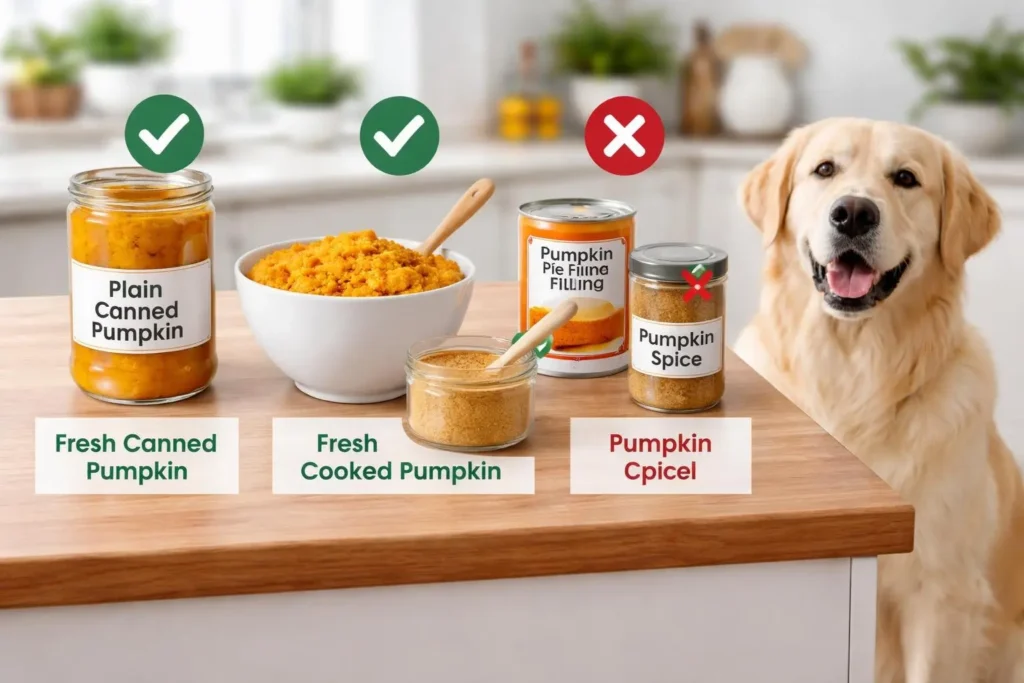
✅ Plain canned pumpkin — The gold standard. One ingredient, maximum fiber, zero additives. This is what every recipe in this article uses.
✅ Fresh cooked pumpkin — Roasted or steamed plain pumpkin works well. Remove skin and seeds, cook until soft, and mash or puree before adding to recipes.
✅ Pumpkin powder — Dehydrated pumpkin in powder form. Convenient for adding small amounts to existing meals. Check that it contains 100% pumpkin with no additives.
❌ Pumpkin pie filling — Looks almost identical to plain canned pumpkin on the shelf. Contains sugar, spices, and sometimes xylitol — a sweetener that is toxic to dogs. Always read the label twice.
❌ Pumpkin spice anything — Nutmeg, a common component of pumpkin spice blends, is toxic to dogs. Avoid entirely.
Gut-Supportive Ingredients That Work Alongside Pumpkin
The recipes above are built around a core set of gut-friendly ingredients that consistently appear alongside pumpkin. Here’s why each one earns its place:
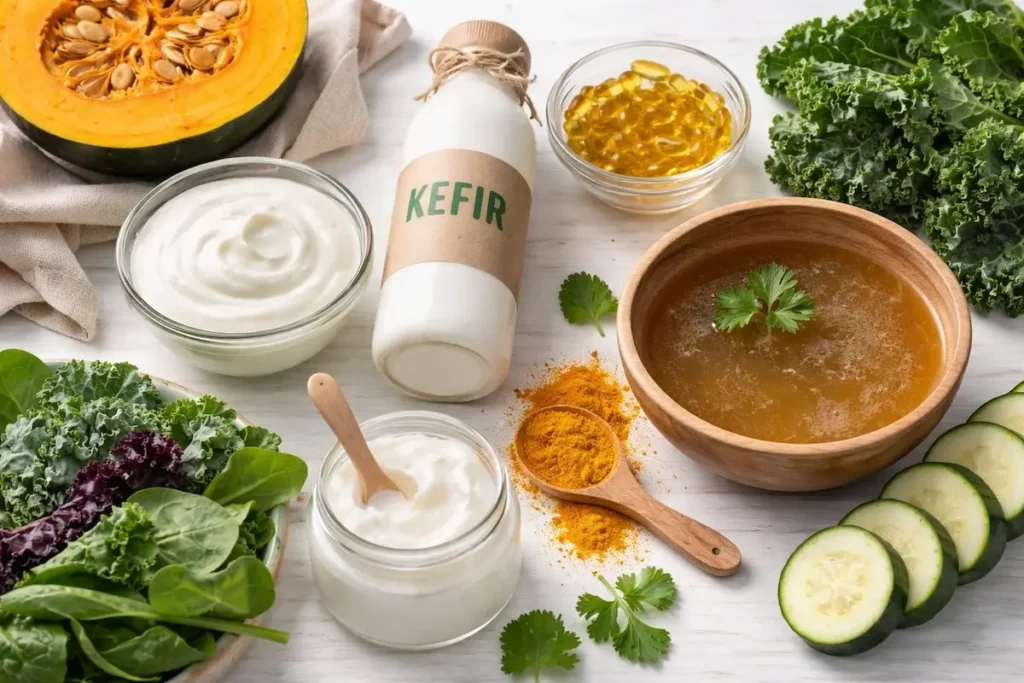
🐾 Plain Greek yogurt — Live probiotic cultures directly replenish beneficial gut bacteria. Use unsweetened, full-fat versions with live active cultures listed on the label.
🐾 Plain kefir — More diverse probiotic profile than yogurt, with a thinner consistency that mixes easily into food. Use unsweetened, unflavored versions only.
🐾 Fish oil — Omega-3 fatty acids reduce gut inflammation. One of the most important supplements for dogs with any chronic digestive condition.
🐾 Coconut oil — Medium-chain triglycerides have mild antimicrobial properties that help balance gut bacteria. Use in moderation — about 1 tablespoon per meal for medium-sized dogs.
🐾 Bone broth — Gelatin and collagen support gut lining integrity. Use unsalted, homemade or store-bought versions with no onion or garlic.
🐾 Turmeric — Curcumin reduces intestinal inflammation. Always pair with black pepper to activate absorption.
🐾 Zucchini — One of the gentlest vegetables for irritated guts. Low fiber content compared to most vegetables makes it ideal during recovery.
🐾 Kale and spinach — Prebiotic fiber feeds beneficial gut bacteria. Chop finely and steam lightly for best digestibility.
Common Digestive Issues Pumpkin Helps Address
✔️ Diarrhea — Soluble fiber absorbs excess intestinal water and firms stool. Start with a small amount mixed into regular food. Most dogs show improvement within 24 to 48 hours.
✔️ Constipation — Insoluble fiber adds bulk and stimulates gut motility. The high water content of pumpkin also softens stool. Results typically appear within 12 to 24 hours.
✔️ Anal gland issues — Firmer stools from increased fiber naturally help express anal glands during bowel movements. Not a cure for chronic anal gland disease, but a genuinely useful preventive measure.
✔️ IBD and chronic gut inflammation — Pumpkin’s prebiotic fiber feeds anti-inflammatory bacterial species. Best used alongside omega-3-rich proteins like salmon and sardines for a comprehensive anti-inflammatory approach.
✔️ Post-antibiotic microbiome disruption — Antibiotics eliminate beneficial bacteria alongside harmful ones. Pumpkin’s prebiotic fiber, combined with yogurt and kefir’s probiotic cultures, helps rebuild a healthy microbiome faster than diet alone.
Signs a Dog’s Gut Health Is Improving
After switching to pumpkin-based digestive health meals, look for these positive changes over 2 to 4 weeks:
- More consistent stool quality — firm, well-formed, predictable
- Reduced frequency of urgent bathroom trips — fewer emergency middle-of-the-night outings
- Less gas and bloating — a quieter, more comfortable belly
- Improved appetite — dogs with gut issues often eat reluctantly; recovery brings appetite back
- Better energy levels — gut health directly affects nutrient absorption, which affects energy
- Healthier coat — improved nutrient absorption shows up in coat quality surprisingly quickly
Storage Guidelines for All 12 Recipes
Every recipe in this article follows the same storage framework:
- Fridge: Airtight glass container for up to 4 days
- Freezer: Individual meal portions frozen flat in freezer bags for up to 3 months
- Thawing: Transfer from freezer to fridge the night before — never thaw at room temperature
- Serving temperature: Allow refrigerated food to sit for 10 to 15 minutes before serving, or warm gently and stir to eliminate hot spots. Room temperature food is more palatable and easier on a sensitive stomach than cold food straight from the fridge
For dogs in active digestive recovery, fresh from the fridge or slightly warmed is preferable to frozen and reheated — the texture and temperature of warmed fresh food tends to be better tolerated by sensitive stomachs.
Final Thoughts
Pumpkin isn’t a miracle cure — but it’s about as close to one as the natural food world offers for canine digestive health.
The combination of dual-action fiber, prebiotic properties, and exceptional tolerability makes it the single most useful ingredient in a homemade dog food rotation focused on gut health.
The 12 recipes above aren’t just pumpkin-forward meals — they’re built from the ground up around digestive support, with every protein, vegetable, and add-in chosen because it contributes something meaningful to gut health.
Rotate through them, use the gut-reset and recovery recipes when needed, and build the prebiotic and probiotic-rich recipes into the regular weekly rotation for long-term digestive wellness.
A dog with a healthy gut is a happier, more energetic, better-coated, and frankly much easier-to-live-with companion. And it all starts with what goes in the bowl. 🙂