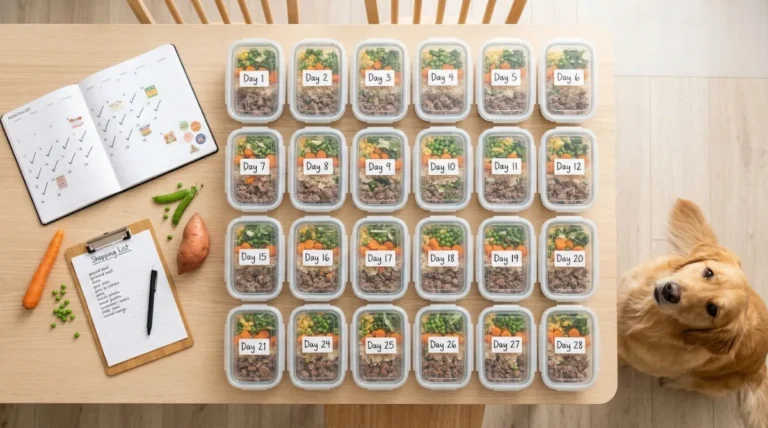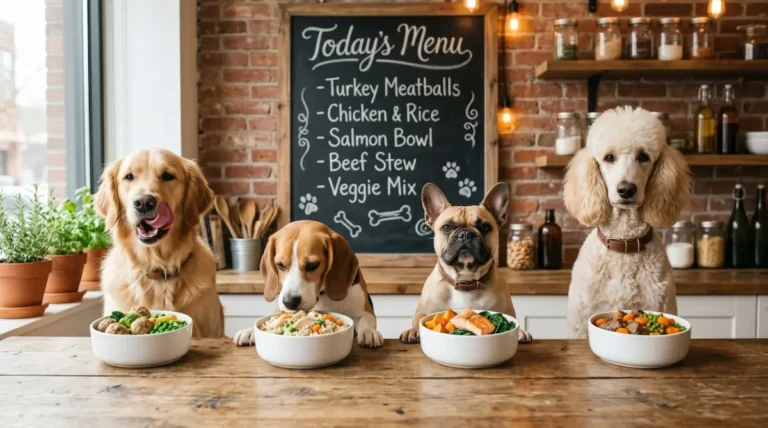
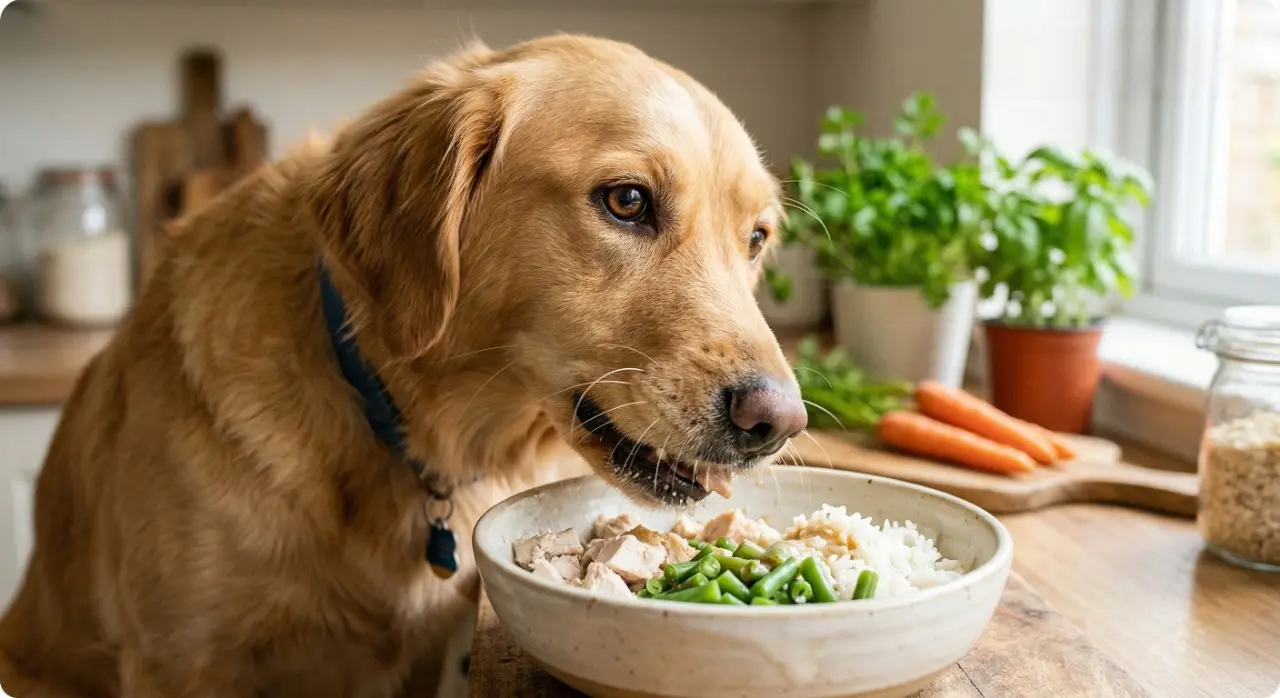
Homemade dog food gets a bad reputation in some veterinary circles — and honestly, not without reason. Poorly balanced homemade diets are a real problem.
But a well-researched, nutritionally complete homemade diet? That’s a different conversation entirely — and it’s one more vets are getting behind every year.
This article covers 15 vet-approved homemade dog food recipes built around the nutritional principles that canine health professionals actually recommend.
Every recipe follows a balanced protein, vegetable, and carbohydrate framework, includes supplementation guidance, and avoids the common pitfalls that make homemade feeding genuinely risky when done carelessly.
⚠️ Important: “Vet-approved” means these recipes follow established veterinary nutritional guidelines — not that a specific vet has reviewed them for an individual dog. Always consult a vet or veterinary nutritionist before switching to a homemade diet full-time, particularly for dogs with existing health conditions.
What Makes a Homemade Dog Food Recipe “Vet-Approved”?
Before the recipes, it’s worth understanding what separates a genuinely balanced homemade meal from one that looks healthy but quietly creates nutritional deficiencies over time.
Veterinary nutritionists recommend homemade dog food meets these core requirements:
- Complete protein from animal sources providing all essential amino acids
- Appropriate fat content — not too low, not too high
- Digestible carbohydrates for energy without blood sugar spikes
- Calcium and phosphorus balance — critical for bone health, often missing in homemade diets
- Essential micronutrients including zinc, iron, Vitamin D, and B vitamins
- Omega-3 fatty acids for inflammation management and coat health
- A canine multivitamin and calcium supplement to fill gaps no whole-food recipe fully covers
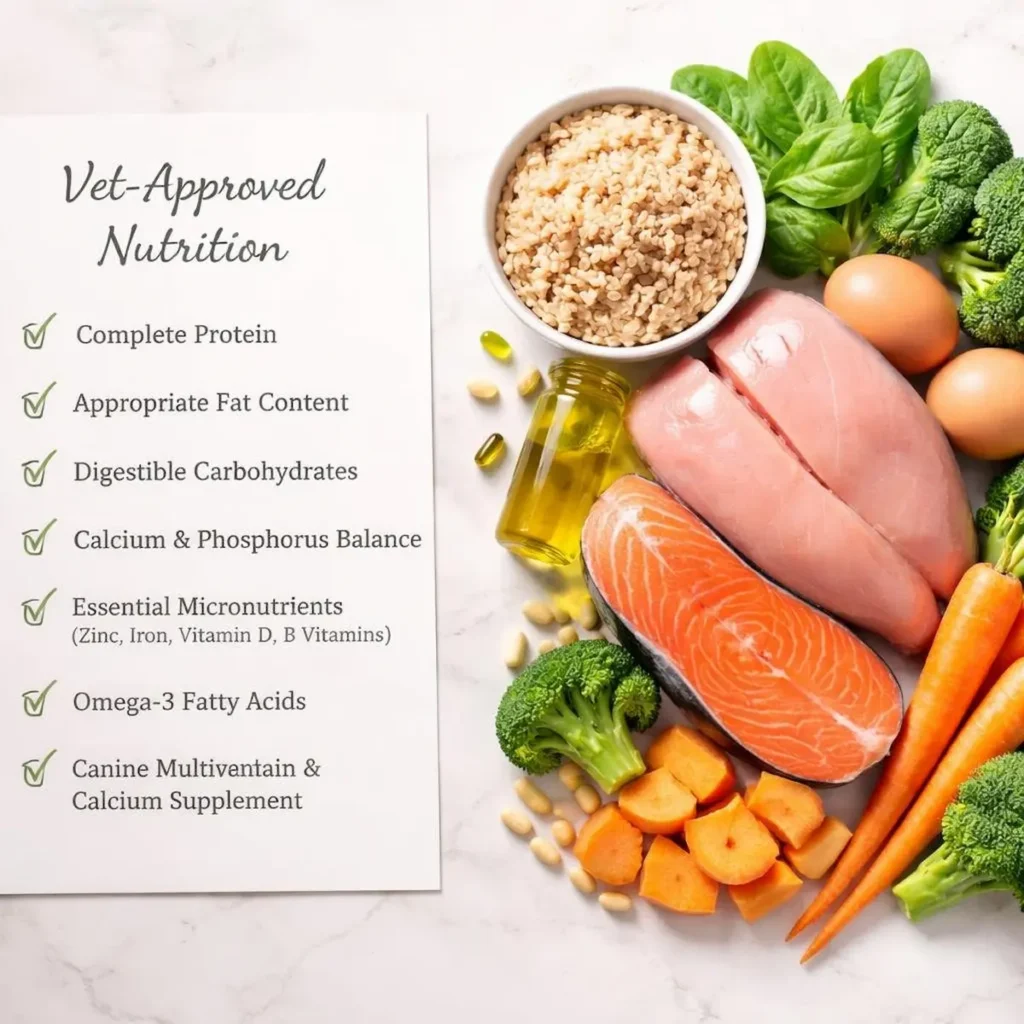
That last point isn’t optional. No whole-food homemade recipe — however carefully constructed — fully replaces the micronutrient completeness of a properly supplemented diet.
A quality canine multivitamin and a calcium source like bone meal or eggshell powder are non-negotiable additions to any long-term homemade feeding plan.
15 Vet-Approved Homemade Dog Food Recipes
Recipe 1: Classic Chicken and Rice Alternative Bowl
Rice is the traditional grain in homemade dog food — but sweet potato delivers the same digestible carbohydrate energy with significantly more nutritional value.
This recipe follows the same trusted protein-carb-vegetable framework vets recommend while upgrading the carbohydrate source.
Classic Chicken & Rice Alternative Bowl
The go-to comfort meal — shredded chicken thighs with sweet potato, green beans & pumpkin
Ingredients
2 lbs boneless, skinless chicken thighs
✦ Thighs are juicier and more nutrient-dense than breast — great for shredding
1½ cups sweet potato, cubed
steam until tender then mash lightly — beta-carotene and potassium
1 cup green beans, chopped
steam until just soft — low-calorie fiber source
½ cup carrots, grated
grated carrots cook quickly and blend into the bowl easily
½ cup plain pumpkin puree
⚠ Use 100% plain pumpkin — NOT pumpkin pie filling (contains xylitol and spices, toxic to dogs)
2 tablespoons fish oil
✦ Add after cooling — heat degrades omega-3s
Canine multivitamin + calcium supplement
✦ Add per serving at feeding time — follow product dosage for dog’s weight
Instructions
Poach chicken thighs in plain water (no salt, no seasoning) for 20 minutes until cooked through. Remove and shred finely.
Steam sweet potato cubes until completely tender. Mash lightly with a fork — no need to be perfectly smooth.
Steam green beans and grated carrots until just soft, about 5–7 minutes.
Combine shredded chicken, mashed sweet potato, green beans, carrots, and pumpkin puree. Mix well until evenly distributed.
Cool completely before storing. Add fish oil and supplements per serving at feeding time — do not mix into the whole batch.
🍗 Storage & serving tip: Portion into daily servings before refrigerating — makes it easy to grab and go. Keeps in the fridge for 4 days; freeze remaining portions for up to 2 months. A 50 lb dog typically gets about 2 cups per day, split across two meals. The “alternative bowl” name reflects that this replaces the classic plain chicken-and-rice upset-stomach meal with a more complete, nutrient-rich daily rotation.
Recipe 2: Lean Beef and Vegetable Bowl
Ground beef is one of the most accessible and nutritionally complete proteins for homemade dog food.
The key is keeping fat content in check — 90/10 lean ground beef delivers the protein and iron dogs need without the excess saturated fat that causes weight gain and digestive issues over time.
Lean Beef & Vegetable Bowl
Iron-rich ground beef with sweet potato, spinach & zucchini — a hearty everyday rotation
Ingredients
2 lbs lean ground beef (90/10)
✦ 90/10 lean-to-fat ratio keeps this low-fat — drain thoroughly after browning
1 cup sweet potato, cubed and steamed
steam until completely tender — complex carbs and potassium
1 cup spinach, chopped
✦ Vitamin K and magnesium — wilt in residual heat, no extra cooking needed
½ cup zucchini, diced
steam alongside sweet potato — hydrating and easy to digest
½ cup plain pumpkin puree
⚠ Use 100% plain pumpkin only — NOT pumpkin pie filling (contains xylitol and spices, toxic to dogs)
2 tablespoons fish oil
✦ Add after cooling per serving — heat degrades omega-3s
Canine multivitamin + calcium supplement
✦ Add per serving at feeding time — follow product dosage for dog’s weight
Instructions
Brown ground beef in a skillet over medium heat until completely cooked through. Drain all fat thoroughly — tilt the pan and spoon off, or transfer to a colander and rinse briefly with warm water.
Steam sweet potato cubes and diced zucchini together until tender, about 8–10 minutes.
Add chopped spinach on top of the hot vegetables and cover for 1–2 minutes to wilt. No extra heat needed.
Combine beef, steamed vegetables, wilted spinach, and pumpkin puree. Mix well.
Cool completely before storing. Add fish oil and supplements per serving at feeding time — not into the full batch.
🥩 Fat-draining tip: Even 90/10 beef releases a fair amount of rendered fat — don’t skip this step. Excess fat in a dog’s regular diet can contribute to pancreatitis over time, especially in smaller or less active dogs. Portion into daily servings before refrigerating. Keeps in the fridge for 4 days; freeze the rest for up to 2 months.
Recipe 3: Turkey and Pumpkin Digestive Support Bowl
Ground turkey sits at the top of the veterinary recommendation list for dogs with sensitive stomachs. It’s lean, highly digestible, and rarely triggers sensitivity reactions — making it the safest protein choice for dogs with a history of digestive issues.
Turkey & Pumpkin Digestive Support Bowl
Triple digestive support — pumpkin fiber, yogurt probiotics & gentle zucchini bulk
Ingredients
2 lbs lean ground turkey (93/7)
✦ Naturally contains taurine — supports heart health in dogs
1 cup plain pumpkin puree
⚠ Use 100% plain pumpkin only — NOT pumpkin pie filling (contains xylitol and spices, toxic to dogs)
1 cup zucchini, diced
steam until just tender — gentle fiber, high water content, easy on the gut
½ cup green beans, chopped
steam alongside zucchini — low-calorie, adds satisfying bulk
½ cup plain Greek yogurt
✦ Stir in only after the batch has fully cooled — live probiotic cultures are heat-sensitive. Use full-fat or low-fat plain, no flavoring, no sweeteners
2 tablespoons fish oil
✦ Add after cooling per serving — heat degrades omega-3s
Canine multivitamin + calcium supplement
✦ Add per serving at feeding time — follow product dosage for dog’s weight
Instructions
Brown ground turkey in a skillet over medium heat until completely cooked through. Drain any excess fat.
Steam zucchini and green beans together until just tender, about 6–8 minutes. Don’t over-steam — slight bite is fine.
Combine cooked turkey, steamed vegetables, and pumpkin puree. Mix well.
Cool completely, then stir in Greek yogurt — adding it to a hot batch will kill the live probiotic cultures.
Add fish oil and supplements per serving at feeding time — not into the full batch.
🌿 Digestive support note: This bowl works especially well for dogs with sensitive stomachs or recovering from a bout of loose stools. The three-way digestive combo — pumpkin (soluble fiber), Greek yogurt (live probiotics), and zucchini (gentle bulk) — covers both firm-stool support and gut flora balance. If your dog is lactose-sensitive, start with 2 tablespoons of yogurt and monitor. Keeps in the fridge for 4 days; freeze portions without the yogurt and stir it in fresh when thawing.
Recipe 4: Salmon and Sweet Potato Omega Bowl
Salmon is the single best whole-food omega-3 source available for dogs — and veterinary nutritionists consistently recommend rotating fish-based proteins into homemade feeding plans for their anti-inflammatory benefits.
This recipe is particularly well-suited for dogs with skin conditions, joint issues, or chronic inflammation.
Salmon & Sweet Potato Omega Bowl
Anti-inflammatory omega-3 powerhouse — flaked baked salmon with mashed sweet potato & broccoli
Ingredients
1.5 lbs fresh salmon fillet, fully cooked and deboned
⚠ Raw or undercooked salmon can carry Neorickettsia helminthoeca — the parasite responsible for Salmon Poisoning Disease, which can be fatal in dogs. Always cook to an internal temperature of 145°F (63°C). Remove all bones before mixing.
1½ cups sweet potato, steamed and mashed
steam until completely soft — complex carbs for sustained energy
1 cup broccoli, steamed and finely chopped
✦ Finely chop after steaming — easier to digest and distribute evenly through the bowl
½ cup spinach, wilted
wilt in residual heat — Vitamin K and magnesium
2 tablespoons coconut oil
✦ Add after cooling per serving — supports coat health and adds healthy medium-chain fatty acids
Canine multivitamin + calcium supplement
✦ Add per serving at feeding time — follow product dosage for dog’s weight
Instructions
Bake salmon fillet at 375°F (190°C) for 18 minutes, until flesh flakes easily and reaches an internal temperature of 145°F (63°C). Remove all bones carefully and flake into small pieces.
Steam sweet potato until completely soft. Mash with a fork — no need to be perfectly smooth.
Steam broccoli until tender. Chop finely after steaming.
Add spinach on top of hot vegetables, cover for 1–2 minutes to wilt.
Combine flaked salmon, mashed sweet potato, broccoli, and spinach. Mix gently.
Cool completely before storing. Add coconut oil and supplements per serving at feeding time.
🚨 Salmon safety — do not skip: Salmon Poisoning Disease (SPD) is caused by Neorickettsia helminthoeca, a parasite unique in its danger to dogs (cats and humans are not affected the same way). Symptoms appear within 6–10 days and can be fatal if untreated. Full cooking to 145°F (63°C) eliminates the risk entirely. Never serve raw or smoked salmon to dogs.
🐟 Bone check tip: Run your fingers along both sides of the fillet before and after baking — pin bones are easier to feel than see. For peace of mind, use tweezers to pull any remaining bones. Keeps in the fridge for 3 days (fish-based meals spoil faster than poultry — shorter window). Freeze remaining portions for up to 6 weeks.
Recipe 5: Chicken and Broccoli Immune Support Bowl
Broccoli contains sulforaphane — a naturally occurring compound that veterinary research has linked to immune function support and cancer prevention in dogs.
Combined with chicken’s complete amino acid profile, this recipe is one of the most genuinely therapeutic on the list.
Chicken & Broccoli Immune Support Bowl
Sulforaphane from lightly steamed broccoli + complete amino acids from baked chicken breast
Ingredients
2 lbs boneless chicken breast
✦ Breast is leaner than thigh — complete amino acid profile, ideal for immune support focus
2 cups broccoli, steamed and finely chopped
✦ Steam until just tender — sulforaphane (the key immune-supportive compound) degrades significantly with excess heat. Bright green = done
1 cup sweet potato, mashed
steam and mash — complex carbs for sustained energy, beta-carotene
½ cup carrots, grated
grated raw or lightly steamed — blends seamlessly into the bowl
2 tablespoons fish oil
✦ Add after cooling per serving — heat degrades omega-3s
Canine multivitamin + calcium supplement
✦ Add per serving at feeding time — follow product dosage for dog’s weight
Instructions
Bake chicken breast at 375°F (190°C) for 22 minutes, until cooked through. Let cool slightly, then shred finely.
Steam broccoli until just tender and still bright green — about 4–5 minutes. Do not overcook; sulforaphane degrades with excess heat. Chop finely after steaming.
Steam sweet potato until completely soft. Mash with a fork.
Combine shredded chicken, broccoli, mashed sweet potato, and grated carrots. Mix well.
Cool completely before storing. Add fish oil and supplements per serving at feeding time — not into the full batch.
🥦 Sulforaphane tip: Sulforaphane is broccoli’s most potent immune-supportive compound — and it’s surprisingly heat-sensitive. The window is short: steam just until bright green and tender (4–5 min), then pull it off heat. Overdone, grey-green broccoli has lost most of its benefit. Finely chopping after steaming also improves bioavailability. Keeps in the fridge for 4 days; freeze remaining portions for up to 2 months.
Recipe 6: Beef and Organ Meat Micronutrient Bowl
Organ meat is one of the most nutritionally important components of a genuinely balanced homemade diet — and one of the most commonly skipped.
Vets and canine nutritionists consistently emphasize that muscle meat alone cannot provide the full micronutrient spectrum dogs need. Keep organ meat at approximately 10% of total recipe volume.
Beef & Organ Meat Micronutrient Bowl
Nutrient-dense liver boost — Vitamins A, B12, iron, zinc & copper that muscle meat simply can’t match
Ingredients
1.5 lbs lean ground beef
brown and drain fat thoroughly — the base protein for this bowl
¼ lb beef liver, finely chopped
✦ Keep to 5–10% of total meal weight — liver is extraordinarily nutrient-dense; too much causes Vitamin A toxicity over time. This ratio is the sweet spot.
1 cup butternut squash, steamed and mashed
steam until completely soft — potassium and digestive fiber
1 cup green beans, chopped
steam until just tender — low-calorie fiber, adds satisfying bulk
½ cup spinach, wilted
wilt in residual heat — Vitamin K and magnesium
2 tablespoons fish oil
✦ Add after cooling per serving — heat degrades omega-3s
Canine multivitamin + calcium supplement
✦ Add per serving at feeding time — follow product dosage for dog’s weight
Instructions
Cook finely chopped liver in a lightly oiled pan over medium heat for 3–4 minutes per side until fully cooked through. Set aside.
Brown ground beef in the same pan until completely cooked. Drain all fat thoroughly.
Steam butternut squash until completely soft. Mash with a fork.
Steam green beans until just tender. Add spinach on top, cover 1–2 minutes to wilt in residual heat.
Combine beef, liver, mashed squash, green beans, and spinach. Mix well.
Cool completely before storing. Add fish oil and supplements per serving at feeding time.
🫀 Liver dosing — the 10% rule: Beef liver is one of the most micronutrient-dense foods on earth — Vitamins A, B12, iron, zinc, and copper at concentrations muscle meat can’t come close to. That’s precisely why portion control matters: excess Vitamin A accumulates in the body and can cause toxicity over weeks to months of overfeeding. The ¼ lb in this batch represents roughly 5–8% of total meal weight, which sits well within the safe and beneficial range.
🔄 Rotation note: Serve this bowl 2–3 times per week rather than daily — alternating with non-organ recipes gives the body time to process the concentrated micronutrients without risk of accumulation. Keeps in the fridge for 4 days; freeze remaining portions for up to 2 months.
Recipe 7: Lamb and Root Vegetable Novel Protein Bowl
Novel protein diets are a standard veterinary recommendation for dogs with diagnosed food allergies or chronic skin and digestive issues.
Lamb qualifies as a novel protein for most dogs because commercial dog food historically used chicken and beef so heavily — lamb exposure is comparatively rare, making immune reactions significantly less likely.
Lamb & Root Vegetable Novel Protein Bowl
Ideal for food-sensitive dogs — lamb’s novelty sidesteps common protein triggers while L-carnitine supports heart health
Ingredients
1.5 lbs ground lamb
✦ A true novel protein for most dogs — less exposure means lower chance of immune-mediated food reactions. Also a natural source of L-carnitine for heart and fat metabolism
1 cup sweet potato, cubed and steamed
steam until completely tender — complex carbs, beta-carotene, potassium
1 cup carrots, sliced and steamed
steam alongside sweet potato — beta-carotene and natural sweetness dogs love
½ cup green beans, chopped
steam until just tender — low-calorie fiber, gentle on sensitive stomachs
½ cup plain pumpkin puree
⚠ Use 100% plain pumpkin only — NOT pumpkin pie filling (contains xylitol and spices, toxic to dogs)
2 tablespoons fish oil
✦ Add after cooling per serving — heat degrades omega-3s
Canine multivitamin + calcium supplement
✦ Add per serving at feeding time — follow product dosage for dog’s weight
Instructions
Brown ground lamb over medium heat until completely cooked through. Drain fat thoroughly — lamb renders more fat than lean beef, so don’t skip this step.
Steam sweet potato and carrots together until completely tender, about 10–12 minutes.
Steam green beans separately until just tender, about 5–6 minutes.
Combine lamb, all vegetables, and pumpkin puree. Mix well.
Cool completely before storing. Add fish oil and supplements per serving at feeding time — not into the full batch.
🐑 Novel protein explained: “Novel protein” means a protein source the dog hasn’t been regularly exposed to — so the immune system has no prior reaction history against it. For dogs with suspected food sensitivities to chicken or beef (the two most common triggers), lamb is a go-to alternative. For this to work as an elimination-style meal, keep the ingredient list clean: no mixing with proteins the dog already eats frequently.
💧 Fat note: Ground lamb is naturally higher in fat than 90/10 beef or chicken breast — draining thoroughly after browning is important, especially for dogs prone to weight gain or pancreatitis. Keeps in the fridge for 4 days; freeze remaining portions for up to 2 months.
Recipe 8: Turkey and Egg Protein-Boost Bowl
Eggs are one of the most bioavailable protein sources available — veterinary nutritionists rate egg protein among the highest quality proteins measurable by biological value.
Adding eggs to a turkey base creates a protein-dense meal that’s particularly well-suited for active dogs, working dogs, or dogs recovering from illness.
Turkey & Egg Protein-Boost Bowl
Double high-quality protein — lean turkey plus eggs for choline that supports brain and liver health
Ingredients
1.5 lbs lean ground turkey
✦ Leaner than ground beef — great base protein with lower fat content
3 eggs, scrambled (cooked, no butter or oil)
✦ Choline in egg yolks supports brain function, liver health, and cell membrane integrity
1 cup sweet potato, mashed
steam until completely tender then mash — complex carbs for sustained energy
1 cup spinach, wilted
wilt in residual heat after cooking — iron, folate, and antioxidants
½ cup zucchini, diced and steamed
steam until just tender — low-calorie, hydrating, gentle on digestion
2 tablespoons fish oil
✦ Add after cooling per serving — heat degrades omega-3s
Canine multivitamin + calcium supplement
✦ Add per serving at feeding time — follow product dosage for dog’s weight
Instructions
Brown ground turkey over medium heat until completely cooked through. Drain fat.
Scramble eggs separately in a dry pan with no butter or oil until just cooked through — avoid any added fat.
Steam sweet potato until completely tender, then mash. Steam zucchini separately until just tender, about 4–5 minutes.
Wilt spinach by folding it into the warm turkey — residual heat is enough, no extra cooking needed.
Combine turkey, eggs, mashed sweet potato, spinach, and zucchini. Mix well.
Cool completely before storing. Add fish oil and supplements per serving at feeding time — not into the full batch.
🥚 Why eggs matter here: Eggs are one of the most bioavailable protein sources available — the amino acid profile is nearly perfect for dogs. The yolk is where the real nutrition lives: choline supports cognitive function and liver fat metabolism, while selenium and B12 round out what turkey alone doesn’t fully cover. Whole cooked eggs (yolk included) are ideal; egg whites alone are not recommended as the sole protein source.
🦃 Storage: Keeps in the fridge for up to 4 days. Portion into meal-sized containers before refrigerating — this makes it easy to grab, add fish oil and supplements, and serve without digging into the full batch each time. Freeze extra portions for up to 2 months.
Recipe 9: Chicken and Lentil Balanced Bowl
Lentils are a grain-free carbohydrate and plant protein source that veterinary nutritionists consider safe when used as a supporting ingredient rather than a primary carbohydrate.
This recipe keeps lentils at approximately 15% of total volume — consistent with current nutritional guidance following the DCM investigation.
Chicken & Lentil Balanced Bowl
Prebiotic fiber from lentils + taurine from chicken thighs — a gut-friendly, heart-supportive combination
Ingredients
2 lbs boneless chicken thighs
✦ Thighs contain more taurine than breast — important for heart health
½ cup green lentils, rinsed and cooked separately
✦ Cook until completely soft in plain water — prebiotic fiber supports gut microbiome. Rotate with lentil-free meals per FDA/DCM guidance (see tip)
1 cup sweet potato, cubed and steamed
steam until completely tender — complex carbs and beta-carotene
1 cup kale, finely chopped and steamed
✦ Chop finely before steaming — improves digestibility. Vitamins A, C, and K
½ cup zucchini, diced and steamed
steam until just tender — hydrating, low-calorie filler
2 tablespoons fish oil
✦ Add after cooling per serving — heat degrades omega-3s
Canine multivitamin + calcium supplement
✦ Add per serving at feeding time — follow product dosage for dog’s weight
Instructions
Cook lentils in plain water until completely soft. Drain and set aside.
Poach chicken thighs in plain water until cooked through. Shred finely.
Steam sweet potato, kale, and zucchini until tender.
Combine all ingredients and mix well.
Cool completely before storing. Add fish oil and supplements per serving at feeding time.
⚠️ Lentil rotation (FDA/DCM): The FDA flagged a potential link between legume-heavy diets and dilated cardiomyopathy (DCM) in dogs. Research is ongoing, but as a precaution — rotate this recipe with lentil-free meals throughout the week rather than feeding daily. Fridge: 4 days. Freezer: up to 2 months.
Recipe 10: Sardine and Vegetable Anti-Inflammatory Bowl
Sardines are the most omega-3-dense, most affordable, and most preparation-free protein on this list — and they’re consistently recommended by veterinary nutritionists for their anti-inflammatory properties.
This recipe takes 15 minutes and delivers exceptional nutritional value.
Sardine & Vegetable Anti-Inflammatory Bowl
Two omega-3 sources in one bowl — sardines deliver DHA, EPA, and Vitamin D alongside lean turkey protein
Ingredients
2 cans sardines in water, no salt added (drained)
✦ Must be in water, no salt — sardines in oil or brine are too high in sodium. Bones are safe and soft enough to mash; they add calcium
1 lb lean ground turkey
supplements the protein base — sardines alone don’t yield enough volume
1 cup sweet potato, steamed and mashed
steam until completely tender — complex carbs and beta-carotene
1 cup spinach, wilted
wilt in residual heat — no extra cooking needed
½ cup plain pumpkin puree
⚠ Use 100% plain pumpkin only — NOT pumpkin pie filling (contains xylitol and spices, toxic to dogs)
Canine multivitamin + calcium supplement
✦ Add per serving at feeding time — follow product dosage for dog’s weight
Instructions
Cook ground turkey through completely. Drain fat.
Drain sardines and mash thoroughly — bones included, they’re soft and calcium-rich.
Steam sweet potato until tender, then mash. Wilt spinach in residual heat.
Combine all ingredients including pumpkin puree. Mix well.
Cool completely before storing. Add supplements per serving at feeding time.
🐟 Sardine tip: The omega-3s (DHA + EPA) in sardines are already in their most bioavailable form — no conversion needed unlike plant-based sources. Because sardines are naturally high in omega-3s, skip the fish oil supplement with this recipe to avoid over-supplementation. Fridge: 3 days (fish-based meals keep slightly less long). Freezer: up to 2 months.
Recipe 11: Beef and Bone Broth Gut-Health Bowl
Bone broth deserves its veterinary-recommended status.
Gelatin from bone broth directly supports gut lining integrity — a critical factor in overall health that affects everything from nutrient absorption to immune function. This recipe uses bone broth as both a cooking liquid and a nutritional component.
Beef & Bone Broth Gut-Health Bowl
Gelatin and collagen from bone broth soothe the gut lining — double fiber from pumpkin and green beans
Ingredients
2 lbs lean ground beef
90/10 or leaner — drain fat thoroughly after browning
1 cup homemade bone broth, unsalted
⚠ Must be homemade or certified dog-safe — store-bought broths almost always contain onion, garlic, or excess sodium, all toxic to dogs
1 cup zucchini, diced
simmers directly in the broth — absorbs flavor while staying tender
1 cup green beans, chopped
chop into small pieces — low-calorie, soluble fiber for gut support
½ cup plain pumpkin puree
⚠ Use 100% plain pumpkin only — NOT pumpkin pie filling (contains xylitol and spices, toxic to dogs)
2 tablespoons fish oil
✦ Add after cooling per serving — heat degrades omega-3s
Canine multivitamin + calcium supplement
✦ Add per serving at feeding time — follow product dosage for dog’s weight
Instructions
Brown ground beef and drain fat thoroughly.
Add bone broth, zucchini, and green beans to the pan. Simmer on low for 5 minutes until vegetables are just tender.
Stir in pumpkin puree and mix well.
Cool completely before storing. Add fish oil and supplements per serving at feeding time.
Optional: add a small splash of reserved bone broth per bowl when serving for extra gut-soothing benefit.
🍖 Bone broth note: Only use unsalted homemade broth or a product specifically labeled for dogs — onion and garlic are standard ingredients in human broths and are toxic to dogs even in small amounts. Fridge: 4 days. Freezer: up to 2 months. Freeze extra broth in ice cube trays for easy per-serving top-ups.
Recipe 12: Turkey and Turmeric Anti-Inflammatory Bowl
Turmeric’s curcumin compound has been studied extensively in veterinary contexts for its ability to reduce joint inflammation, support digestive health, and provide antioxidant protection.
This recipe maximizes curcumin bioavailability by pairing turmeric with black pepper — a combination that increases absorption by up to 2000%.
Turkey & Turmeric Anti-Inflammatory Bowl
Curcumin from turmeric reduces systemic inflammation — black pepper activates absorption for maximum benefit
Ingredients
2 lbs lean ground turkey
browned and drained — drain fat thoroughly after cooking
1 cup sweet potato, mashed
steamed then mashed — excellent source of beta-carotene and fiber
1 cup kale, finely chopped and steamed
chop finely before steaming — easier to digest, broad vitamin spectrum
½ cup plain pumpkin puree
⚠ Use 100% plain pumpkin only — NOT pumpkin pie filling (contains xylitol and spices, toxic to dogs)
¼ teaspoon turmeric
✦ Mix into pumpkin puree before combining — curcumin reduces systemic inflammation
A pinch of black pepper
✦ Mix with turmeric into pumpkin — piperine activates curcumin absorption by up to 2,000%
1 tablespoon coconut oil
✦ Add after cooling per serving — MCTs support brain function and coat health
2 tablespoons fish oil
✦ Add after cooling per serving — heat degrades omega-3s
Canine multivitamin + calcium supplement
✦ Add per serving at feeding time — follow product dosage for dog’s weight
Instructions
Brown ground turkey and drain fat thoroughly. Set aside to cool slightly.
Mix turmeric and black pepper directly into pumpkin puree before adding to the bowl — this ensures even distribution throughout the meal.
Steam sweet potato until soft. Mash and set aside. Steam kale until just tender.
Combine browned turkey, mashed sweet potato, steamed kale, and spiced pumpkin puree. Mix gently until evenly combined.
Cool completely before storing. Add coconut oil, fish oil, and supplements per serving at feeding time.
🌿 Turmeric note: Always pair turmeric with a pinch of black pepper — piperine in black pepper dramatically increases curcumin absorption. Keep portions small; ¼ teaspoon per batch is the safe upper limit for dogs. Fridge: 4 days. Freezer: up to 2 months. Add oils and supplements fresh at each serving — never pre-mix into the stored batch.
Recipe 13: Chicken and Blueberry Antioxidant Bowl
Blueberries are one of the most antioxidant-dense foods available for dogs — veterinary researchers have specifically studied their anthocyanins for cognitive support in aging dogs.
This recipe combines that antioxidant power with chicken’s complete protein profile for a genuinely impressive nutritional result.
Chicken & Blueberry Antioxidant Bowl
Anthocyanins from blueberries boost immunity and brain health — taurine from chicken supports a strong, healthy heart
Ingredients
2 lbs boneless chicken thighs
poached and shredded finely once cooled
½ cup fresh or frozen blueberries
✦ Rich in anthocyanins — supports cognitive function and immune health
1 cup sweet potato, mashed
steamed then mashed — excellent source of beta-carotene and fiber
1 cup spinach, wilted
wilt briefly in residual heat — do not overcook to preserve Vitamin K
½ cup carrots, grated
grated fine — easier to digest, supports eye health
2 tablespoons fish oil
✦ Add after cooling per serving — heat degrades omega-3s
Canine multivitamin + calcium supplement
✦ Add per serving at feeding time — follow product dosage for dog’s weight
Instructions
Poach chicken thighs in plain water until fully cooked. Shred finely once cooled.
Steam sweet potato until soft. Mash and set aside.
Wilt spinach using residual heat only — do not cook over direct heat to preserve nutrients.
Combine shredded chicken, mashed sweet potato, wilted spinach, blueberries, and grated carrots. Mix gently.
Cool completely before storing. Add fish oil and supplements per serving at feeding time.
🫐 Blueberry note: Both fresh and frozen blueberries work equally well — frozen are often more budget-friendly with no difference in nutritional value. Fridge: 4 days. Freezer: up to 2 months. Portion into meal-sized containers before freezing for easy daily prep.
Recipe 14: White Fish and Cauliflower Hypoallergenic Bowl
White fish — cod, tilapia, or haddock — is one of the most hypoallergenic proteins in veterinary dietary management and is commonly recommended for dogs on elimination diets or those with multiple protein sensitivities.
Cauliflower replaces starchier carbohydrates as a gentle, low-GI vegetable base.
White Fish & Cauliflower Hypoallergenic Bowl
Gentle on sensitive stomachs — low-allergen protein with non-starchy vegetables for clean, easy digestion
Ingredients
1.5 lbs white fish fillets
cod, tilapia, or haddock — baked and flaked, all bones removed
1.5 cups cauliflower, steamed and mashed
steam until very soft before mashing — easier to digest when well-cooked
1 cup zucchini, diced
steamed until tender — mild flavor, gentle on sensitive stomachs
½ cup spinach, wilted
wilt briefly in residual heat — do not overcook to preserve nutrients
½ cup plain pumpkin puree
⚠ Use 100% plain pumpkin only — NOT pumpkin pie filling (contains xylitol and spices, toxic to dogs)
2 tablespoons fish oil
✦ Add after cooling per serving — heat degrades omega-3s
Canine multivitamin + calcium supplement
✦ Add per serving at feeding time — follow product dosage for dog’s weight
Instructions
Bake fish fillets at 375°F (190°C) for 18 minutes until fully cooked. Remove all bones carefully and flake into small pieces.
Steam cauliflower until very soft. Mash thoroughly and set aside.
Steam zucchini until tender. Wilt spinach using residual heat only — do not cook over direct heat.
Combine flaked fish, mashed cauliflower, zucchini, wilted spinach, and pumpkin puree. Mix gently.
Cool completely before storing. Add fish oil and supplements per serving at feeding time.
🐟 Bone safety note: Always check fish fillets thoroughly for pin bones before and after baking — run your finger along the flesh to feel for any remaining bones. Even small bones can be a choking hazard. Fridge: 3–4 days. Freezer: up to 2 months. Portion into meal-sized containers before freezing.
Recipe 15: Three-Protein Balanced Weekly Rotation Bowl
The most nutritionally comprehensive recipe on the list — and the one veterinary nutritionists would arguably endorse most enthusiastically.
Rotating multiple proteins in a single batch delivers the broadest amino acid profile, the most diverse micronutrient spectrum, and the most balanced overall diet of any single-protein recipe.
Three-Protein Balanced Weekly Rotation Bowl
Broadest essential amino acid coverage from three complementary proteins — dual omega-3 sources from sardines and fish oil
Ingredients
1 lb boneless chicken thighs
poached and shredded finely once cooled
½ lb lean ground beef
90/10 or leaner — drain fat thoroughly after browning
1 can sardines in water, no salt (drained and mashed)
⚠ Must be packed in water with no added salt — oil-packed or salted sardines are unsafe for dogs
1 cup sweet potato, mashed
steamed then mashed — excellent source of beta-carotene and fiber
1 cup green beans, chopped
chop into small pieces — low-calorie, soluble fiber for gut support
½ cup spinach, wilted
wilt briefly in residual heat — do not overcook to preserve Vitamin K
½ cup plain pumpkin puree
⚠ Use 100% plain pumpkin only — NOT pumpkin pie filling (contains xylitol and spices, toxic to dogs)
2 tablespoons fish oil
✦ Add after cooling per serving — heat degrades omega-3s
Canine multivitamin + calcium supplement
✦ Add per serving at feeding time — follow product dosage for dog’s weight
Instructions
Brown ground beef and drain fat thoroughly. Set aside.
Poach chicken thighs in plain water until fully cooked. Shred finely once cooled.
Steam sweet potato until soft and mash. Steam green beans and wilt spinach using residual heat only.
Combine browned beef and shredded chicken with all vegetables and mashed sweet potato. Mix gently.
Stir in mashed sardines and pumpkin puree until evenly distributed throughout the bowl.
Cool completely before storing. Add fish oil and supplements per serving at feeding time.
🐟 Sardine note: Always choose sardines packed in water with zero added salt — check the label carefully as some “in water” varieties still contain sodium. Mash sardines thoroughly including any soft bones, which are safe and add extra calcium. Fridge: 3–4 days. Freezer: up to 2 months. This recipe makes a larger batch — portion into daily meal containers before freezing.
Quick Reference: All 15 Recipes
| Recipe | Protein | Key Benefit | Best For |
| Chicken & Sweet Potato | Chicken | Digestible baseline meal | All dogs, beginners |
| Lean Beef & Vegetable | Beef | Iron & immune support | All dogs |
| Turkey & Pumpkin | Turkey | Digestive health | Sensitive stomachs |
| Salmon & Sweet Potato | Salmon | Anti-inflammatory, coat | Skin & joint issues |
| Chicken & Broccoli | Chicken | Immune function support | All dogs, immune health |
| Beef & Organ Meat | Beef + Liver | Micronutrient density | Nutritional completeness |
| Lamb & Root Vegetable | Lamb | Novel protein allergy diet | Food-sensitive dogs |
| Turkey & Egg | Turkey + Egg | High bioavailable protein | Active, working dogs |
| Chicken & Lentil | Chicken | Prebiotic gut support | Gut health rotation |
| Sardine & Vegetable | Sardine | Omega-3 anti-inflammatory | Coat, joints, budget |
| Beef & Bone Broth | Beef | Gut lining repair | Leaky gut, IBD |
| Turkey & Turmeric | Turkey | Joint inflammation | Senior, arthritic dogs |
| Chicken & Blueberry | Chicken | Cognitive & antioxidant | Senior dogs |
| White Fish & Cauliflower | White Fish | Hypoallergenic baseline | Elimination diets |
| Three-Protein Rotation | Chicken + Beef + Sardine | Maximum nutritional diversity | Long-term balanced feeding |
Supplementation — The Non-Negotiable Part
This section exists because it’s the most commonly skipped part of homemade dog food — and skipping it is where genuine nutritional deficiencies develop over time.
Every recipe above requires these additions:
Canine multivitamin — fills micronutrient gaps that whole foods alone cannot cover. Look for formulas that include Vitamin D, zinc, iodine, and selenium.
Calcium source — homemade diets without raw bone are consistently low in calcium. Options include:
- Bone meal powder — most complete calcium source
- Eggshell powder — approximately 1/2 teaspoon per pound of food
- Canine calcium supplement
Fish oil — omega-3 fatty acids from fish oil reduce inflammation and support coat, joint, and brain health. Standard dosage is approximately 300mg EPA/DHA per 30 lbs of body weight daily.
Optional but beneficial:
- Probiotics — support microbiome health
- Digestive enzymes — improve nutrient absorption, particularly useful for senior dogs
- Vitamin E — antioxidant support, particularly when fish oil is used regularly
How to Transition to Homemade Food
Switching too fast is the most common reason dogs have negative reactions to new homemade diets — not because the food itself is the problem, but because the digestive system needs time to adjust.
Safe transition timeline:
| Week 1 | 25% homemade, 75% current food |
| Week 2 | 50/50 |
| Week 3 | 75% homemade, 25% current food |
| Week 4 | Full homemade diet |
Monitor stool quality, energy levels, and appetite throughout. Any significant digestive upset during transition warrants slowing down the process.
Storage Guidelines
All 15 recipes follow the same storage framework:
- Fridge: Airtight glass container for up to 4 days
- Freezer: Individual portions frozen flat for up to 3 months
- Thawing: Fridge overnight — never at room temperature
- Serving: Allow refrigerated food to sit 10 to 15 minutes before serving, or warm gently
Final Thoughts
Homemade dog food done right isn’t complicated — but it does require intention. Following established nutritional guidelines, rotating proteins, including organ meat, and supplementing consistently are what separate a genuinely balanced homemade diet from one that looks healthy on the surface but quietly falls short over time.
The 15 recipes above are built on exactly those principles. Start with one or two, get comfortable with the routine, and build a rotation from there.
A vet check-in after 60 to 90 days on a new homemade diet is always a smart move — blood panels tell the full story of how well the diet is performing nutritionally.
The dog is counting on whoever fills that bowl to get it right. These recipes are a solid place to start. 🙂