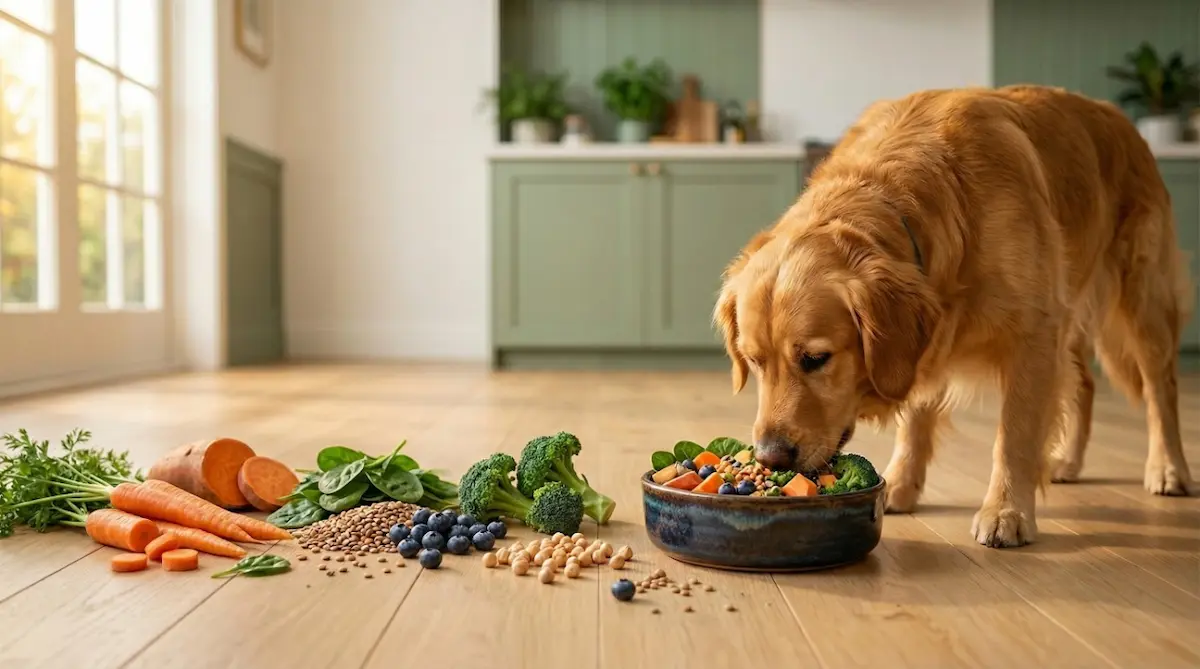
Plant-based eating isn’t just a human trend anymore. Vegan dog food recipes have moved firmly into the mainstream — and the science backing them is more solid than the skeptics would like to admit.
Dogs are omnivores, not obligate carnivores like cats, which means they can absolutely thrive on a well-planned plant-based diet. The emphasis, as always, is on well-planned.
These 10 vegan dog food recipes are built around whole, nutrient-dense plant ingredients that cover dogs’ core nutritional needs — protein, healthy fats, complex carbohydrates, and essential micronutrients.
Every recipe is dog-safe, genuinely filling, and designed to make the transition to plant-based feeding as smooth as possible. FYI, a few of these smell good enough that the human in the kitchen may have to resist tasting them. That’s not a joke.
A vet check before switching to a fully vegan diet is non-negotiable — but for dog parents curious about plant-based options, this is the place to start.
10 Vegan Dog Food Recipes: Plant-Based Meals Dogs Actually Love
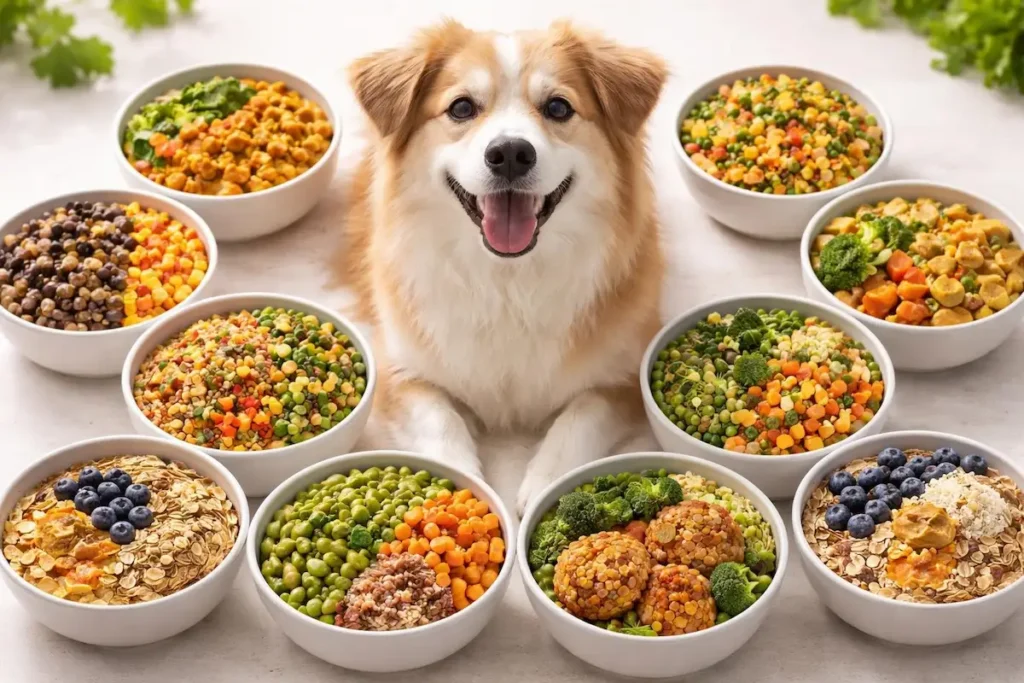
1. Lentil & Sweet Potato Power Bowl
Lentils are the MVP of vegan dog food recipes — high in plant-based protein, rich in fiber, and deeply satisfying for dogs that tend to vacuum their bowl and immediately look for more.
Paired with sweet potato, this is a warm, nutrient-dense meal that works as a complete base recipe.
Lentil & Sweet Potato Power Bowl
Protein-rich lentils + beta-carotene from sweet potato — a hearty plant-based bowl for all breed sizes
Ingredients
1 cup dry green or brown lentils, rinsed
source of lysine and essential amino acids — rinse well to remove any debris
2 medium sweet potatoes, peeled and cubed
delivers beta-carotene and sustained energy — peel thoroughly before cubing
1 cup chopped carrots
natural source of vitamins A and K — chop uniformly for even cooking
1 cup frozen peas
added in the last 5 minutes — retains texture and nutrients
4 cups water or low-sodium vegetable broth
⚠ If using vegetable broth, verify it contains no onion, garlic, leeks, or chives — all are toxic to dogs. Plain water is the safest choice.
1 tablespoon coconut oil
✦ Adds healthy fat for coat health and aids fat-soluble vitamin absorption
Instructions
Combine lentils, cubed sweet potato, and carrots in a large pot. Cover with water or broth.
Bring to a boil over medium-high heat, then reduce to a gentle simmer. Cook for 25–30 minutes until lentils are fully soft and sweet potato is tender.
Stir in frozen peas and coconut oil in the last 5 minutes of cooking.
For smaller dogs, mash slightly for a softer texture. Leave chunky for larger breeds.
Cool completely before serving or storing. Never serve hot.
🌿 Storage: Refrigerate for up to 4 days or freeze in portioned containers for up to 2 months. Portion size should match your dog’s weight — consult your vet when transitioning to a homemade diet.
2. Chickpea & Pumpkin Stew
Chickpeas are an underrated protein source for dogs — high in protein, fiber, and folate, with a mild flavor that most dogs accept readily.
This stew is gentle on the digestive system, making it a great starting recipe for dogs new to plant-based eating.
Chickpea & Pumpkin Stew
Pumpkin fiber for gut health + plant protein from chickpeas — ideal for dietary transitions
Ingredients
1 can (15 oz) plain chickpeas, drained and rinsed thoroughly
✦ Rinse very well under running water — reduces digestive gas significantly
1 cup plain canned pumpkin
⚠ Use 100% plain pumpkin only — NOT pumpkin pie filling (contains xylitol and spices, toxic to dogs)
1 cup brown rice, cooked
stirred in at the end — cook separately beforehand for best texture
1 cup chopped zucchini
simmers until soft — low-calorie and gentle on digestion
3 cups water
plain water only — no broth substitutes for this recipe
Instructions
Combine chickpeas, pumpkin, zucchini, and water in a pot. Stir to mix evenly.
Simmer over medium heat for 20 minutes until zucchini is soft and chickpeas are very tender.
Stir in cooked brown rice and mix well.
Mash chickpeas slightly with a fork or spoon to improve digestibility.
Cool completely before serving or storing. Never serve hot.
🎃 Gut health note: Pumpkin fiber helps regulate digestion and is especially helpful during dietary transitions. Ensure chickpeas are fully cooked and well-rinsed to minimize gas. Fridge: 4 days. Freezer: up to 2 months.
3. Quinoa & Vegetable Medley
Quinoa is one of the most nutritionally complete plant foods available — it’s a rare complete protein, containing all nine essential amino acids.
For vegan dog food recipes, this makes it genuinely valuable as a base ingredient. Dogs digest cooked quinoa well, and the mild flavor pairs easily with a range of vegetables.
Quinoa & Vegetable Medley
Complete amino acid profile from quinoa + skin-supporting olive oil — light and nutrient-dense
Ingredients
1 cup dry quinoa, rinsed thoroughly
⚠ Must be rinsed very well before cooking — saponins (natural compounds on the outer coat) can irritate dogs’ digestive systems
1 cup chopped butternut squash
steamed until tender — rich in vitamin A and naturally sweet
1 cup chopped green beans
steamed alongside squash — low-calorie and high in fiber
1 cup shredded spinach
✦ Added off heat — residual warmth wilts it gently without destroying nutrients
2 tablespoons olive oil
✦ Drizzle in after cooling — provides oleic acid and supports skin and coat health
3 cups water
used to cook quinoa — plain water only, no broth substitutes
Instructions
Rinse quinoa thoroughly under cold running water for at least 1 minute before cooking.
Cook quinoa in 3 cups water according to package instructions (typically 15 minutes on low heat after boiling).
While quinoa cooks, steam butternut squash and green beans until fully tender.
Combine cooked quinoa and steamed vegetables. Stir in shredded spinach — residual heat will wilt it naturally.
Drizzle with olive oil and mix well. Cool completely before serving or storing.
🌾 Saponin note: Quinoa’s natural outer coating contains saponins that can upset dogs’ stomachs — always rinse under running water until water runs clear before cooking. Fridge: 4 days. Freezer: up to 2 months.
4. Black Bean & Brown Rice Bowl
Simple, filling, and budget-friendly — this recipe is the weeknight staple of vegan dog food. Black beans are rich in protein, iron, and antioxidants, and when cooked from scratch or thoroughly rinsed from a can, they’re well-tolerated by most dogs.
Black Bean & Brown Rice Bowl
Plant-based omega-3 from flaxseed oil + vitamins C and K from broccoli — hearty and filling
Ingredients
1 can (15 oz) plain black beans, drained and rinsed
✦ Rinse thoroughly under running water — removes excess sodium and reduces gas
1 cup brown rice, cooked
cook separately beforehand — stirred in at the end for best texture
1 cup chopped carrots
simmered first — chop uniformly so they soften evenly alongside broccoli
1 cup frozen corn, plain — no additives
⚠ Plain frozen corn only — avoid any seasoned, buttered, or canned varieties with salt or preservatives
1 cup chopped broccoli
⚠ Keep portions moderate — broccoli is safe in small amounts but can cause digestive upset in large quantities
3 cups water
plain water only — used for simmering vegetables
1 tablespoon flaxseed oil
✦ Stir in after cooling — heat degrades omega-3 (ALA) content. Excellent plant-based source of essential fatty acids.
Instructions
Simmer carrots and broccoli in 3 cups water over medium heat for 10–12 minutes until fully soft.
Add black beans and frozen corn. Cook for a further 5 minutes until heated through.
Stir in cooked brown rice and mix well to combine.
Remove from heat. For smaller dogs, mash lightly with a fork or spoon.
Cool completely, then stir in flaxseed oil per serving at feeding time.
🌿 Flaxseed oil note: Always add flaxseed oil after cooling — heat destroys its omega-3 (ALA) content. Store oil separately in the fridge. Meal fridge life: 4 days. Freezer: up to 2 months. Add oil fresh at each serving.
5. Tofu & Vegetable Scramble
Tofu is a versatile, plant-based protein that dogs generally enjoy — especially when cooked to a soft, crumbly texture.
This recipe is inspired by a human scramble but stripped of all seasoning, garlic, and onion. The result is a protein-packed, easily digestible meal. 🙂
Tofu & Vegetable Scramble
Complete amino acids + calcium and iron from tofu — a pan-cooked scramble dogs love
Ingredients
1 block (14 oz) firm tofu, pressed and crumbled
⚠ Use firm or extra-firm tofu only — silken tofu has too much moisture and a texture dogs tend to reject
1 cup diced sweet potato, cooked
cook beforehand by steaming or boiling — adds natural sweetness and beta-carotene
1 cup chopped spinach
✦ Stirred in off heat — residual warmth wilts it gently without losing nutrients
1 cup grated carrot
grated finely for easy digestion — added to pan with other vegetables
1 cup frozen peas
no need to thaw — added directly to pan in the final cook
2 tablespoons coconut oil
✦ Used for cooking — provides medium-chain fatty acids that support coat health
Instructions
Press tofu for at least 15 minutes to remove excess moisture, then crumble into small pieces.
Heat coconut oil in a large pan over medium heat. Add crumbled tofu and cook for 5–7 minutes, stirring occasionally, until lightly golden.
Add cooked sweet potato, grated carrot, and frozen peas. Cook for a further 3–4 minutes until heated through.
Remove from heat and stir in chopped spinach — residual heat will wilt it naturally.
Cool completely before serving or storing. Never serve hot.
🟫 Tofu tip: The longer you press the tofu, the better it browns and holds texture in the pan — 30 minutes pressing gives the best scramble. Fridge: 4 days. Freezer: up to 2 months.
6. Oat & Pumpkin Breakfast Bowl
A lighter, easily digestible recipe that works particularly well as a morning meal for dogs with sensitive stomachs.
Oats are a wonderful grain for dogs — gentle, fiber-rich, and genuinely soothing to the digestive tract. IMO this is the most underrated recipe on the list.
Oat & Pumpkin Breakfast Bowl
Soft, warming, and easy to digest — ideal for senior dogs or those recovering from digestive issues
Ingredients
1 cup rolled oats
plain rolled oats only — no instant flavoured varieties, which contain added sugar and salt
½ cup plain canned pumpkin
⚠ Use 100% plain pumpkin only — NOT pumpkin pie filling (contains xylitol and spices, toxic to dogs)
1 banana, mashed
✦ Adds potassium and natural sweetness — use a ripe banana for easiest mashing
1 tablespoon chia seeds
✦ Delivers omega-3 fatty acids, calcium, and fiber — thickens the bowl naturally as it cools
2 cups water
used to cook the oats — plain water only
Instructions
Cook oats in 2 cups water over medium heat for 5 minutes, stirring regularly until thickened.
Remove from heat. Stir in pumpkin, mashed banana, and chia seeds until fully combined.
Allow to cool to room temperature — chia seeds will absorb moisture and thicken the mixture as it cools.
Serve at room temperature or slightly warm. Never serve hot.
🌾 Senior dog tip: This recipe’s soft texture makes it especially gentle for older dogs or those with sensitive digestion. For smaller seniors, mash further with a fork before serving. Fridge: 3 days. Not ideal for freezing — chia and oat texture changes significantly after thawing.
7. Edamame & Brown Rice Protein Bowl
Edamame — young soybeans — are safe for dogs in moderate amounts and provide an excellent plant-based protein punch. They’re also a good source of calcium, iron, and vitamin K.
This bowl is simple, high-protein, and genuinely satisfying for active dogs that need more fuel. 🙂
Edamame & Brown Rice Protein Bowl
No-cook assembly bowl — antioxidant-rich blueberries, hydrating cucumber, and plant protein from edamame
Ingredients
1 cup shelled edamame, cooked
⚠ Serve plain only — no salt, no seasoning, shells fully removed. Cook from frozen and cool completely before use.
1 cup brown rice, cooked
cook and cool beforehand — plain with no added salt or seasoning
1 cup grated carrot
used raw — grate finely for easy digestion and better texture in the bowl
1 cup chopped cucumber
✦ Adds hydration and is very low-calorie — a great filler for weight-conscious dogs
½ cup blueberries
✦ Rich in antioxidants — a great natural treat component folded into a main meal
2 tablespoons flaxseed oil
✦ Drizzled in at assembly — never heat flaxseed oil as it degrades the omega-3 (ALA) content
Instructions
Ensure edamame and brown rice are fully cooked and cooled before starting assembly.
Combine edamame and brown rice in a large bowl.
Stir in raw grated carrot, chopped cucumber, and blueberries.
Drizzle with flaxseed oil and mix well to coat evenly.
Serve immediately or refrigerate. Do not freeze — cucumber and blueberries lose texture after thawing.
🫐 Storage note: This is a no-cook assembly recipe — the freshest of the series. Best served the same day but keeps in the fridge for up to 3 days. Not suitable for freezing — cucumber and blueberries become watery after thawing. Add flaxseed oil fresh at each serving for best omega-3 benefit.
8. Lentil & Kale Immunity Boost Recipe
Kale is one of the most micronutrient-dense vegetables available — rich in vitamins A, C, and K, plus calcium and antioxidants. In moderation, it’s safe and beneficial for dogs.
Paired with lentils, this recipe delivers an impressive immunity-supporting nutritional profile.
Lentil & Kale Immunity Boost
Creamy red lentils easy on sensitive stomachs + vitamin C from apple — naturally immunity-supporting
Ingredients
1 cup dry red lentils, rinsed
✦ Red lentils break down faster than green — creating a naturally creamy texture and easier digestion for sensitive stomachs
1 cup chopped kale, stems removed
⚠ Keep portions moderate — large amounts of kale can interfere with thyroid function. Rotate with other greens across recipes.
1 cup diced apple, peeled and cored
⚠ Seeds must be fully removed — apple seeds contain cyanogenic compounds toxic to dogs. Peel and core thoroughly before dicing.
1 cup chopped parsnip
simmered with lentils from the start — softens fully and adds natural sweetness
1 tablespoon coconut oil
✦ Stirred in at the end — supports coat health and aids fat-soluble vitamin absorption
3 cups water
plain water only — lentils absorb most of it creating a thick, stew-like consistency
Instructions
Rinse red lentils thoroughly. Combine lentils and parsnip in a pot with 3 cups water.
Bring to a boil then reduce to a gentle simmer for 15–18 minutes until lentils are completely soft and creamy.
Stir in chopped kale and diced apple. Cook for a further 3–4 minutes until kale is wilted and apple is just tender.
Add coconut oil and stir through to combine.
Cool completely before serving or storing. Never serve hot.
🥬 Kale rotation note: Do not serve kale-based recipes daily — rotate with other greens like spinach or zucchini across the week to avoid cumulative thyroid impact. Fridge: 4 days. Freezer: up to 2 months.
9. Sweet Potato & Chickpea Patties
A firmer, hand-formed recipe that works as a meal or a substantial treat.
These patties hold their shape well after refrigerating, which makes them easy to portion, store, and serve. Great for dogs that prefer a more textured, less soupy meal.
Sweet Potato & Chickpea Patties
Baked, golden patties — easily made fully vegan with a flax egg swap
Ingredients
1 cup plain canned chickpeas, drained, rinsed, and mashed
rinse thoroughly before mashing — mash until mostly smooth with some texture remaining
1 cup cooked, mashed sweet potato
cook and mash beforehand — acts as the primary binder alongside the egg or flax egg
½ cup oat flour
plain oat flour only — absorbs moisture and firms up the patty during baking
1 egg — or 1 tbsp flaxseed meal + 3 tbsp water (flax egg)
✦ For fully vegan version: mix flaxseed meal with water and rest for 5 minutes until gel-like before adding to the mixture
¼ cup grated carrot
grate finely — adds natural sweetness, color, and moisture to the patties
1 tablespoon olive oil
✦ Brushed lightly on top before baking — helps achieve a golden, slightly firm crust
Instructions
Preheat oven to 375°F (190°C). Line a baking tray with parchment paper.
If using a flax egg, mix flaxseed meal with water now and set aside for 5 minutes to gel.
Combine mashed chickpeas and mashed sweet potato in a large bowl. Add oat flour, egg or flax egg, and grated carrot. Mix until a soft but moldable mixture forms.
Form into small patties and place on the lined tray. Brush lightly with olive oil.
Bake for 20–25 minutes, flipping halfway, until golden and firm.
Cool completely before serving or storing. Patties firm up further as they cool.
🌿 Fully vegan version
Replace the egg with a flax egg: 1 tablespoon ground flaxseed meal mixed with 3 tablespoons water, rested 5 minutes until gel-like. Patties will be slightly softer but hold their shape well after baking and cooling.
🍠 Storage: Refrigerate for up to 5 days — the longest shelf life of any recipe in this series. Freeze for up to 2 months. Freeze in a single layer first, then transfer to a bag to prevent sticking.
10. Blueberry, Oat & Coconut Recovery Bowl
The final recipe is built around post-activity recovery — antioxidants to fight exercise-induced oxidative stress, easily digestible carbs for energy replenishment, and healthy fat for sustained fuel.
This is the recipe for the dog that just completed a long hike, an agility session, or an enthusiastic game of fetch in the backyard.
Blueberry, Oat & Coconut Recovery Bowl
Antioxidants for muscle recovery + MCTs from coconut milk — calorie-dense, adjust portions for less active dogs
Ingredients
½ cup fresh or frozen blueberries
✦ Folded in after cooling — antioxidants support muscle recovery and are best preserved without heat
1 cup rolled oats, cooked
plain rolled oats only — no instant flavoured varieties with added sugar or salt
¼ cup unsweetened coconut milk
⚠ Use unsweetened, additive-free coconut milk only — avoid sweetened, flavoured, or reduced-fat varieties with stabilisers. Check the label carefully.
1 banana, mashed
✦ Adds potassium and natural sweetness — use a ripe banana for easiest mashing and best flavour
1 tablespoon chia seeds
✦ Folded in after cooling — thickens the bowl naturally over 10–15 minutes. Delivers omega-3, calcium, and fiber.
1 teaspoon coconut oil
stirred in while warm — provides MCTs as a fast-absorbing energy source
Instructions
Cook oats in water over medium heat until soft, about 5 minutes, stirring regularly.
While still warm, stir in coconut milk, mashed banana, and coconut oil until fully combined.
Allow to cool to room temperature. Do not add blueberries or chia seeds while hot.
Once cooled, fold in blueberries and chia seeds gently.
Rest for 10–15 minutes before serving — chia seeds absorb moisture and create the best texture as they sit.
🫐 Portion note: This is the most calorie-dense recipe in the series due to coconut milk and banana — reduce portion size for less active or overweight dogs. Fridge: 3 days. Not suitable for freezing — blueberries and chia texture degrade after thawing.
Can Dogs Thrive on a Vegan Diet?
This is the question that comes up every single time vegan dog food recipes enter the conversation — and it deserves a straight answer.
Yes, dogs can thrive on a well-formulated vegan diet.
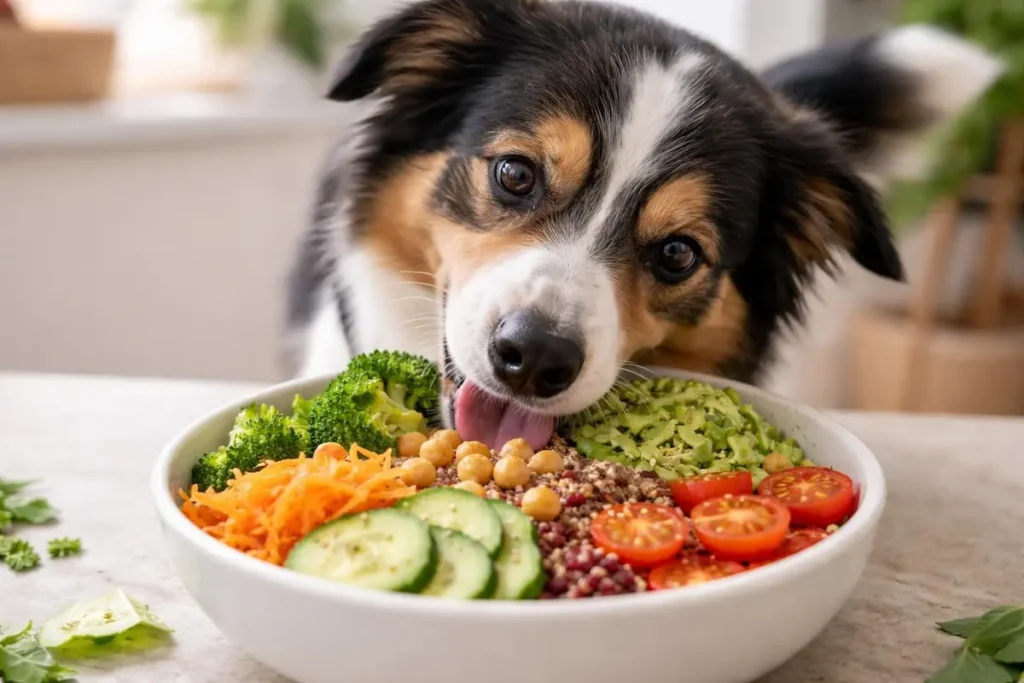
Dogs are omnivores, which means their digestive systems are built to extract nutrition from both animal and plant sources. This sets them apart fundamentally from cats, which are obligate carnivores and cannot be safely fed a vegan diet.
Multiple peer-reviewed studies, including a notable 2022 study published in PLOS ONE, found that dogs fed nutritionally complete vegan diets were no less healthy than dogs on conventional diets — and in some health markers, fared better.
The critical phrase in all of that is nutritionally complete. A vegan diet that’s casually assembled without attention to specific nutrient requirements will fall short.
The nutrients most likely to be insufficient in a plant-based dog diet without supplementation are:
- Vitamin B12 — found almost exclusively in animal products; must be supplemented
- Taurine — an amino acid important for heart health; plant-based diets may be insufficient
- Vitamin D3 — the animal-derived form (D3) is better absorbed than plant-derived D2
- Omega-3s (EPA & DHA) — plant sources provide ALA, which dogs convert inefficiently; algae-based omega-3 supplements are the vegan solution
- Calcium & phosphorus — must be in the correct ratio; plant sources alone may not balance correctly without planning
- L-carnitine — supports fat metabolism; low in plant-based diets
This isn’t a list designed to discourage vegan feeding — it’s the practical supplement roadmap that makes it work long-term.
The Supplement Non-Negotiables for Vegan Dog Food
No vegan dog food plan is complete without addressing supplementation directly. These are the non-negotiables:
- Algae-based DHA/EPA omega-3 supplement — the vegan alternative to fish oil; derived from the same algae that fish eat
- Vitamin B12 — essential for neurological function; must be added to fully plant-based diets
- Taurine supplement — particularly important for large breeds and dogs with any cardiac history
- Vitamin D3 (vegan-certified) — available in lichen-derived form; supports bone health and immune function
- Calcium supplement or calcium-rich foods — leafy greens alone won’t cover it; a vet-recommended supplement is the reliable solution
- Zinc — plant-based zinc is less bioavailable than animal-derived zinc; supplementation bridges the gap
A veterinary nutritionist can formulate a supplement stack tailored to a specific dog’s breed, size, age, and health status. For dog parents transitioning to fully vegan feeding, this consultation is genuinely worth the investment.
Dog-Safe vs. Toxic Plant Ingredients
Not every plant food is safe for dogs. This list matters:
✅
Safe plant ingredients for dogs:
- Lentils, chickpeas, black beans (cooked thoroughly)
- Sweet potato, butternut squash, pumpkin, parsnip
- Brown rice, oats, quinoa (rinsed), barley
- Carrots, green beans, peas, zucchini, cucumber
- Spinach, kale (moderate), broccoli (moderate)
- Blueberries, apple (no seeds), banana, mango (no skin/pit)
- Tofu, edamame (plain, no salt)
- Coconut oil, olive oil, flaxseed oil
⛔️
Toxic plant ingredients — never use:
- Onion & garlic — toxic in all forms, including powdered
- Grapes & raisins — cause kidney failure
- Avocado — contains persin, causes digestive distress
- Macadamia nuts — cause neurological symptoms
- Xylitol — found in some peanut butters and sugar-free products; deadly
- Raw kidney beans — contain phytohaemagglutinin, a toxic lectin; must be fully cooked
- Mushrooms (wild) — many species are toxic; avoid entirely unless using commercially grown, plain varieties confirmed safe
Portion & Feeding Guide
| Dog Size | Weight | Daily Amount |
| Extra Small | Under 10 lbs | ½–¾ cup per meal, twice daily |
| Small | 10–20 lbs | ¾–1 cup per meal, twice daily |
| Medium | 20–50 lbs | 1–1½ cups per meal, twice daily |
| Large | 50–90 lbs | 1½–2½ cups per meal, twice daily |
| Extra Large | 90+ lbs | 2½–4 cups per meal, twice daily |
These are starting points — adjust based on activity level, age, and whether these recipes are the sole diet or supplementing commercial food.
Active dogs and growing puppies need more; senior or sedentary dogs need less. Monitor body condition regularly and adjust accordingly.
Storage Guide
- Stews, bowls & rice-based recipes — refrigerate in airtight containers for up to 4 days; freeze in portioned servings for up to 3 months
- Patties — refrigerate for up to 5 days; freeze for up to 2 months; separate with parchment paper to prevent sticking
- Oat-based recipes — refrigerate for up to 3 days; these don’t freeze as well due to texture changes
- Labeling tip — always write the recipe name and date on freezer bags; rotate stock so older portions get used first
Quick Reference Guide
| # | Recipe | Protein Source | Best For | Cook Time |
| 1 | Lentil & Sweet Potato Bowl | Lentils | All dogs, daily base meal | 30 min |
| 2 | Chickpea & Pumpkin Stew | Chickpeas | Sensitive stomachs, transition | 25 min |
| 3 | Quinoa & Vegetable Medley | Quinoa | Complete protein needs | 20 min |
| 4 | Black Bean & Brown Rice | Black beans | Budget-friendly, active dogs | 20 min |
| 5 | Tofu & Vegetable Scramble | Tofu | High protein, varied texture | 15 min |
| 6 | Oat & Pumpkin Breakfast Bowl | Oats | Sensitive stomachs, seniors | 10 min |
| 7 | Edamame & Brown Rice Bowl | Edamame | Active, high-energy dogs | 15 min |
| 8 | Lentil & Kale Immunity Bowl | Red lentils | Immunity support, rotation | 20 min |
| 9 | Sweet Potato & Chickpea Patties | Chickpeas | Texture variety, easy portioning | 30 min |
| 10 | Blueberry Oat Recovery Bowl | Oats + seeds | Post-activity recovery | 15 min |
Final Thoughts
Vegan dog food recipes aren’t a compromise — when done right, they’re a genuinely solid nutritional choice that many dogs thrive on.
The key is the same as it is for any homemade feeding approach: use whole, dog-safe ingredients, supplement strategically, and work with a vet to make sure the diet is complete for that specific dog.
Start with Recipe 1 or Recipe 2 — both are gentle, easy to make, and perfect for dogs trying plant-based food for the first time. Introduce new recipes gradually, watch how the dog responds, and build from there.
A dog eating clean, whole, plant-based food is a dog worth watching. Glossy coat, good energy, happy gut — the results speak for themselves. Pick a recipe, add the right supplements, and give that good dog the plant-powered meal they deserve. 🙂