
Making your own dog food doesn’t require culinary expertise or a pantry full of specialty ingredients.
You can prepare nutritious, balanced meals for your dog using simple recipes that take less time than cooking your own dinner, with ingredients you likely already have in your kitchen.
The key is understanding a few basic principles about canine nutrition and following straightforward recipes designed specifically for beginners.
Many dog owners feel overwhelmed by complicated recipes listing twenty ingredients or requiring expensive supplements. The reality is that cooked dog food can be as simple as combining a protein source, a carbohydrate, vegetables, and a healthy fat.
Once you understand these core components and proper preparation methods, you’ll have the foundation to create meals your dog will thrive on.
This guide walks you through everything you need to know about cooking for your dog, from understanding nutritional requirements to preparing your first batch of homemade meals.
You’ll learn which ingredients to use, how to prepare them safely, and how to customize recipes based on your dog’s specific needs and preferences.
Benefits of Cooked Dog Food for Beginners
Preparing cooked dog food at home offers distinct advantages that make it an appealing choice for pet owners new to homemade feeding.
You gain direct oversight of ingredient quality, can address specific dietary sensitivities, and often save money compared to premium commercial options.
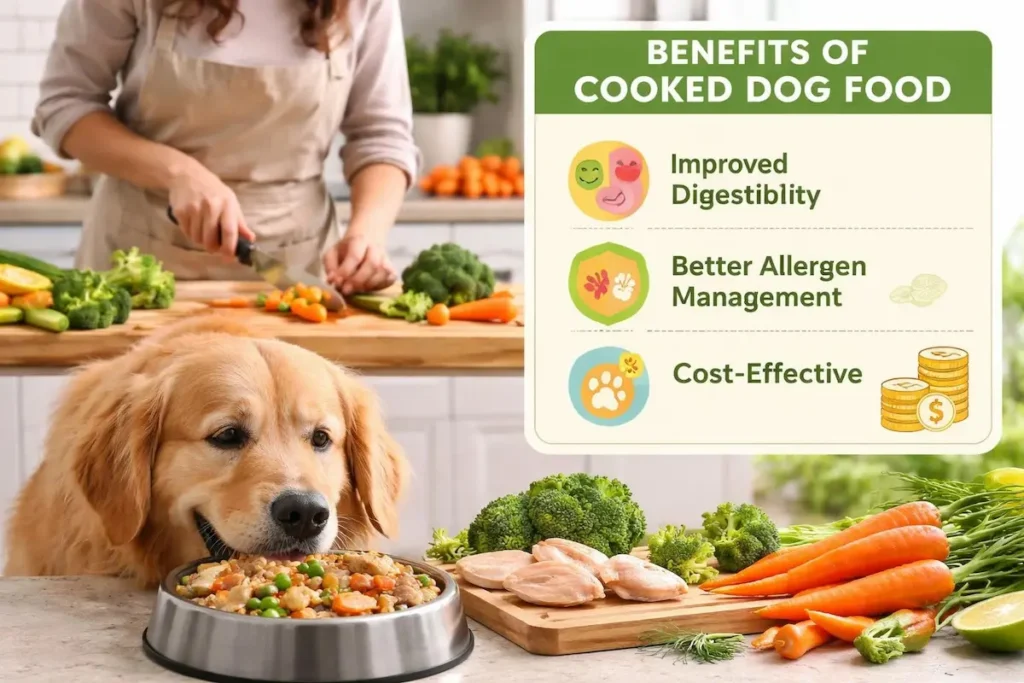
Freshness and Quality Control
When you prepare homemade dog food recipes, you know exactly what goes into your pet’s bowl. You select the meat, vegetables, and grains yourself, ensuring they meet your standards for freshness and quality.
Commercial kibble undergoes extensive processing and contains preservatives to extend shelf life, while your cooked meals use whole, recognizable ingredients.
You can avoid artificial colors, flavors, and chemical additives commonly found in processed dog foods. This transparency is particularly valuable if your dog has shown sensitivities to certain ingredients.
You control the protein source, choosing lean cuts of chicken, beef, or turkey rather than relying on meat meals or byproducts of uncertain origin.
The ability to customize recipes based on your dog’s preferences and needs gives you flexibility that commercial foods cannot match. You can adjust ingredient ratios, swap proteins, or modify cooking methods to suit your dog’s specific requirements.
Improved Digestibility and Allergen Management
Cooked dog food is generally easier for dogs to digest than heavily processed kibble. The cooking process breaks down proteins and starches, making nutrients more accessible to your dog’s digestive system.
Many dogs experience fewer gastrointestinal issues, including reduced gas, firmer stools, and less frequent digestive upset.
For dogs with food allergies or sensitivities, homemade dog food recipes provide complete control over allergen exposure. You can eliminate problematic ingredients entirely and introduce new foods one at a time to monitor reactions.
This precision is difficult to achieve with commercial foods that may contain multiple protein sources or vague ingredient listings like “animal fat” or “poultry meal.”
You can also ensure proper cooking temperatures that eliminate harmful bacteria while preserving nutritional value. This food safety control reduces the risk of contamination issues that occasionally affect commercial pet food products.
Cost-Effectiveness Compared to Commercial Kibble
While basic kibble remains the cheapest feeding option, cooking your own dog food often costs less than premium or prescription commercial diets.
Buying ingredients in bulk, using seasonal vegetables, and purchasing family-pack meats can make homemade feeding economical.
A 50-pound bag of premium kibble typically costs between $60-$100 and lasts several weeks.
In contrast, you can prepare equivalent homemade meals using chicken thighs, rice, and vegetables for approximately $40-$60, depending on local prices and your dog’s size.
The cost difference becomes more pronounced when comparing homemade options to prescription veterinary diets, which often exceed $100 per bag.
You also eliminate the cost of treating health issues potentially linked to poor-quality ingredients. Better nutrition through whole foods may reduce veterinary expenses related to skin conditions, digestive problems, or chronic inflammation.
Batch cooking and freezing portions saves both time and money while ensuring you always have fresh meals ready.
Essential Guidelines Before Starting
Starting homemade dog food requires proper planning to ensure your dog receives complete nutrition.
Working with a professional, transitioning slowly, and understanding food safety are non-negotiable steps that prevent health issues and digestive problems.
Consulting with a Veterinary Nutritionist
A veterinary nutritionist specializes in formulating balanced diets based on your dog’s specific needs. They assess factors like age, weight, activity level, and existing health conditions to create a customized meal plan.

Generic recipes found online often lack essential nutrients like calcium, zinc, or certain B vitamins. A nutritionist calculates precise ratios of protein, fat, carbohydrates, vitamins, and minerals. They also recommend appropriate supplements to fill nutritional gaps that whole foods alone cannot meet.
Your dog’s needs change throughout their life. Puppies require different calcium-to-phosphorus ratios than adult dogs, while senior dogs may need adjusted protein levels. A nutritionist monitors these changes and adjusts recipes accordingly.
The consultation typically costs between $150-$300 but prevents expensive health problems caused by nutritional deficiencies. Many veterinary nutritionists offer follow-up consultations to track your dog’s progress and modify recipes as needed.
Transitioning Gradually to Homemade Meals
Sudden diet changes cause digestive upset including vomiting, diarrhea, and gas. Your dog’s gut bacteria need time to adapt to new food sources and textures.
| Start with a 7-10 day transition period. Mix 25% homemade food with 75% current food for days 1-3. Increase to 50/50 for days 4-6. Move to 75% homemade food for days 7-9. Complete the switch on day 10 if your dog shows no digestive issues. |
Monitor your dog’s stool consistency daily. Firm, well-formed stools indicate proper digestion. Loose stools or excessive gas mean you’re moving too quickly.
Some dogs with sensitive stomachs need longer transitions of 2-3 weeks. Extend each ratio period by several days if needed. Watch for signs of discomfort like decreased appetite, lethargy, or stomach gurgling.
Ingredient Safety and Foods to Avoid
Certain human foods are toxic to dogs and cause serious health emergencies. Never feed onions, garlic, grapes, raisins, chocolate, xylitol (artificial sweetener), macadamia nuts, or avocado.
Raw or undercooked meat carries bacteria like Salmonella and E. coli. Cook all proteins to safe internal temperatures: poultry to 165°F, ground meats to 160°F, and whole cuts of beef or pork to 145°F.
Cooked bones splinter and cause intestinal blockages or perforations. Remove all bones before serving meat to your dog. Raw vegetables like carrots should be steamed or pureed since dogs cannot digest raw plant cell walls efficiently.
Safe ingredients include:
- Lean proteins: chicken, turkey, beef, fish, eggs
- Carbohydrates: rice, oatmeal, sweet potato, quinoa
- Vegetables: green beans, carrots, pumpkin, zucchini
- Healthy fats: fish oil, olive oil (in small amounts)
Avoid seasoning with salt, butter, oil, or spices. Plain, cooked ingredients provide the nutrients your dog needs without harmful additives.
Core Ingredients in Beginner-Friendly Dog Food Recipes
Successful cooked dog food starts with three core components: quality proteins for muscle maintenance, digestible carbohydrates for energy, and nutrient-dense vegetables paired with healthy fats.
Each ingredient serves a specific nutritional role in supporting your dog’s health.
✅ Lean Proteins and Their Benefits
Lean proteins form the foundation of any dog food recipe.
✔️ Ground beef with 90% lean content or higher provides complete amino acids without excessive fat.
✔️ Turkey and chicken offer easily digestible alternatives, particularly for dogs with sensitive stomachs.
✔️ Pork serves as another viable protein source when thoroughly cooked and trimmed of fat.
✔️ Fish like salmon or cod delivers omega-3 fatty acids alongside protein, though you must remove all bones before serving.
✔️ Eggs add affordable protein and can be hard-boiled or scrambled without oil.
You should aim for proteins to constitute 40-50% of each meal by volume.
- For a basic calculation, use approximately 0.5-0.75 pounds of cooked lean meat per 20 pounds of your dog’s body weight daily, divided across meals.
- Organ meats like liver can supplement regular proteins but should stay under 5% of total protein intake due to their vitamin A concentration.
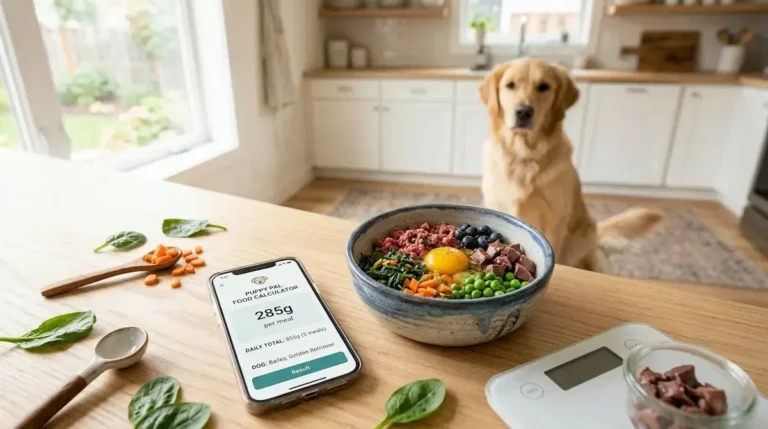
If you’re new to homemade dog food and don’t know where to start, check out our homemade dog food recipes or learn how to calculate the right portion size for your pup!
✅ Whole Grains and Complex Carbohydrates
Grains provide sustained energy and help bind ingredients together in your dog food recipe.
Brown rice contains more fiber than white rice, supporting digestive regularity. White rice works better for dogs with upset stomachs due to its gentler composition.
Oats deliver soluble fiber and B vitamins while maintaining a soft texture when cooked. Quinoa serves as a complete protein source in addition to being a carbohydrate, though it costs more than rice.
Whole-grain pasta can add variety but requires monitoring for gluten sensitivity.
Cook grains thoroughly until soft. Use a 1:2 ratio of rice to liquid for proper texture. Grains should make up 30-40% of the meal by volume.
Sweet potatoes and regular potatoes count as starchy carbohydrates and can partially replace grains if your dog doesn’t tolerate certain grains well.
✅ Vegetables and Healthy Fats for Dogs
Vegetables contribute vitamins, minerals, and fiber to balance your dog food recipe.
🥕 Carrots offer beta-carotene and satisfying crunch when lightly steamed. Peas and green beans add protein and fiber without significant calories.
🥦 Broccoli provides cancer-fighting compounds but should stay below 10% of the vegetable portion to avoid digestive upset.
🍠 Sweet potato and pumpkin aid digestive health with their soluble fiber content. Zucchini and spinach deliver nutrients with minimal calories for weight-conscious dogs.
Always cook or finely chop vegetables since dogs cannot break down plant cell walls as efficiently as humans.
Vegetables should comprise 10-20% of each meal. Add 1-2 tablespoons of olive oil or safflower oil per recipe batch to support nutrient absorption and coat health. These oils provide essential fatty acids that dogs cannot produce themselves.
You can also use omega-3 supplements designed for pets to support joint and skin health.
Step-by-Step: How to Make Easy Homemade Dog Food
Making homemade dog food involves choosing safe cooking methods and following proper storage guidelines. You’ll need to select quality ingredients, cook them thoroughly, and portion meals correctly for your dog’s size and needs.
Simple Cooking Methods for Dog Food
Start by cooking your protein source completely. Brown 2-3 pounds of lean ground beef or turkey in a large skillet over medium heat until no pink remains. Drain excess fat to keep the meal lean and digestible.
Cook grains separately using a 1:2 ratio of rice to liquid. For every cup of brown or white rice, add 2 cups of low-sodium beef stock or water. Simmer until the grains are tender and have absorbed the liquid.
Prepare vegetables by steaming or boiling them until soft. Dice carrots, sweet potatoes, and green beans into small pieces for easier digestion. You can also shred vegetables finely for picky eaters or senior dogs.
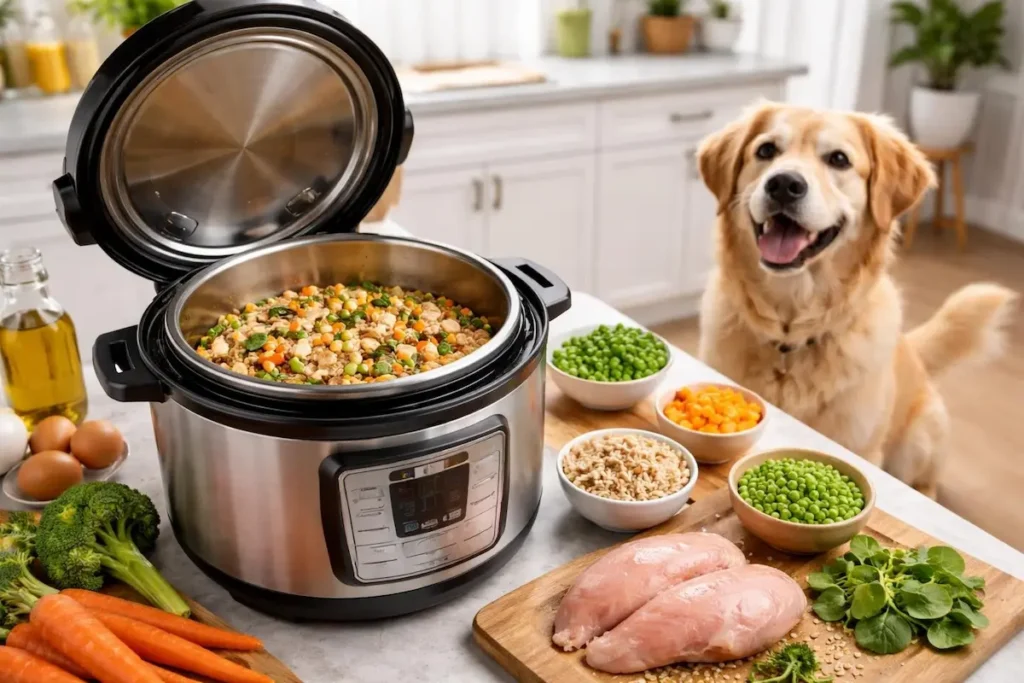
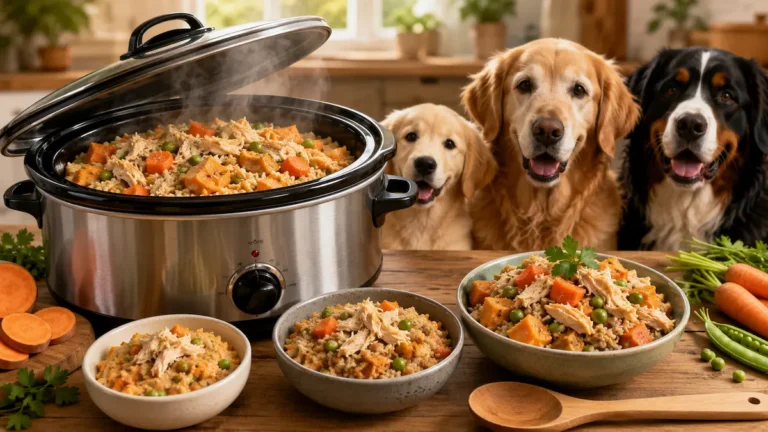
💡 Slow cooker method: Combine ground beef, brown rice, kidney beans, diced butternut squash, carrots, and peas in your crockpot. Add enough water or salt-free stock to cover the ingredients. Cook on low for 4-6 hours until everything is tender.
Mix all components together once cooled slightly. Add 2-3 tablespoons of olive oil for healthy fats and coat shine.
Tips for Safe Preparation, Storage, and Serving
Cool cooked food completely before storing to prevent bacterial growth. Divide portions into airtight containers and refrigerate what you’ll use within 3-4 days.
Freeze extra portions flat in zip-top bags for space efficiency and faster thawing. Label each bag with the date and recipe name. Thaw frozen meals in the refrigerator overnight, not at room temperature.
Feeding guidelines:
- Feed approximately 1 cup per 10 pounds of body weight daily
- Split into two meals for most dogs
- Offer multiple small meals for senior dogs or those with kidney concerns
Serve meals at room temperature or slightly warmed. Add onion-free bone broth or warm water to increase moisture and palatability. Monitor your dog’s weight and adjust portions based on activity level and body condition.
Store prepared food in glass or BPA-free plastic containers. Never leave homemade dog food at room temperature for more than 2 hours.
Popular Cooked Dog Food Recipes for Beginners
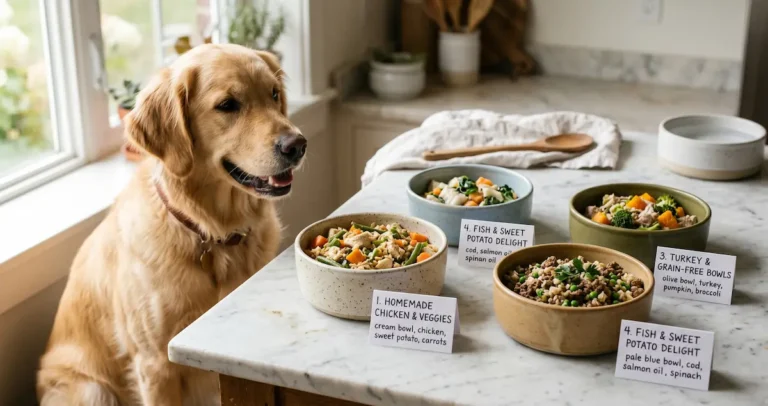
These four recipes provide balanced nutrition using accessible ingredients that you can find at any grocery store. Each recipe focuses on a single protein source paired with digestible carbohydrates and nutrient-rich vegetables.
1. Chicken and Brown Rice Classic
This homemade dog food recipe combines boneless chicken breast with brown rice and vegetables for complete nutrition.
The bland nature of this dog food recipe makes it ideal for dogs with sensitive stomachs or those transitioning from commercial kibble.
Chicken & Brown Rice Classic
The go-to gentle meal — easy to digest, easy to make, easy to love
Ingredients
2 lbs chicken breast, diced
✦ Lean protein — low fat makes it easy on sensitive stomachs
2 cups brown rice, cooked
cook separately; start this first — takes the longest
1 cup carrots, diced and steamed
beta-carotene, fiber, and a natural mild sweetness dogs like
1 cup green beans, steamed
low-calorie bulk — good for weight-conscious dogs
1 tbsp fish oil
✦ Add after cooling — heat degrades omega-3 potency
Instructions
Start brown rice per package directions — it takes the longest.
Cook diced chicken breast in a separate pan until fully cooked through with no pink remaining. Drain any excess liquid.
Steam carrots and green beans until tender.
Combine chicken, rice, and vegetables. Mix well.
Let cool completely, then drizzle fish oil on top and stir in before serving.
🍗 Storage: Refrigerate for up to 3 days or freeze individual portions for up to 3 months. The mild, bland profile makes this ideal for dogs with sensitive stomachs or those transitioning off commercial kibble — introduce gradually over 5–7 days, mixing with current food to avoid digestive upset.
2. Turkey and Sweet Potato Blend
Ground turkey provides lean protein while sweet potatoes deliver fiber and vitamins.
Turkey & Sweet Potato Blend
Lean, warming, and naturally sweet — great for digestion and coat health
Ingredients
2 lbs ground turkey
✦ Drain excess fat after browning — keeps the meal light on the stomach
3 medium sweet potatoes, peeled and diced
boil until mashable — natural beta-carotene and soluble fiber
1 cup spinach, chopped
add in the last minute of cooking — just wilt, don’t overcook
1 tbsp olive oil
✦ Add after cooling to preserve healthy fat content
Instructions
Brown ground turkey in a large pot over medium heat, breaking into small pieces. Drain excess fat.
Boil diced sweet potatoes in a separate pot until soft enough to mash, about 15 minutes. Drain and mash.
Add spinach to the turkey in the last minute of cooking and stir until just wilted.
Combine turkey mixture with mashed sweet potato. Mix well.
Cool completely, then stir in olive oil before serving.
🦃 Storage & serving: Refrigerate up to 3 days or freeze in portions for up to 3 months. Ground turkey makes this especially easy to portion for smaller dogs. The sweet potato base adds soluble fiber that supports healthy digestion and helps firm up loose stools.
This homemade dog food works well for active dogs needing sustained energy. The natural sweetness appeals to picky eaters.
Let the mixture cool completely before serving. Divide into meal-sized portions based on your dog’s weight and activity level.
3. Beef and Oatmeal Power Bowl
Lean ground beef paired with oatmeal creates a protein-rich dog food recipe suitable for muscle maintenance.
Beef & Oatmeal Power Bowl
Hearty, fiber-rich, and satisfying — built for active dogs who need a real meal
Ingredients
2 lbs ground beef, 90% lean or higher
✦ Drain fat after browning — high fat can trigger pancreatitis in sensitive dogs
2 cups plain oatmeal, cooked in water
⚠ Plain oats only — no instant packets with flavoring, sugar, or xylitol
1 cup zucchini, diced
low-calorie, hydrating — add to oatmeal during the last few minutes of cooking
1 cup peas
fresh or frozen both work — good source of plant protein and vitamins
Instructions
Brown ground beef in a large pan over medium heat. Drain excess fat thoroughly.
Cook oatmeal in water per package directions. Add zucchini and peas in the last 3–4 minutes and stir through.
Let both components cool to room temperature separately.
Combine beef and oatmeal mixture. Mix well and serve.
🌾 Long-term feeding note: If this is a regular rotation meal, consider adding a calcium source — homemade meals without bone meal or supplements can be calcium-deficient over time. Ask your vet about appropriate supplementation. Store in the fridge up to 3 days or freeze portions for up to 3 months.
4. Salmon and Spinach Supper
Fresh salmon delivers omega-3 fatty acids for coat health and joint support.
Salmon & Spinach Supper
Omega-3 rich and anti-inflammatory — one of the best meals for coat and joint health
Ingredients
1.5 lbs salmon, skinless and boneless
⚠ Must be fully cooked to 145°F (63°C) — raw or undercooked salmon can carry Neorickettsia helminthoeca, which causes salmon poisoning disease in dogs
2 cups white rice, cooked
plain, no salt or seasoning — easy-to-digest carb base
2 cups fresh spinach
✦ Steam until just wilted — preserves more iron and folate than boiling
Instructions
Bake salmon at 375°F (190°C) for 15–20 minutes until it reaches an internal temperature of 145°F (63°C). No oil, seasoning, or foil wrapping with herbs.
Cook white rice per package directions while salmon bakes.
Steam spinach until just wilted, about 2–3 minutes.
Flake the cooked salmon and check carefully for any remaining bones.
Combine all ingredients once cooled to room temperature. Mix well before serving.
🐟 Salmon safety: Never feed raw or undercooked salmon to dogs — salmon poisoning disease is fatal if untreated. Fully baked salmon is safe and one of the richest sources of DHA omega-3 for dogs, supporting coat shine, skin health, and joint inflammation. Store in the fridge up to 3 days or freeze for up to 3 months.
This homemade dog food recipe particularly benefits dogs with dry skin or inflammatory conditions. Salmon offers anti-inflammatory properties not found in poultry or beef.
Feed this recipe 2-3 times per week rather than daily to prevent excessive fish intake. Store refrigerated portions for up to 2 days only, as fish spoils faster than other proteins.
Ready to start? Check out our 20 Quick Dog Food Recipes to find your first beginner-friendly meal.
Customizing Recipes to Suit Your Dog’s Needs
Every dog has unique nutritional requirements based on their health status, age, and individual sensitivities.
Adjusting homemade dog food recipes allows you to address allergies, control sodium intake, and modify textures for different life stages.
Managing Allergies and Sensitivities
If your dog shows signs of food allergies like itching, digestive upset, or ear infections, you need to identify and eliminate trigger ingredients from their meals. Common allergens include beef, dairy, wheat, chicken, and soy.
Start by selecting a novel protein source your dog hasn’t eaten before, such as duck, venison, or rabbit. Replace problematic carbohydrates with alternatives like sweet potato instead of wheat-based pasta.
Keep detailed records of ingredients you use and any symptoms that appear within 48 hours of feeding.
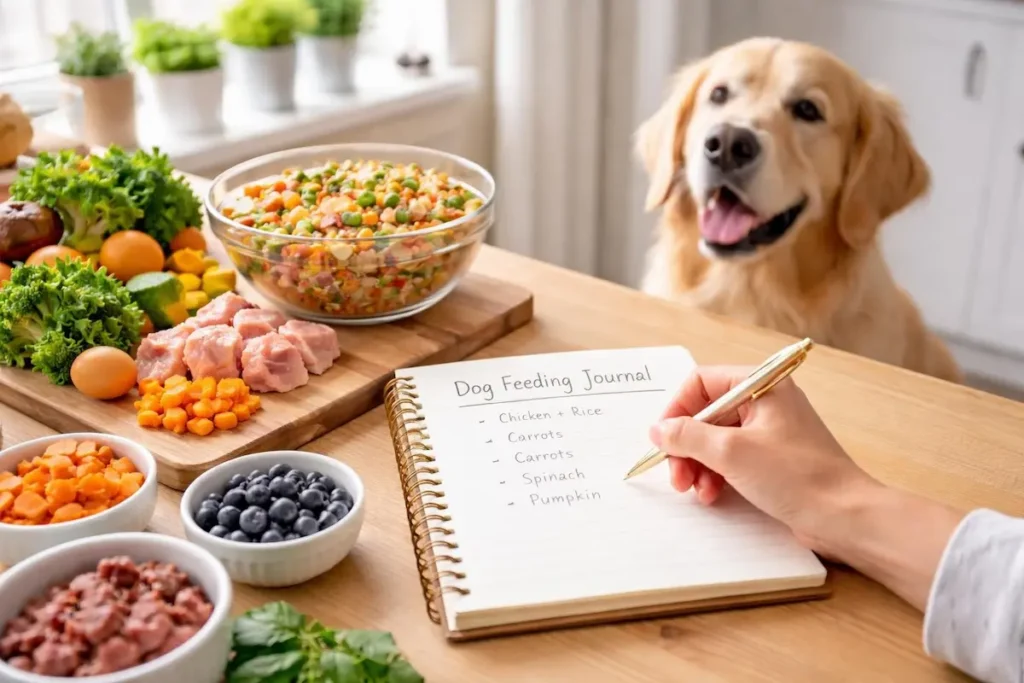
When adapting homemade dog food recipes, introduce new ingredients one at a time over 5-7 days. This method helps you pinpoint exactly which foods cause reactions.
You can substitute quinoa for rice if your dog has grain sensitivities, or use ground turkey instead of chicken for protein variety.
Always work with your veterinarian to confirm suspected allergies through elimination diets or testing before making permanent recipe changes.
Incorporating Low-Sodium Chicken Broth
Low-sodium chicken broth adds moisture and flavor to homemade dog food recipes without excessive salt content.
Regular chicken broth contains 500-800mg of sodium per cup, while low-sodium versions typically have 140mg or less.
You can use low-sodium chicken broth to rehydrate meals, make food more palatable for picky eaters, or help dogs with dental issues consume their meals more easily.
Add 2-4 tablespoons per cup of food, adjusting based on your dog’s preference and hydration needs.
Making your own broth gives you complete control over ingredients. Simmer chicken bones, meat, and dog-safe vegetables like carrots in water for 12-24 hours, then strain and refrigerate. Avoid onions and garlic, which are toxic to dogs.
Store homemade broth in ice cube trays for convenient portioning. Each cube typically contains 1-2 tablespoons, making it easy to add the right amount to meals.
Adapting Portions and Textures for Life Stages
Puppies need smaller, more frequent meals with higher calorie density than adult dogs. Their food should be softer and easier to chew, which you can achieve by processing ingredients more finely or adding extra low-sodium chicken broth.
Puppy adjustments: Increase protein to 22-25% of the recipe and feed 3-4 times daily. Grind or mash ingredients thoroughly to prevent choking and aid digestion.
Senior dogs often require fewer calories due to decreased activity levels but may need softer textures if they have dental problems. Reduce portions by 20-30% compared to adult amounts and consider pureeing meals or cutting ingredients into smaller pieces.
Senior modifications: Add joint-supporting ingredients like fish oil and adjust fat content to maintain healthy weight. Use a food processor to create smoother textures that are easier on sensitive teeth and gums.
Active adult dogs maintain their weight on standard portions, but working dogs or highly active breeds may need 25-50% more food to meet their energy requirements.
Final Thoughts
Cooking your own cooked dog food recipes for beginners doesn’t have to be complicated or time-consuming.
By starting with simple recipes, using safe ingredients, and following vet-approved guidelines, you’re already giving your dog a better, healthier life than most commercial diets can offer.
Remember that the journey to homemade feeding is gradual. Start with one or two basic recipes, observe how your dog responds, and build your confidence from there.
Consult your veterinary nutritionist when needed, transition slowly, and always prioritize food safety over convenience.
Your dog doesn’t need a gourmet chef, they just need you, a simple recipe, and a little patience. Pick one recipe from this guide, head to the kitchen, and watch your furry friend enjoy every bite of a meal made with love.