Active dogs aren’t just hungrier — they’re running on a fundamentally different nutritional demand than the average couch-dwelling lap dog.
More movement means more muscle breakdown, more energy expenditure, and a significantly higher need for quality protein to repair, rebuild, and fuel everything that makes an active dog go.
Generic kibble doesn’t always cut it for working dogs, sport dogs, or high-energy breeds that treat every single day like it’s the Olympics.
These 10 high protein dog food recipes are built specifically for dogs that earn their meals — real, complete proteins, muscle-supporting ingredients, and the kind of nutritional density that keeps active dogs performing at their best. 🙂
10 High-Protein Dog Food Recipes for Active Dogs
1. Beef & Egg Power Bowl
The highest-protein combination on this list. Beef and eggs together deliver a complete amino acid profile that supports rapid muscle repair after intense activity — this is the post-workout meal of the dog food world.
Beef & Egg Power Bowl
The highest protein-per-cup meal in the guide — dual complete protein sources
Ingredients
2 lbs lean ground beef
✦ ~26g protein per 100g — drain fat thoroughly after browning
6 eggs, beaten
complete protein — all essential amino acids covered
1 cup brown rice (uncooked)
cooked directly in pot with broth/water
1 cup carrot, grated
beta-carotene + fiber
1 cup spinach, chopped
stirred in at the end — wilts in residual heat
1 cup frozen peas
added at the end — thaws quickly
4 cups water
for cooking rice — add more if needed
Instructions
Brown ground beef in a large pot over medium heat. Drain excess fat thoroughly.
Add brown rice, grated carrot, and water. Bring to a boil.
Reduce to a simmer, cover, and cook for 20 minutes until rice is tender.
Reduce heat to very low. Slowly stir in beaten eggs — they cook gently in residual heat within 2–3 minutes.
Stir in spinach and peas. Mix thoroughly until spinach is wilted and peas are thawed.
Cool completely before serving. Refrigerate leftovers for up to 4 days.
💪 Protein profile: Ground beef delivers ~26g protein per 100g. Eggs add a second complete protein source covering all essential amino acids. Together, this is the highest protein-per-cup meal in the series — ideal for working dogs, highly active breeds, or dogs recovering muscle mass.
🍳 Egg tip: Stirring beaten eggs into low heat (rather than boiling) keeps them soft and fully incorporated — no rubbery chunks, easier to digest.
2. Chicken Breast & Quinoa Muscle Batch
Chicken breast is the leanest high-protein option available — low fat, high protein, easy to digest.
Quinoa is the only plant food that’s a complete protein, making this recipe an outstanding combination for active dogs that need protein without excess caloric density.
Chicken Breast & Quinoa Muscle Batch
Lean, clean, and loaded — 31g protein per 100g with dual complete protein sources
Ingredients
2.5 lbs boneless, skinless chicken breast
✦ ~31g protein per 100g — highest lean protein ratio in the series
1 cup dry quinoa, rinsed thoroughly
✦ Complete plant protein — rinse well to remove bitter saponins
1 cup sweet potato, diced
complex carbs for sustained energy
1 cup broccoli, chopped
added in final 5 minutes — keeps it tender, not mushy
1 cup frozen peas
added in final 5 minutes — thaws quickly
4 cups low-sodium chicken broth
⚠️ Low-sodium only — regular broth contains too much salt for dogs
Instructions
Add chicken, quinoa, sweet potato, and broth to a large pot. Bring to a boil.
Reduce to a simmer, cover, and cook for 20 minutes.
Add broccoli and peas. Cook uncovered for a final 5 minutes.
Remove chicken and shred finely, then return to the pot.
Stir well — quinoa absorbs most of the liquid. Cool completely before serving.
💪 Protein profile: Chicken breast has one of the highest lean protein ratios of any meat at ~31g per 100g. Quinoa layers on a second complete protein source — all essential amino acids, from plants. Together they make this an exceptional muscle-support meal for working or highly active dogs.
🌾 Quinoa tip: Always rinse quinoa thoroughly before cooking. The natural coating (saponins) tastes bitter and can irritate a dog’s stomach if not washed off.
3. Salmon & Lentil Performance Recipe
Salmon brings omega-3 fatty acids alongside its high protein content — a combination that’s particularly valuable for active dogs because omega-3s reduce exercise-induced inflammation and support faster recovery.
This is the recipe for dogs that work hard and need to bounce back quickly.
Salmon & Lentil Performance Recipe
Omega-3 rich, joint-supporting protein with iron and folate from lentils
Ingredients
2 lbs boneless salmon fillets, skin removed
✦ ~25g protein per 100g + EPA & DHA omega-3s for joints and coat
½ cup dry green lentils, rinsed
✦ Iron, folate, and plant protein — rounds out the amino acid profile
1 cup potato, diced
cooked soft — digestible carb base
1 cup green beans, chopped
added with lentil mixture — fiber and vitamins K & C
1 cup carrot, grated
beta-carotene and natural sweetness
4 cups water
for cooking base — becomes light broth as lentils cook
Instructions
Cook lentils and potato in water in a large pot for 15 minutes.
Add green beans and grated carrot. Stir to combine.
Place salmon fillets on top of the vegetable mixture.
Cover and steam over low heat for 8–10 minutes until salmon flakes easily and reaches 145°F (63°C) internally.
Flake salmon thoroughly through the vegetables. Check carefully for any remaining bones.
Cool completely before serving. Refrigerate for up to 3 days.
🐟 Protein profile: Salmon delivers ~25g protein per 100g alongside EPA and DHA omega-3s — the most bioavailable form for supporting joints, coat health, and inflammation recovery in active dogs. Lentils add iron, folate, and complementary plant protein that rounds out the amino acid profile.
🦴 Bone check: Even “boneless” fillets can have small pin bones — run your finger along the flesh before and after flaking. A fish bone lodged in the throat is a vet visit.
📋 Legume rotation note: The FDA has flagged a potential link between diets high in legumes and dilated cardiomyopathy (DCM) in dogs. Current research is ongoing and inconclusive. As a precaution, rotate this recipe with legume-free meals rather than feeding it daily.
4. Turkey & Chickpea Endurance Batch
This recipe is built for sustained energy — turkey’s lean protein for muscle maintenance, chickpeas for slow-release complex carbohydrates, and a vegetable mix that covers key micronutrients.
The ideal recipe for endurance dogs, working breeds, or dogs with long active days.
Turkey & Chickpea Endurance Batch
Lean turkey protein + slow-release carbs — built for dogs that go the distance
Ingredients
2.5 lbs ground turkey
✦ ~29g protein per 100g — lean, easily digestible, low allergen
1 can (15 oz) plain chickpeas, drained & rinsed
✦ Plain only — no added salt, seasoning, or garlic
1 cup sweet potato, diced
complex carbs + beta-carotene for sustained energy
1 cup green beans, chopped
added in final 5 minutes — fiber and vitamins K & C
1 cup frozen peas
added in final 5 minutes — thaws quickly
4 cups water
cooking liquid — chickpeas and sweet potato absorb most of it
Instructions
Sauté ground turkey in a large pot until fully cooked through. No oil needed — turkey releases enough fat.
Add chickpeas, sweet potato, and water. Bring to a boil.
Reduce to a simmer, cover, and cook for 15 minutes.
Add green beans and peas. Cook uncovered for a final 5 minutes.
Lightly mash chickpeas into the mixture for better digestibility. Cool completely before serving.
🏃 Protein profile: Ground turkey delivers ~29g protein per 100g — lean, low-fat, and gentle on digestion. Chickpeas layer in plant-based protein plus complex carbohydrates that release energy slowly, making this recipe particularly well-suited for dogs with long endurance demands rather than quick-burst activities.
🫘 Chickpea tip: Rinse canned chickpeas thoroughly to wash off excess sodium from the brine. Lightly mashing them before serving improves digestibility — whole chickpeas can pass through largely intact.
📋 Legume rotation note: The FDA has flagged a potential link between diets high in legumes and dilated cardiomyopathy (DCM) in dogs. Current research is ongoing and inconclusive. As a precaution, rotate this recipe with legume-free meals rather than feeding it daily.
5. Venison & Brown Rice Lean Muscle Recipe
Venison is one of the leanest, most protein-dense meats available — almost no fat, extraordinarily high protein, and a novel protein that most dogs haven’t built a sensitivity to.
For performance-focused active dogs, venison is about as close to an ideal protein source as it gets.
Venison & Brown Rice Lean Muscle Recipe
~30g protein per 100g with minimal fat — high protein for dogs managing weight
Ingredients
2 lbs ground venison or venison stew meat
✦ ~30g protein per 100g, minimal fat — outstanding lean protein density
1 cup brown rice (uncooked)
cooked directly in pot — absorbs cooking liquid
1 cup carrots, chopped
beta-carotene and fiber — added with rice
1 cup green beans, chopped
added in final 5 minutes — stays tender-crisp
1 cup plain canned pumpkin
⚠️ Plain pumpkin only — NOT pumpkin pie filling (contains xylitol, spices, and sweeteners toxic to dogs)
4 cups water
rice and vegetables absorb most of the liquid
Instructions
Brown venison in a large pot over medium heat. Drain any excess liquid.
Add rice, carrots, and water. Bring to a boil.
Reduce to a simmer, cover, and cook for 20 minutes until rice is tender.
Add green beans. Cook uncovered for a final 5 minutes.
Stir pumpkin evenly through the mixture. Cool completely before serving.
🦌 Protein profile: Venison delivers ~30g protein per 100g with remarkably low fat — making it one of the leanest high-protein meats available. This recipe is particularly well-suited for active dogs on weight management plans who still need dense protein to maintain and build muscle mass.
🎃 Pumpkin note: Pumpkin acts as a natural digestive regulator — it firms loose stools and softens hard ones. Stirring it in off heat preserves its soluble fiber content best. It also makes the batch easier to portion as a soft, cohesive mixture.
6. Duck & Sweet Potato Recovery Batch
Duck is iron-rich, nutrient-dense, and genuinely delicious — dogs go completely unreasonable about it.
The higher fat content compared to chicken or turkey makes duck particularly valuable for very high-output dogs that burn significant calories daily and need calorie-dense meals to maintain body condition.
Duck & Sweet Potato Recovery Batch
Iron-rich protein + blueberry antioxidants — built for post-workout muscle recovery
Ingredients
2 lbs duck breast, excess fat trimmed
✦ ~27g protein per 100g + high iron and B vitamins — sear first to render remaining fat
2 medium sweet potatoes, peeled and cubed
complex carbs for glycogen replenishment post-activity
1 cup frozen blueberries
✦ Stirred in off the heat — antioxidants reduce oxidative stress from high-output activity
1 cup spinach, chopped
added in final 4 minutes — wilts in residual heat
1 cup green beans, chopped
added in final 4 minutes — fiber and vitamins K & C
4 cups water
sweet potato absorbs most of the cooking liquid
Instructions
Sear duck breast in a large pot over medium heat to render some fat. Drain well — duck fat is rich and too much can cause loose stools.
Add sweet potato and water. Bring to a boil.
Reduce to a simmer, cover, and cook for 18 minutes.
Remove duck, slice or shred into small pieces, and return to the pot.
Add green beans and spinach. Cook uncovered for a final 4 minutes.
Remove from heat. Stir in blueberries off the heat. Cool completely before serving.
🦆 Protein profile: Duck delivers ~27g protein per 100g alongside significant iron and B vitamins — nutrients that support red blood cell production and sustained energy output. It’s also a novel protein, making this recipe a good option for dogs with chicken or beef sensitivities.
🫐 Recovery angle: Blueberries are stirred in off the heat to preserve their anthocyanins — the antioxidant compounds that help reduce oxidative stress and inflammation from high-output activity. Heating them diminishes this benefit.
7. Beef Liver & Chicken Organ Power Recipe
Organ meat is the most protein-dense and micronutrient-rich food available — and for active dogs with high metabolic demands, it deserves a regular spot in the rotation.
This recipe balances liver’s extraordinary nutrient density with lean chicken at the correct ratio for safe, regular use.
Beef Liver & Chicken Organ Power Recipe
B12, iron, and copper in extraordinary density — the nutrient powerhouse of the series
Ingredients
2 lbs boneless chicken breast
✦ Lean protein base — shredded after cooking to blend evenly through the batch
½ lb beef liver, chopped small
✦ ~29g protein per 100g + extraordinary B12, iron, and copper — kept at 20% of total meat for safe ratio
1 cup brown rice (uncooked)
cooked directly in pot — absorbs cooking liquid
1 cup carrots, chopped
beta-carotene and fiber — added at the start
1 cup frozen peas
added in final 4 minutes — thaws quickly
1 cup spinach, chopped
added in final 4 minutes — wilts in residual heat
4 cups water
liver enriches the cooking liquid into a deeply nutritious broth
Instructions
Add chicken, liver, rice, carrots, and water to a large pot. Bring to a boil.
Reduce to a simmer, cover, and cook for 20 minutes.
Remove chicken and shred finely. Return to the pot.
Add peas and spinach. Cook uncovered for a final 4 minutes.
Stir thoroughly — liver blends into the broth and enriches the entire batch. Cool completely before serving.
🫀 Protein profile: Beef liver delivers ~29g protein per 100g alongside some of the highest concentrations of vitamin B12, iron, and copper found in any whole food — gram for gram, it outperforms most supplements. The ½ lb liver to 2 lbs chicken ratio keeps organ meat at roughly 20% of total meat, a safe and effective amount.
🍗 Liver in broth: Chopping the liver small means it partially dissolves into the cooking liquid as it simmers, distributing its nutrients evenly through every cup rather than concentrating in chunks — dogs that are hesitant about organ textures usually accept this format well.
⚠️ Rotation is non-negotiable: Vitamin A is fat-soluble and accumulates in the body — it does not flush out the way water-soluble vitamins do. Feed this recipe 1–2 times per week maximum, always alternated with non-organ meals. Do not double up organ recipes in the same week.
8. Tuna & Brown Rice High-Protein Batch
Canned tuna in water is a high-protein, budget-friendly option that works surprisingly well in homemade dog food — particularly for active dogs that need a quick, accessible protein source.
The key is using it in rotation rather than as a daily staple, due to tuna’s higher mercury content compared to sardines or salmon.
Tuna & Brown Rice High-Protein Batch
29g protein per 100g from pantry staples — budget-friendly, no cooking required for the protein
Ingredients
6 cans (5 oz) tuna in water, drained — no salt added
✦ ~29g protein per 100g — folded in off the heat, no cooking needed
2 cups brown rice (uncooked)
higher ratio here — forms the main body of the batch
1 cup broccoli, chopped
added in final 8 minutes — tender but not mushy
1 cup carrot, grated
added in final 8 minutes — beta-carotene and fiber
1 cup frozen peas
stirred in off heat — residual warmth thaws them through
4 cups water
rice absorbs most of the cooking liquid
Instructions
Cook brown rice in water in a large pot for 20 minutes until tender.
Add grated carrot and broccoli for the final 8 minutes of cooking.
Remove from heat. Stir in frozen peas — residual heat warms them through without overcooking.
Fold tuna gently through the mixture, breaking it apart evenly. Do not return to heat.
Stir well and cool completely before serving.
🐟 Protein profile: Canned tuna delivers ~29g protein per 100g — comparable to fresh fish at a fraction of the cost. It’s the most budget-efficient high-protein option in this series and requires zero cooking time for the protein itself, making this the fastest batch to assemble.
🥫 Canned tuna tip: Always check the label for two things: packed in water (not oil) and no salt added. Regular canned tuna can contain 200–300mg sodium per serving — far too high for dogs. Drain each can thoroughly before folding in.
9. Lamb & Egg High-Protein Allergy Recipe
For active dogs with protein allergies to chicken or beef, this combination delivers exceptional protein density using two proteins unlikely to trigger existing sensitivities.
Lamb is a novel protein for most dogs; eggs are hypoallergenic and universally well-tolerated.
Lamb & Egg High-Protein Allergy Recipe
Novel protein + complete egg amino acids — for active dogs that can’t tolerate the standard choices
Ingredients
2 lbs ground lamb, fat trimmed
✦ ~25g protein per 100g + iron and zinc — drain fat thoroughly, lamb runs fattier than beef or turkey
4 eggs, beaten
✦ Complete protein — all essential amino acids; stirred in over very low heat
1 cup brown rice (uncooked)
cooked directly in pot — absorbs cooking liquid
1 cup parsnip, diced
grain-free friendly starch — naturally sweet, easy to digest
1 cup green beans, chopped
added in final 3 minutes — fiber and vitamins K & C
1 cup frozen peas
added in final 3 minutes — thaws quickly
4 cups water
rice and parsnip absorb most of the cooking liquid
Instructions
Brown lamb in a large pot. Drain excess fat thoroughly — lamb is naturally fattier than most proteins in this series.
Add rice, parsnip, and water. Bring to a boil.
Reduce to a simmer, cover, and cook for 20 minutes.
Reduce heat to very low. Slowly stir in beaten eggs until cooked through — 2–3 minutes. Stir continuously to keep them soft and evenly distributed.
Add green beans and peas. Cook for a final 3 minutes. Cool completely before serving.
🐑 Protein profile: Lamb delivers ~25g protein per 100g alongside meaningful iron and zinc. As a novel protein — rarely found in commercial dog food — it’s the go-to option for dogs whose common allergies rule out chicken, beef, or turkey. The eggs add a complete second protein source with all essential amino acids plus healthy fat.
🥚 Allergy note: If your dog has a known egg sensitivity, this recipe works without them — increase the lamb to 2.5 lbs to compensate for the lost protein. For dogs on elimination diets, confirm with your vet before introducing any new protein, including lamb.
10. Pork & Lentil Lean Performance Batch
Lean pork tenderloin is an underused performance protein — comparable to chicken breast in fat content and protein density, with a flavor that even picky active dogs tend to accept readily.
Paired with lentils for added plant protein and complex carbs, this is a well-rounded performance recipe that deserves more attention. IMO it’s the most underrated combination on the list.
Pork & Lentil Lean Performance Batch
31g protein per 100g from one of the leanest cuts — red lentils cook down into a naturally thick sauce
Ingredients
2 lbs pork tenderloin, trimmed and cut into chunks
✦ ~31g protein per 100g — one of the leanest, highest-protein cuts available; shredded after cooking
½ cup dry red lentils, rinsed
✦ Cook down into a smooth, thick sauce — better texture than green lentils for most dogs
1 cup sweet potato, diced
complex carbs for sustained energy — cooks alongside pork
1 cup carrot, grated
added at the start — beta-carotene and fiber
1 cup broccoli, chopped
added in final 5 minutes — tender but not mushy
1 cup frozen peas
added in final 5 minutes — thaws quickly
4 cups water
lentils absorb most of the liquid as they break down
Instructions
Add pork, lentils, sweet potato, carrot, and water to a large pot. Bring to a boil.
Reduce to a simmer, cover, and cook for 20 minutes.
Add broccoli and peas. Cook uncovered for a final 5 minutes.
Remove pork and shred or cut into small pieces, then return to the pot.
Stir well — red lentils will have broken down into a naturally thick sauce. Cool completely before serving.
🥩 Protein profile: Pork tenderloin delivers ~31g protein per 100g — matching chicken breast at the top of the lean protein rankings. Unlike fattier pork cuts, tenderloin is trimmed close to zero visible fat, making it an excellent high-protein option for performance dogs that don’t need extra calories from fat.
🫘 Red lentil advantage: Red lentils break down much faster than green and dissolve into the cooking liquid, creating a naturally thick, smooth sauce that coats every piece of pork and vegetable. Dogs that reject visible lentil chunks tend to accept this format well — it’s protein and fiber without the texture.
📋 Legume rotation note: The FDA has flagged a potential link between diets high in legumes and dilated cardiomyopathy (DCM) in dogs. Current research is ongoing and inconclusive. As a precaution, rotate this recipe with legume-free meals rather than feeding it daily.
Why Active Dogs Need More Protein
Protein isn’t just a macronutrient for dogs — it’s the foundation of every physical process that makes an active dog capable of doing what active dogs do.
Understanding why high protein dog food recipes matter for working and sport dogs makes the difference between feeding for maintenance and feeding for performance.
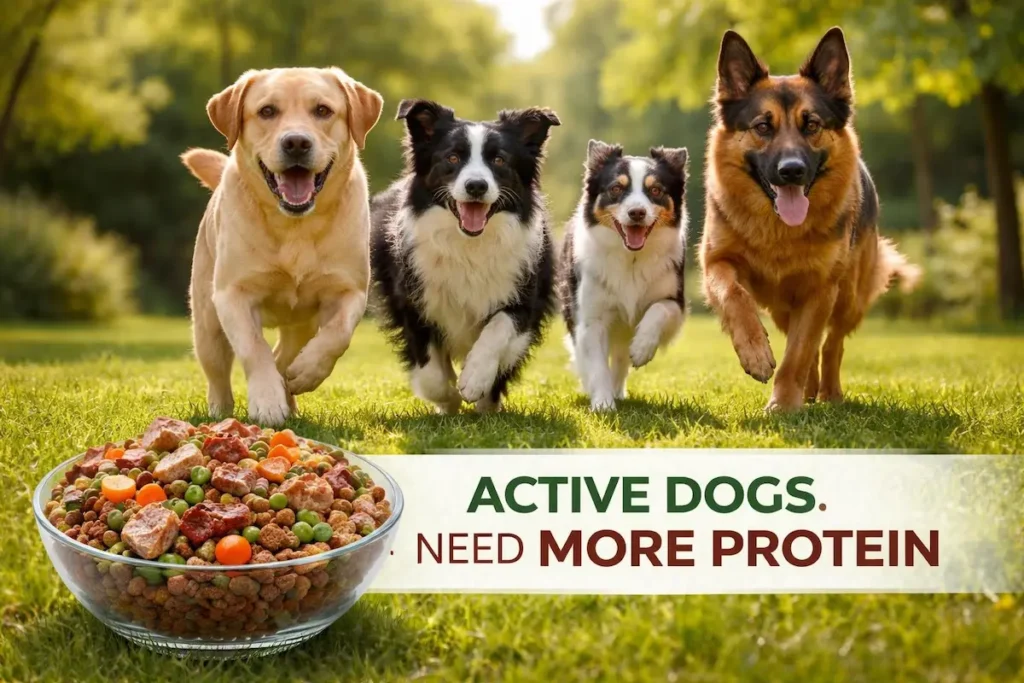
✅ Muscle repair and growth is the most direct function.
Every training session, run, or working day creates microscopic tears in muscle fibers — protein provides the amino acids needed to repair and rebuild those fibers stronger.
Inadequate protein means slower recovery, reduced performance, and increased injury risk over time.
✅ Energy metabolism in active dogs relies on protein more heavily than in sedentary dogs.
While fat is the primary energy source for dogs at moderate activity levels, high-intensity work draws increasingly on protein for fuel — particularly branched-chain amino acids like leucine, isoleucine, and valine.
✅ Immune function is protein-dependent. Active dogs have higher immune demands from physical stress, environmental exposure, and the general wear of an active lifestyle.
Adequate protein supports antibody production and immune cell function that keeps working dogs healthy.
✅ The general recommendation for active dogs is 25–30% protein as a percentage of total diet calories, compared to 18–22% for average adult dogs. The recipes in this guide are all formulated to sit comfortably within — or above — that range.
Highest-Protein Ingredients for Active Dogs
Not all protein sources are equal in terms of protein density, digestibility, or amino acid completeness. Here’s how the key ingredients in this guide rank:
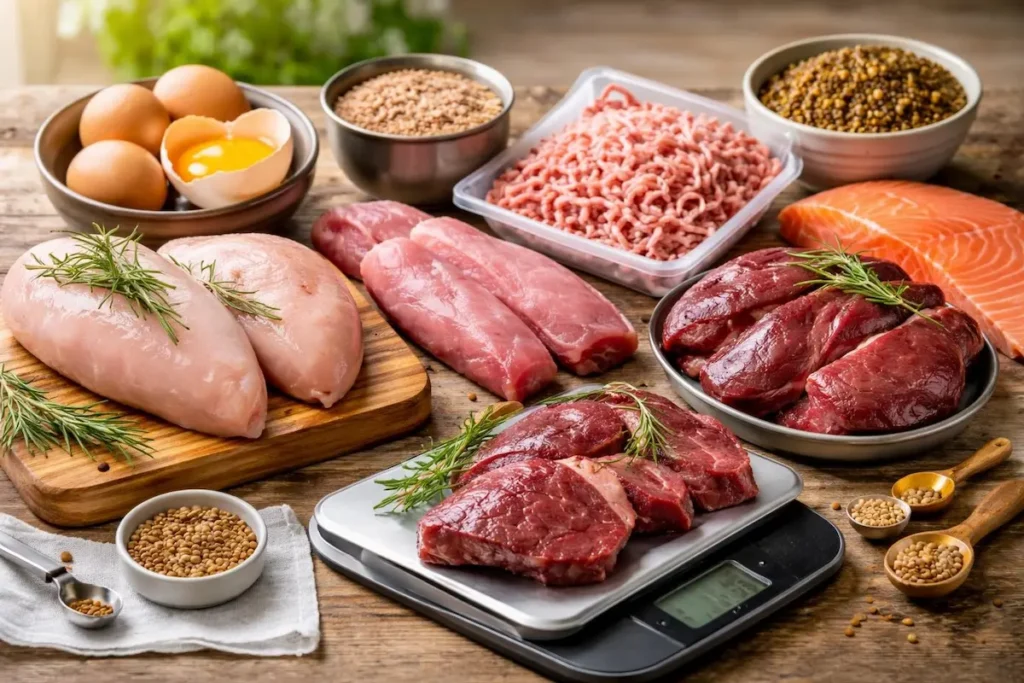
- Chicken breast — ~31g protein/100g; lean, digestible, complete amino acid profile
- Pork tenderloin — ~31g protein/100g; lean, underutilized, excellent digestibility
- Ground turkey — ~29g protein/100g; lean, versatile, widely available
- Beef liver — ~29g protein/100g; extraordinarily micronutrient-dense; rotate carefully
- Canned tuna — ~29g protein/100g; budget-friendly; limit frequency due to mercury
- Venison — ~30g protein/100g; extremely lean; ideal for high-protein weight management
- Eggs — ~13g protein/100g but 100% bioavailability; the most digestible protein source available
- Salmon — ~25g protein/100g plus EPA/DHA omega-3s for recovery
- Lentils — ~9g protein/100g cooked; plant-based complete protein when combined with animal sources
Feeding Active Dogs: Timing & Portions
How and when food is served matters as much as what’s in it for active dogs. A few key principles:
Never feed immediately before intense activity. Large meals before exercise increase the risk of bloat — particularly dangerous for large, deep-chested breeds. Feed at least 1–2 hours before or wait until after activity.
Post-activity feeding window matters. Research in canine sports nutrition suggests that feeding within 30–60 minutes after intense exercise supports better muscle glycogen replenishment and recovery. The beef and egg or chicken and quinoa recipes are ideal post-activity meals.
Split into two or three meals daily. Active dogs benefit from more frequent feeding than once-daily meals. Two meals minimum, three for very high-output dogs — this maintains stable energy levels and reduces digestive stress.
Portion by activity level, not just weight. A 60 lb working dog doing 4+ hours of activity daily needs significantly more food than a 60 lb dog on moderate daily walks. Adjust portions based on body condition — ribs should be easily felt but not visible.
Essential Supplements for Active Dogs
High-protein homemade recipes cover the major nutritional bases, but active dogs have elevated supplement needs compared to sedentary dogs:
- Fish oil (omega-3) — reduces exercise-induced inflammation; add to every meal post-cook
- Vitamin E — antioxidant that supports muscle recovery; particularly important for sport dogs
- Electrolytes — dogs working in heat lose sodium and potassium through panting; a small amount of low-sodium broth post-activity helps
- Glucosamine & chondroitin — joint protection for dogs with high-impact activity levels; start early rather than waiting for symptoms
- B-complex vitamins — support energy metabolism; active dogs have higher B vitamin demands
Safety: Avoid These in High-Protein Recipes
A few ingredients sometimes suggested in performance dog nutrition circles that should be avoided:
- Raw meat — salmonella and E. coli risk; always cook proteins fully
- Raw eggs — contain avidin, which blocks biotin absorption; always cook eggs
- Onion, garlic, or leeks — toxic in all forms
- Xylitol — lurks in some peanut butters; always check labels
- Cooked bones — brittle and dangerous; never serve
- Excess salt — sometimes suggested for electrolyte replacement; dangerous in quantity
Portion Guide for Active Dogs
| Activity Level | Weight | Per Meal | Meals Per Day |
| Moderate (1–2 hrs/day) | 30–50 lbs | 1½–2 cups | 2 |
| Moderate (1–2 hrs/day) | 50–80 lbs | 2–3 cups | 2 |
| High (2–4 hrs/day) | 30–50 lbs | 2–2½ cups | 2–3 |
| High (2–4 hrs/day) | 50–80 lbs | 3–4 cups | 2–3 |
| Working/Sport (4+ hrs/day) | Any size | Increase by 25–50% | 3 |
These are starting points. Monitor body condition weekly for active dogs — weight and muscle condition can change quickly with high activity levels, and portions should be adjusted accordingly.
Storage Guide
- Cooked batches — refrigerate in airtight containers for up to 4–5 days
- Freezer portions — freeze in individual meal-sized containers for up to 3 months
- Fish-based recipes — use within 3 days refrigerated; fish deteriorates faster than meat-based batches
- Organ meat recipes — label clearly with date; rotate within the weekly meal plan
- Post-activity meals — prepare in advance and refrigerate; serve within 30–60 minutes after activity
Quick Reference Guide: All 10 Recipes
| # | Recipe | Primary Protein | Protein Focus | Best For |
| 1 | Beef & Egg Power Bowl | Beef + Eggs | Highest protein density | Post-workout recovery |
| 2 | Chicken Breast & Quinoa | Chicken | Lean complete protein | Daily performance base |
| 3 | Salmon & Lentil | Salmon | Protein + omega-3s | Recovery, inflammation |
| 4 | Turkey & Chickpea | Turkey | Lean + endurance carbs | Endurance, working dogs |
| 5 | Venison & Brown Rice | Venison | Leanest protein option | Weight-managed active dogs |
| 6 | Duck & Sweet Potato | Duck | Calorie-dense protein | High-output, sport dogs |
| 7 | Beef Liver & Chicken | Beef + Liver | Maximum micronutrients | Nutrient boost (rotate) |
| 8 | Tuna & Brown Rice | Tuna | Budget high protein | Rotation, cost-effective |
| 9 | Lamb & Egg Allergy | Lamb + Eggs | Novel protein | Allergic active dogs |
| 10 | Pork & Lentil | Pork | Lean + plant protein | Underrated all-rounder |
Final Thoughts
Active dogs deserve food that matches their output — and high protein dog food recipes built around real, whole ingredients are the most direct way to deliver that.
More protein means faster recovery, better muscle maintenance, sustained energy, and a dog that’s ready to do it all again tomorrow.
Start with the chicken and quinoa batch for a clean, balanced everyday base. Add the beef and egg bowl on heavy training days. Rotate salmon once a week for the omega-3 recovery benefits. Build from there.
An active dog fed for performance is a happier, healthier, longer-lived dog. Put in the work on the prep side and that dog will absolutely put in the work on their end. That’s a deal worth making. 🙂