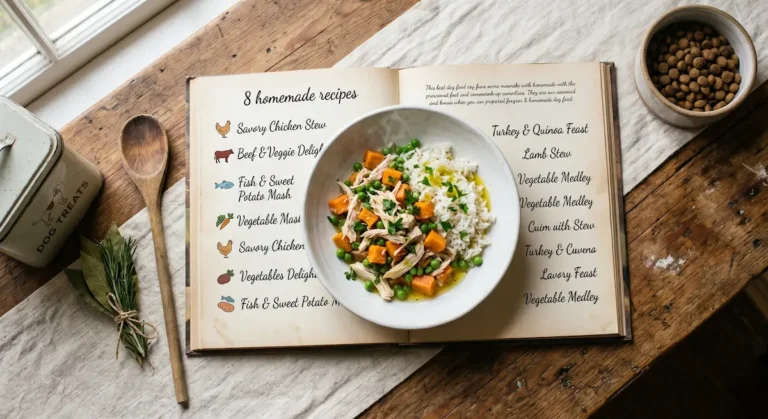
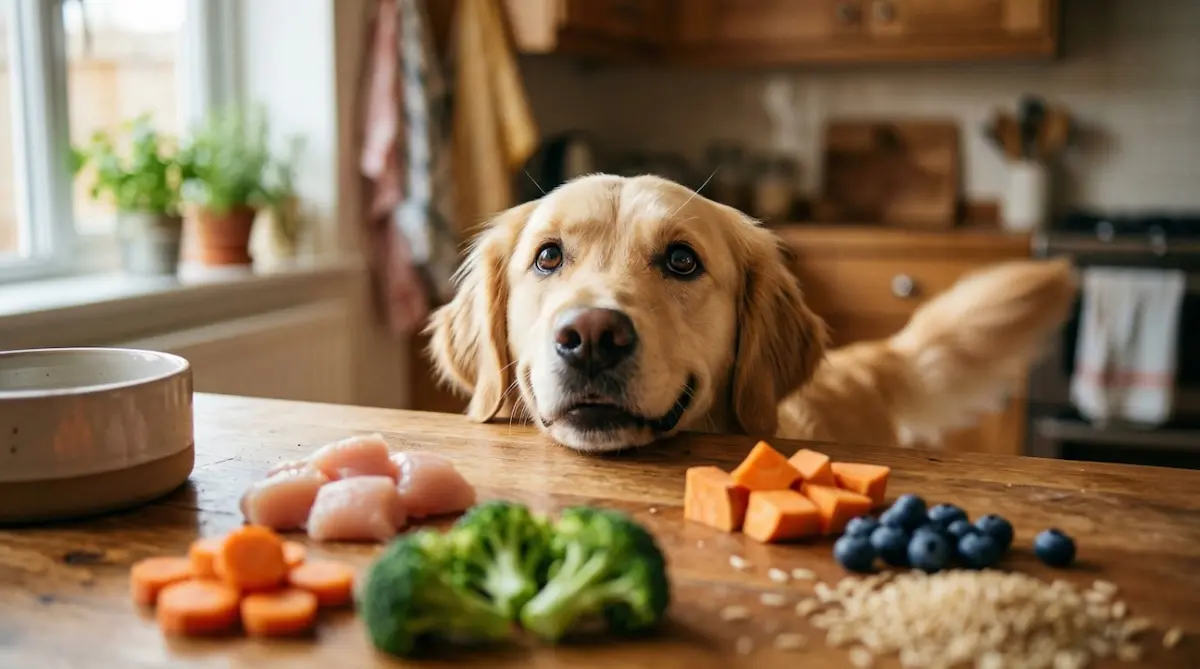
Switching to homemade dog food is one of the best decisions a dog owner can make. This guide covers everything needed to get started — the nutritional basics, 8 beginner-friendly recipes, and a practical meal prep system that makes homemade feeding sustainable long-term.
No prior cooking experience required. Just a few good ingredients and about an hour on the weekend.
⚠️ Always consult a vet before switching to a homemade diet full-time. A canine multivitamin and calcium supplement are essential additions to any homemade feeding plan.
8 Beginner-Friendly Homemade Dog Food Recipes
Recipe 1: Classic Chicken and Sweet Potato Bowl
The perfect starting recipe. Simple, affordable, and accepted enthusiastically by virtually every dog.
Chicken thighs deliver more taurine and nutrients than breast, and sweet potato provides sustained energy without blood sugar spikes.
Classic Chicken & Sweet Potato Bowl
The go-to beginner recipe — easy to make, easy to digest, dogs love it
Ingredients
2 lbs boneless, skinless chicken thighs
thighs stay moist after poaching — easier to shred than breast
1½ cups sweet potato, cubed
steam until fork-tender, then lightly mash
1 cup green beans, chopped
steam until just soft — low-calorie fiber source
½ cup carrots, grated
grated carrots blend in easily and soften fast
½ cup plain pumpkin puree
⚠️ Use plain pumpkin only — NOT pumpkin pie filling (contains xylitol & spices)
2 tbsp fish oil
✦ Add after cooling — heat degrades omega-3 fatty acids
Canine multivitamin + calcium supplement
✦ Dose per serving as directed on product label
Instructions
Poach chicken thighs in plain water for 20 minutes until fully cooked through. Reserve the poaching liquid — it makes a great flavor base for future meals.
Let chicken cool, then shred finely.
Steam sweet potato until fork-tender. Lightly mash.
Steam green beans and carrots until just soft.
Combine shredded chicken, sweet potato, green beans, carrots, and pumpkin puree. Mix well.
Cool completely before adding fish oil and supplements. Serve portioned by your dog’s weight.
🍗 Beginner tip: This is one of the most foolproof recipes to start with — chicken thighs are forgiving, sweet potato adds natural sweetness dogs love, and pumpkin supports healthy digestion. Batch-cook on Sunday and portion into daily containers for the week.
❄️ Freezing: Freeze without the fish oil and supplements — add those fresh per serving. Label bags with the date and thaw overnight in the fridge.
Recipe 2: Ground Beef and Vegetable Bowl
A heartier, iron-rich alternative to chicken. Lean ground beef delivers complete protein, zinc, and B vitamins that support immune function and energy levels.
Drain the fat thoroughly — excess saturated fat causes digestive issues over time.
Ground Beef & Vegetable Bowl
Hearty, iron-rich and one of the easiest ground meat meals to put together
Ingredients
2 lbs lean ground beef (90/10)
✦ 90/10 lean-to-fat ratio — drain thoroughly after browning
1 cup sweet potato, cubed and steamed
steam until fork-tender — adds natural sweetness and vitamin A
1 cup spinach, chopped
wilt in residual heat — no extra cooking needed
½ cup zucchini, diced
steam until just tender — hydrating and low-calorie
½ cup plain pumpkin puree
⚠️ Plain pumpkin only — NOT pumpkin pie filling (contains xylitol & spices)
2 tbsp fish oil
✦ Add after cooling — heat degrades omega-3 fatty acids
Canine multivitamin + calcium supplement
✦ Dose per serving as directed on product label
Instructions
Brown ground beef over medium heat until completely cooked through. Drain all fat — excess fat can cause digestive upset in dogs.
Steam sweet potato and zucchini until tender.
Add chopped spinach to the warm beef or vegetables and let wilt in the residual heat.
Combine beef, steamed vegetables, and pumpkin puree. Mix well.
Cool completely before adding fish oil and supplements. Serve portioned by your dog’s weight.
🥩 Fat matters: Always drain ground beef well — extra fat in a dog’s diet can trigger pancreatitis, especially in dogs with sensitive stomachs. 90/10 is the sweet spot: enough fat for flavor and palatability, lean enough to be safe.
❄️ Freezing: Portion into daily-use containers or zip bags before freezing. Freeze without fish oil and supplements — add those fresh per serving after thawing.
Recipe 3: Turkey and Pumpkin Digestive Bowl
The go-to recipe for dogs with sensitive stomachs. Ground turkey is the most digestible protein available for dogs — and the double fiber hit from pumpkin and zucchini actively supports healthy gut function.
Turkey & Pumpkin Digestive Bowl
Lean, gentle on the gut — a great pick for dogs with sensitive stomachs
Ingredients
2 lbs lean ground turkey (93/7)
✦ One of the leanest ground meats available — easy on the digestive system
1 cup plain pumpkin puree
⚠️ Plain pumpkin only — NOT pumpkin pie filling (contains xylitol & spices)
1 cup zucchini, diced
steam until just tender — hydrating and low-calorie
½ cup green beans, chopped
steam until soft — gentle fiber source
½ cup plain Greek yogurt
✦ Stir in after cooling — live cultures support gut flora. Plain, unsweetened only.
2 tbsp fish oil
✦ Add after cooling — heat degrades omega-3 fatty acids
Canine multivitamin + calcium supplement
✦ Dose per serving as directed on product label
Instructions
Brown ground turkey over medium heat until fully cooked. Drain any excess fat.
Steam zucchini and green beans until tender.
Combine turkey, steamed vegetables, and pumpkin puree. Mix well.
Cool completely, then stir in Greek yogurt. Adding yogurt to warm food kills the beneficial live cultures.
Add fish oil and supplements per serving just before feeding.
🎃 Double gut support: Pumpkin and Greek yogurt are doing a lot of work here — pumpkin’s soluble fiber helps regulate both loose stools and constipation, while yogurt’s live probiotics support a healthy gut microbiome. This bowl is a go-to for dogs coming off antibiotics or prone to digestive upsets.
❄️ Freezing: Freeze the turkey and vegetable base without the Greek yogurt — yogurt separates poorly after freezing. Stir in a fresh spoonful when serving from frozen.
Recipe 4: Salmon and Vegetable Omega Bowl
Salmon delivers more anti-inflammatory omega-3s per serving than any other whole food protein. Rotate this into the weekly plan for dogs with dull coats, dry skin, or joint stiffness — the difference shows up within a few weeks.
Salmon & Vegetable Omega Bowl
Omega-3 powerhouse — skin, coat and joint support in every bite
Ingredients
1½ lbs fresh salmon fillet, fully cooked
⚠️ Remove all bones — check by running fingers along the flesh after cooking
1½ cups sweet potato, steamed and mashed
forms a soft, binding base — vitamin A and digestive fiber
1 cup broccoli, steamed and chopped finely
✦ Chop small — large florets can be a choking hazard for smaller dogs
½ cup spinach, wilted
wilt in residual heat — iron and antioxidants
1 tbsp coconut oil
✦ Add after cooling — supports coat health and digestion
Canine multivitamin + calcium supplement
✦ Dose per serving as directed on product label
Instructions
Bake salmon at 375°F / 190°C for 18 minutes, or until it reaches an internal temperature of 145°F (63°C). Let cool slightly, then remove all bones and flake the flesh.
Steam sweet potato until fork-tender. Mash well.
Steam broccoli until tender. Chop finely.
Add spinach to warm vegetables and let wilt in residual heat.
Combine flaked salmon, sweet potato, broccoli, and spinach. Mix gently.
Cool completely before adding coconut oil and supplements per serving.
🐟 Shorter shelf life: Fish-based meals spoil faster than poultry or beef — store in the fridge for no more than 3 days and freeze in single-serving portions for up to 2 months. Label with the date.
🥥 Coconut oil note: Coconut oil is a saturated fat — keep to the recommended amount. It’s a useful addition for coat condition and digestion, but too much can cause loose stools in dogs that aren’t used to it. Introduce gradually if this is their first time.
Recipe 5: Slow Cooker Chicken and Vegetable Stew
The meal prep hero. Ten minutes of prep, eight hours of slow cooking, and enough food for the entire week.
Slow cooking breaks proteins into more digestible forms and produces a naturally broth-rich meal that supports hydration.
Slow Cooker Chicken & Vegetable Stew
Set it and forget it — hands-off cooking with fall-apart tender chicken
Ingredients
2 lbs boneless chicken thighs
thighs hold up better than breast in long slow-cooker sessions
1 cup sweet potato, cubed
breaks down into the stew base after long cooking
1 cup carrots, sliced
slice thick — thin slices go mushy over 6+ hours
1 cup green beans, chopped
add whole or chopped — holds texture reasonably well
½ cup plain pumpkin puree
⚠️ Plain pumpkin only — NOT pumpkin pie filling (contains xylitol & spices)
2 cups low-sodium chicken broth
⚠️ Must be onion-free and garlic-free — both are toxic to dogs. Check labels carefully.
Fish oil + canine supplements
✦ Add per serving after cooling — never into the hot slow cooker
Instructions
Add chicken thighs, sweet potato, carrots, green beans, and broth to the slow cooker.
Cook on low for 6–8 hours. Resist lifting the lid — each peek adds 20–30 minutes to cook time.
Shred chicken directly in the slow cooker once fully cooked through.
Stir in pumpkin puree during the last 15 minutes of cooking. This keeps its digestive benefits intact.
Cool completely before portioning — slow cooker inserts retain heat for a long time. Spread into a shallow pan to speed cooling.
Add fish oil and supplements per serving just before feeding.
🍲 Broth check: Most store-bought broths — even “low-sodium” ones — contain onion or garlic powder. Read the ingredients list, not just the front label. Making your own plain chicken broth from the poaching liquid is the safest option.
❄️ Batch-friendly: This recipe scales up easily — double it if you have a 6-quart or larger slow cooker. Portion into daily servings before freezing so you can thaw exactly what you need.
Recipe 6: Ground Lamb and Vegetable Bowl
The smart choice for dogs with food sensitivities. Lamb is a novel protein that most dogs haven’t been heavily exposed to through commercial food — making immune-triggered reactions significantly less likely. Great rotation option for allergy-prone dogs.
Ground Lamb & Vegetable Bowl
A novel protein option — ideal for dogs with chicken or beef sensitivities
Ingredients
1½ lbs ground lamb
✦ A novel protein — good rotation choice for dogs prone to food sensitivities
1 cup butternut squash, steamed and mashed
rich in beta-carotene and potassium — sweeter than sweet potato
1 cup green beans, chopped
steam until just tender — low-calorie fiber source
½ cup carrots, grated
grated raw — blends in easily and softens with residual heat
½ cup plain pumpkin puree
⚠️ Plain pumpkin only — NOT pumpkin pie filling (contains xylitol & spices)
2 tbsp fish oil
✦ Add after cooling — heat degrades omega-3 fatty acids
Canine multivitamin + calcium supplement
✦ Dose per serving as directed on product label
Instructions
Brown ground lamb over medium heat until fully cooked. Drain fat thoroughly — lamb is naturally fattier than beef or turkey.
Steam butternut squash until fork-tender. Mash well.
Steam green beans until just tender.
Combine lamb, butternut squash, green beans, grated carrots, and pumpkin puree. Mix well.
Cool completely before adding fish oil and supplements per serving.
🐑 Novel protein explained: “Novel protein” means a meat your dog hasn’t eaten regularly before. If your dog has been reacting to chicken or beef — itchy skin, recurring ear infections, loose stools — switching to lamb gives the immune system a reset. Introduce any new protein gradually over 5–7 days to avoid digestive upset.
🎃 Butternut squash vs. sweet potato: Either works well here. Butternut squash has a slightly lower glycemic index and a subtler sweetness — a good swap for dogs watching their weight or managing blood sugar.
Recipe 7: Beef and Organ Meat Micronutrient Bowl
Organ meat is the most nutritionally important ingredient most homemade feeders skip.
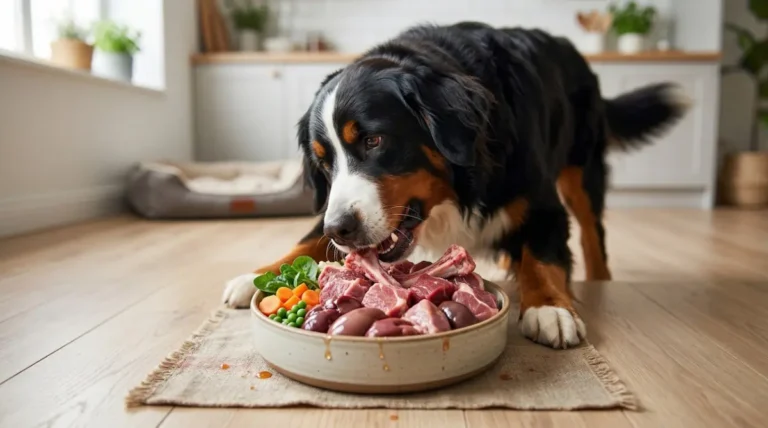
Beef liver delivers Vitamins A and B12, iron, zinc, and copper at levels muscle meat alone simply can’t match. Keep liver at approximately 10% of the total recipe.
Beef & Organ Meat Micronutrient Bowl
Nutrient-dense and deeply satisfying — liver brings vitamins no plant can match
Ingredients
1½ lbs lean ground beef
the muscle meat base — drain fat thoroughly after browning
¼ lb beef liver, finely chopped
⚠️ Do not exceed this amount — liver is very high in vitamin A. See ratio note above.
1 cup butternut squash, steamed and mashed
beta-carotene, potassium, and a natural binding base
1 cup spinach, wilted
wilt in residual heat — iron and folate to complement the liver
½ cup green beans, chopped
steam until just tender — fiber and crunch
2 tbsp fish oil
✦ Add after cooling — heat degrades omega-3 fatty acids
Canine multivitamin + calcium supplement
✦ Dose per serving as directed on product label
Instructions
Sauté finely chopped liver over medium-high heat for about 3 minutes per side until just cooked through — slightly pink inside is fine, but not raw. Set aside.
Brown ground beef in the same pan. Drain fat thoroughly.
Steam butternut squash until fork-tender. Mash well.
Add spinach to warm ingredients and let wilt in residual heat.
Combine beef, liver, butternut squash, spinach, and green beans. Mix well.
Cool completely before adding fish oil and supplements per serving.
🫀 Why liver? Beef liver is one of the most nutrient-dense foods on the planet — packed with vitamin A, B12, iron, zinc, and copper in bioavailable forms no synthetic supplement can fully replicate. A small amount does a lot of work. The key is keeping the quantity in check.
🔄 Rotation tip: Alternate this bowl with non-organ recipes across the week. A good rhythm is 2 organ-meat meals and 4–5 lean muscle-meat meals per week — enough to capture liver’s micronutrient benefits without risking excess vitamin A accumulation over time.
Recipe 8: Turkey and Turmeric Anti-Inflammatory Bowl
Built for dogs dealing with joint issues, chronic inflammation, or skin conditions.
Curcumin from turmeric directly reduces inflammatory markers — always pair with black pepper to activate absorption. The difference in bioavailability without it is enormous.
Turkey & Turmeric Anti-Inflammatory Bowl
Lean protein meets golden spice — joint and immune support in every serving
Ingredients
2 lbs lean ground turkey
brown and drain — mild, lean base that lets the turmeric shine
1 cup sweet potato, steamed and mashed
vitamin A and natural sweetness — pairs well with turmeric
1 cup kale, finely chopped and steamed
✦ Chop finely and steam until fully tender — raw kale is hard to digest for dogs
½ cup plain pumpkin puree
⚠️ Plain pumpkin only — NOT pumpkin pie filling (contains xylitol & spices)
¼ tsp turmeric
✦ Mix into pumpkin puree before combining — ensures even distribution throughout the batch
A pinch of black pepper
✦ Activates curcumin in turmeric — piperine increases absorption by up to 2,000%
1 tbsp coconut oil
✦ Add after cooling — fat further aids curcumin absorption
2 tbsp fish oil
✦ Add after cooling — heat degrades omega-3 fatty acids
Canine multivitamin + calcium supplement
✦ Dose per serving as directed on product label
Instructions
Brown ground turkey over medium heat until fully cooked. Drain fat.
Mix turmeric and black pepper into the pumpkin puree before adding to the bowl — this ensures even distribution and activates the curcumin-piperine pairing.
Steam sweet potato until fork-tender. Mash well. Steam kale until fully tender, then chop finely.
Combine turkey, sweet potato, kale, and spiced pumpkin puree. Mix well.
Cool completely before adding coconut oil, fish oil, and supplements per serving.
🌿 The turmeric trio: Turmeric alone absorbs poorly — that’s where black pepper and fat come in. Piperine in black pepper boosts curcumin absorption dramatically, and fat (coconut oil or fish oil) helps it cross into the bloodstream. All three work together, which is why the recipe uses all three.
🦴 Best for: Older dogs with joint stiffness, dogs recovering from inflammation, or any dog that could benefit from immune support. At ¼ tsp per batch, the dose is gentle and safe for regular rotation.
Quick Reference: All 8 Recipes
| Recipe | Protein | Best For | Prep Time |
| Chicken & Sweet Potato | Chicken | All dogs, beginners | 30 min |
| Ground Beef & Vegetable | Beef | Iron & immune support | 25 min |
| Turkey & Pumpkin | Turkey | Sensitive stomachs | 25 min |
| Salmon & Vegetable | Salmon | Coat & joint health | 30 min |
| Slow Cooker Chicken Stew | Chicken | Meal prep, busy schedules | 10 min + slow cook |
| Ground Lamb & Vegetable | Lamb | Food-sensitive dogs | 30 min |
| Beef & Organ Meat | Beef + Liver | Micronutrient density | 30 min |
| Turkey & Turmeric | Turkey | Joint & inflammatory conditions | 25 min |
The Beginner’s Nutritional Framework
Understanding what goes into a balanced homemade meal matters as much as the recipes themselves. Here’s the framework behind every recipe above.
Getting the Balance Right
Every balanced homemade dog food meal follows this basic structure:
- Protein (40–50%) — lean muscle meat from animal sources
- Vegetables (25–35%) — dog-safe vegetables for fiber, vitamins, and minerals
- Carbohydrates (15–25%) — sweet potato, pumpkin, butternut squash
- Fat (5–10%) — from the meat itself plus added fish oil or coconut oil
- Supplements — canine multivitamin and calcium source to fill nutritional gaps
The most common beginner mistake is skipping the supplement step. No whole-food recipe — however carefully built — fully replaces the micronutrient completeness of a properly supplemented diet. Calcium and a good canine multivitamin are non-negotiable for long-term homemade feeding.
Best Proteins for Homemade Dog Food
Rotating proteins across the week delivers a broader amino acid and micronutrient profile than any single protein can achieve alone:
| Protein | Status | Key benefits |
|---|---|---|
| Chicken thighs | Recommended | Complete protein, taurine, affordable and widely available |
| Lean ground beef (90/10) | Recommended | Iron, zinc, and B vitamins in bioavailable form |
| Ground turkey | Recommended | Most digestible ground meat — ideal for sensitive stomachs |
| Salmon | Recommended | Omega-3 powerhouse, anti-inflammatory, skin and coat support |
| Ground lamb | Recommended | Novel protein — good rotation choice for dogs with sensitivities |
| Sardines in water | Recommended | Budget-friendly omega-3 source, no prep needed |
| Eggs | Recommended | Highest biological value protein available — nutrient-dense |
| Beef or chicken liver | Recommended | Exceptional micronutrient density — keep to 10% of meal maximum |
Best Vegetables for Homemade Dog Food
These vegetables appear consistently in every recipe for good reason:
| Vegetable | Status | Key benefits |
|---|---|---|
| Sweet potato | Recommended | Complex carbohydrates, beta-carotene, potassium |
| Pumpkin (plain) | Recommended | Soluble fiber — regulates both diarrhea and constipation |
| Green beans | Recommended | Low glycemic, high fiber, universally tolerated |
| Zucchini | Recommended | Very low calorie, gentle on digestion, hydrating |
| Spinach | Recommended | Iron, vitamin K, magnesium |
| Kale | Recommended | Broad vitamin spectrum, prebiotic fiber — cook before serving |
| Broccoli | Recommended | Chromium, sulforaphane, immune support — chop finely |
| Carrots | Recommended | Beta-carotene, natural crunch, low calorie |
| Butternut squash | Recommended | Fiber, potassium, vitamin A — good low-GI sweet potato swap |
Ingredients to Always Avoid
These ingredients are toxic to dogs regardless of quantity:
| Ingredient | Status | Why it’s dangerous |
|---|---|---|
| Onions and garlic | Toxic | Damage red blood cells — causes hemolytic anemia |
| Grapes and raisins | Toxic | Cause acute kidney failure — even small amounts |
| Chocolate and cocoa | Toxic | Contain methylxanthines — toxic to the nervous system and heart |
| Xylitol | Toxic | Found in some peanut butters and sugar-free products — causes rapid liver failure |
| Macadamia nuts | Toxic | Cause neurological symptoms, weakness, and hyperthermia |
| Avocado | Toxic | Contains persin — causes vomiting, diarrhea, and fluid accumulation |
| Cooked bones | Toxic | Splinter easily — cause internal punctures and blockages |
| Nutmeg | Toxic | Toxic in any amount — causes tremors and seizures |
| Excess salt | Avoid | Causes sodium ion poisoning — excessive thirst, vomiting, neurological symptoms |
How Much to Feed
A reliable starting point for homemade food is 2 to 3% of the dog’s ideal body weight per day, split across two meals:
| Dog Size | Weight | Daily Amount |
| Small | Under 20 lbs | ½ to 1 cup |
| Medium | 20–50 lbs | 1 to 2.5 cups |
| Large | 50–90 lbs | 2.5 to 4 cups |
| Extra Large | 90+ lbs | 4 to 6 cups |
Start at 2.5% and adjust based on body condition over 2 to 3 weeks. Active dogs, puppies, and nursing females need more. Senior dogs and those managing weight need less.
The Beginner Meal Prep System
This is the system that makes homemade dog food genuinely sustainable — even for busy households.
The Weekend Batch Method
Sunday is the magic day. Spend 60 to 90 minutes cooking two different recipes:
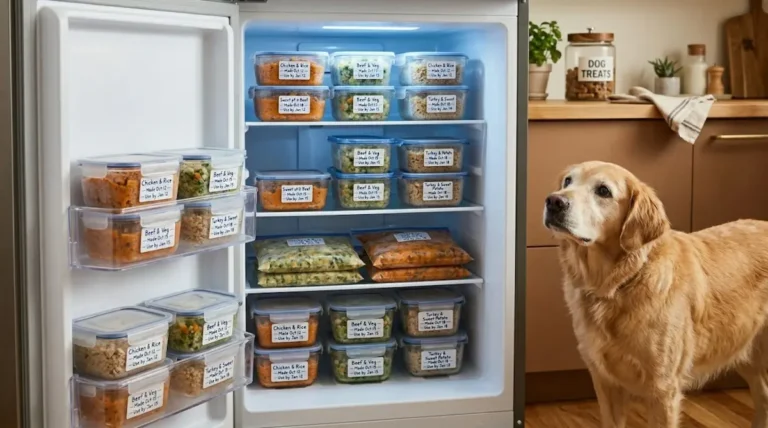
- Recipe A goes into the fridge — feeds the dog for the next 4 days
- Recipe B gets portioned into individual meal sizes and frozen — feeds the dog for the following week
That’s 2 weeks of meals handled in a single Sunday session. Repeat every weekend.
Portioning for the Freezer
- Use airtight freezer bags or glass containers
- Portion into individual meal sizes before freezing — never freeze one giant block
- Lay bags flat to freeze — saves significant freezer space
- Label every bag with the recipe name and date
Thawing and Serving
- Transfer one portion from freezer to fridge the night before it’s needed
- Never thaw at room temperature — bacterial growth risk
- Let refrigerated food sit for 10 to 15 minutes before serving
- Warm gently if needed — stir thoroughly to eliminate hot spots
Transitioning From Commercial to Homemade Food
Switch too fast and digestive upset follows — not because the food is wrong, but because the gut microbiome needs time to adjust. Follow this timeline:
- Week 1: 25% homemade, 75% current food
- Week 2: 50/50
- Week 3: 75% homemade, 25% current food
- Week 4: Full homemade diet
Monitor stool quality and energy levels throughout. Slow down the transition if significant digestive changes occur.
Signs the Diet Is Working
After 4 to 6 weeks on a well-balanced homemade diet, look for:
- Firmer, more consistent stools — the clearest early indicator
- Improved coat shine and texture — visible within 4 to 8 weeks
- Better energy levels — improved nutrient absorption shows up in daily activity
- Healthy weight maintenance — neither gaining nor losing unexpectedly
- Reduced itching or skin irritation — particularly in dogs with previous sensitivities
A vet check-in with blood panels after 60 to 90 days on a full homemade diet is always a smart move — it confirms the diet is performing nutritionally where it matters most.
Final Thoughts
Homemade dog food isn’t complicated — it just requires a little intention and a consistent routine. Start with Recipe 1, nail the weekend batch method, and add one new recipe per week until a full rotation is established.
The dog gets fresher, more nutritious food. The ingredient list becomes something actually readable. And the Sunday batch session becomes one of those low-effort habits that pays off every single day of the week. 🙂