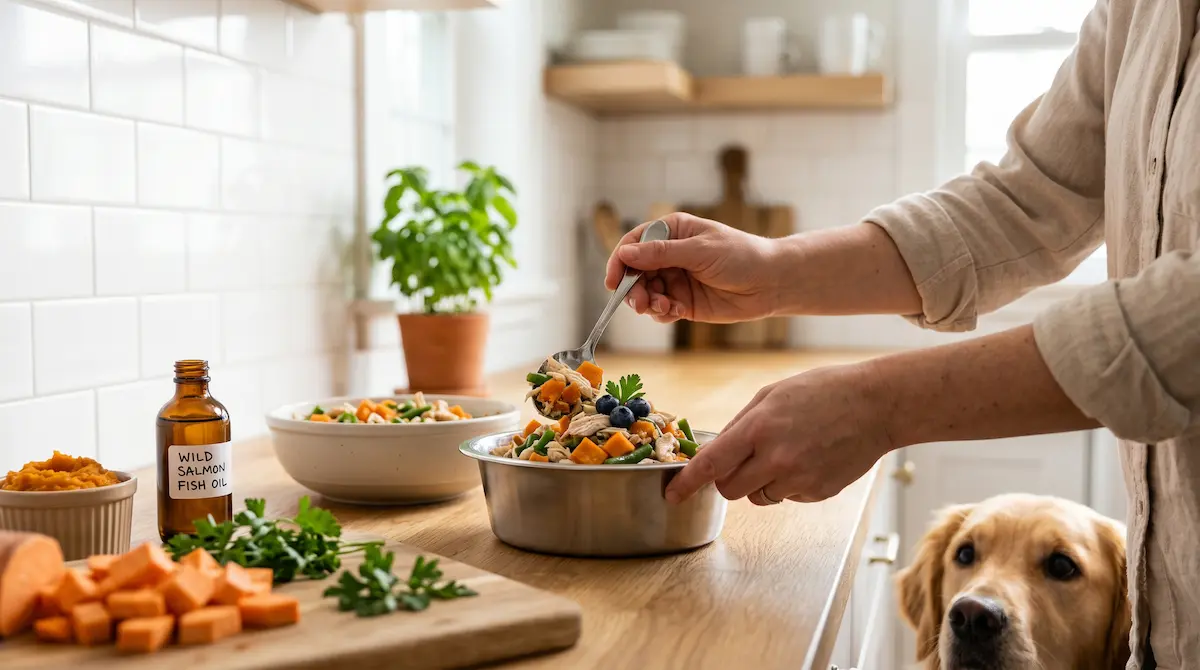
The best homemade dog food isn’t the most complicated — it’s the most consistently balanced. Fresh proteins, dog-safe vegetables, appropriate carbohydrates, and the right supplements. That’s the whole formula.
These 12 recipes follow exactly the nutritional principles veterinary nutritionists recommend — complete protein rotation, organ meat inclusion, omega-3 supplementation, and a calcium source to cover the gaps whole food alone can’t fill.
⚠️ These recipes follow established veterinary nutritional guidelines. Always consult a vet or veterinary nutritionist before switching to a homemade diet full-time, especially for dogs with existing health conditions.
Not sure where to begin? Our vet-approved beginner’s guide and easy raw diet recipes are great places to start.
12 Best Homemade Dog Food Recipes
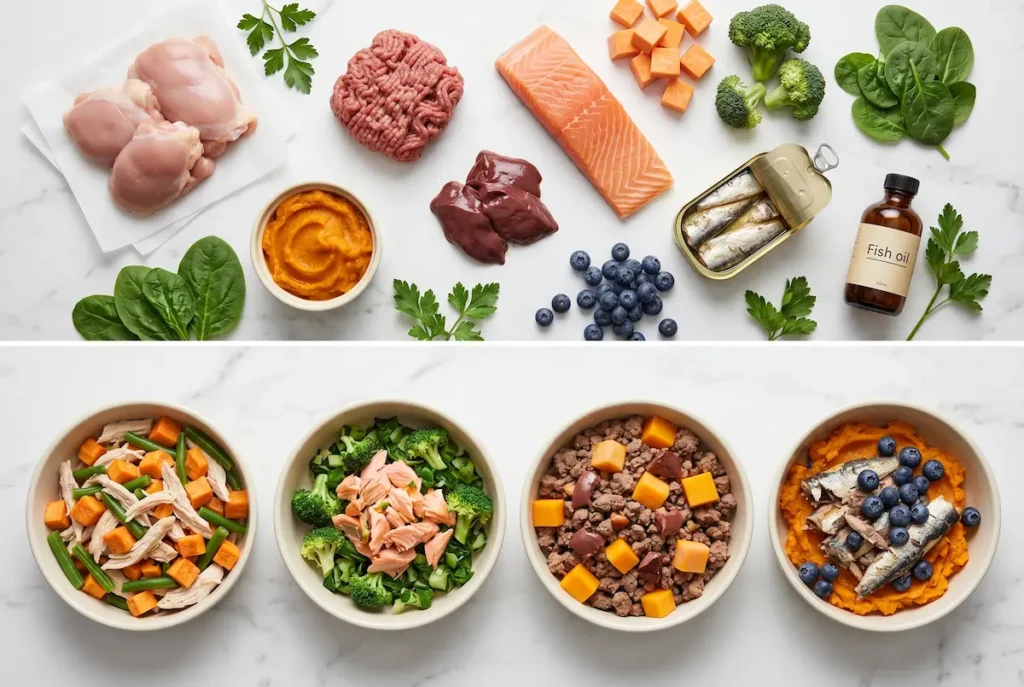
Recipe 1: The Classic — Chicken and Sweet Potato Bowl
Every vet-approved homemade feeding plan starts here.
Chicken thighs over breast — always — for the higher taurine content, better fat profile, and superior moisture retention after cooking. This recipe works for every breed, every age, and every budget.
The Classic Chicken & Sweet Potato Bowl
A balanced, vet-friendly everyday meal built around lean protein, gentle carbs, and fiber-rich veggies.
Ingredients
2 lbs boneless, skinless chicken thighs
✦ Lean protein base
1½ cups sweet potato, cubed
1 cup green beans, chopped
½ cup carrots, grated
½ cup plain pumpkin puree
Plain only, not pie filling
2 tbsp fish oil
Canine multivitamin + calcium supplement
✦ Essential for nutritional balance
Instructions
Poach chicken thighs in plain water for 20 minutes. Shred finely.
Steam sweet potato until tender, then lightly mash.
Steam green beans and carrots until just soft.
Combine all cooked ingredients with the pumpkin puree.
Cool completely. Add fish oil and supplements per serving, not to the whole batch.
⚠️ No seasoning: Skip salt, garlic, and onion. They’re harmful to dogs.
📦 Storage: Refrigerate up to 4 days, or freeze in portions for up to 3 months.
Recipe 2: Lean Beef and Vegetable Power Bowl
Ground beef brings iron, zinc, and B vitamins that chicken simply doesn’t deliver at the same levels.
Rotate this into the weekly plan at least twice to cover the micronutrients that poultry-heavy diets consistently fall short on.
Lean Beef & Vegetable Power Bowl
An iron-rich, muscle-building meal packed with lean beef, leafy greens, and fiber-loaded veggies.
Ingredients
2 lbs lean ground beef (90/10)
✦ Iron-rich protein base
1½ cups sweet potato, cubed and steamed
1 cup spinach, chopped
½ cup zucchini, diced
½ cup plain pumpkin puree
Plain only, not pie filling
2 tbsp fish oil
Canine multivitamin + calcium supplement
✦ Essential for nutritional balance
Instructions
Brown ground beef completely. Drain all fat to keep it lean and digestible.
Steam sweet potato and zucchini until tender.
Wilt spinach in the residual heat from the cooked veggies.
Combine all cooked ingredients with the pumpkin puree.
Cool completely. Add fish oil and supplements per serving, not to the whole batch.
⚠️ Drain the fat: Excess beef fat can trigger pancreatitis in dogs. Always drain thoroughly.
📦 Storage: Refrigerate up to 4 days, or freeze in portions for up to 3 months.
Recipe 3: Turkey and Pumpkin Sensitive Stomach Bowl
The default recipe for digestive issues — chronic or acute.
Turkey is the most digestible protein available, pumpkin’s soluble fiber regulates transit in both directions, and the yogurt delivers live probiotic cultures that actively rebuild gut flora after disruption.
Turkey & Pumpkin Sensitive Stomach Bowl
A gentle, easy-to-digest meal designed for upset tummies — light protein, soothing fiber, and gut-friendly probiotics.
Ingredients
2 lbs lean ground turkey (93/7)
✦ Light, easy-to-digest protein
1 cup plain pumpkin puree
✦ Soothes digestion, regulates stool
1 cup zucchini, diced
½ cup green beans, chopped
½ cup plain Greek yogurt
✦ Live probiotics — add after cooling
2 tbsp fish oil
Canine multivitamin + calcium supplement
Instructions
Brown ground turkey and drain fat.
Steam zucchini and green beans until just tender.
Combine turkey, vegetables, and pumpkin puree.
Cool completely before stirring in yogurt — heat destroys live cultures.
Add fish oil and supplements per serving, not to the whole batch.
⚠️ Cool first, yogurt second: Adding yogurt to warm food kills the probiotics that make this recipe gut-friendly.
📦 Storage: Refrigerate up to 4 days, or freeze in portions for up to 3 months. Note: yogurt texture may change after freezing.
Recipe 4: Salmon and Broccoli Omega Bowl
Omega-3 fatty acids from whole food salmon outperform supplemental fish oil when it comes to bioavailability — and this recipe delivers both.
Broccoli adds chromium for metabolic support and sulforaphane for immune function, making this one of the most nutritionally impressive recipes on the list.
Salmon & Broccoli Omega Bowl
A coat-shining, anti-inflammatory meal loaded with omega-3s, antioxidants, and gentle complex carbs.
Ingredients
1½ lbs fresh salmon fillet
✦ Fully cooked, all bones removed
1½ cups sweet potato, steamed and mashed
1 cup broccoli, steamed and finely chopped
✦ Antioxidant-rich, lightly cooked
½ cup spinach, wilted
1 tbsp coconut oil
Add per serving after cooling
Canine multivitamin + calcium supplement
Instructions
Bake salmon at 375°F (190°C) for 18 minutes. Remove all bones, then flake.
Steam sweet potato until tender, then mash.
Steam broccoli until just tender — don’t overcook, sulforaphane degrades with excess heat.
Combine all cooked ingredients and mix gently.
Cool completely. Add coconut oil and supplements per serving, not to the whole batch.
⚠️ Always fully cook salmon: Raw or undercooked salmon carries Neorickettsia helminthoeca, a parasite that can be fatal to dogs.
📦 Storage: Refrigerate up to 3 days, or freeze in portions for up to 2 months. Shorter shelf life than poultry recipes.
Recipe 5: Beef and Organ Meat Micronutrient Bowl
The recipe most homemade feeders skip — and the one that makes the biggest nutritional difference. Beef liver delivers Vitamins A and B12, iron, zinc, and copper at concentrations no muscle meat can match.
Without organ meat in regular rotation, homemade diets consistently fall short on these critical micronutrients.
Beef & Organ Meat Micronutrient Bowl
A nose-to-tail bowl that delivers concentrated vitamin A, B12, iron, and copper through nutrient-dense organ meat.
Ingredients
1½ lbs lean ground beef
¼ lb beef liver, finely chopped
✦ Cap at 10% of total recipe volume
1 cup butternut squash, steamed and mashed
1 cup spinach, wilted
½ cup green beans, chopped
2 tbsp fish oil
Canine multivitamin + calcium supplement
Instructions
Sauté liver in a lightly oiled pan for 3 minutes each side. Set aside.
Brown ground beef and drain all fat.
Steam butternut squash until tender, then mash.
Combine all cooked ingredients and mix well.
Cool completely. Add fish oil and supplements per serving, not to the whole batch.
⚠️ Don’t exceed the liver ratio: Keep liver at 10% of total volume (~¼ lb per 1½ lbs muscle meat). Excess vitamin A is toxic to dogs.
📦 Storage: Refrigerate up to 4 days, or freeze in portions for up to 3 months.
Recipe 6: Lamb and Root Vegetable Novel Protein Bowl
Novel protein diets are standard veterinary practice for food allergy management — and lamb qualifies for most dogs because commercial food has historically under-used it. This recipe keeps ingredients deliberately simple to minimize allergen variables.
Lamb & Root Vegetable Novel Protein Bowl
A hypoallergenic bowl built on lamb as a single novel protein — designed for dogs with chicken or beef sensitivities during elimination trials.
Ingredients
1½ lbs ground lamb
✦ The novel protein — keep it the only meat in the trial
1 cup sweet potato, cubed and steamed
1 cup carrots, sliced and steamed
½ cup green beans, chopped
½ cup plain pumpkin puree
Plain only — not pie filling
2 tbsp fish oil
Canine multivitamin + calcium supplement
Instructions
Brown ground lamb over medium heat. Drain fat thoroughly — lamb is naturally rich.
Steam sweet potato and carrots until fork-tender.
Combine lamb, root vegetables, green beans, and pumpkin puree. Mix gently.
Cool completely. Add fish oil and supplements per serving, not to the whole batch.
⚠️ Strict elimination protocol: If using as an allergy trial, feed only this recipe for 8–12 weeks — no other proteins, treats, table scraps, or flavored medications, or the trial is invalidated.
📦 Storage: Refrigerate up to 4 days, or freeze in portions for up to 3 months.
Recipe 7: Slow Cooker Chicken and Vegetable Stew
The recipe that makes homemade feeding genuinely sustainable. Ten minutes of prep, eight hours of cooking, enough food for the whole week.
Slow cooking improves protein digestibility and produces a naturally brothy meal that supports hydration alongside nutrition.
Slow Cooker Chicken & Vegetable Stew
A hands-off, broth-rich stew with shredded chicken and tender root vegetables — built for batch-cooking busy weeks.
Ingredients
2 lbs boneless chicken thighs
✦ Boneless only — never slow-cook on the bone
1 cup sweet potato, cubed
1 cup carrots, sliced
1 cup green beans, chopped
½ cup plain pumpkin puree
Stir in at the end — keeps the texture velvety
2½ cups low-sodium chicken broth
✦ Must be onion-free and garlic-free
Fish oil + canine multivitamin
Added per serving, never to the hot batch
Instructions
Add chicken, sweet potato, carrots, green beans, and broth to the slow cooker. Hold the pumpkin for later.
Cook on low for 6–8 hours until chicken is fully tender.
Shred chicken directly in the pot using two forks.
Stir in pumpkin puree during the last 15 minutes to thicken the stew.
Cool completely. Add fish oil and supplements per serving.
⚠️ Read the broth label: most commercial chicken broths contain onion powder, garlic powder, or “natural flavors” — all toxic to dogs. Use unsalted homemade broth or a verified dog-safe brand only.
📦 Storage: Refrigerate up to 4 days, or freeze in portions for up to 3 months. The broth keeps it especially moist after thawing.
💡 Related Articles:
Recipe 8: Turkey and Turmeric Anti-Inflammatory Bowl
For dogs dealing with joint pain, IBD, chronic skin conditions, or any systemic inflammation.
Curcumin from turmeric directly reduces inflammatory markers — and black pepper’s piperine increases its absorption by up to 2000%. Don’t skip the pepper.
Turkey & Turmeric Anti-Inflammatory Bowl
A golden bowl built around curcumin and omega-3s — designed to support senior dogs with joint stiffness and chronic inflammation.
Ingredients
2 lbs lean ground turkey
1 cup sweet potato, mashed
1 cup kale, finely chopped & steamed
Steamed softens oxalates and aids digestion
½ cup plain pumpkin puree
The carrier for turmeric — fat helps absorption
¼ tsp turmeric
✦ The active anti-inflammatory — curcumin source
A pinch of black pepper
✦ Piperine boosts curcumin absorption ~20×
1 tbsp coconut oil
2 tbsp fish oil
Canine multivitamin + calcium supplement
Instructions
Brown ground turkey over medium heat and drain the fat.
Stir turmeric and black pepper into the pumpkin puree before adding — this activates the curcumin–piperine pairing.
Steam sweet potato until soft and mash. Steam kale until just tender.
Combine turkey, sweet potato, kale, and the spiced pumpkin. Mix evenly so every bite carries the turmeric.
Cool completely. Add coconut oil, fish oil, and supplements per serving.
⚠️ Turmeric is a mild blood thinner: skip this recipe if your dog is on NSAIDs, anticoagulants, or scheduled for surgery within 2 weeks. Always clear curcumin use with your vet for senior or chronically medicated dogs.
📦 Storage: Refrigerate up to 4 days, or freeze in portions for up to 3 months. Turmeric will stain containers — glass is your friend.
Recipe 9: Chicken and Bone Broth Gut-Health Bowl
Bone broth’s gelatin directly supports gut lining integrity — the foundational element of nutrient absorption and immune function.
This recipe uses it as both a cooking medium and a serving addition, maximizing its therapeutic benefit while producing one of the most palatable meals on the list.
Chicken & Bone Broth Gut-Health Bowl
A poached, broth-rich bowl built around collagen and glycine — designed to soothe leaky gut, support digestion, and rehydrate picky eaters.
Ingredients
2 lbs boneless chicken thighs
1½ cups homemade bone broth
✦ Unsalted, no onion or garlic — homemade only
1 cup zucchini, diced
½ cup green beans, chopped
½ cup carrots, grated
½ cup plain pumpkin puree
Soluble fiber — feeds healthy gut bacteria
2 tbsp fish oil
Canine multivitamin + calcium supplement
Instructions
Poach chicken thighs in bone broth for 20 minutes until cooked through. Shred finely. Reserve the broth — it carries the collagen.
Steam zucchini, green beans, and carrots until just tender.
Combine shredded chicken, vegetables, and pumpkin puree.
Stir in reserved broth gradually until you reach a stew-like consistency.
Cool completely. Add fish oil and supplements per serving.
⚠️ Bone broth must be homemade: store-bought varieties almost always contain salt, onion, or garlic. Simmer chicken or beef bones for 12–24 hours with apple cider vinegar — that’s where collagen and glycine actually come from.
📦 Storage: Refrigerate up to 4 days, or freeze in portions for up to 3 months. The broth gels naturally when cold — that’s the collagen working.
Recipe 10: Sardine and Sweet Potato Budget Bowl
The most affordable omega-3-rich recipe on the list — and one of the fastest.
Canned sardines in water require zero cooking, cost a fraction of fresh salmon, and deliver comparable omega-3 content per serving.
This recipe proves that the best homemade dog food doesn’t require the biggest grocery budget. FYI, this one also tends to disappear from the bowl faster than any other recipe here.
Sardine & Sweet Potato Budget Bowl
A pantry-friendly bowl that delivers omega-3s, calcium, and B12 from canned sardines — premium nutrition at grocery-aisle prices.
Ingredients
2 cans sardines in water, drained
✦ Water-packed, no salt — soft bones stay in for calcium
1 lb lean ground turkey, cooked
Bulks up the protein base and dilutes fish intensity
1½ cups sweet potato, steamed & mashed
1 cup spinach, wilted
½ cup plain pumpkin puree
Plain only — not pie filling
Canine multivitamin + calcium supplement
Instructions
Brown ground turkey thoroughly. Drain fat and let cool.
Mash sardines (bones and all) until smooth — the soft bones are a natural calcium source.
Steam sweet potato and mash. Wilt spinach in a dry pan or with a splash of water.
Combine sardines, turkey, sweet potato, spinach, and pumpkin. Mix thoroughly so the fish distributes evenly.
Cool completely. Add supplements per serving.
⚠️ Read the can carefully: only use sardines packed in water with no added salt. Skip anything in oil, tomato sauce, mustard, or brine — the sodium and additives are unsafe for dogs even in small batches.
📦 Storage: Refrigerate up to 3 days (shorter than usual due to fish content), or freeze in portions for up to 2 months. Fish-based meals lose freshness fastest.
Recipe 11: Chicken and Blueberry Antioxidant Bowl
Blueberries are one of the most research-backed functional foods for canine health — their anthocyanins support cognitive function, immune health, and cellular protection.
This recipe is particularly well-suited for senior dogs, where cognitive support and antioxidant protection matter most.
Chicken & Blueberry Antioxidant Bowl
Anthocyanins, beta-carotene, and omega-3s in one bowl — built to fight oxidative stress in senior dogs and active breeds.
Ingredients
½ cup fresh or frozen blueberries
✦ Anthocyanins — the deep purple pigment that scavenges free radicals
2 lbs boneless chicken thighs, poached & shredded
Thighs over breast — more iron and zinc, both cofactors in antioxidant enzymes
1½ cups sweet potato, steamed & mashed
Beta-carotene partner — fat-soluble antioxidant pairs with the water-soluble berry ones
1 cup spinach, wilted
½ cup carrots, grated
2 tbsp fish oil
✦ DHA/EPA — anti-inflammatory teammate to the antioxidants
Canine multivitamin + calcium supplement
Instructions
Poach chicken thighs in water until cooked through. Cool, then shred finely.
Steam sweet potato and mash. Wilt spinach in a dry pan. Grate carrots raw.
Combine chicken, sweet potato, spinach, and carrots in a large bowl.
Gently fold in blueberries off the heat — high heat breaks down anthocyanins, which is the whole point of this bowl.
Cool completely. Add fish oil and supplements per serving, not to the whole batch.
⚠️ Sniff the fish oil before every use: fresh smells faintly oceanic, rancid smells sharp, paint-like, or like old crayons. Rancid oil is pro-oxidant — it actively works against the antioxidants in this bowl. Store in a dark bottle in the fridge, use within 60 days of opening.
📦 Storage: Refrigerate up to 4 days or freeze portions for up to 3 months. Don’t panic if poop turns dark blue or purple for a day — that’s just anthocyanin pigment passing through, not blood.
Recipe 12: The Weekly Rotation Bowl — Three Proteins
The recipe veterinary nutritionists would choose above all others on this list.
No single protein delivers every amino acid and micronutrient in optimal quantities — rotation across chicken, beef, and sardines in one batch covers the widest nutritional spectrum achievable in a single homemade meal.
The Weekly Rotation Bowl — Three Proteins
Chicken, beef, and sardines in one bowl — three protein sources covering amino acids and minerals no single meat can deliver alone.
Ingredients
1 lb boneless chicken thighs
✦ Lean base — niacin and selenium-rich foundation
½ lb lean ground beef
Brings heme iron and zinc — bioavailability chicken can’t match
1 can sardines in water, drained & mashed
✦ Soft bones in — calcium + omega-3 the land proteins are missing
1 cup sweet potato, mashed
1 cup green beans, chopped
Low-cal fiber — balances the calorie load of three meats
½ cup spinach, wilted
½ cup plain pumpkin puree
Soluble fiber — eases the gut through three protein types at once
2 tbsp fish oil
Canine multivitamin + calcium supplement
Instructions
Brown ground beef thoroughly. Drain the fat and set aside.
Poach chicken thighs in water until cooked through. Cool, then shred finely.
Steam sweet potato and mash. Steam green beans until tender. Wilt spinach in a dry pan.
Combine beef, chicken, and mashed sardines (bones and all) in a large bowl.
Fold in vegetables and pumpkin. Mix thoroughly so every spoonful gets all three proteins — that’s the whole point.
Cool completely. Add fish oil and supplements per serving.
⚠️ Don’t make this your dog’s first homemade meal. With three proteins mixed, any allergic reaction (itchy ears, loose stools, paw licking) is impossible to trace back to a culprit. Introduce chicken, beef, and sardines one at a time over 2–3 days each first — then graduate to this bowl once you’ve confirmed all three are tolerated.
📦 Storage: Refrigerate up to 3 days (fish content shortens the window) or freeze in portions for up to 2 months. This bowl pairs best on a weekly rotation with an organ-meat or bone-broth recipe — variety beats repetition for long-term nutrition.
Quick Reference: All 12 Recipes
| Recipe | Protein | Best For | Prep Time |
|---|---|---|---|
| Chicken & Sweet Potato | Chicken | All dogs, beginners | 30 min |
| Lean Beef & Vegetable | Beef | Iron & immune support | 25 min |
| Turkey & Pumpkin | Turkey | Sensitive stomachs | 25 min |
| Salmon & Broccoli | Salmon | Omega-3, inflammation | 30 min |
| Beef & Organ Meat | Beef + Liver | Micronutrient density | 30 min |
| Lamb & Root Vegetable | Lamb | Food sensitivities | 30 min |
| Slow Cooker Chicken Stew | Chicken | Meal prep, busy schedules | 10 min + slow cook |
| Turkey & Turmeric | Turkey | Joint & inflammatory conditions | 25 min |
| Chicken & Bone Broth | Chicken | Gut health, palatability | 30 min |
| Sardine & Sweet Potato | Sardine | Budget omega-3, fast prep | 15 min |
| Chicken & Blueberry | Chicken | Senior dogs, antioxidants | 25 min |
| Three-Protein Rotation | Chicken + Beef + Sardine | Maximum nutrition | 30 min |
What “Vet Approved” Actually Means
Ever wonder why some homemade dog food plans get veterinary endorsement and others get a firm no? The difference comes down to four things:
1️⃣ Complete protein from animal sources
Dogs need all essential amino acids, and plant proteins alone don’t deliver them in the right ratios. Every recipe above uses at least one animal protein as the primary ingredient.
2️⃣ Calcium and phosphorus balance
The most commonly deficient nutrient pair in homemade diets. Without raw bone or a calcium supplement, homemade food consistently under-delivers on calcium regardless of how carefully everything else is balanced.
3️⃣ Organ meat in rotation
Muscle meat alone cannot provide adequate Vitamin A, B12, iron, zinc, or copper for long-term health. Liver and other secreting organs need to appear in the rotation at least once or twice per week.
4️⃣ Consistent supplementation
No whole-food recipe fully replaces the micronutrient completeness of a properly supplemented diet. A quality canine multivitamin and a calcium source are non-negotiable for any dog eating homemade food long-term.
⚠️ Miss any one of these four and the diet has a gap — which is exactly the kind of gap that doesn’t show up immediately but causes real health problems over months and years.
Building the Best Weekly Rotation
Feeding one recipe every day misses the point of homemade feeding. Protein rotation across the week delivers the broadest nutritional coverage — and keeps the dog genuinely interested in every meal.
A solid beginner weekly rotation:
- Monday/Tuesday: Recipe 1 — Chicken and Sweet Potato
- Wednesday: Recipe 2 — Lean Beef and Vegetable
- Thursday/Friday: Recipe 7 — Slow Cooker Chicken Stew
- Saturday: Recipe 5 — Beef and Organ Meat
- Sunday: Recipe 4 or Recipe 10 — Salmon or Sardine
This rotation covers chicken, beef, and fish across the week, includes organ meat once weekly, and hits omega-3 sources at least twice.
It’s also entirely batch-cookable on a weekend — two recipes prepared Sunday, portioned and frozen, and pulled out as needed through the week.
The Non-Negotiable Supplement List
✅ Canine multivitamin — fills the micronutrient gaps that whole food recipes leave behind. Look for formulas that include Vitamin D, zinc, iodine, and selenium specifically.
✅ Calcium source — choose one:
- Bone meal powder — most complete
- Eggshell powder — approximately ½ teaspoon per pound of food
- Canine calcium supplement
✅ Fish oil — 300mg EPA/DHA per 30 lbs of body weight daily. Even recipes with fish benefit from additional fish oil to reach therapeutic omega-3 levels.
✅ Optional additions worth considering:
- Probiotics — particularly valuable after antibiotics or digestive upset
- Digestive enzymes — improve nutrient absorption in senior dogs
- Vitamin E — antioxidant protection when fish oil is used regularly
- Glucosamine/chondroitin — joint support for large breeds and seniors
Transitioning to Homemade Food
The most common mistake new homemade feeders make — switching cold turkey and then attributing the resulting digestive upset to the new food rather than the speed of transition.
Follow this timeline:
- Week 1: 25% homemade / 75% current food
- Week 2: 50/50
- Week 3: 75% homemade / 25% current food
- Week 4: Full homemade
Monitor stool quality, energy levels, and appetite throughout. Soft stools during transition are normal — they should resolve within a week at each stage. If they don’t, slow the transition down further.
Signs These Recipes Are Working
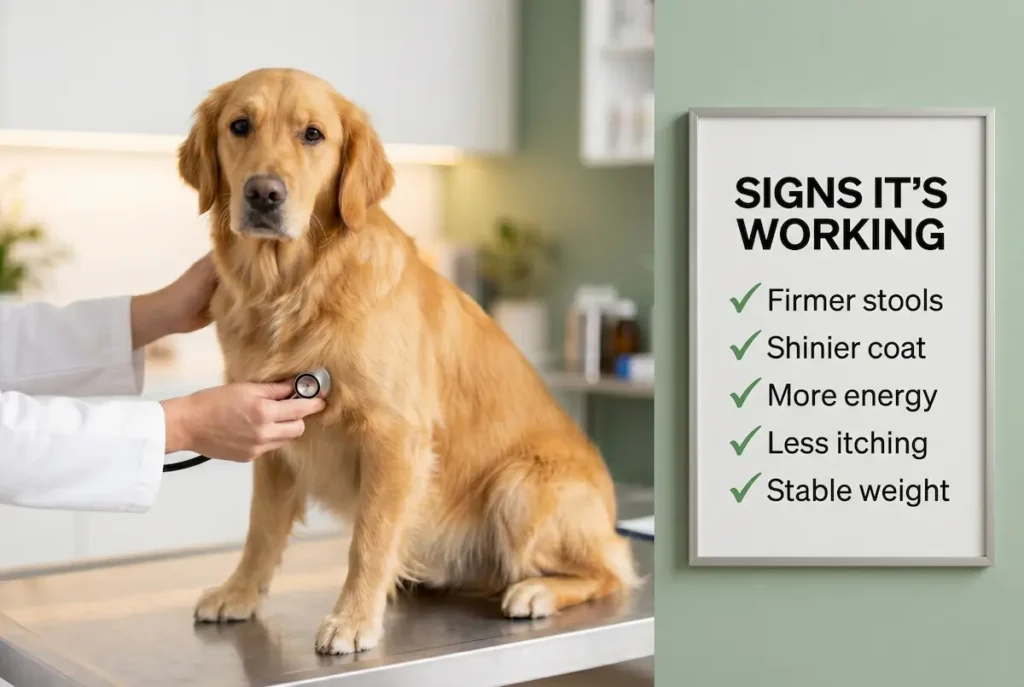
After 4 to 8 weeks on a well-balanced homemade rotation, look for:
- Firmer, more consistent stools — the earliest and clearest indicator
- Improved coat shine and texture — visible within 4 to 8 weeks
- Better energy and alertness — improved nutrition shows up in daily behavior
- Reduced itching or skin irritation — particularly noticeable in previously sensitive dogs
- Healthy stable weight — neither gaining nor losing unexpectedly
Schedule a vet check-in with blood panels at 60 to 90 days. The panels confirm nutritional completeness where it matters — inside the body, not just in the bowl.
Final Thoughts
The best homemade dog food isn’t the most elaborate — it’s the most consistently balanced, properly supplemented, and regularly rotated. These 12 recipes deliver all of that in a format practical enough to actually maintain week after week.
Start with Recipe 1. Add Recipe 2 the following week. Build the rotation gradually until a full weekly plan is established. The dog won’t need convincing. 🙂