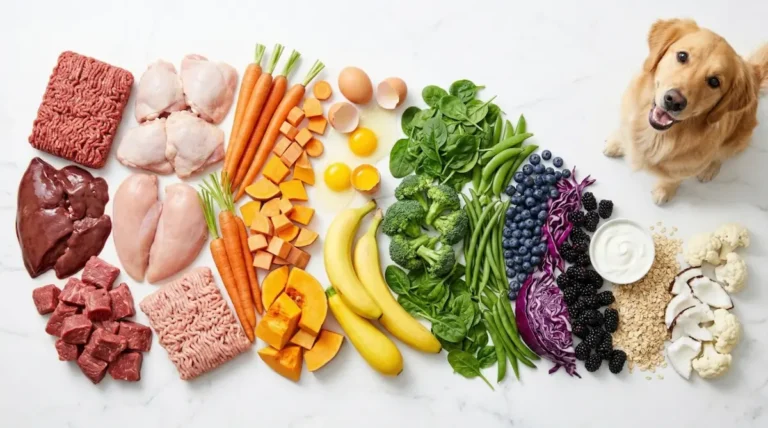
Chronic digestive issues are exhausting — for the dog and for the owner watching it happen.
The right food makes a bigger difference to a sensitive stomach than almost any other intervention. Fresh ingredients, gentle proteins, digestive-supportive fiber, and nothing that triggers an immune response.
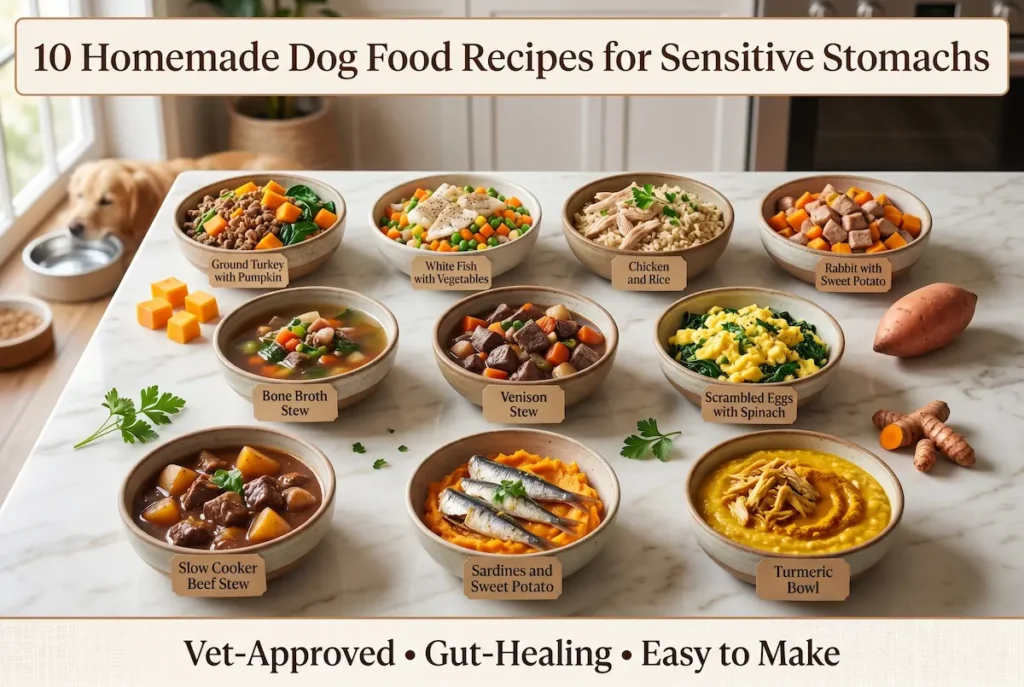
These 10 recipes are built specifically for dogs that struggle — with diarrhea, soft stools, vomiting, bloating, or just generally unpredictable digestion.
Every recipe uses hypoallergenic ingredients, minimal fat, and the gut-supportive additions that actually move the needle.
⚠️ Chronic digestive symptoms warrant a vet visit before starting any new diet. Persistent issues may indicate underlying conditions — IBD, food allergies, parasites, or pancreatitis — that require diagnosis before dietary management.
10 Gentle Homemade Dog Food Recipes for Sensitive Stomachs
Recipe 1: Classic Turkey and Pumpkin Reset Bowl
The starting point for every sensitive stomach feeding plan.
- Ground turkey is the most digestible protein available — lower in fat than beef, less allergenic than chicken for many dogs, and consistently well-tolerated even by dogs with significant digestive sensitivity.
- Pumpkin’s soluble fiber does the regulatory work.
Classic Turkey and Pumpkin Reset Bowl
Triple digestive support — pumpkin fiber, yogurt probiotics, and gentle zucchini for sensitive stomachs
Ingredients
2 lbs lean ground turkey (93/7)
1 cup plain pumpkin puree
1 cup zucchini, finely diced and steamed until very soft
½ cup plain Greek yogurt (added after cooling)
2 tablespoons fish oil
Canine multivitamin + calcium supplement
Instructions
Brown ground turkey over medium heat. Drain all fat thoroughly.
Steam zucchini until completely soft — for sensitive stomachs, softer is always better.
Combine turkey, zucchini, and pumpkin puree while still warm.
Cool completely before adding Greek yogurt.
Add fish oil and supplements per serving.
💡 Why it works: Triple digestive support — pumpkin fiber regulates transit, yogurt probiotics rebuild microbiome, zucchini adds gentle bulk without digestive stress.
Recipe 2: White Fish and Pumpkin Hypoallergenic Bowl
White fish is the gold standard hypoallergenic protein — cod, tilapia, and haddock trigger immune responses in a fraction of the dogs that react to chicken or beef.
This recipe keeps everything deliberately simple: one protein, one vegetable, one fiber source. Minimal variables mean any remaining reactions are easier to identify.
White Fish and Pumpkin Hypoallergenic Bowl
Novel protein meets gentle fiber — eliminates common allergens while supporting digestive health
Ingredients
1.5 lbs white fish fillets (cod, tilapia, or haddock — fully cooked)
1 cup plain pumpkin puree
1 cup cauliflower, steamed until very soft and mashed
½ cup zucchini, diced and steamed
2 tablespoons fish oil
Canine multivitamin + calcium supplement
Instructions
Bake fish at 375°F (190°C) for 18 minutes. Remove all bones. Flake finely.
Steam cauliflower until completely soft. Mash to a smooth consistency.
Steam zucchini until very tender.
Combine all ingredients with pumpkin puree.
Cool completely. Add fish oil and supplements per serving.
💡 Why it works: Hypoallergenic protein eliminates the most common immune-triggered digestive reactions, cauliflower provides gentle fiber without starchy carbohydrates, pumpkin regulates transit time.
Recipe 3: Chicken and Rice Gentle Daily Bowl
The most trusted combination in veterinary digestive management — upgraded from the strict bland diet version into a nutritionally complete daily meal.
White rice’s low fiber content keeps digestive demand minimal, chicken breast stays lean, and the additions provide nutrition without digestive stress.
Chicken and Rice Gentle Daily Bowl
Classic comfort food — lean protein, easy-digest rice, and probiotic support for everyday feeding
Ingredients
2 lbs boneless, skinless chicken breast
1 cup white rice, rinsed
½ cup plain pumpkin puree
½ cup zucchini, finely diced and steamed
½ cup plain Greek yogurt (added after cooling)
2 cups low-sodium chicken broth (no onion, no garlic)
2 tablespoons fish oil
Canine multivitamin + calcium supplement
Instructions
Poach chicken breast in broth until cooked through. Shred finely. Reserve broth.
Cook rinsed rice in reserved broth until fully absorbed.
Steam zucchini until completely soft.
Combine chicken, rice, zucchini, and pumpkin puree.
Cool completely before adding Greek yogurt.
Add fish oil and supplements per serving.
💡 Why it works: White rice’s low fiber keeps digestive demand minimal, chicken breast is lean and digestible, broth adds palatability and hydration, yogurt maintains probiotic support daily.
Recipe 4: Rabbit and Sweet Potato Novel Protein Bowl
Rabbit is the most genuinely novel protein available for dogs with multiple food sensitivities.
Almost no commercial dog food uses rabbit, making immune reactions essentially impossible in dogs that haven’t been previously exposed.
This is the recipe to reach for when chicken, beef, and turkey have all been ruled out.
Rabbit and Sweet Potato Novel Protein Bowl
True novel protein solution — eliminates immune reactions with lean rabbit and gentle complex carbs
Ingredients
1.5 lbs ground rabbit (available from specialty butchers or raw pet food suppliers)
1 cup sweet potato, steamed and mashed
½ cup plain pumpkin puree
½ cup green beans, chopped and steamed until very soft
2 tablespoons fish oil
Canine multivitamin + calcium supplement
Instructions
Cook ground rabbit over medium heat until fully cooked through.
Drain any fat — rabbit is naturally lean but some rendering occurs during cooking.
Steam sweet potato and mash.
Steam green beans until completely soft.
Combine all ingredients with pumpkin puree.
Cool completely. Add fish oil and supplements per serving.
💡 Why it works: Genuinely novel protein eliminates immune-mediated digestive reactions entirely, sweet potato delivers complex carbohydrates without blood sugar spikes, green beans add fiber gently.
Recipe 5: Turkey and Bone Broth Gut-Repair Bowl
This recipe targets the gut lining directly — the underlying issue in many chronic digestive conditions including IBD, leaky gut syndrome, and chronic colitis.
Bone broth’s gelatin coats and soothes the intestinal lining. Turkey’s digestibility minimizes additional irritation while the gut repairs.
Turkey and Bone Broth Gut-Repair Bowl
Therapeutic gut support — gelatin-rich bone broth repairs intestinal lining while probiotics restore balance
Ingredients
2 lbs lean ground turkey
1.5 cups homemade bone broth (unsalted — zero onion, zero garlic)
½ cup plain pumpkin puree
½ cup zucchini, finely diced
½ cup spinach, wilted (small amount — more digestible than kale for sensitive stomachs)
½ cup plain Greek yogurt (added after cooling)
2 tablespoons fish oil
Canine multivitamin + calcium supplement
Instructions
Brown turkey and drain fat completely.
Add bone broth and zucchini. Simmer for 5 minutes.
Stir in pumpkin puree and spinach. Cook 2 more minutes.
Cool completely before adding Greek yogurt.
Add fish oil and supplements per serving.
Add an extra splash of bone broth per serving for maximum gut benefit.
💡 Why it works: Gelatin from bone broth directly supports tight junction integrity in the gut lining, reducing the intestinal permeability that underlies many chronic digestive conditions.
Recipe 6: Venison and Pumpkin Elimination Diet Bowl
Used in veterinary elimination diets alongside rabbit as the second novel protein option. Venison almost never appears in commercial dog food, making it safe to use with dogs undergoing formal food sensitivity testing.
Deliberately minimal ingredient list — every addition is a variable that could mask a reaction.
Venison and Pumpkin Elimination Diet Bowl
Strict elimination protocol — minimal ingredients, novel protein, zero common allergens
Ingredients
1.5 lbs ground venison
½ cup plain pumpkin puree
1 cup sweet potato, steamed and mashed
½ cup zucchini, diced and steamed
2 tablespoons fish oil
Canine multivitamin + calcium supplement
Instructions
Cook ground venison over medium heat until fully cooked through.
Steam sweet potato and mash.
Steam zucchini until completely soft.
Combine all ingredients with pumpkin puree.
Cool completely. Add fish oil and supplements per serving.
⚠️ Important for elimination diets: Don’t add Greek yogurt, bone broth, or any ingredient not listed. The point of an elimination diet is identifying reactions — every additional ingredient is an additional variable. Keep it deliberately simple.
Recipe 7: Egg and Vegetable Gentle Bowl
Eggs are simultaneously the highest biological value protein available and one of the most digestible — which makes them genuinely excellent for sensitive stomach dogs that need maximum nutrition extracted from minimal digestive effort.
This recipe works as a rotation option or a transition meal between other proteins.
Egg and Vegetable Gentle Bowl
Maximum bioavailability — highly digestible egg protein with minimal digestive effort
Ingredients
6 eggs, scrambled (cooked in a dry pan — zero butter, zero oil)
1 cup white rice, cooked in plain water
½ cup plain pumpkin puree
½ cup zucchini, finely diced and steamed
½ cup carrots, finely grated and steamed
1 tablespoon fish oil
Canine multivitamin + calcium supplement
Instructions
Scramble eggs in a dry non-stick pan until just cooked — no browning.
Cook rinsed rice in plain water until fully absorbed.
Steam zucchini and carrots until completely soft.
Combine eggs, rice, vegetables, and pumpkin puree.
Cool completely. Add fish oil and supplements per serving.
💡 Why it works: Egg protein is the most bioavailable available — dogs extract more nutrition per gram than from any other protein source. Combined with white rice’s low digestive demand, this recipe maximizes nutrition while minimizing digestive effort.
Recipe 8: Slow Cooker Turkey and Vegetable Gentle Stew
Slow cooking is one of the best preparation methods for sensitive stomach dogs — the long, low heat breaks protein molecules into more bioavailable forms, softens vegetables completely, and produces a naturally brothy, easily digestible result that the gut processes with significantly less effort than quickly cooked food.
Slow Cooker Turkey and Vegetable Gentle Stew
Set-it-and-forget-it comfort — hands-off cooking produces tender turkey and perfectly soft vegetables
Ingredients
2 lbs boneless turkey breast (or lean ground turkey)
1 cup white rice, rinsed
½ cup plain pumpkin puree
1 cup zucchini, diced
½ cup carrots, finely sliced
2 cups low-sodium chicken broth (no onion, no garlic)
Fish oil (added per serving)
Canine multivitamin + calcium supplement (added per serving)
Instructions
Add turkey, rinsed rice, zucchini, carrots, and broth to the slow cooker.
Cook on low for 5 to 6 hours — turkey breast cooks faster than thighs.
Shred turkey once cooked through.
Stir in pumpkin puree during the last 15 minutes.
Cool completely. Add fish oil and supplements per serving.
💡 Consistency tip: Slow cooker recipes naturally produce a thicker consistency as rice absorbs broth. Add extra broth per serving for a wetter, more easily digestible meal — particularly useful during active flares.
Recipe 9: Sardine and Sweet Potato Omega Gut-Health Bowl
Omega-3 fatty acids directly reduce intestinal inflammation — making sardines one of the most therapeutically useful proteins for dogs with IBD, chronic colitis, or inflammatory digestive conditions.
This recipe is simple, fast, and delivers a concentrated anti-inflammatory dose alongside gentle digestive support.
Sardine and Sweet Potato Omega Gut-Health Bowl
Anti-inflammatory powerhouse — EPA and DHA from sardines reduce gut inflammation naturally
Ingredients
2 cans sardines in water, no salt added (drained and mashed)
1 lb lean ground turkey (cooked — to supplement the protein base)
1 cup sweet potato, steamed and mashed
½ cup plain pumpkin puree
½ cup zucchini, diced and steamed
Canine multivitamin + calcium supplement
Instructions
Cook ground turkey through completely. Cool.
Mash sardines thoroughly — remove any large bones found.
Steam sweet potato and mash. Steam zucchini until soft.
Combine all ingredients with pumpkin puree.
Cool completely. Add supplements per serving.
📝 Note: Sardines provide sufficient omega-3s — additional fish oil not required with this recipe.
💡 Why it works: EPA and DHA from sardines directly reduce inflammatory cytokines in the gut lining, sweet potato delivers gentle complex carbohydrates, pumpkin provides soluble fiber that feeds beneficial gut bacteria.
Recipe 10: Turkey, Kefir, and Turmeric Anti-Inflammatory Bowl
The most comprehensive recipe on the list — addressing gut inflammation, microbiome health, and protein digestibility simultaneously.
Kefir’s diverse probiotic strains, turmeric’s curcumin, and turkey’s digestibility create a genuinely multi-layered approach to chronic digestive inflammation that single-ingredient interventions can’t match.
Turkey, Kefir, and Turmeric Anti-Inflammatory Bowl
Triple anti-inflammatory action — curcumin, diverse probiotics, and MCTs work synergistically
Ingredients
2 lbs lean ground turkey
½ cup plain kefir (unsweetened — added after cooling)
½ cup plain pumpkin puree
1 cup sweet potato, mashed
½ cup zucchini, diced and steamed
¼ teaspoon turmeric
A pinch of black pepper
1 tablespoon coconut oil
2 tablespoons fish oil
Canine multivitamin + calcium supplement
Instructions
Brown turkey and drain fat completely.
Mix turmeric and black pepper into pumpkin puree before adding — ensures even distribution.
Steam sweet potato and mash. Steam zucchini.
Combine turkey, sweet potato, zucchini, and spiced pumpkin.
Cool completely before adding kefir — heat destroys probiotic cultures.
Add coconut oil, fish oil, and supplements per serving.
💡 Why it works: Curcumin reduces inflammatory markers throughout the gut, kefir’s 20 to 30 probiotic strains provide significantly more microbiome diversity than yogurt alone, coconut oil’s MCTs support gut epithelial cell function.
❄️ Storage note: Freeze for 3 months — add kefir fresh after thawing, not before freezing.
Quick Reference: All 10 Recipes
| Recipe | Protein | Best For | Key Gut Benefit |
|---|---|---|---|
| Turkey & Pumpkin Reset | Turkey | Starting point, all sensitive dogs | Triple digestive support |
| White Fish & Pumpkin | White Fish | Hypoallergenic baseline | Immune-reaction elimination |
| Chicken & Rice Daily | Chicken | Everyday gentle feeding | Low digestive demand |
| Rabbit & Sweet Potato | Rabbit | Multiple protein sensitivities | Novel protein |
| Turkey & Bone Broth | Turkey | IBD, leaky gut, colitis | Gut lining repair |
| Venison & Pumpkin | Venison | Elimination diet protocol | Novel protein, minimal variables |
| Egg & Vegetable | Egg | Rotation, transition meals | Maximum bioavailability |
| Slow Cooker Turkey Stew | Turkey | Flare management, meal prep | Enhanced digestibility |
| Sardine & Sweet Potato | Sardine | IBD, inflammatory conditions | Omega-3 anti-inflammatory |
| Turkey, Kefir & Turmeric | Turkey | Chronic inflammation, microbiome | Multi-layered gut support |
Understanding Sensitive Stomach Triggers
Knowing what to avoid matters as much as knowing what to feed. The most common dietary triggers for sensitive stomach dogs fall into four categories:
🐾 High fat content — fat is the hardest macronutrient to digest, and excess fat directly triggers diarrhea and vomiting in sensitive dogs. Every recipe above uses lean proteins and minimal added fat for exactly this reason.
🐾 Common protein allergens — beef, chicken, dairy, wheat, and soy are the five most commonly implicated food allergens in dogs with dietary sensitivities.
IMO the underappreciation of chicken as a common allergen — given how ubiquitous it is in commercial food — accounts for a significant number of unresolved sensitive stomach cases.
🐾 High fiber from the wrong sources — insoluble fiber from raw vegetables and certain grains irritates an already-inflamed gut.
All vegetables in the recipes above are cooked until soft, and fiber sources focus on soluble fiber from pumpkin and sweet potato that soothes rather than irritates.
🐾 Artificial additives — preservatives, artificial colors, flavor enhancers, and fillers in commercial food trigger digestive responses in sensitive dogs frequently. Homemade food eliminates this category entirely.
The Best Gut-Supportive Additions
These ingredients appear consistently across the recipes above — each one earns its place with genuine functional benefit:
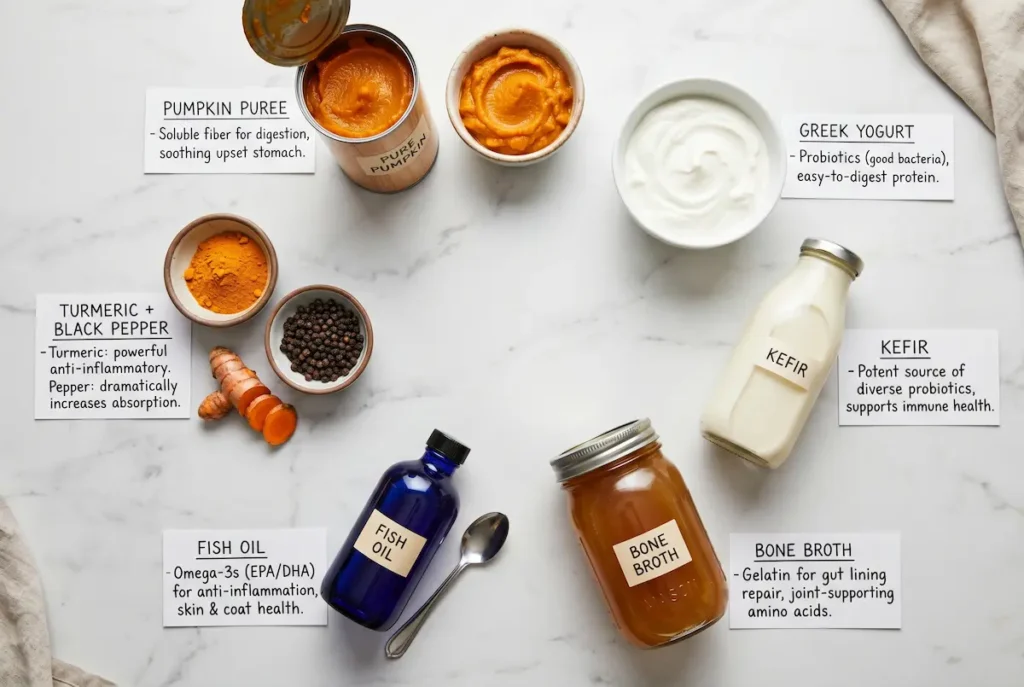
✅ Plain pumpkin puree — soluble fiber that works bidirectionally, feeding beneficial gut bacteria while regulating transit time. The single most useful sensitive stomach ingredient available.
✅ Plain Greek yogurt — live probiotic cultures support microbiome diversity. Always added cold to cooled food — heat destroys the cultures that make it useful.
✅ Plain kefir — 20 to 30 probiotic strains compared to yogurt’s typical 2 to 7. Meaningfully superior for post-antibiotic recovery and chronic microbiome support.
✅ Bone broth — gelatin directly supports gut lining integrity, reducing intestinal permeability. Homemade only — commercial broths almost always contain onion or garlic.
✅ Fish oil — omega-3 fatty acids reduce gut inflammation directly. Essential for any dog with IBD, colitis, or chronic digestive inflammation.
✅ Turmeric with black pepper — curcumin reduces inflammatory cytokine production in gut tissue. Black pepper’s piperine increases curcumin absorption by up to 2000% — always pair them.
Vegetables That Work for Sensitive Stomachs
Not all dog-safe vegetables are equally gentle. These consistently cause the least digestive stress:
- ✅ Zucchini — the gentlest vegetable available, extremely low irritant potential
- ✅ Plain pumpkin puree — soluble fiber, universally tolerated
- ✅ Sweet potato (cooked) — gentle complex carbohydrates, well-tolerated
- ✅ Green beans (well-cooked) — low fiber load when cooked soft
- ✅ Carrots (well-cooked) — gentle, low allergen
- ✅ Cauliflower (well-cooked and mashed) — gentle bulk, low starch
- ✅ Spinach (small amounts, wilted) — easier than kale on sensitive guts
Vegetables to limit or avoid for sensitive stomachs:
- ⚠️ Raw vegetables of any kind — cell walls are too hard to digest
- ⚠️ Broccoli — gas-producing for some sensitive dogs
- ⚠️ Kale in large amounts — too fibrous for active flares
- ⚠️ Corn — common allergen, low nutritional value
- ⚠️ Peas — legume concerns for some dogs, and a common commercial food filler that many sensitive dogs have pre-existing exposure to
How Much to Feed
Use the standard homemade food guide as a starting point — but begin at the lower end and adjust over 2 to 3 weeks:
| Dog Size | Weight | Daily Amount |
| Small | Under 20 lbs | ½ to 1 cup |
| Medium | 20–50 lbs | 1 to 2 cups |
| Large | 50–90 lbs | 2 to 3.5 cups |
| Extra Large | 90+ lbs | 3.5 to 5 cups |
💡 Feed two smaller meals per day rather than one large meal — sensitive stomachs handle smaller volumes significantly better. For dogs in active flares, three small meals per day reduces digestive stress further.
Transitioning to a Sensitive Stomach Diet
Transition slower than standard homemade food recommendations — a sensitive gut needs more time to adjust than a healthy one:
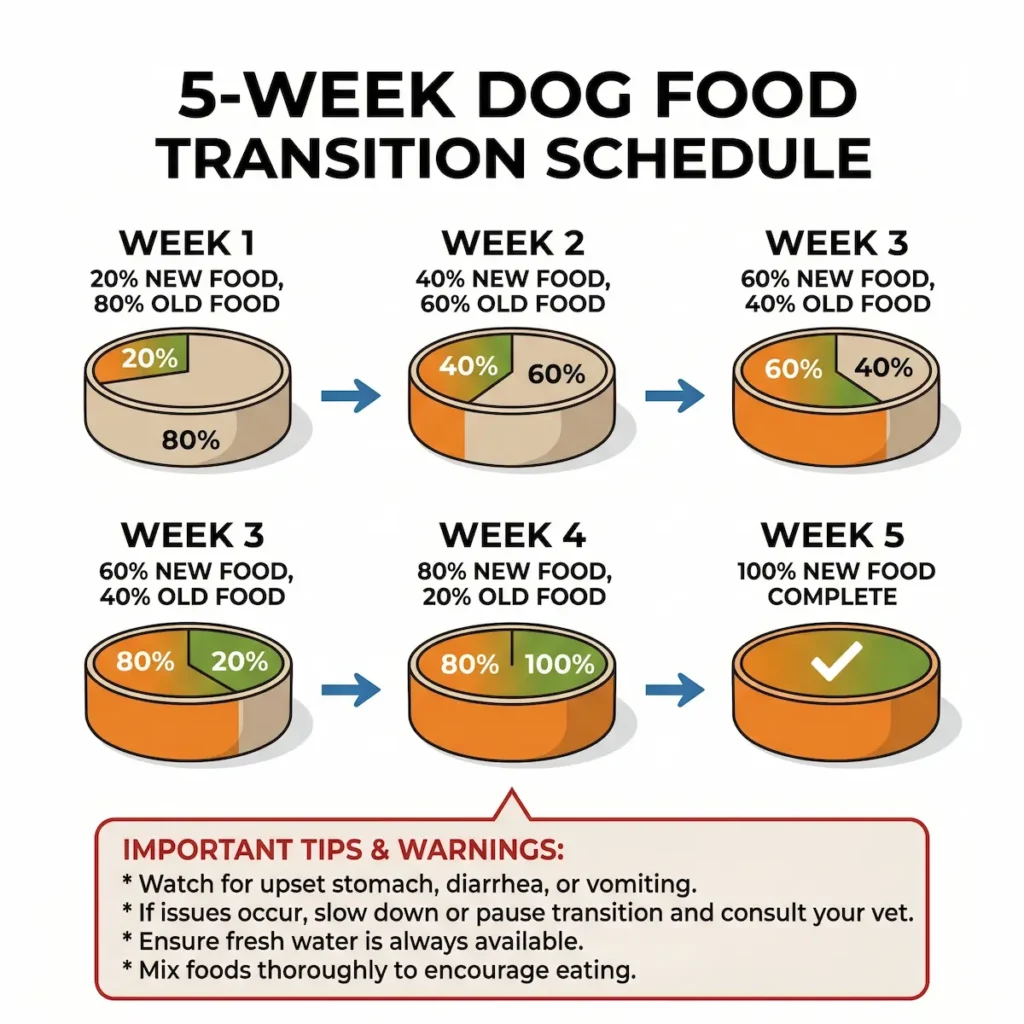
- Week 1: 20% new food / 80% current food
- Week 2: 40% new food / 60% current food
- Week 3: 60% new food / 40% current food
- Week 4: 80% new food / 20% current food
- Week 5: Full new diet
If symptoms worsen at any stage, go back one step and hold for an additional week before progressing. Slower is always better for sensitive stomachs.
Final Thoughts
Sensitive stomach dogs deserve food that’s genuinely built for their needs — not just regular homemade food with the fingers crossed.
These 10 recipes address the underlying drivers of digestive sensitivity — immune-triggered reactions, gut inflammation, microbiome disruption, and fat intolerance — with ingredients that are chosen specifically because they help rather than just because they’re healthy.
Start with Recipe 1, give it two full weeks, and track stool quality, energy, and appetite throughout. The results of the right food for a sensitive stomach dog show up quickly — and they’re hard to miss. 🙂