When your dog suddenly has diarrhea, the first question is usually: What can I give my dog to help their stomach settle?
For a mild episode in an otherwise healthy adult dog, simple supportive care may be enough. The goal is to maintain hydration, reduce digestive stress, provide easy-to-digest nutrition, and support the gut while it recovers.
Here are 7 practical dog diarrhea remedies, plus a simple recovery plan and signs that mean it is time to call your veterinarian.
🚨 Call your vet promptly if your dog has bloody or black, tarry stool, repeated vomiting, marked lethargy or weakness, abdominal pain, signs of dehydration, suspected toxin or foreign-object ingestion, or severe or worsening diarrhea.
Puppies, seniors, and dogs with existing health problems may need veterinary care sooner.
🐶 What Can I Give My Dog for Diarrhea?
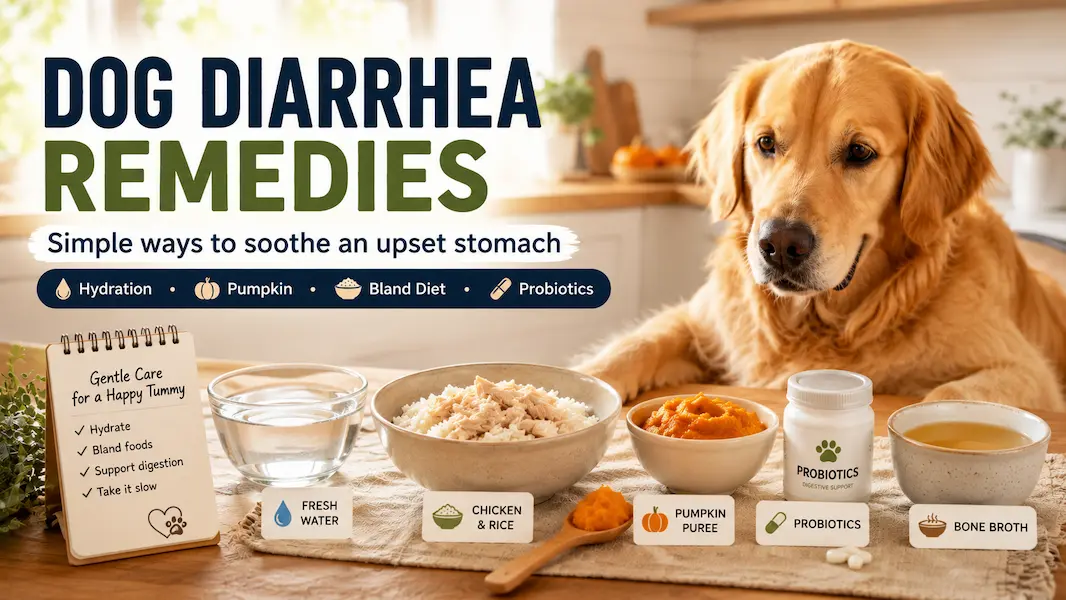
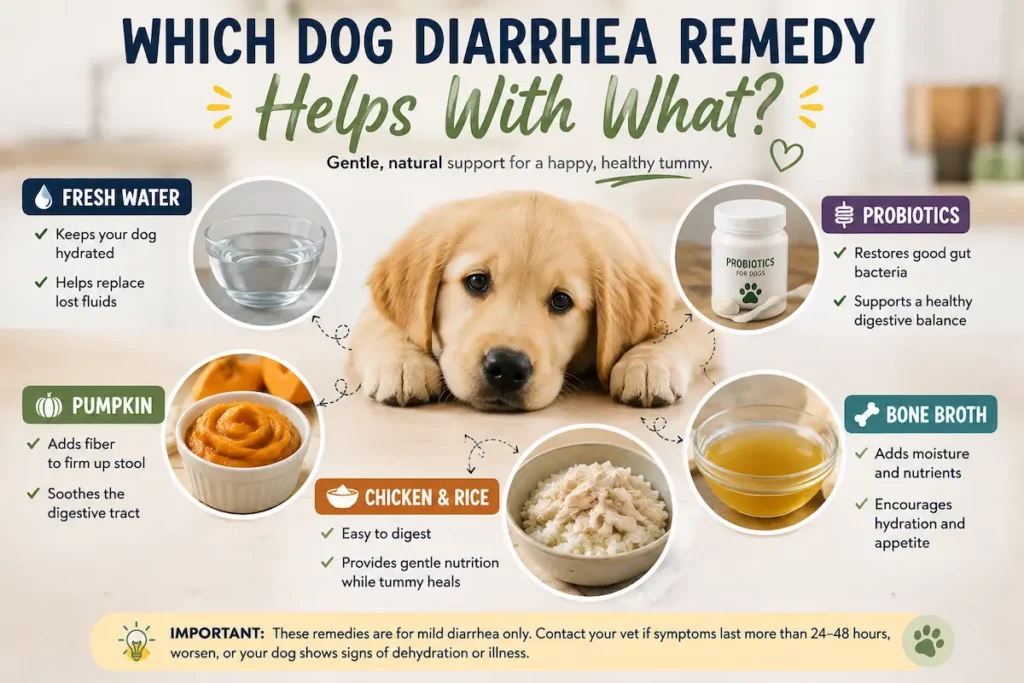
For mild, uncomplicated diarrhea, useful supportive options can include:
- 💧 Fresh water to replace lost fluids
- 🍗 Small, frequent portions of easily digestible food
- 🎃 Plain canned pumpkin for soluble fiber
- 🦠 A dog-specific probiotic to support the intestinal microbiome
- 🍲 Plain dog-safe broth for extra moisture and palatability
- 🌿 Slippery elm as an optional soothing fiber
- 🍚 Rice water for additional moisture and easy-to-digest starch
For many dogs, the simplest starting point is hydration + small bland meals + a little plain pumpkin rather than trying several remedies at once.
VCA specifically recommends small, frequent bland meals, pure pumpkin, and veterinarian-recommended probiotics as possible home measures for otherwise healthy dogs with mild diarrhea.
🚨 When Is Home Treatment Appropriate?
✅ Home care may be reasonable when:
- Diarrhea is mild and recent
- Your dog is alert and responsive
- They are drinking normally
- There is no blood or black stool
- There is no repeated vomiting
- There is no known toxin or foreign-object exposure
🚑 Call your vet if you notice:
- Blood or black, tarry stool
- Repeated vomiting
- Significant lethargy or weakness
- A swollen or painful abdomen
- Signs of dehydration
- Difficulty keeping water down
- Severe or persistent diarrhea
- Suspected toxin or foreign-object ingestion
Persistent or severe diarrhea, particularly when accompanied by vomiting, pain, dehydration, weakness, or blood, warrants veterinary evaluation.
🐾 Why Do Dogs Get Diarrhea?
Knowing the likely cause can help determine whether home care makes sense.
🍗 Dietary indiscretion: Garbage, table scraps, spoiled food, excessive treats, or something picked up outside can irritate the digestive tract.
🔄 Sudden diet changes: Changing protein, fat, fiber, or ingredients too quickly can disrupt digestion and the intestinal microbiome.
😰 Stress: Travel, boarding, fireworks, household changes, and other stressful events can affect intestinal motility.
🦠 Infections: Bacterial and viral illnesses can cause diarrhea, often with additional symptoms such as vomiting, poor appetite, lethargy, or blood.
🪱 Parasites: Giardia and intestinal worms can cause recurring loose stools. Home remedies do not eliminate parasites.
💊 Medication: Antibiotics and some other medications may disrupt intestinal bacteria and contribute to diarrhea.
🌿 7 Dog Diarrhea Remedies
⏱️ 1. Give the Digestive System a Gentle Break
Older advice often recommended withholding food for 8 to 12 hours when an adult dog developed diarrhea.
A short food rest may still be appropriate in some cases, but fasting is not mandatory for every dog. Current veterinary advice also supports feeding small, frequent portions of highly digestible food when a dog is otherwise doing well.
VCA notes that older practice commonly used longer fasting periods, whereas current nutritional management often emphasizes continued digestible nutrition.
If your healthy adult dog skips one meal naturally, that may be reasonable. If they are hungry, bright, and not vomiting, try a small bland meal instead of insisting on a full 12-hour fast.
Keep fresh water available at all times.
⚠️ Do not routinely fast young puppies, diabetic dogs, weak or underweight dogs, or dogs with significant medical conditions without veterinary guidance.
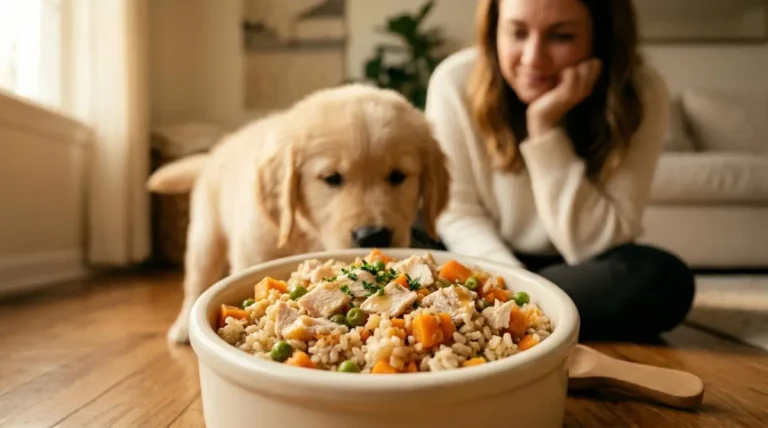
🍗 2. Try Chicken and White Rice
Chicken and rice is a familiar short-term meal for mild digestive upset.
🥣 Simple Bland Diet
- 1 part boiled, skinless chicken breast
- 2 parts cooked white rice
For more ways to prepare this gentle combination, see these easy chicken and rice dog food recipes.
🔬 Why it works
- Chicken breast provides lean protein with less fat than skin-on chicken or fattier cuts.
- White rice provides an easily digested carbohydrate source and contains less fiber than brown rice.
Combined, they create a simple, relatively low-fat meal that can be easier for an irritated digestive tract to handle. Chicken and white rice remain commonly recommended bland-food options for short-term GI upset.
Once your dog is ready for a little more variety, these homemade dog food recipes for sensitive stomachs can give you additional gentle meal ideas.
🍽️ How to feed it
Start with roughly 25% of your dog’s usual meal size and divide food into 3 to 4 smaller meals.
If the food is tolerated and stools improve, gradually increase portions.
🥣 Chicken and rice is not a complete and balanced long-term diet. If your dog needs gastrointestinal feeding for more than a short recovery period, ask your vet about a complete veterinary GI diet.
🎃 3. Add Plain Pumpkin
Plain pumpkin is especially useful because of its soluble fiber.
Soluble fiber absorbs water and forms a gel-like material in the digestive tract, helping add structure to loose stool. Pumpkin fiber can also act as a prebiotic substrate for intestinal microorganisms.
🥄 How much?
A practical starting range is:
- 🐕 Small dogs: about 1 teaspoon to 1 tablespoon
- 🐕🦺 Medium dogs: about 1 to 2 tablespoons
- 🦮 Large dogs: about 2 to 4 tablespoons
Start at the lower end if your dog is not accustomed to much fiber. AKC gives 1 to 4 tablespoons of plain pumpkin puree, depending on dog size, as a commonly used range.
Mix it into the bland meal rather than serving a large amount by itself.
✅ Use: 100% plain pumpkin puree
❌ Avoid: pumpkin pie filling with added sugar and spices
If you use pumpkin regularly, our guide to whether dogs can eat pumpkin also covers safe preparation and other ways to serve it.
🦠 4. Support the Gut With Probiotics
The intestinal microbiome plays an important role in digestion, fermentation, and normal intestinal function. Diarrhea, diet changes, stress, disease, and medications can disrupt this microbial community.
Probiotics provide beneficial microorganisms intended to help restore or support that balance. Veterinary references recognize microbiome modification with probiotics and prebiotics as potentially beneficial in both acute and chronic gastrointestinal disease.
Best option
Choose a dog-specific probiotic with identified strains and follow the product directions or your veterinarian’s recommendation.
🥛 Kefir or plain yogurt?
Plain unsweetened kefir or yogurt can provide live cultures for dogs that tolerate dairy.
A small food-based starting amount might be:
- Small dog: 1 teaspoon to 1 tablespoon
- Medium dog: 1 to 2 tablespoons
- Large dog: 2 to 4 tablespoons
Start small and discontinue if it increases gas or loose stool.
🦠 Add fermented foods only after the meal has cooled, since heat can reduce the survival of live cultures.
🍲 5. Add Plain Dog-Safe Broth
Bone broth or another plain dog-safe broth is most useful for moisture and palatability.
A dog that is reluctant to drink may consume more fluid when a little broth is mixed with food or water. Veterinary guidance also lists broth as one way to make bland food more appealing.
Try approximately:
- Small dog: 1 to 2 tablespoons
- Medium dog: ¼ cup
- Large dog: ¼ to ½ cup
⚠️ Check the label
Broth should contain:
- No onion
- No garlic
- No heavy seasoning
- No excessive sodium
Bone broth is a hydration and palatability tool, not a replacement for food or veterinary treatment.
🌿 6. Consider Slippery Elm
Slippery elm contains mucilage, a soluble plant material that becomes thick and gel-like when mixed with water. That coating quality is why the herb has traditionally been used to soothe irritated digestive tissues.
Slippery elm powder can be mixed with warm water to form a thin gel, cooled, and added to food.
Because herbal products vary in concentration and slippery elm may affect the absorption of medications, use the dosing instructions on a veterinary product or ask your veterinarian about an appropriate amount.
Think of slippery elm as an optional supportive addition, not a treatment for parasites, infection, obstruction, or persistent diarrhea.
🍚 7. Try Plain Rice Water
Rice water is the cloudy, starchy liquid left after cooking white rice in extra water.
How to make it
- Add ½ cup white rice to about 3 cups water.
- Cook until the rice is soft.
- Strain out the rice.
- Cool the liquid completely.
Offer a small amount alongside regular water or mix it into a bland meal.
Rice water provides extra moisture and easily digestible rice starch, but it is not a substitute for fresh water or nutritionally complete food.
🍎 What About Apple Cider Vinegar for Dog Diarrhea?
Apple cider vinegar often appears in natural-remedy lists because it contains acetic acid and is a fermented food.
However, evidence that ACV directly treats acute diarrhea in dogs is limited, and its acidity may irritate an already sensitive stomach.
For that reason, apple cider vinegar is not a first-choice remedy.
Hydration, digestible food, plain pumpkin, and veterinarian-recommended probiotics are more established supportive options for mild diarrhea.
Never pour undiluted ACV directly into your dog’s mouth or use it instead of veterinary care.
💦 Keep Your Dog Hydrated
Diarrhea can cause significant fluid loss, so hydration deserves as much attention as food.
💧 At home:
- Keep fresh water available
- Refresh the bowl frequently
- Add water to bland meals
- Add a little dog-safe broth if needed
- Feed moisture-rich foods
- Offer smaller amounts frequently if your dog tends to gulp water
🚨 Watch for dehydration:
- Dry or tacky gums
- Reduced urination
- Sunken-looking eyes
- Weakness or unusual lethargy
- Reduced interest in drinking
Diarrhea can disturb fluid and electrolyte balance, and dogs that cannot keep fluids down or show meaningful dehydration may require veterinary fluid therapy.
After your dog is fully recovered, moisture-rich homemade dog food can be another way to increase dietary moisture.
📅 A Simple 24–48 Hour Recovery Plan
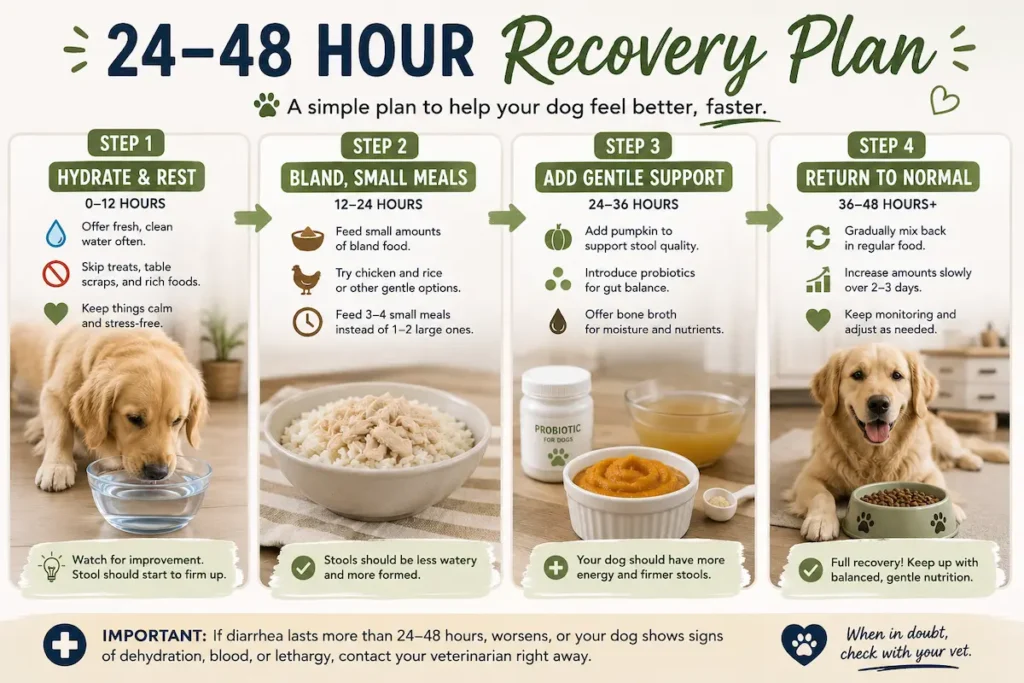
⏰ First Few Hours
💧 Keep water available.
🚫 Stop treats and table scraps.
👀 Watch for vomiting, blood, pain, or lethargy.
🍗 If your dog is hungry and not vomiting, offer a small bland meal.
🥣 First Meals
Begin around 25% of the normal meal size, divided into 3 to 4 small meals.
Add a modest amount of plain pumpkin or a dog-specific probiotic if appropriate.
📈 As Stool Improves
Increase meal size gradually:
25% → 50% → 75% → normal portion
Use stool quality, appetite, energy, and comfort to guide the pace rather than following a rigid clock.
🔄 Return to Normal Food
Once stools are consistently improving, gradually mix the regular food back in.
A practical progression is:
- 25% regular + 75% recovery food
- 50% + 50%
- 75% regular + 25% recovery
- 100% regular food
Some sensitive dogs may need a slower 5 to 7 day transition. VCA similarly recommends gradually transitioning back once stool improves.
🍚 3 Simple Recovery Recipes
🥣 1. Classic Chicken & Rice Bowl
Ingredients:
- 1 cup cooked white rice
- ½ cup boiled shredded chicken breast
- 1 to 2 tablespoons plain pumpkin
Mix, cool, and serve in small portions throughout the day.
🎃 2. Pumpkin & Broth Gut-Support Bowl
Ingredients:
- ½ cup cooked white rice
- ½ cup shredded chicken breast
- 2 tablespoons plain pumpkin
- ¼ cup dog-safe broth
- 1 tablespoon plain kefir or dog probiotic, optional
Combine the rice, chicken, pumpkin, and broth. Cool before adding any live probiotic food.
The meal provides lean protein + digestible carbohydrate + soluble fiber + extra moisture.
🍗 3. Transition Bowl
Ingredients:
- ½ cup cooked white rice
- ¼ cup shredded chicken
- ¼ cup regular tolerated food or protein
- 1 to 2 tablespoons plain pumpkin
Gradually increase the regular food over subsequent meals as stools normalize.
🥣 These meals are intended for short-term recovery, not permanent feeding.
❌ What to Avoid During Recovery
❌ Fatty foods: Skip cheese, bacon, greasy meat scraps, rich treats, and other high-fat extras.
❌ Regular treats and table scraps: Keep the diet simple until stools normalize.
❌ Human diarrhea medicines: Do not give Imodium, Pepto-Bismol, or other human GI medications unless your veterinarian specifically recommends them. Some medications are unsuitable for certain dogs and can complicate diagnosis.
❌ Sudden food changes: Wait until stools are stable before experimenting with new foods.
❌ Too many remedies at once: Start with the basics:
💧 Hydration + 🍗 gentle food + 🎃 one supportive addition
If you are unsure which table foods are safe, keep our human foods dogs can and cannot eat chart handy before sharing anything from your plate.
🛡️ Help Prevent Future Episodes
🗑️ Control garbage access. Secure trash cans and keep tempting food off counters.
🦴 Keep treats moderate. Too many rich extras can overwhelm an otherwise balanced diet.
🔄 Change foods gradually. A simple 25% → 50% → 75% → 100% transition over roughly 5 to 7 days works well as a practical starting framework.
😰 Plan for stress. If travel or boarding predictably causes loose stool, ask your veterinarian whether dietary or probiotic support could help.
🪱 Do not ignore recurring diarrhea. Parasites and gastrointestinal disease need diagnosis rather than repeated home treatment.
❤️ Final Thoughts
For an otherwise healthy adult dog with mild diarrhea, start simple:
💧 Maintain hydration
🍗 Feed small, easy-to-digest meals
🎃 Add a modest amount of soluble fiber
🦠 Support the microbiome when appropriate
🚫 Remove rich foods and unnecessary treats
👀 Watch your dog, not just the stool
Numbers such as 1 to 2 tablespoons of pumpkin, 3 to 4 small meals, or a 25% → 50% → 75% feeding progression give you useful starting points, but adjust them for your dog’s size, tolerance, appetite, and recovery.
Most importantly, pay attention to the whole dog.
A dog with a couple of loose stools who is still bright, drinking, hungry, and playful is very different from a dog who is vomiting, weak, painful, dehydrated, or passing blood.
Knowing when home support is reasonable and when veterinary care is needed matters more than any individual remedy.