If a dog has just been diagnosed with diabetes, the first instinct is probably to overhaul everything — the walks, the schedule, the food. And honestly? That instinct is right, especially when it comes to diet.
What a diabetic dog eats directly affects how well their blood sugar stays regulated, and that’s not an exaggeration.
The good news is that managing canine diabetes through food doesn’t have to feel like a chemistry class.
These 8 low-glycemic homemade recipes are built around ingredients that work with a diabetic dog’s metabolism rather than against it — and they’re practical enough to actually cook on a regular basis.
But first — a few things every dog owner needs to know before changing a diabetic dog’s diet.
⚠️ Important: Always consult a veterinarian or veterinary nutritionist before switching a diabetic dog to a homemade diet. Blood glucose levels need to be monitored closely during any dietary transition, and insulin dosages may need to be adjusted based on the new food.
8 Low-Glycemic Homemade Dog Food Recipes for Diabetic Dogs
Recipe 1: Ground Turkey and Green Bean Bowl
The ultimate starter recipe for diabetic dogs.
🔸 Ground turkey is lean, easily digestible, and pairs perfectly with green beans — one of the best low-glycemic vegetables available for dogs.
🔸Green beans have an exceptionally low glycemic index and add fiber that slows glucose absorption, making this combination a go-to for blood sugar management.
Ground Turkey & Green Bean Bowl
Lean protein, blood sugar–friendly fiber, and gut-supporting pumpkin — built for diabetic dogs
Ingredients
2 lbs lean ground turkey (93/7)
✦ 93/7 ratio keeps fat low — important for diabetic dogs prone to pancreatitis
2 cups green beans, finely chopped
fresh or frozen — no salt added; one of the lowest-GI vegetables for dogs
1 cup zucchini, diced
lightly steamed — hydrating, very low-calorie, gentle on digestion
1 cup spinach, chopped
✦ Wilt briefly — do not serve raw in large amounts; oxalates are neutralized by heat
½ cup plain pumpkin puree
✦ Must be 100% plain pumpkin — not pumpkin pie filling. Soluble fiber helps slow glucose absorption
2 tablespoons fish oil
add per serving at feeding time — not into the stored batch
Canine multivitamin + calcium supplement
per package directions — add after cooling, per serving
Why pumpkin? Plain pumpkin puree is one of the best additions for diabetic dogs. Its soluble fiber slows digestion, which helps prevent post-meal blood sugar spikes. It also supports gut health and adds volume to the meal without adding significant calories — making it a near-perfect filler for weight management alongside diabetes.
Instructions
Brown ground turkey in a large pan over medium heat until fully cooked through. Drain any excess fat — keeping fat low is important for diabetic dogs.
Steam green beans and zucchini until just tender. Do not overcook — preserves fiber content and nutrients that help moderate blood sugar.
Add spinach to the warm (not hot) pan and wilt for 1 to 2 minutes. Remove from heat.
Combine turkey, all vegetables, and pumpkin puree. Mix thoroughly until well combined.
Cool completely before portioning into airtight containers.
Add fish oil and supplements to each individual serving at feeding time — not to the stored batch.
🫘 Green bean note: Green beans are one of the top recommended vegetables for diabetic dogs — extremely low glycemic index, high in fiber, and filling without adding calories. Chop finely for smaller breeds or dogs with dental issues. Frozen green beans with no added salt work just as well as fresh and are a convenient year-round option.
Nutritional Highlights
- 🩸 Blood sugar support
- 🎃 Soluble fiber (pumpkin)
- 🌿 Iron & folate (spinach)
- 🦃 Lean complete protein
- 🐟 Omega-3 (DHA/EPA)
- 🫘 Low-GI vegetables
Why it works for diabetic dogs: Very low carbohydrate load, high protein supports stable blood sugar, fiber from green beans and pumpkin slows glucose release.
Recipe 2: Baked Chicken and Broccoli Low-Carb Bowl
Broccoli is a diabetic dog’s best friend in the vegetable world. It’s high in fiber, low in sugar, and packed with chromium — a mineral that actually helps improve insulin sensitivity.
Combined with lean chicken breast, this recipe delivers serious nutritional value with minimal glycemic impact.
Baked Chicken & Broccoli Low-Carb Bowl
Oven-baked breast, cruciferous vegetables, and cauliflower mash — a carb-conscious bowl for diabetic dogs
Ingredients
2 lbs boneless, skinless chicken breast
✦ Baked without seasoning — leaner than thighs, ideal for strict low-fat diabetic protocols
2 cups broccoli florets, steamed and chopped
✦ Rich in sulforaphane and vitamin C — one of the most nutrient-dense low-GI vegetables for dogs
1 cup cauliflower, steamed and mashed
replaces starchy carbs — very low-GI, adds bulk and a soft texture dogs tend to enjoy
½ cup carrots, grated
⚠ Use in moderation — low-GI but naturally higher in sugar than other vegetables in this recipe
1 cup spinach, wilted
wilt in residual heat — iron, folate, and vitamin K with minimal calories
2 tablespoons fish oil
add per serving at feeding time — not into the stored batch
Canine multivitamin + calcium supplement
per package directions — add after cooling, per serving
About the carrots: Carrots are safe for diabetic dogs and provide beta-carotene and fiber, but they contain more natural sugar than the other vegetables here. Keep to ½ cup per batch and avoid increasing the amount. If your dog’s blood sugar is difficult to regulate, ask your vet whether to include or reduce carrots further.
Why cauliflower mash? Cauliflower is one of the best low-carb substitutes for starchy fillers like rice or potato. Mashing it gives the bowl a soft, cohesive texture — great for senior dogs or picky eaters — while keeping the glycemic load very low. It also adds volume so diabetic dogs feel satisfied without overeating.
Instructions
Bake chicken breast at 375°F (190°C) for 20 to 25 minutes until fully cooked through. No seasoning, no oil — plain baked only.
Remove from oven and let cool. Shred into small, bite-sized pieces.
Steam broccoli and cauliflower until tender. Mash cauliflower lightly — leave some texture rather than pureeing completely.
Wilt spinach in the residual steam heat for 1 to 2 minutes. No additional cooking needed.
Combine shredded chicken, broccoli, cauliflower mash, grated carrots, and spinach. Mix well.
Cool completely before portioning into airtight containers.
Add fish oil and supplements to each individual serving at feeding time.
🥦 Broccoli note: Steam broccoli until just tender — overcooking destroys sulforaphane, the compound that gives broccoli much of its anti-inflammatory benefit. Chop florets finely before mixing in to aid digestion and reduce the risk of gas in dogs with sensitive stomachs. A small amount of gas is normal when first introducing broccoli; start with less and increase gradually.
Nutritional Highlights
- 🥦 Sulforaphane (anti-inflammatory)
- 🩸 Very low glycemic load
- 🍗 Lean complete protein
- 🥕 Beta-carotene
- 🐟 Omega-3 (DHA/EPA)
- 🌿 Iron & vitamin K
Why it works for diabetic dogs: Cauliflower acts as a low-carb, low-GI alternative to starchy vegetables, chromium in broccoli supports insulin function, lean protein keeps the fat content low.
Recipe 3: Salmon and Zucchini Omega Bowl
Diabetic dogs frequently deal with secondary inflammation — and omega-3 fatty acids from salmon are one of the most effective natural anti-inflammatory tools available.
This recipe doubles as a coat and skin booster, which matters because diabetic dogs are often more prone to skin issues than healthy dogs.
Salmon & Zucchini Omega Bowl
A high-DHA meal built around wild salmon, fiber-rich vegetables, and gut-supporting pumpkin
Ingredients
1.5 lbs fresh salmon fillet (or canned in water)
✦ Canned option: choose no-salt-added, packed in water — drain well before use
2 cups zucchini, diced and steamed
very low-GI, hydrating — one of the most diabetes-friendly vegetables for dogs
1 cup green beans, chopped
steamed until just tender — low-GI, high-fiber, filling without calories
½ cup plain pumpkin puree
✦ 100% plain pumpkin only — soluble fiber slows glucose absorption after meals
½ cup spinach, wilted
wilt in residual heat — iron, folate, and vitamin K with minimal calories
1 tablespoon coconut oil
✦ Add per serving at feeding time — small amount supports coat health; do not exceed 1 tbsp/day for medium dogs
Canine multivitamin + calcium supplement
per package directions — add after cooling, per serving
Fresh vs. canned salmon: Both work well. Fresh fillet gives you control over quality and fat content. Canned salmon (no salt, in water) is a convenient, budget-friendly alternative — it’s already soft and easy to flake, which saves time. Avoid salmon packed in oil or with added salt. Either way, always check for and remove all bones before mixing.
Instructions
Bake salmon at 375°F (190°C) for 15 to 18 minutes until fully cooked through. No seasoning, no oil on the fillet.
Let salmon cool. Check carefully for bones and remove all — including pin bones. Flake into small pieces.
Steam zucchini and green beans until just tender. Do not overcook.
Wilt spinach in residual steam heat for 1 to 2 minutes.
Combine flaked salmon, all vegetables, and pumpkin puree. Mix gently to keep salmon texture intact.
Cool completely before portioning into airtight containers.
Add coconut oil and supplements to each individual serving at feeding time.
Always cook salmon fully — this is a safety-critical step
Raw or undercooked salmon can carry Neorickettsia helminthoeca, a parasite that causes Salmon Poisoning Disease — a condition that is potentially fatal in dogs but not harmful to humans. Always bake to an internal temperature of 145°F (63°C) minimum. Never serve salmon rare, lightly cooked, or from sushi-grade preparations. When in doubt, cook longer.
🥥 Coconut oil note: Coconut oil adds medium-chain triglycerides (MCTs) that can support coat and skin health, but it is high in saturated fat — keep to a small amount per serving. For diabetic dogs, always introduce gradually and monitor for any digestive changes. If your dog is also managing weight, consider skipping or reducing to ½ tsp per serving.
Nutritional Highlights
- 🐟 Omega-3 (DHA/EPA) — highest of all recipes
- 🩸 Very low glycemic load
- 🎃 Soluble fiber (pumpkin)
- 🌿 Iron & vitamin K
- 🥥 MCT (coat support)
- 🫘 Low-GI vegetables
Why it works for diabetic dogs: Omega-3s reduce systemic inflammation associated with diabetes, very low glycemic vegetable base, high-quality protein with minimal carbohydrate load.
Recipe 4: Lean Beef and Cabbage Stir
Cabbage is one of those underrated vegetables that absolutely deserves more attention in the homemade dog food world.
It’s extremely low in calories, has a very low glycemic index, and contains compounds that support liver function — which matters because the liver plays a central role in glucose regulation.
This recipe is also one of the most budget-friendly on the list.
Lean Beef & Cabbage Stir
Iron-rich ground beef, gut-friendly cabbage, and pumpkin fiber — a hearty bowl for diabetic dogs
Ingredients
2 lbs lean ground beef (90/10 or leaner)
✦ 90/10 is the minimum — leaner is better. Excess fat must be drained fully after browning
2 cups green cabbage, finely shredded and steamed
✦ Steam until fully soft — raw cabbage is hard to digest and can cause gas in dogs
1 cup green beans, chopped
steamed until just tender — low-GI, high-fiber, filling without calories
½ cup zucchini, diced
lightly steamed — hydrating, very low-calorie, gentle on digestion
½ cup plain pumpkin puree
✦ 100% plain pumpkin only — soluble fiber helps slow post-meal glucose absorption
2 tablespoons fish oil
add per serving at feeding time — not into the stored batch
Canine multivitamin + calcium supplement
per package directions — add after cooling, per serving
Why 90/10 — and why draining matters: Ground beef retains more fat than it appears after browning. Even 90/10 beef can leave behind significant fat in the pan. For diabetic dogs — who are already at elevated risk for pancreatitis — draining thoroughly after browning is not optional. Tilt the pan, spoon out visible fat, or blot with paper towels before mixing with vegetables.
About cabbage: Cabbage is safe and nutritious for dogs — high in vitamin C, fiber, and antioxidants — but it must be steamed until fully soft. Raw or lightly cooked cabbage is difficult for dogs to digest and commonly causes gas and bloating. If your dog has a sensitive stomach, start with 1 cup per batch and increase gradually over a few days.
Instructions
Brown ground beef in a large pan over medium heat until fully cooked. Drain fat thoroughly — tilt the pan and spoon out or blot with paper towels.
Steam cabbage until fully soft and easy to digest — not just wilted. Finely shredded cabbage steams faster; check at 5 to 7 minutes.
Steam green beans and zucchini until just tender. Do not overcook — preserve fiber and nutrients.
Combine drained beef, all steamed vegetables, and pumpkin puree. Mix thoroughly.
Cool completely before portioning into airtight containers.
Add fish oil and supplements to each individual serving at feeding time.
🥬 Cabbage note: Green cabbage is one of the most underused vegetables in homemade dog food — it’s inexpensive, widely available, and genuinely beneficial for gut health. The key is cooking it properly. Steam until it’s fully tender and has lost its crunch entirely. For dogs new to cabbage, introduce gradually over 3 to 5 days to allow their digestive system to adjust.
Nutritional Highlights
- 🥩 Iron & zinc (beef)
- 🥬 Vitamin C & antioxidants
- 🎃 Soluble fiber (pumpkin)
- 🩸 Low glycemic load
- 🐟 Omega-3 (DHA/EPA)
- 🫘 High-fiber vegetables
Why it works for diabetic dogs: Cabbage supports liver health and glucose regulation, very low glycemic vegetable combination, lean beef provides complete amino acid profile without excess fat.
Recipe 5: Slow Cooker Turkey and Veggie Stew
Because some days, standing over a stove for 30 minutes simply isn’t happening. This slow cooker version delivers all the same nutritional benefits of the stovetop turkey recipe with about 10 minutes of actual hands-on time. Set it before work, come home to a ready batch — that’s the kind of sustainable routine that makes homemade feeding actually stick long-term.
Slow Cooker Turkey & Veggie Stew
Set-and-forget stew with tender turkey, fiber-rich vegetables, and a light broth base
Ingredients
2 lbs turkey breast, cut into small chunks
✦ Breast over thigh for this recipe — lower fat content suits the broth-based slow cook method
1 cup green beans, chopped
added raw to slow cooker — will soften fully during long cook time
1 cup zucchini, diced
added raw — breaks down into a soft texture ideal for senior or picky dogs
1 cup broccoli florets
✦ Add in the last 1–2 hours on low (or last 30–45 min on high) to prevent overcooking
½ cup plain pumpkin puree
✦ Stir in during the last 15 minutes — keeps fiber intact and prevents it from thinning the broth too early
½ cup spinach
stir in during the last 15 minutes with the pumpkin — wilts instantly in the heat
2 cups low-sodium chicken broth
⚠ Must be free of onion and garlic — check the label every time, even on familiar brands
Fish oil + canine multivitamin & calcium
add per serving at feeding time — not into the slow cooker or stored batch
Broth safety check: Many commercial chicken broths — including “plain” or “natural” varieties — contain onion powder or garlic extract, both of which are toxic to dogs. Always read the ingredient list, not just the front label. If unsure, make your own by simmering plain chicken bones or breast in water with no seasonings, then skimming the fat before use.
Cook time — choose your mode
🌡 Low & Slow
6–8 hours
Best for tender, shreddable turkey and well-developed flavor
⚡ High & Fast
3–4 hours
Works well — check turkey is fully cooked before shredding
Instructions
Add turkey chunks, green beans, zucchini, and broth to the slow cooker. Do not add broccoli yet.
Cook on low for 6–8 hours or high for 3–4 hours.
About 1–2 hours before the end (low) or 30–45 minutes before (high), add broccoli florets. This prevents them from turning mushy.
Remove turkey and shred into small pieces. Return shredded turkey to the pot.
In the last 15 minutes, stir in pumpkin puree and spinach. Replace lid and let cook through.
Cool completely before portioning into airtight containers. The stew will thicken as it cools.
Add fish oil and supplements to each individual serving at feeding time.
🍲 Stew consistency tip: This recipe produces a wetter, stew-like texture — perfect for dogs who don’t drink enough water or need extra hydration alongside their diabetes management. If your dog prefers drier food, ladle out some of the broth before mixing and serve it separately as a drink, or reduce broth to 1 cup per batch.
Why add broccoli later? Broccoli breaks down quickly in moist heat. Adding it at the start of an 8-hour cook will turn it to mush and destroy much of its sulforaphane content. Adding it in the final 1–2 hours keeps the texture intact and preserves more of its anti-inflammatory compounds.
Nutritional Highlights
- 🍲 Extra hydration (broth base)
- 🦃 Lean complete protein
- 🥦 Sulforaphane (anti-inflammatory)
- 🎃 Soluble fiber (pumpkin)
- 🩸 Low glycemic load
- 🐟 Omega-3 (DHA/EPA)
Why it works for diabetic dogs: Slow cooking preserves nutrients and produces a naturally broth-based meal that supports hydration — important for diabetic dogs who are more prone to dehydration.
Recipe 6: Egg and Veggie Scramble Bowl
Eggs are one of the most complete protein sources available, and their glycemic index is essentially zero — they contain no carbohydrates at all.
This recipe works brilliantly as a lighter second meal of the day or as a rotation option that breaks up the meat-heavy recipes elsewhere on this list.
Slow Cooker Turkey & Veggie Stew
Set-and-forget stew with tender turkey, fiber-rich vegetables, and a light broth base
Ingredients
2 lbs turkey breast, cut into small chunks
✦ Breast over thigh for this recipe — lower fat content suits the broth-based slow cook method
1 cup green beans, chopped
added raw to slow cooker — will soften fully during long cook time
1 cup zucchini, diced
added raw — breaks down into a soft texture ideal for senior or picky dogs
1 cup broccoli florets
✦ Add in the last 1–2 hours on low (or last 30–45 min on high) to prevent overcooking
½ cup plain pumpkin puree
✦ Stir in during the last 15 minutes — keeps fiber intact and prevents it from thinning the broth too early
½ cup spinach
stir in during the last 15 minutes with the pumpkin — wilts instantly in the heat
2 cups low-sodium chicken broth
⚠ Must be free of onion and garlic — check the label every time, even on familiar brands
Fish oil + canine multivitamin & calcium
add per serving at feeding time — not into the slow cooker or stored batch
Broth safety check: Many commercial chicken broths — including “plain” or “natural” varieties — contain onion powder or garlic extract, both of which are toxic to dogs. Always read the ingredient list, not just the front label. If unsure, make your own by simmering plain chicken bones or breast in water with no seasonings, then skimming the fat before use.
Cook time — choose your mode
🌡 Low & Slow
6–8 hours
Best for tender, shreddable turkey and well-developed flavor
⚡ High & Fast
3–4 hours
Works well — check turkey is fully cooked before shredding
Instructions
Add turkey chunks, green beans, zucchini, and broth to the slow cooker. Do not add broccoli yet.
Cook on low for 6–8 hours or high for 3–4 hours.
About 1–2 hours before the end (low) or 30–45 minutes before (high), add broccoli florets. This prevents them from turning mushy.
Remove turkey and shred into small pieces. Return shredded turkey to the pot.
In the last 15 minutes, stir in pumpkin puree and spinach. Replace lid and let cook through.
Cool completely before portioning into airtight containers. The stew will thicken as it cools.
Add fish oil and supplements to each individual serving at feeding time.
🍲 Stew consistency tip: This recipe produces a wetter, stew-like texture — perfect for dogs who don’t drink enough water or need extra hydration alongside their diabetes management. If your dog prefers drier food, ladle out some of the broth before mixing and serve it separately as a drink, or reduce broth to 1 cup per batch.
Why add broccoli later? Broccoli breaks down quickly in moist heat. Adding it at the start of an 8-hour cook will turn it to mush and destroy much of its sulforaphane content. Adding it in the final 1–2 hours keeps the texture intact and preserves more of its anti-inflammatory compounds.
Nutritional Highlights
- 🍲 Extra hydration (broth base)
- 🦃 Lean complete protein
- 🥦 Sulforaphane (anti-inflammatory)
- 🎃 Soluble fiber (pumpkin)
- 🩸 Low glycemic load
- 🐟 Omega-3 (DHA/EPA)
Why it works for diabetic dogs: Zero glycemic impact from eggs, double protein source helps sustain stable energy levels, fiber from vegetables regulates glucose absorption.
Recipe 7: Lamb and Leafy Green Bowl
Lamb is a novel protein that works particularly well for diabetic dogs who also deal with food sensitivities or allergies — a common combination.
The L-carnitine naturally present in lamb supports fat metabolism, which is especially relevant for diabetic dogs since fat metabolism and glucose regulation are closely connected.
Lamb & Leafy Green Bowl
Rich ground lamb with turmeric-spiced pumpkin, kale, and fiber-dense vegetables — the most nutrient-varied recipe in the series
Ingredients
1.5 lbs ground lamb
✦ Richest protein in this series — drain fat very thoroughly after browning. Good novel protein for dogs with chicken or beef sensitivities
1 cup kale, finely chopped and steamed
✦ Chop very finely before steaming — raw or coarsely cut kale is hard for dogs to digest and may cause gas
1 cup green beans, chopped
steamed until just tender — low-GI, high-fiber, filling without calories
½ cup zucchini, diced
lightly steamed — hydrating, very low-calorie, gentle on digestion
½ cup plain pumpkin puree
base for the spice mix — 100% plain pumpkin only, not pie filling
¼ teaspoon turmeric
✦ Safe and beneficial for dogs in small amounts — anti-inflammatory curcumin supports joint and cellular health
A pinch of black pepper
✦ Not optional — piperine in black pepper increases curcumin absorption by up to 20x. Keep to a small pinch only
2 tablespoons fish oil
add per serving at feeding time — not into the stored batch
Canine multivitamin + calcium supplement
per package directions — add after cooling, per serving
About the spice pairing — turmeric + black pepper
Turmeric (¼ tsp per batch): Curcumin — the active compound in turmeric — has well-documented anti-inflammatory properties. For diabetic dogs who often experience systemic inflammation, this is a meaningful addition at the right dose. Safe in small amounts; do not exceed ¼ tsp per batch.
Black pepper (pinch per batch): Piperine dramatically boosts curcumin bioavailability — without it, most curcumin passes through unabsorbed. A small pinch per batch is all that’s needed and is safe for dogs. Do not use white pepper or chili pepper as a substitute.
Lamb is richer than other proteins in this series: Ground lamb has a naturally higher fat content than turkey, chicken breast, or 90/10 beef. Draining thoroughly after browning is critical — not just recommended. If your dog has a history of pancreatitis alongside diabetes, consult your vet before introducing lamb, or substitute with leaner ground turkey.
Instructions
Brown ground lamb over medium heat until fully cooked. Drain fat very thoroughly — lamb renders significantly more fat than other proteins in this series. Blot with paper towels if needed.
Steam kale, green beans, and zucchini until tender. Kale should be fully softened — not just wilted.
In a small bowl, mix turmeric and black pepper into the pumpkin puree until evenly combined.
Combine drained lamb, all steamed vegetables, and spiced pumpkin puree. Mix thoroughly.
Cool completely before portioning into airtight containers.
Add fish oil and supplements to each individual serving at feeding time.
🥬 Kale prep matters: Of all the leafy greens in this series, kale requires the most preparation attention. Chop very finely before steaming, and steam until completely tender — not just bright green. Undercooked kale can cause gas and digestive upset. The stems are tougher and take longer; remove them or chop separately and steam a minute longer than the leaves.
Why lamb as a protein option? Lamb is one of the most common “novel proteins” recommended when dogs develop sensitivities or allergies to chicken or beef — both of which feature heavily in commercial dog food. Rotating lamb into the weekly meal plan provides dietary variety and reduces the risk of protein sensitivity developing over time.
Nutritional Highlights
- 🌿 Curcumin (anti-inflammatory)
- 🥬 Vitamin K & C (kale)
- 🎃 Soluble fiber (pumpkin)
- 🩸 Low glycemic load
- 🐟 Omega-3 (DHA/EPA)
- 🥩 Novel protein (allergy-friendly)
Series complete — 8/8 recipes. All recipes are designed for rotation. Varying proteins week to week reduces allergy risk and ensures broader nutritional coverage across the series.
Why it works for diabetic dogs: L-carnitine in lamb supports healthy fat metabolism, turmeric’s curcumin reduces inflammation associated with insulin resistance, leafy greens provide micronutrients with minimal glycemic impact.
Recipe 8: Sardine and Broccoli Superfood Bowl
The fastest recipe on this list and arguably the most nutrient-dense. Canned sardines in water require zero cooking, and their omega-3 content rivals fresh salmon at a fraction of the cost.
For diabetic dogs dealing with inflammation, joint stiffness, or skin issues alongside their diabetes, this recipe pulls serious weight.
Sardine & Broccoli Superfood Bowl
Canned sardines, whole egg, and cruciferous vegetables — the highest omega-3 density of the entire series
Ingredients
2 cans sardines in water, no salt added (drained)
✦ Always check: packed in water only, no salt added. Avoid sardines in oil, tomato sauce, or brine
2 cups broccoli, steamed and chopped
✦ Steam until just tender — chop finely after cooking to aid digestion and reduce gas risk
1 cup zucchini, diced and steamed
hydrating, very low-calorie — one of the most diabetes-friendly fillers in the series
½ cup plain pumpkin puree
100% plain pumpkin only — soluble fiber helps slow post-meal glucose absorption
½ cup spinach, wilted
wilt in residual steam heat — iron, folate, and vitamin K with minimal calories
1 egg, scrambled and fully cooked
✦ Cook until fully set — no runny whites. Raw egg whites block biotin absorption in dogs
1 tablespoon coconut oil
⚠ Stir in after cooling — do not heat. Keep to 1 tbsp per batch total; high in saturated fat
Canine multivitamin + calcium supplement
per package directions — add after cooling, per serving
Why this bowl earns the “superfood” label
Sardines: Whole sardines — including the soft, edible bones — deliver calcium, phosphorus, vitamin D, and the highest concentration of omega-3 (DHA/EPA) of any ingredient in this series. They’re also a complete protein with no cooking required.
Broccoli: Sulforaphane, vitamin C, and fiber in a single vegetable. Combined with sardine omega-3s, this pairing offers meaningful anti-inflammatory synergy for diabetic dogs managing systemic inflammation.
Egg: Adds choline and complete amino acids to complement sardine protein — a small addition that rounds out the nutritional profile without significantly increasing the glycemic load.
Sardine label check — every time: “Sardines in water” does not always mean no salt. Many brands add salt even to water-packed varieties. Always read the ingredient list, not just the front label. The only acceptable ingredients are sardines and water. Sodium is harmful for dogs with diabetes who may also have heart or kidney involvement.
Instructions
Drain sardines thoroughly and mash in a large mixing bowl until no large pieces remain. The soft bones can be mashed in — they are safe and a good source of calcium.
Scramble and cook egg separately over low heat until fully set — no wet whites. Set aside to cool slightly.
Steam broccoli and zucchini until tender. Chop broccoli finely after steaming.
Wilt spinach briefly in residual steam heat for 1 to 2 minutes.
Combine mashed sardines, cooked egg, all vegetables, and pumpkin puree. Mix thoroughly.
Cool completely. Once cooled, stir in coconut oil and portion into airtight containers.
Add supplements to each individual serving at feeding time.
🐟 Sardine bones — mash them in: Unlike large fish bones, sardine bones are soft, fully edible, and safe for dogs. Mashing them into the mix is not just fine — it’s encouraged. They add a meaningful amount of calcium and phosphorus, making this one of the few recipes where bones contribute to the overall mineral balance without needing a separate supplement.
Coconut oil timing: Unlike other recipes where coconut oil is added per serving, here it’s stirred into the full cooled batch. Because sardines already provide significant natural fat, keep strictly to 1 tablespoon total — not per serving. For dogs managing both diabetes and weight, consider omitting entirely and replacing with a small drizzle of fish oil per serving instead.
Nutritional Highlights
- 🐟 Highest omega-3 in series
- 🦴 Natural calcium (sardine bones)
- 🥦 Sulforaphane (anti-inflammatory)
- 🥚 Choline (liver & brain health)
- 🎃 Soluble fiber (pumpkin)
- 🩸 Zero glycemic protein base
Why it works for diabetic dogs: Two natural omega-3 sources in one bowl, broccoli’s chromium content supports insulin sensitivity, zero-GI egg adds complete protein, entire recipe has minimal carbohydrate load.
Quick Reference: All 8 Recipes at a Glance
| Recipe | Primary Protein | Key Benefit | Prep Time |
| Ground Turkey & Green Bean Bowl | Turkey | Blood sugar regulation | 20 min |
| Baked Chicken & Broccoli Bowl | Chicken | Insulin sensitivity support | 30 min |
| Salmon & Zucchini Omega Bowl | Salmon | Anti-inflammatory | 25 min |
| Lean Beef & Cabbage Stir | Beef | Liver & glucose support | 25 min |
| Slow Cooker Turkey & Veggie Stew | Turkey | Busy schedules | 10 min + slow cook |
| Egg & Veggie Scramble Bowl | Egg + Poultry | Zero glycemic impact | 15 min |
| Lamb & Leafy Green Bowl | Lamb | Fat metabolism support | 25 min |
| Sardine & Broccoli Superfood Bowl | Sardine | Budget omega-3 powerhouse | 10 min |
Now the Important Stuff: Understanding Canine Diabetes and Diet
Recipes first — context second. Here’s everything needed to understand why these recipes are built the way they are.
What Is Canine Diabetes?
Canine diabetes works similarly to diabetes in humans. The pancreas either stops producing enough insulin (Type 1, most common in dogs) or the body stops responding to insulin properly (Type 2, less common).
Without insulin doing its job, glucose can’t enter cells efficiently — it builds up in the bloodstream instead, causing a cascade of health problems.
⚠️ Common signs of diabetes in dogs include:
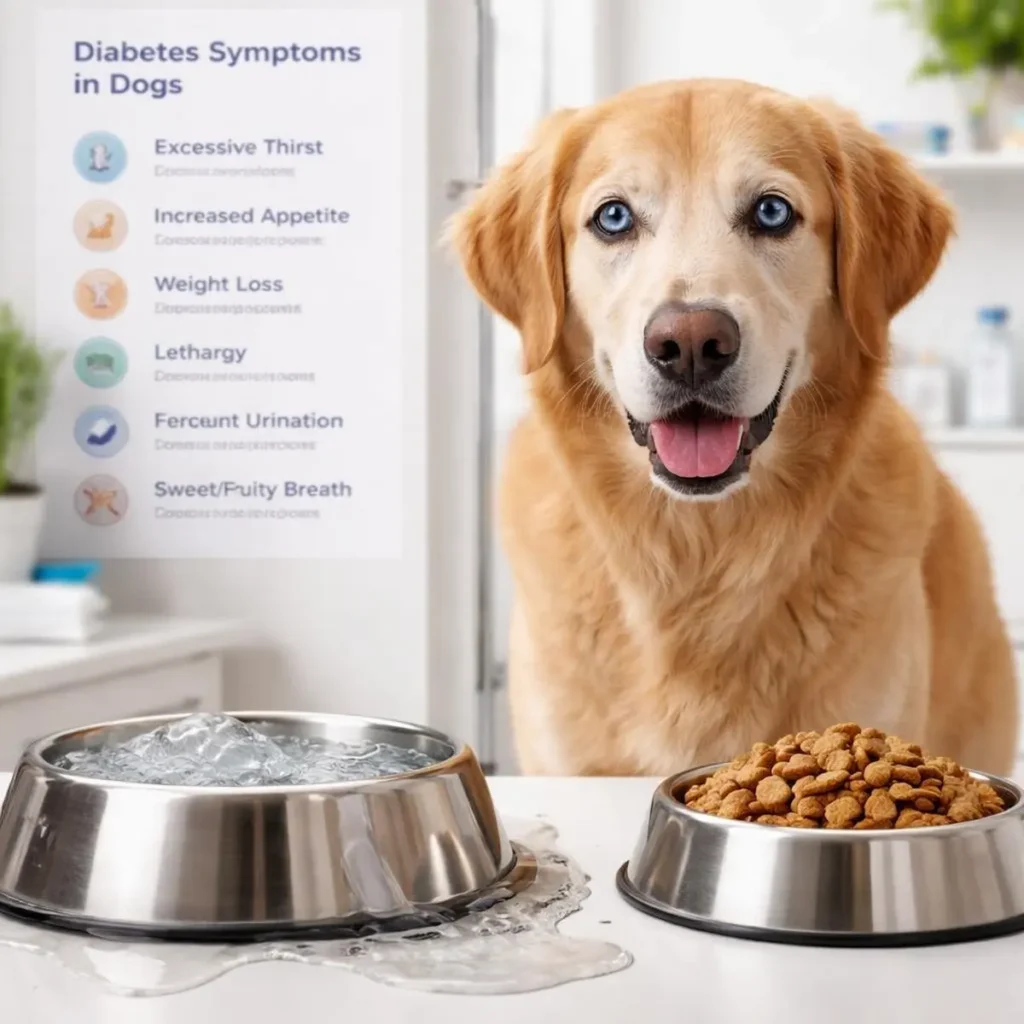
- Excessive thirst and urination
- Increased appetite despite weight loss
- Cloudy eyes (cataracts develop rapidly in diabetic dogs)
- Lethargy and reduced energy
- Recurring infections, particularly urinary tract infections
- Sweet or fruity-smelling breath in advanced cases
Diabetes is manageable — many diabetic dogs live long, happy lives with the right care. But diet is one of the most powerful management tools available, alongside insulin therapy and consistent exercise.
Why Diet Matters So Much for Diabetic Dogs
Every meal a diabetic dog eats either helps or hinders blood sugar regulation.
High-glycemic foods cause glucose to spike rapidly after eating, which makes insulin management unpredictable and difficult.
Low-glycemic foods release glucose slowly and steadily, which keeps blood sugar more stable between insulin doses.
This is why commercial dog foods — even high-quality ones — can be challenging for diabetic dogs. Many contain rice, corn, wheat, or other high-glycemic carbohydrates that cause blood sugar spikes.
Homemade food allows complete control over every ingredient and every gram of carbohydrate that goes into the bowl.
The Low-Glycemic Ingredient Framework
All 8 recipes above are built around the same core ingredient philosophy. Here’s the breakdown:
Best Proteins for Diabetic Dogs
High protein, moderate fat, easily digestible:
- ✅ Lean ground turkey (93/7 or leaner)
- ✅ Chicken breast (lower fat than thighs)
- ✅ Salmon (baked, fully cooked)
- ✅ Sardines in water (no salt)
- ✅ Lean ground beef (90/10 or leaner)
- ✅ Ground lamb (drain fat well)
- ✅ Eggs (zero glycemic index)
- ✅ Chicken or beef liver (small amounts — nutrient-dense but rich)
Best Low-Glycemic Vegetables
High fiber, low sugar, slow glucose release:
- ✅ Green beans — one of the best choices for diabetic dogs
- ✅ Zucchini — extremely low calorie and low GI
- ✅ Broccoli — contains chromium for insulin support
- ✅ Cabbage — liver-supportive, very low GI
- ✅ Spinach — iron and magnesium, minimal carbs
- ✅ Kale — broad vitamin profile, very low GI
- ✅ Cauliflower — low-carb starchy vegetable substitute
- ✅ Cucumber — high water content, nearly zero carbs
- ✅ Celery — low calorie, supports hydration
Vegetables to Use in Moderation
These are still dog-safe and nutritious, but slightly higher in natural sugars:
- ⚠️ Carrots — nutritious but moderate natural sugar content, limit portions
- ⚠️ Peas — decent protein but moderate carbohydrate content
- ⚠️ Pumpkin — excellent for digestion but use in measured amounts
Vegetables and Ingredients to Avoid
- ❌ Sweet potato — too high in starch and sugar for diabetic dogs
- ❌ Corn — high GI, common allergen
- ❌ White potato — very high glycemic index
- ❌ Parsnips — high in natural sugars
- ❌ Beets — high sugar content
- ❌ Any fruit in large quantities — natural sugars still affect blood glucose
Supplements That Support Diabetic Dogs
Homemade diets need supplementation to stay complete, and certain supplements offer additional specific benefits for diabetic dogs:
- Fish oil (omega-3s) — reduces inflammation, supports insulin sensitivity, great for skin health
- Canine multivitamin — fills nutritional gaps in any homemade diet
- Calcium (bone meal or eggshell powder) — essential for any homemade diet lacking raw bone
- Chromium — supports insulin sensitivity (check with a vet for appropriate dosage)
- Alpha-lipoic acid — a powerful antioxidant that supports glucose metabolism — however, the dose matters enormously, as high doses can be toxic to dogs. Vet guidance is non-negotiable here
- Probiotics — support gut health, which is increasingly linked to better metabolic function
Feeding Schedule and Consistency
For diabetic dogs, consistency in meal timing is just as important as what goes in the bowl. Most diabetic dogs receive insulin injections once or twice daily, and those injections need to be timed around meals.
General guidelines:
- Feed two equal meals per day, ideally 12 hours apart
- Always feed at the same time — blood sugar fluctuations from inconsistent meal timing make insulin regulation significantly harder
- Give insulin after the dog has eaten — most vets recommend waiting until the dog has consumed the meal before administering insulin, to avoid dangerous hypoglycemia if the dog doesn’t eat
- Keep portion sizes consistent — sudden changes in food quantity affect blood glucose as much as changes in ingredients
If a diabetic dog refuses a meal — which occasionally happens — contact the vet immediately before administering insulin. Injecting insulin without food on board can cause life-threatening hypoglycemic episodes.
Transitioning a Diabetic Dog to Homemade Food
Switching a diabetic dog to homemade food requires more care than transitioning a healthy dog.
The change in macronutrient ratios — particularly the reduction in carbohydrates — will affect how the body responds to insulin, and the insulin dose may need to be adjusted by a vet.
A safe transition plan:
| Week 1 | Replace 25% of current food with homemade recipe |
| Week 2 | Move to 50/50 |
| Week 3 | Move to 75% homemade |
| Week 4 | Full transition to homemade |
Monitor blood glucose levels closely throughout the transition and keep the vet updated. This isn’t the kind of dietary change to make cold turkey — pun absolutely intended :/
Signs a Diabetic Dog’s Diet Is Working
After a few weeks on the new diet, look for these positive indicators:
- More stable energy levels — fewer dramatic highs and lows throughout the day
- Reduced thirst and urination — a sign blood sugar is better regulated
- Healthy, consistent weight — neither gaining nor losing unexpectedly
- Improved coat quality — often a visible sign of better overall nutrition
- Better regulated blood glucose readings — confirmed through vet monitoring
If any concerning symptoms appear — lethargy, vomiting, disorientation, or signs of hypoglycemia like weakness or trembling — contact the vet immediately.
Storage Tips for These Recipes
All 8 recipes follow the same storage guidelines:
- Fridge: Airtight glass container for up to 4 days
- Freezer: Portion into individual meal sizes and freeze for up to 3 months
- Thawing: Transfer from freezer to fridge the night before — never thaw at room temperature
- Serving temperature: Let refrigerated food sit for 10 to 15 minutes before serving, or warm gently and stir thoroughly to eliminate hot spots
Batch cooking and freezing is especially valuable for diabetic dog owners because consistent meal composition matters.
Cooking the same batch recipe repeatedly and freezing it ensures every meal delivers the same macronutrient profile — which makes insulin management far more predictable.
Final Thoughts
Managing canine diabetes through diet is one of the most empowering things an owner can do.
Every bowl of low-glycemic, whole-food homemade food is a direct investment in better blood sugar control, fewer complications, and a better quality of life for a dog that depends completely on the human making those decisions.
The 8 recipes above aren’t just low-glycemic — they’re genuinely nutritious, practical to cook, and varied enough to rotate throughout the week without things getting repetitive. Start with one or two, get the vet on board with the transition plan, and monitor closely.
A diabetic diagnosis isn’t the end of a good food life for a dog. With the right recipes and the right routine, it’s just a new chapter — and this one comes with a really solid meal plan. 🙂