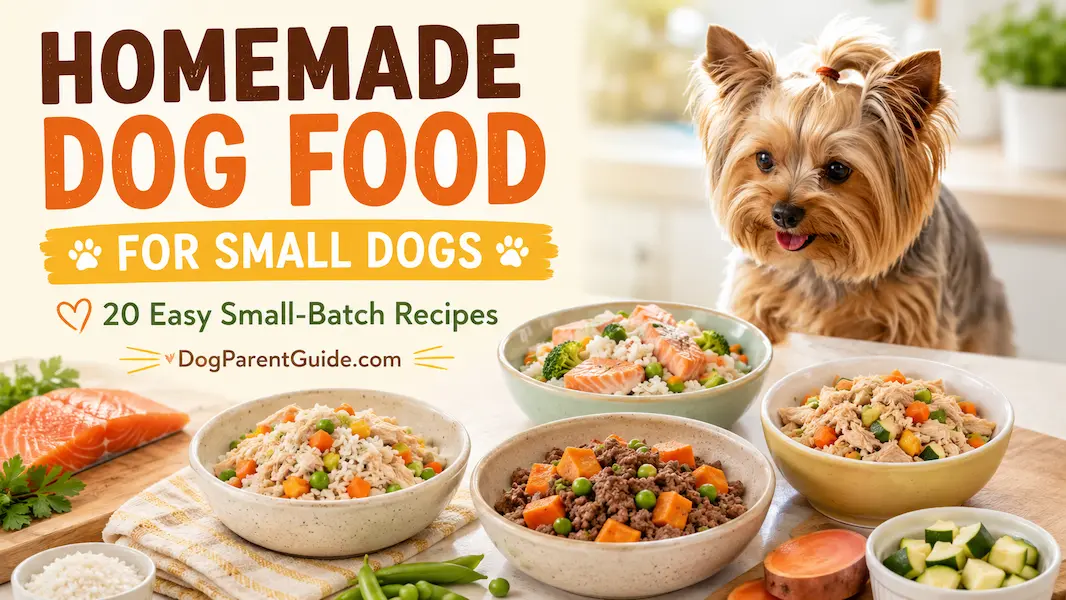
Most homemade dog food recipes seem written for dogs with Labrador-sized appetites.
If your dog weighs 6, 10, or 15 pounds, you usually need something different: smaller batches, calorie-conscious portions, finely chopped ingredients, and enough flavor to keep a tiny picky eater interested.
These 20 homemade dog food recipes for small dogs include everyday meals, softer options, fish recipes, novel proteins, senior-friendly textures, and easy meal-prep ideas.
🎯 Nutrition note: These recipes are homemade meal ideas, not automatically complete and balanced diets.
If homemade food will provide most or all of your dog’s calories long-term, ask your veterinarian or a board-certified veterinary nutritionist how to properly balance calcium, vitamins, minerals, essential fats, and other nutrients.
🐾 Which Homemade Dog Food Recipe Should You Try First?
| If Your Small Dog… | Try This Recipe |
|---|---|
| Is new to homemade food | Chicken & Rice |
| Is a picky eater | Beef & Sweet Potato |
| Has a sensitive tummy | Chicken & Pumpkin |
| Needs a lighter meal | White Fish & Rice |
| Loves fish | Salmon & Potato |
| Is a senior | Chicken & Oat |
| Needs protein variety | Duck, Venison, or Rabbit |
| Prefers soft food | Egg, Pumpkin & Rice |
| Needs easy meal prep | Turkey & Quinoa |
| Deserves something special | Chicken & Egg |
You don’t need all 20 in rotation. Start with one or two that suit your dog, then add variety gradually.
Not ready to replace the whole bowl? A spoonful of one of these homemade dog food toppers can be an easier way to make a familiar meal more tempting.
20 Homemade Dog Food Recipes for Small Dogs
🍗 Easy Everyday Small Dog Meals
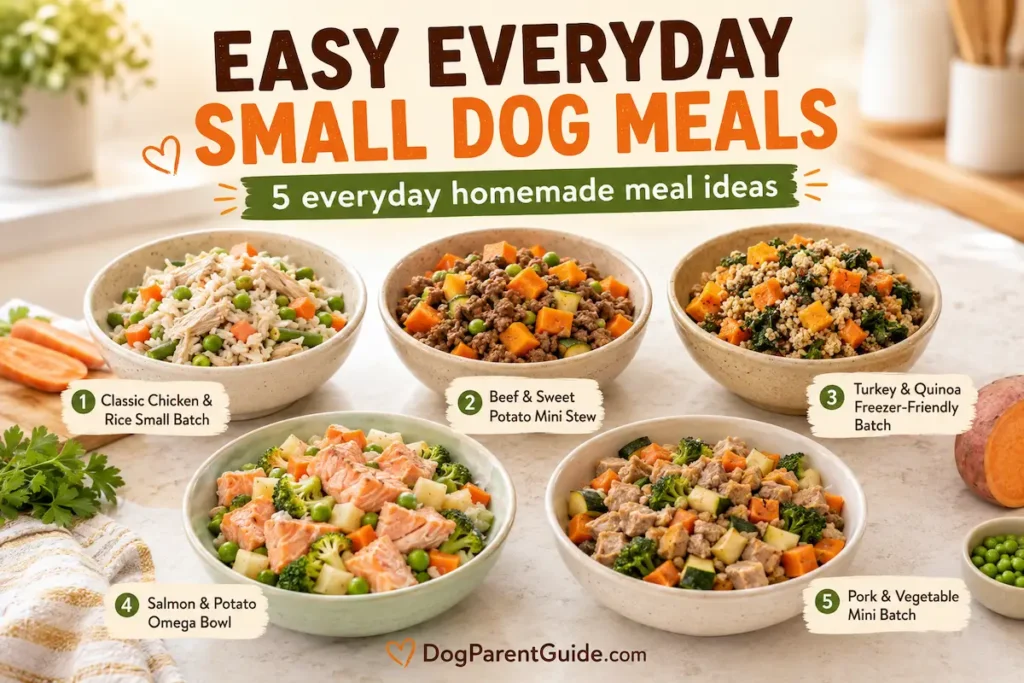
1. Classic Chicken & Rice Small Batch
A mild, familiar starting point for small dogs new to homemade food.
🥣 Ingredients
- 1 lb boneless, skinless chicken breast
- ½ cup dry brown rice
- ½ cup finely chopped carrots
- ½ cup finely chopped green beans
- ¼ cup frozen peas
- 2 cups water or unsalted dog-safe broth
👩🍳 Instructions
- Add chicken, rice, carrots, and liquid to a pot.
- Bring to a boil, then reduce to a simmer.
- Cover and cook for about 20 minutes.
- Add green beans and peas during the final 5 minutes.
- Shred chicken finely, return it to the pot, mix, and cool.
Why it works: Chicken provides lean protein while rice adds easy-to-portion energy. The soft texture is also practical for very small mouths.
2. Beef & Sweet Potato Mini Stew
A richer, more aromatic option for picky small dogs.
If your small dog regularly turns up their nose at dinner, these homemade dog food recipes for picky eaters offer more flavor, texture, and protein ideas to try.
🥣 Ingredients
- 1 lb lean ground beef
- 1 medium sweet potato, peeled and diced
- ½ cup zucchini
- ½ cup peas
- ¼ cup spinach
- 2 cups water
👩🍳 Instructions
- Brown the beef and drain excess fat.
- Add sweet potato and water.
- Simmer for about 15 minutes.
- Add zucchini, peas, and spinach for another 4 to 5 minutes.
- Mash lightly and cool.
Why it works: Beef provides protein, iron, zinc, and B vitamins, while sweet potato adds fiber, beta-carotene, and a soft texture many picky dogs enjoy.
3. Turkey & Quinoa Freezer-Friendly Batch
A tidy meal-prep recipe that freezes well in small portions.
🥣 Ingredients
- 1 lb ground turkey
- ½ cup quinoa, thoroughly rinsed
- ½ cup butternut squash
- ½ cup grated carrot
- ¼ cup chopped kale
- 2 cups water
👩🍳 Instructions
- Cook turkey until fully done.
- Add quinoa, squash, carrot, and water.
- Simmer covered for about 15 minutes.
- Stir in kale for the final 3 minutes.
- Cool before portioning.
Why it works: Turkey adds lean protein, while quinoa contributes carbohydrates, fiber, minerals, and additional amino acids.
4. Salmon & Potato Omega Bowl
A fish-based option with naturally occurring EPA and DHA omega-3 fats.
🥣 Ingredients
- 1 lb boneless salmon
- 2 small potatoes, peeled and diced
- ½ cup broccoli
- ½ cup grated carrot
- ½ cup peas
- 2 cups water
👩🍳 Instructions
- Simmer potatoes and carrots for about 8 minutes.
- Add salmon, broccoli, and peas.
- Cover and cook another 6 to 8 minutes.
- Flake the salmon thoroughly and check carefully for bones.
- Mix and cool.
Why it works: Salmon provides protein and omega-3 fats that support normal skin, coat, brain, joint, and inflammatory function.
If salmon is already a favorite in your house, try these easy homemade salmon dog food recipes for more ways to pair it with dog-friendly vegetables and carbs.
5. Pork & Vegetable Mini Batch
Lean pork is an easy way to add protein variety beyond chicken and beef.
🥣 Ingredients
- 1 lb pork tenderloin
- ½ cup sweet potato
- ½ cup zucchini
- ½ cup broccoli
- ¼ cup grated carrot
- 2 cups water
👩🍳 Instructions
- Cut pork into small pieces.
- Simmer pork, sweet potato, and carrot for about 15 minutes.
- Add zucchini and broccoli for another 5 to 6 minutes.
- Finely chop or shred the pork.
- Cool before serving.
Why it works: Pork tenderloin provides protein and B vitamins while remaining leaner than many other pork cuts.
🥣 Gentle & Lighter Small Dog Meals
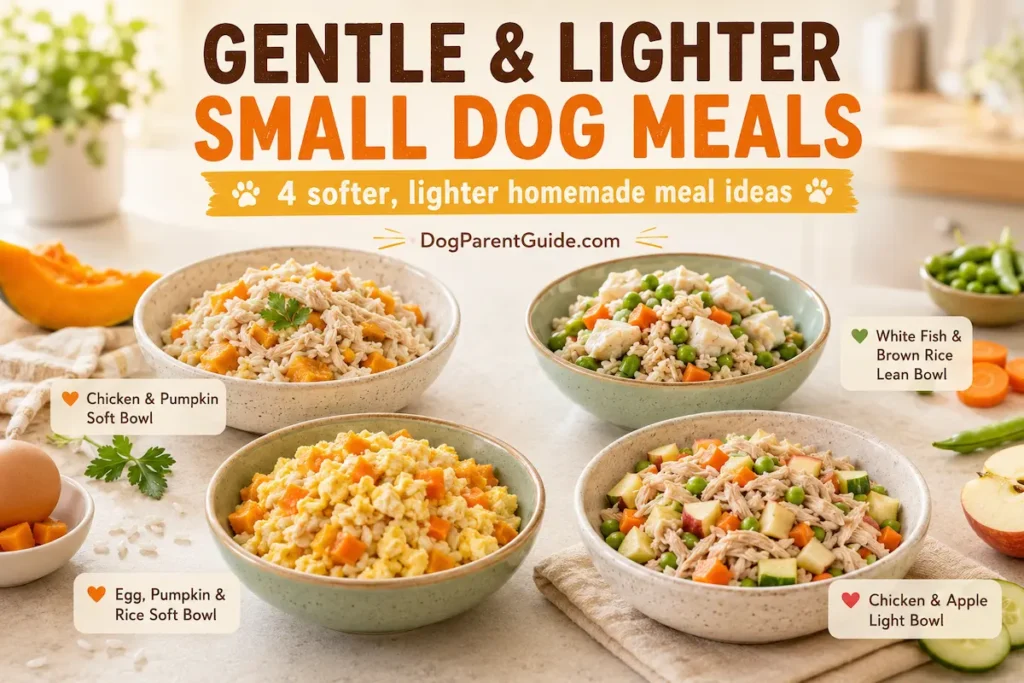
6. Chicken & Pumpkin Soft Bowl
Soft, moist, and especially useful when your dog prefers wetter food.
🥣 Ingredients
- 1 lb skinless chicken breast or thigh
- ½ cup plain canned pumpkin
- ½ cup brown rice
- ½ cup finely chopped carrots
- 2 cups water
👩🍳 Instructions
- Cook chicken, rice, carrots, and water for about 20 minutes.
- Shred the chicken finely.
- Return it to the pot and stir in pumpkin.
- Cool before serving.
Why it works: Pumpkin adds fiber and moisture and can help support normal digestion and stool quality.
Use 100% plain pumpkin, not pumpkin pie filling.
If pumpkin works well for your dog, you can find more combinations in these homemade pumpkin dog food recipes, from simple everyday bowls to heartier meals.
7. White Fish & Brown Rice Lean Bowl
One of the leanest meals in the collection.
🥣 Ingredients
- 1 lb boneless cod, pollock, or tilapia
- ½ cup brown rice
- ½ cup carrots
- ½ cup green beans
- ¼ cup peas
- 2 cups water
👩🍳 Instructions
- Cook rice until nearly tender.
- Add fish and vegetables.
- Cover and cook for 6 to 8 minutes.
- Flake the fish and check for bones.
- Mix and cool.
Why it works: White fish provides lean protein, while vegetables add fiber and volume without a large calorie load.
8. Egg, Pumpkin & Rice Soft Bowl
Soft, aromatic, and easy to mash into tiny portions.
🥣 Ingredients
- 6 eggs
- ½ cup cooked white rice
- ½ cup plain pumpkin
- ½ cup grated carrot
👩🍳 Instructions
- Cook rice until soft.
- Stir in pumpkin and carrot.
- Beat eggs separately.
- Add eggs over low heat and stir until fully cooked.
- Cool.
Why it works: Eggs provide highly digestible protein plus choline, selenium, riboflavin, and other nutrients.
9. Chicken & Apple Light Bowl
A fresh, lighter combination for dogs that enjoy a little sweetness.
🥣 Ingredients
- 1 lb chicken breast
- ½ cup apple, peeled and diced
- ½ cup grated carrot
- ¼ cup peas
- ¼ cup cucumber
- 2 cups water
👩🍳 Instructions
- Cook chicken thoroughly and shred finely.
- Add carrot and peas for several minutes.
- Fold in apple and cucumber near the end.
- Cool.
Why it works: Chicken keeps protein high while apple, cucumber, and vegetables add moisture, fiber, and relatively little calorie density.
Remove the apple core and seeds completely.
🥩 More Protein Variety for Small Dogs
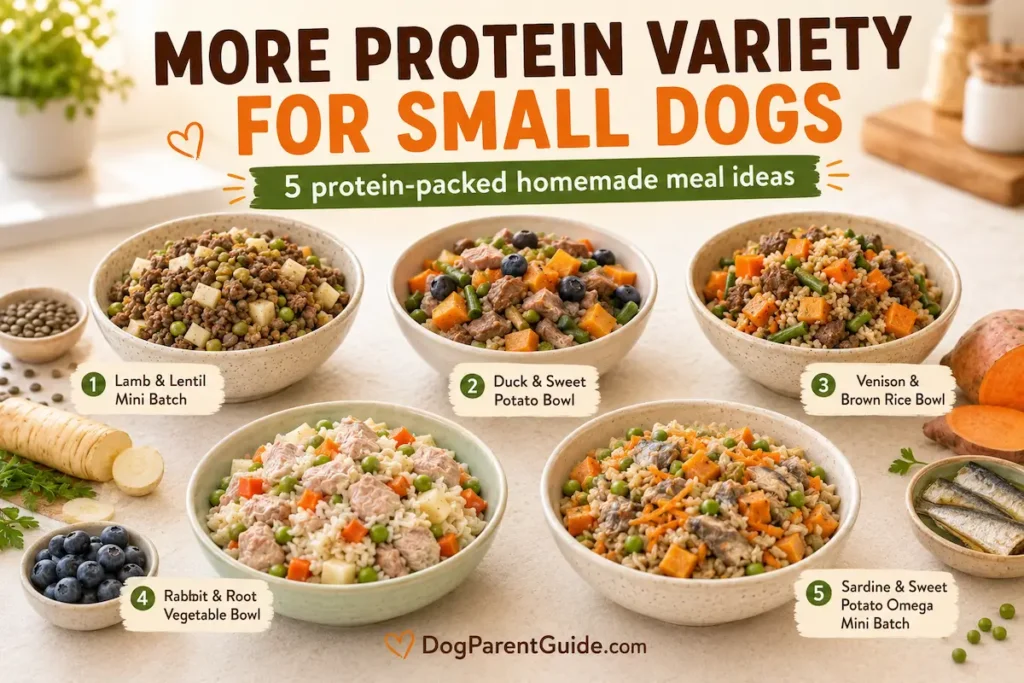
10. Lamb & Lentil Mini Batch
Lamb’s richer aroma can be appealing to dogs that get bored with chicken.
🥣 Ingredients
- 1 lb lean ground lamb
- ¼ cup green lentils
- ½ cup parsnip
- ½ cup kale
- ¼ cup peas
- 2½ cups water
👩🍳 Instructions
- Brown lamb and drain excess fat.
- Add lentils, parsnip, and water.
- Simmer about 20 minutes.
- Add kale and peas near the end.
- Cool.
Why it works: Lamb provides protein, iron, zinc, and vitamin B12, while lentils contribute fiber and folate.
11. Duck & Sweet Potato Bowl
Rich, flavorful, and useful when you want a less-common protein.
🥣 Ingredients
- 1 lb boneless duck breast
- 1 medium sweet potato
- ½ cup green beans
- 2 tablespoons blueberries
- 2 cups water
👩🍳 Instructions
- Trim visible fat and cook duck thoroughly.
- Drain rendered fat.
- Simmer sweet potato and green beans until soft.
- Shred duck finely.
- Stir in blueberries near the end.
- Cool.
Why it works: Duck supplies protein, iron, selenium, and B vitamins, while sweet potato adds fiber and carotenoids.
12. Venison & Brown Rice Bowl
Another option when your dog needs more variety than the usual chicken-beef rotation.
🥣 Ingredients
- 1 lb ground venison
- ½ cup brown rice
- ½ cup carrot
- ¼ cup green beans
- ¼ cup plain pumpkin
- 2 cups water
👩🍳 Instructions
- Brown venison.
- Add rice, carrots, and water.
- Simmer about 20 minutes.
- Add green beans near the end.
- Stir in pumpkin and cool.
Why it works: Venison provides protein, iron, zinc, vitamin B12, and other B vitamins.
If you’re using venison as part of an elimination diet, follow your veterinarian’s plan carefully.
13. Rabbit & Root Vegetable Bowl
A mild, lean protein option for dogs that have eaten most of the usual meats.
🥣 Ingredients
- 1 lb boneless rabbit
- ¼ cup white rice
- ½ cup parsnip
- ½ cup carrot
- ¼ cup peas
- 2 cups water
👩🍳 Instructions
- Simmer rabbit, rice, parsnip, and carrot until cooked.
- Shred rabbit finely.
- Add peas during the final few minutes.
- Mix and cool.
Why it works: Rabbit is protein-rich and typically relatively lean, with a soft texture when cooked thoroughly.
14. Sardine & Sweet Potato Omega Mini Batch
Your kitchen may smell suspicious for an hour. Your dog probably won’t mind.
🥣 Ingredients
- 3 small cans sardines in water, no salt added
- ½ cup brown rice
- 1 small sweet potato
- ½ cup peas
- ¼ cup grated carrot
- 2 cups water
👩🍳 Instructions
- Cook rice, sweet potato, and carrot until tender.
- Add peas near the end.
- Remove from heat.
- Fold in drained sardines.
- Break into small pieces and cool.
Why it works: Sardines provide protein, EPA and DHA omega-3 fats, vitamin B12, selenium, and vitamin D.
💛 Small Dog Meals for Different Needs
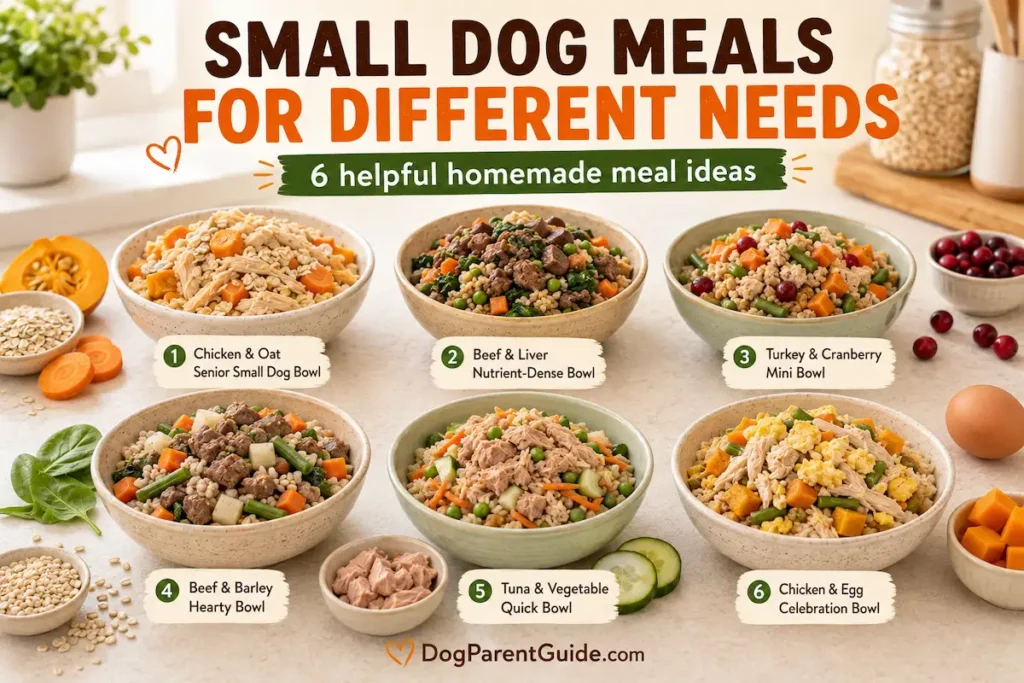
15. Chicken & Oat Senior Small Dog Bowl
Soft, moist, and easy to mash if chewing has become slower.
🥣 Ingredients
- 1 lb chicken breast
- ¼ cup rolled oats
- ½ cup plain pumpkin
- ½ cup mashed sweet potato
- ¼ cup grated carrot
- Water as needed
👩🍳 Instructions
- Simmer chicken, oats, carrot, and sweet potato until very soft.
- Shred chicken finely.
- Stir in pumpkin.
- Add warm water if needed for a softer texture.
Why it works: Chicken provides protein to support maintenance of lean body tissue, while oats, pumpkin, and sweet potato add fiber and soft carbohydrates.
Senior dogs with kidney, pancreatic, heart, or other medical conditions need an individualized diet rather than a generic “senior recipe.”
16. Beef & Liver Nutrient-Dense Bowl
Liver is useful in small amounts because it is exceptionally nutrient-dense.
🥣 Ingredients
- 14 oz lean ground beef
- 2 oz beef liver
- ½ cup brown rice
- ½ cup spinach
- ¼ cup carrot
- ¼ cup peas
- 2 cups water
👩🍳 Instructions
- Cook beef and liver thoroughly.
- Add rice, carrot, and water.
- Simmer until rice is tender.
- Add spinach and peas near the end.
- Mix and cool.
Why it works: Liver supplies vitamin A, copper, iron, folate, vitamin B12, and other micronutrients.
More is not better. Chronically feeding excessive liver can provide too much vitamin A and disturb the balance of a homemade diet.
17. Turkey & Cranberry Mini Bowl
A seasonal variation without pretending cranberry is medicine.
🥣 Ingredients
- 1 lb ground turkey
- 2 tablespoons fresh or frozen cranberries
- ½ cup sweet potato
- ½ cup green beans
- ¼ cup brown rice
- 2 cups water
👩🍳 Instructions
- Cook turkey.
- Add sweet potato, rice, and water.
- Simmer until tender.
- Add green beans and cranberries near the end.
- Cool.
Why it works: Turkey provides lean protein, while cranberries contribute fiber and antioxidant plant compounds.
This is not a treatment for urinary tract infections. Urinary pain, straining, blood in urine, or difficulty urinating needs veterinary attention.
18. Beef & Barley Hearty Bowl
A more substantial bowl for dogs that do well with a heartier meal.
🥣 Ingredients
- 1 lb lean beef
- ¼ cup pearl barley
- ½ cup turnip
- ½ cup green beans
- ¼ cup carrot
- 2½ cups water or unsalted broth
👩🍳 Instructions
- Add ingredients to a pot.
- Bring to a boil.
- Reduce heat and simmer for 30 to 35 minutes.
- Cook until barley is completely tender.
- Finely chop or shred beef.
Why it works: Beef provides protein, iron, zinc, and B vitamins, while barley adds carbohydrates and fiber.
19. Tuna & Vegetable Quick Bowl
The “I forgot to thaw dinner” option.
🥣 Ingredients
- 2 cans tuna packed in water, preferably no salt added
- ½ cup cooked brown rice
- ½ cup grated carrot
- ¼ cup peas
- ¼ cup cucumber
👩🍳 Instructions
- Drain tuna.
- Mix with cooked rice and vegetables.
- Break tuna into small flakes.
- Serve at room temperature.
Why it works: Tuna provides protein, selenium, and B vitamins.
Use tuna for occasional variety rather than as the default fish because larger tuna can contain more mercury than smaller fish such as sardines.
20. Chicken & Egg Celebration Bowl
Birthday, gotcha day, or successful nail trim. All valid reasons.
🥣 Ingredients
- 1 lb chicken breast
- 3 eggs
- ½ cup plain pumpkin
- ½ cup brown rice
- ¼ cup carrot
- ¼ cup green beans
- 2 cups water
👩🍳 Instructions
- Cook chicken, rice, and carrot.
- Shred chicken finely.
- Beat eggs and stir them into the warm mixture over low heat until cooked.
- Add pumpkin and green beans.
- Cool.
Why it works: Chicken and eggs provide high-quality animal protein, while pumpkin and vegetables add fiber and moisture.
📌 20 Small Dog Food Recipes at a Glance
| Recipe | Best For | Time |
|---|---|---|
| Chicken & Rice | Beginners | 25 min |
| Beef & Sweet Potato | Picky dogs | 20 min |
| Turkey & Quinoa | Meal prep | 20 min |
| Salmon & Potato | Skin & coat support | 20 min |
| Pork & Vegetables | Protein variety | 25 min |
| Chicken & Pumpkin | Sensitive stomachs | 25 min |
| White Fish & Rice | Lighter meals | 25 min |
| Egg, Pumpkin & Rice | Soft texture | 18 min |
| Chicken & Apple | Lighter bowl | 25 min |
| Lamb & Lentil | Protein rotation | 25 min |
| Duck & Sweet Potato | Novel protein | 20 min |
| Venison & Rice | Less-common protein | 25 min |
| Rabbit & Root Vegetables | Less-common protein | 25 min |
| Sardine & Sweet Potato | Omega-3 fats | 22 min |
| Chicken & Oat | Seniors | 20 min |
| Beef & Liver | Nutrient-dense rotation | 22 min |
| Turkey & Cranberry | Seasonal variety | 22 min |
| Beef & Barley | Hearty meal | 35 min |
| Tuna & Vegetables | Quick prep | 10 min |
| Chicken & Egg | Special occasions | 22 min |
🐶 Why Small Dogs Need a Different Feeding Approach
Small dogs often need more calories per pound of body weight than larger dogs, but they also have much smaller stomachs.
That makes three things especially important:
- Calorie density: every small portion still needs meaningful nutrition.
- Portion accuracy: a small calorie overage matters more to a 7-pound dog than to a 70-pound dog.
- Texture and piece size: food should be easy for a tiny mouth to chew and swallow.
Small dogs are tiny. Their measuring errors shouldn’t be large.
⚖️ How Much Homemade Food Should a Small Dog Eat?
For homemade food, calories are more useful than cups.
One cup of white fish, vegetables, and rice may contain far fewer calories than one cup of beef, egg, and sweet potato.
As a rough starting reference:
| Dog Weight | Approx. Daily Calories |
|---|---|
| 5 lb | 150–220 kcal |
| 8 lb | 220–300 kcal |
| 10 lb | 260–350 kcal |
| 12 lb | 300–400 kcal |
| 15 lb | 350–470 kcal |
| 20 lb | 430–580 kcal |
These are estimates, not prescriptions. Age, activity, neuter status, breed, body condition, environment, and health can all change calorie needs.
A practical check: you should generally be able to feel your dog’s ribs without pressing through a thick fat layer, and a waist should still be visible from above.
🍼 A Note for Toy-Breed Puppies
Very young toy-breed puppies can be more vulnerable to hypoglycemia, especially when unusually small, stressed, cold, ill, or not eating enough.
That is one reason puppies may need smaller, more frequent meals than healthy adults.
Weakness, trembling, unusual sleepiness, poor coordination, collapse, or seizures can signal dangerously low blood sugar and require urgent veterinary attention.
Growing puppies also have different nutrient needs, so don’t use a generic adult homemade diet as a long-term puppy diet without professional guidance.
🌿 Homemade Does Not Automatically Mean Complete and Balanced
A bowl of meat, rice, and colorful vegetables can look wonderfully healthy and still be nutritionally incomplete.
Long-term homemade diets need the correct balance of nutrients including:
- calcium and phosphorus
- essential fats
- vitamins and minerals
- trace nutrients
- adequate protein and amino acids
Calcium is especially easy to get wrong because muscle meat contains plenty of phosphorus but very little calcium.
If homemade food will provide most or all of your dog’s diet, use a properly formulated recipe rather than trying to balance it by eye or adding a random multivitamin.
🧊 How to Meal Prep Homemade Food for a Small Dog
Small dogs make freezer meal prep surprisingly convenient.
Want to prep further ahead? This 30-day homemade dog food meal prep guide shows how to organize batches, portions, and freezer meals without cooking from scratch every few days.
Think:
COOK → COOL → PORTION → LABEL → CHILL OR FREEZE
- Refrigerate: Store cooked food promptly in airtight containers and prepare only several days at a time.
- Freeze small: Silicone molds or tiny containers prevent you from thawing far more food than your dog needs.
- Label it: Add the recipe name, preparation date, and calories per portion if calculated.
- Thaw safely: Defrost refrigerated or frozen portions safely rather than leaving cooked food at room temperature for long periods.
Once four homemade meals turn the same shade of beige-orange in the freezer, labels become surprisingly important.
⚠️ Ingredients to Avoid in Homemade Dog Food
Some foods are true poisoning risks. Others simply add unnecessary danger to a homemade bowl.
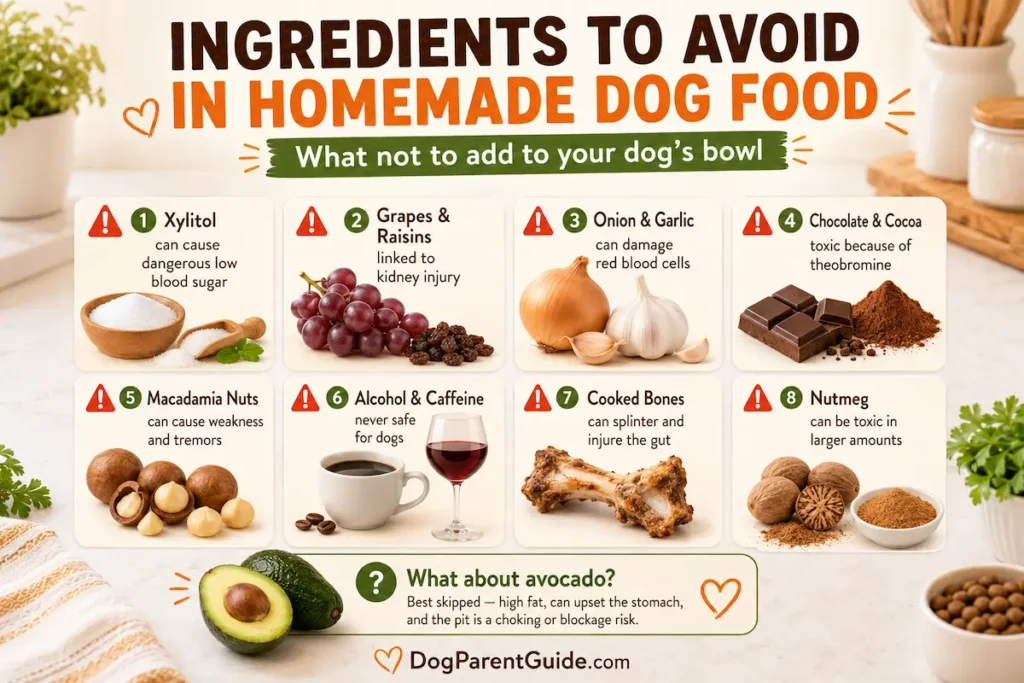
Foods That Can Be Dangerous or Toxic
Xylitol
Never use xylitol. It can cause a rapid, dangerous drop in blood sugar and may also cause severe liver injury in dogs.
Check sugar-free products, some peanut butters, gum, toothpaste, baked goods, and supplements.
Grapes and Raisins
Avoid them completely. Grapes and raisins can cause acute kidney injury, and there is no reliably predictable safe amount for intentional feeding.
Onion, Garlic, Chives, and Leeks
These Allium-family foods can damage canine red blood cells.
Powdered forms matter too, so check broths, seasoning blends, and prepared meats.
Chocolate and Cocoa
Chocolate contains theobromine and caffeine. Dark and baking chocolate are especially concentrated, but chocolate of any type doesn’t belong in dog food.
Macadamia Nuts
Macadamia nuts can cause weakness, vomiting, tremors, and other signs of toxicity in dogs.
Alcohol and Caffeine
Keep alcohol, coffee, espresso grounds, energy drinks, and other caffeinated products away from dogs.
Cooked Bones
Cooked bones can splinter and cause choking, obstruction, or gastrointestinal injury.
Remove bones carefully from fish and meat before serving.
Nutmeg
Nutmeg contains myristicin and can cause toxicity in sufficient amounts.
The simplest seasoning rule for homemade dog food is also the safest:
skip the seasoning.
What About Avocado?
Avocado stays on my do-not-add list, but it is not equivalent to xylitol or grapes.
Avocado contains persin and may cause gastrointestinal upset. Its flesh is also relatively high in fat, while the large pit creates a serious choking or intestinal-obstruction risk.
Dogs appear less sensitive to persin than some other animals, so a tiny accidental lick of avocado flesh is different from a major toxic exposure.
Still, homemade dog food doesn’t need avocado.
Leave it for the humans.
✂️ Cut Small-Dog Food Into Small-Dog Pieces
A perfectly safe carrot can still be annoyingly huge when your entire dog weighs 6 pounds.
For toy and small breeds:
- shred meats finely
- dice firm vegetables small
- cook root vegetables until tender
- check fish carefully for bones
- mash food when a softer texture works better
You don’t need to puree every meal.
Just remember who is eating it.
Final Thoughts
Homemade dog food for small dogs comes down to appropriate portions, small pieces, and balanced nutrition.
Choose recipes your dog enjoys, adjust portions based on calories and body condition, and if homemade food becomes the main diet, make sure it is properly balanced for long-term feeding.