If your dog is limping, moving more slowly, or struggling to get comfortable, you may be looking for something safe to help at home.
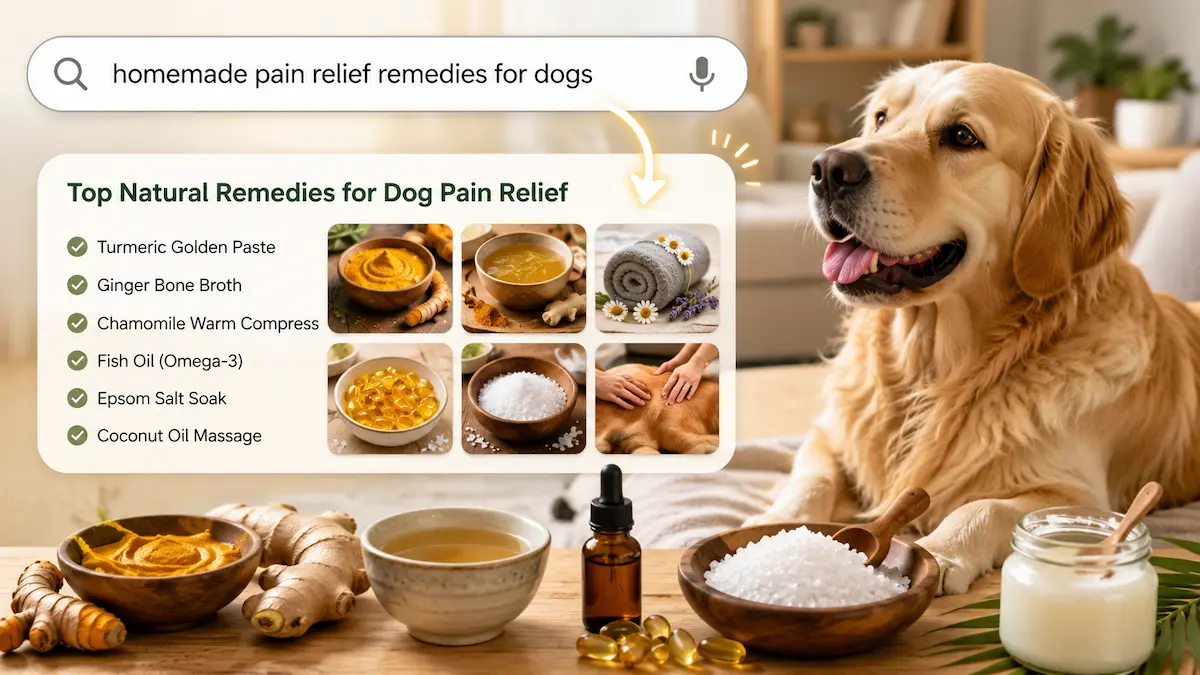
These six homemade pain relief remedies for dogs may help ease mild joint stiffness, sore muscles, arthritis discomfort, and post-exercise aches.
Options such as turmeric golden paste and fish oil provide ongoing joint support, while warm compresses, Epsom salt soaks, and gentle massage may offer more immediate comfort.
Home remedies should support, not replace, veterinary care. Sudden, severe, or unexplained pain always needs professional attention.
🦴 What Causes Pain in Dogs?
Understanding what’s causing your dog’s discomfort can help you choose the most appropriate supportive care.
🎯 Common causes include:
- Arthritis and osteoarthritis
- Aging joints
- Muscle soreness after exercise
- Minor strains or sprains
- Hip dysplasia
- Recovery after long walks or hiking
- Chronic inflammation
- Previous orthopedic injuries
Many dog parents keep one or two natural remedies on hand to support senior dogs or active breeds after strenuous activity.
Quick Homemade Pain Relief Guide for Dogs
| Remedy | Best For | Frequency | Key Benefit |
|---|---|---|---|
| Turmeric Golden Paste | Arthritis, joint inflammation | Daily | Curcumin reduces inflammation |
| Ginger & Bone Broth | Joint health, chronic stiffness | Daily | Collagen + glucosamine support |
| Warm Herbal Compress | Localized soreness, muscle pain | 2–3x daily | Immediate soothing relief |
| Fish Oil | Joint pain, inflammation | Daily | Omega-3s with strong evidence base |
| Epsom Salt Soak | Sore paws, arthritic joints | As needed | Reduces swelling via magnesium |
| Coconut Oil Massage | General stiffness, tension | 1–2x daily | Circulation + bonding benefit |
💡 You might be interested:
🌿 6 Homemade Pain Relief Remedies for Dogs That Actually Work

1. Turmeric Golden Paste
💡 Why It Works
Curcumin, the active compound in turmeric, has well-documented anti-inflammatory and antioxidant properties that may help dogs with arthritis, chronic joint pain, and ongoing inflammation.
Turmeric is absorbed much more effectively when combined with healthy fats and black pepper, making golden paste one of the most popular natural remedies for dogs.
🧾 Ingredients:
- ½ cup organic turmeric powder
- 1 cup water
- 1½ tsp freshly ground black pepper
- ¼ cup coconut oil or olive oil
👩🍳 Instructions:
- Mix turmeric and water in a saucepan over low heat for 7–10 minutes until a thick paste forms. Remove from heat, stir in the black pepper and oil, then let the mixture cool.
- Transfer the mixture to an airtight jar and store it in the refrigerator for up to 2 weeks. Mix the recommended amount into your dog’s food when serving.
🐶 Dosage:
- Small dogs (under 20 lbs): ¼ tsp/day
- Medium (20–50 lbs): ½ tsp/day
- Large (50+ lbs): 1 tsp/day.
Build up gradually over the first week.
2. Ginger & Bone Broth
💡 Why It Works
Bone broth naturally provides collagen, glucosamine, chondroitin, and amino acids that support healthy joints.
Ginger adds additional anti-inflammatory compounds that may help reduce stiffness in aging dogs.
🧾 Ingredients:
- 2–3 lbs raw beef or chicken bones
- 1 tbsp fresh grated ginger (or ½ tsp ground)
- 2 tbsp apple cider vinegar
- Water to cover
👩🍳 Instructions:
- Simmer the bones with apple cider vinegar for 12–24 hours. Add the ginger during the final hour of cooking.
- Strain out all bones thoroughly, skim off excess fat once cooled, then refrigerate for up to 5 days or freeze for up to 3 months. Serve warm over your dog’s regular meal.
🐶 Dosage: Serve approximately:
- Small dogs (under 20 lbs): ¼ cup daily
- Medium dogs (20–50 lbs): ⅓ cup daily
- Large dogs (50+ lbs): ½ cup daily
3. Chamomile & Lavender Warm Compress
💡 Why It Works:
Warm compresses help increase blood circulation, relax tight muscles, and provide temporary relief for sore joints.
Chamomile may help soothe mild inflammation, while properly diluted lavender can promote relaxation during massage or compress therapy.
👩🍳 Instructions:
- Steep two chamomile tea bags in hot water for about 10 minutes, then allow the water to cool until comfortably warm.
- Add 2–3 drops of pure lavender essential oil to the water (never directly onto your dog’s skin).
- Soak a clean cloth, wring out the excess liquid, and gently apply it to the sore area for 10–15 minutes. Repeat 2–3 times daily as needed.
4. Fish Oil (Omega-3 Daily Support)
💡 Why It Works:
Fish oil is one of the most well-researched natural supplements for canine joint health. Its omega-3 fatty acids, particularly EPA and DHA, help reduce inflammation and may improve mobility and comfort in dogs with osteoarthritis over time.
👩🍳 Instructions:
Drizzle liquid fish oil over your dog’s food or puncture a softgel capsule and mix the contents into the meal. Consistent daily use is important, as noticeable improvements often take 4–6 weeks.
🐶 Dosage:
Aim for approximately 20 mg of combined EPA and DHA per pound of body weight daily, or follow the dosage instructions provided by your veterinarian or the product manufacturer.
5. Epsom Salt Soak
💡 Why It Works:
A warm Epsom salt soak may help temporarily reduce swelling, soothe tired paws, and ease mild joint discomfort after long walks or strenuous activity. The warm water itself also helps relax stiff muscles.
👩🍳 Instructions
Dissolve 1 cup of Epsom salt in 1 gallon of comfortably warm water. Soak your dog’s affected paws or lower legs for 10–15 minutes, then pat them completely dry afterward.
Prevent your dog from drinking the soaking water, as ingesting large amounts may cause digestive upset.
6. Coconut Oil Massage
💡 Why It Works:
While coconut oil has mild moisturizing and anti-inflammatory properties, the greatest benefit comes from the massage itself. Gentle massage helps improve circulation, relax tense muscles, reduce stiffness, and strengthen the bond between you and your dog.
👩🍳 Instructions:
- Warm a small amount of virgin coconut oil between your hands and gently massage it into sore muscles or stiff joints using slow, circular motions. Focus on common problem areas such as the hips, shoulders, and lower back.
- Massage for 5–10 minutes, once or twice daily, especially after exercise or before bedtime.
🩺 When Does Homemade Pain Relief for Dogs Actually Help?
✅ Natural remedies work best for:
- Mild arthritis
- Age-related stiffness
- Recovery after exercise
- Mild muscle soreness
- Long-term joint support
- Complementing veterinary treatment
🚫 They should not be used as the only treatment for:
- Neurological conditions
- Broken bones
- Severe injuries
- Sudden paralysis
- Severe pain
👀 How to Tell If Your Dog Is in Pain
Dogs are wired to hide pain — by the time symptoms are visible, discomfort has often been building for a while. Key signs include:
- Limping or favoring one leg, even intermittently
- Reluctance to move, jump, or get up from rest
- Excessive licking or chewing at a specific spot
- Changes in posture — hunching, low head carriage, tucked tail
- Irritability or aggression when touched
- Whimpering, yelping, or unexplained panting
- Loss of appetite or unusual lethargy
Sudden or severe changes? That’s a vet visit, not a home remedy.
⚠️ Safety Tips: What to Avoid
Some “natural” remedies circulating online are genuinely dangerous. Never use:
- Essential oils directly on skin or ingested: tea tree, eucalyptus, peppermint, and many others are toxic to dogs
- Human NSAIDs: ibuprofen, aspirin, and naproxen can cause ulcers, kidney failure, or death even in small doses
- Garlic or onion: sometimes suggested as anti-inflammatory; toxic to dogs in any form
- Undiluted apple cider vinegar on skin: can cause chemical burns
- Herbal supplements without vet clearance: many interact with medications or affect organ function
IMO, “natural” deserves the same scrutiny as any other label when it comes to dog health.
🚨 When to See a Veterinarian

Seek veterinary care immediately if your dog has:
- Sudden severe pain
- Visible swelling
- Heat around a joint
- Difficulty walking
- Collapse
- Loss of coordination
- Changes in eating or drinking
- No improvement after 48–72 hours of home care
Final Thoughts
Watching your dog struggle with pain is never easy, but small changes can make a meaningful difference.
Natural remedies like turmeric golden paste, fish oil, bone broth, warm compresses, Epsom salt soaks, and gentle massage can all play a role in helping your dog stay more comfortable, especially when combined with regular veterinary care, a balanced diet, and healthy daily activity.
Start with one remedy at a time, monitor your dog’s response, and always consult your veterinarian if symptoms worsen or don’t improve.
A happier, more comfortable dog means more walks, more tail wags, and more quality time together.