Flip over any bottle of store-bought dog shampoo and try reading the ingredient list.
Sulfates. Parabens. Artificial fragrances. Preservatives you can’t pronounce.
Not exactly what you want on your dog’s skin — especially since dogs absorb what goes on their coat, and then lick it off on top of that.
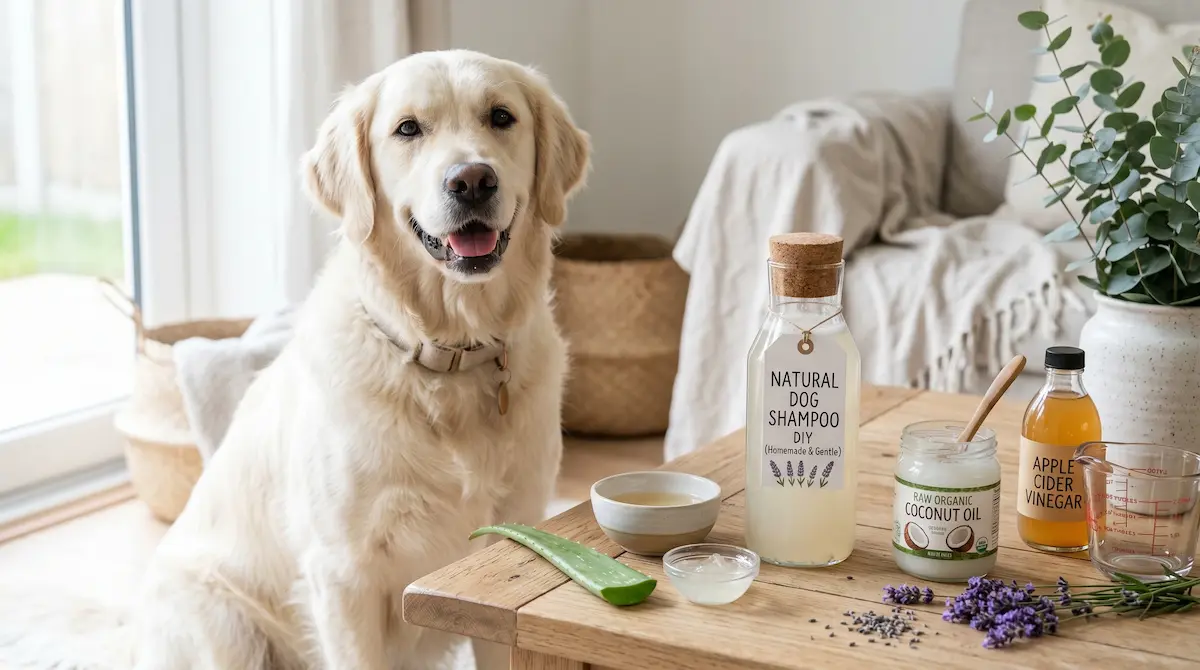
The good news? These natural dog shampoo DIY recipes take under 5 minutes to make, cost next to nothing, and use ingredients you probably already have at home. Bath day just got a serious upgrade.
Quick Answer
Yes, you can make natural dog shampoo DIY at home using simple ingredients like castile soap, aloe vera, apple cider vinegar, and coconut oil. Below are 5 easy recipes for everyday washing, itchy skin, odor, dry coats, and flea season.
Why Go Natural?
Most commercial dog shampoos are designed to smell good in the store. Your dog’s skin health? That’s a secondary concern at best.
Here’s what’s actually in most bottles:
- Sulfates — strip natural oils from the coat, leaving it dry and dull
- Parabens — preservatives linked to hormonal disruption
- Artificial fragrances — a cocktail of undisclosed chemicals that commonly trigger skin allergies
And because dogs groom themselves by licking their coat, whatever goes on the outside ends up on the inside too.
Switching to a natural DIY shampoo means gentler washes, no chemical residue, and a coat that actually looks healthy. Plus you control every single ingredient. That’s a win on every level.
Key Ingredients to Know Before You Start
These are the building blocks across all five recipes. Worth knowing what each one does before you start mixing.
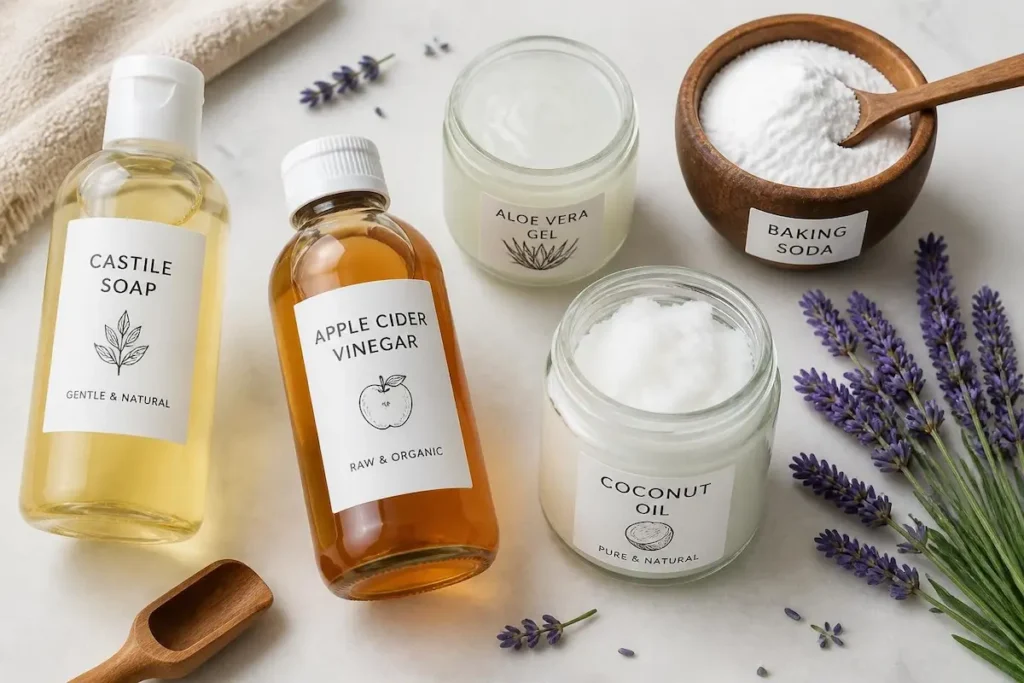
✔️ Castile soap — your base ingredient. Plant-derived, sulfate-free, gentle enough for regular use. Dr. Bronner’s is the go-to brand.
✔️ Apple cider vinegar — natural deodorizer, restores skin pH balance. Great for itchy or smelly dogs.
✔️ Aloe vera gel — soothing and moisturizing. Perfect for dry or irritated skin. Use pure gel only — no added alcohol or fragrance.
✔️ Coconut oil — adds shine, moisturizes the coat, mild antibacterial properties. A little goes a long way.
✔️ Essential oils — lavender and chamomile are safe for dogs in small, diluted amounts.
⚠️ Never use tea tree, peppermint, eucalyptus, clove, or cinnamon essential oils on dogs. These are toxic. No exceptions.
✔️ Baking soda — natural deodorizer. Essential for dogs who treat every walk like a garbage-scented spa day.
💡 Note: Always dilute essential oils properly and avoid using more than the recipe recommends.
5 DIY Natural Dog Shampoo Recipes
Here’s a quick comparison of the five natural dog shampoo DIY recipes in this guide.
| Recipe | Best For | Main Ingredients | Texture | Special Notes |
|---|---|---|---|---|
| Basic Natural Dog Shampoo | Regular bath days, all coat types | Castile soap, water, lavender essential oil | Light | Best starter recipe |
| Itchy Skin Relief Shampoo | Dry, flaky, irritated skin | Castile soap, aloe vera gel, apple cider vinegar, chamomile essential oil | Slightly thicker | Great for soothing itchy skin |
| Deodorizing Dog Shampoo | Smelly dogs | Castile soap, baking soda, lemon juice, water | Light | Helps neutralize strong odors |
| Moisturizing Dog Shampoo | Dry, dull, brittle coats | Castile soap, coconut oil, aloe vera gel, water, lavender essential oil | Medium | Shake well before each use |
| Flea Repellent Dog Shampoo | Flea season prevention | Castile soap, apple cider vinegar, water, lavender essential oil | Light | Repellent only, not a flea treatment |
Recipe 1: Basic Natural Dog Shampoo (Everyday Use)
The simplest one. Start here if you’re new to DIY dog shampoo.
🧴 Ingredients:
- 1 cup water
- ½ cup castile soap
- 5 drops lavender essential oil
📝 How to make it: Combine in a bottle, shake gently, done.
🐶 Best for: All coat types, all breeds, regular bath days.
Recipe 2: Itchy Skin Relief Shampoo
For the dog that scratches constantly and looks miserable doing it.
🧴 Ingredients:
- ½ cup castile soap
- ¼ cup aloe vera gel
- 2 tablespoons apple cider vinegar
- ½ cup water
- 4 drops chamomile essential oil
📝 How to make it: Combine everything in a bottle and shake gently. Slightly thicker than Recipe 1 — that’s normal.
🐶 Best for: Dogs with dry, flaky, or irritated skin and seasonal allergy sufferers.
Recipe 3: Deodorizing Dog Shampoo
For the dog that just found something dead and is extremely proud of it.
🧴 Ingredients:
- ½ cup castile soap
- 2 tablespoons baking soda
- 1 tablespoon fresh lemon juice
- 1 cup water
📝 How to make it: Mix castile soap and water first. Stir in baking soda slowly — it’ll fizz a little, totally normal. Add lemon juice last and stir gently.
🐶 Best for: Dogs that smell like they’ve been on an adventure you’d rather not know about.
Recipe 4: Moisturizing Shampoo for Dry Coats
For dogs whose coat has lost its shine or feels rough to the touch.
🧴 Ingredients:
- ½ cup castile soap
- 1 tablespoon coconut oil (melted)
- 2 tablespoons aloe vera gel
- ½ cup water
- 5 drops lavender essential oil
📝 How to make it: Melt the coconut oil first if solid. Combine everything in a bottle and shake well before each use — the coconut oil can separate when it cools.
🐶 Best for: Dull, dry, or brittle coats. Especially good during winter months.
Recipe 5: Flea Repellent Natural Dog Shampoo
The one to reach for when flea season starts creeping in.
🧴 Ingredients:
- ½ cup castile soap
- ¼ cup apple cider vinegar
- ½ cup water
- 5 drops lavender essential oil
📝 How to make it: Combine in a bottle, shake gently before use. Let it sit on the coat for 2–3 minutes before rinsing.
🐶 Best for: Flea prevention during spring and summer.
⚠️ Important: this is a repellent, not a treatment. Active flea infestations need a vet conversation — don’t rely on this alone.
How to Use Your DIY Dog Shampoo
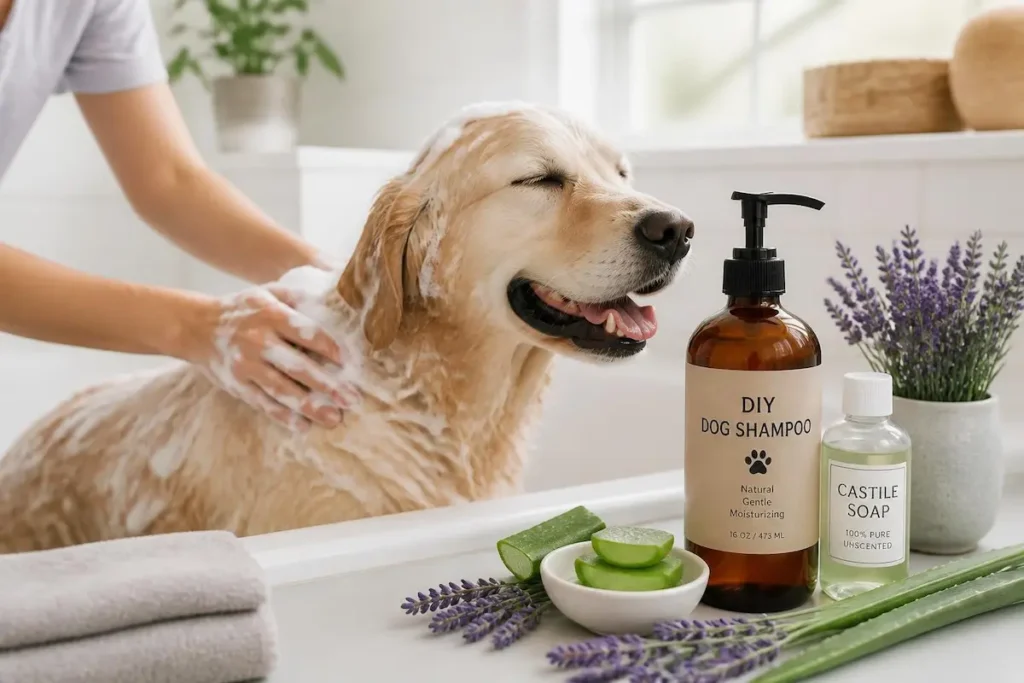
Simple steps, but worth getting right.
- Wet the coat thoroughly before applying — all the way down to the skin
- Apply from neck to tail and work into a lather
- Keep away from eyes, ears, and mouth
- Let it sit for 1–2 minutes before rinsing — especially important for Recipes 2 and 5
- Rinse thoroughly — then rinse again. Leftover residue is a common cause of post-bath itching
- Bathe every 4–6 weeks for most breeds — more often strips natural oils and causes the very dryness you’re trying to fix
Storage & Shelf Life
To keep your homemade dog shampoo fresh and safe, follow these storage guidelines.
| Type of Recipe | Storage Recommendation | Shelf Life |
|---|---|---|
| Water-based recipes | Store in a glass or BPA-free plastic bottle | 2–4 weeks |
| Recipes with coconut oil | Store in the fridge | Up to 2 weeks |
| Recipes with fresh aloe vera | Store in the fridge | Up to 2 weeks |
| All recipes | Label with recipe name and date made | Best practice for safety |
Always label each bottle with the recipe name and date made.
Common Mistakes to Avoid
Learn from other people’s bath-time disasters.
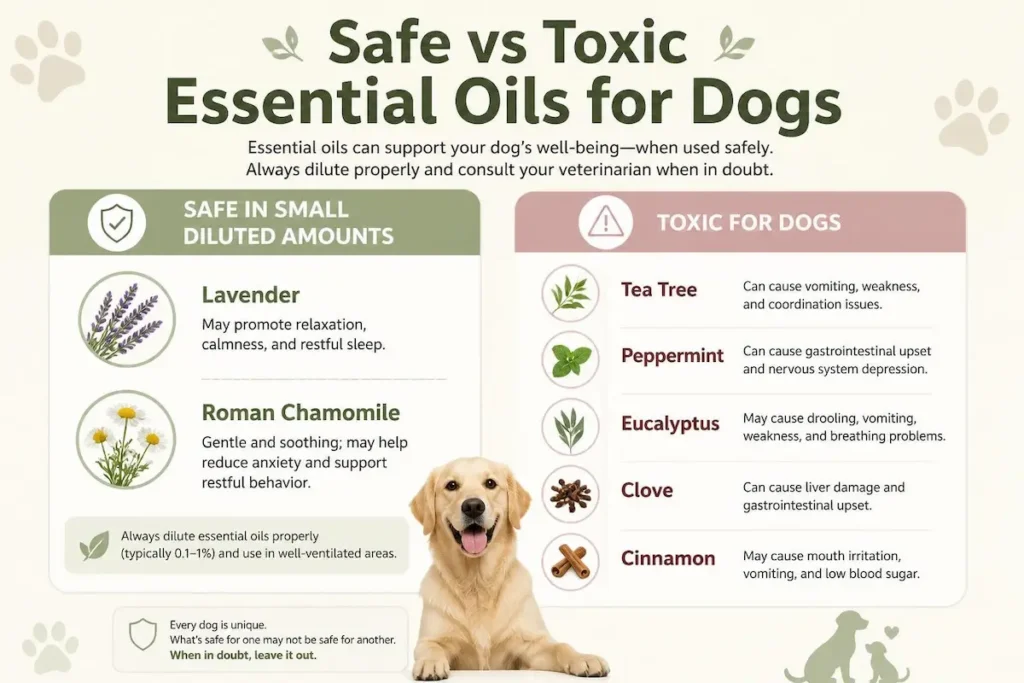
⛔️ Using toxic essential oils. Tea tree, peppermint, eucalyptus — we’ve said it multiple times now and we’ll keep saying it. Leave them out entirely.
⛔️ Going overboard with essential oils. More drops doesn’t mean a better-smelling dog. It means an overwhelmed nervous system and a vet bill. Stick to the amounts listed.
⛔️ Skipping the patch test. Apply a small amount to the inner leg and wait 24 hours before doing a full bath with any new recipe. One day of patience could save your dog a lot of discomfort.
⛔️ Using human shampoo as a base. Human skin pH is around 5.5. Dog skin sits closer to 7. What works for your hair actively disrupts your dog’s skin barrier. Not a safe swap — ever.
⛔️ Storing in cheap plastic bottles. Essential oils are aggressive solvents. They’ll leach chemicals out of low-quality plastic straight into your shampoo. Glass or quality BPA-free plastic only.
Alternatives & Substitutions
Missing an ingredient? Use these simple substitutions.
| If You Don’t Have | Use Instead | Notes |
|---|---|---|
| Castile soap | Unscented baby shampoo | Temporary option only |
| Aloe vera gel | Strong chamomile tea | Let it cool fully before using |
| Apple cider vinegar | White vinegar | ACV is gentler overall |
| Lavender essential oil | Roman chamomile essential oil | Safe alternative for dogs |
| Coconut oil | Sweet almond oil or olive oil | Olive oil has a stronger scent |
Frequently Asked Questions
Final Thoughts
Five minutes. A handful of ingredients. A dog that smells amazing and a coat that actually looks healthy.
Making your own natural dog shampoo is genuinely one of the easiest swaps you can make for your dog’s wellbeing — and your wallet will thank you too.
Start with Recipe 1 if you’re not sure where to begin. Simple, versatile, foolproof.
Pin this so you have all 5 recipes ready for bath day. And if you’re on a homemade dog care roll, go check out our frozen greek yogurt banana dog treats and banana dog cake recipe next — your dog is officially living their best life.