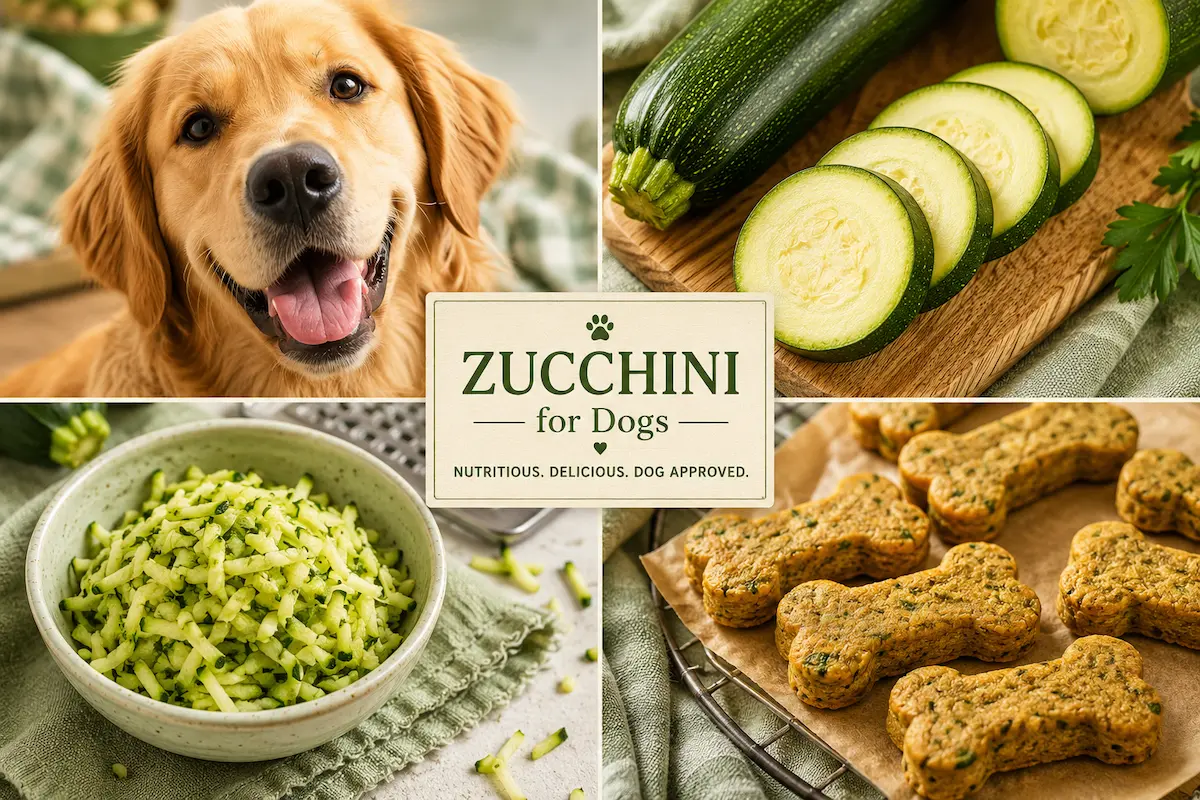
Zucchini is the vegetable that dogs eat without realizing they’re eating a vegetable — and that’s exactly what makes it one of the best ingredients in the homemade dog treat toolkit.
Mild flavor, high water content, practically zero calories, and a texture that blends invisibly into baked treats, frozen pops, and meal toppers without the dog being any the wiser.
For dog parents trying to add more vegetables to their pup’s diet without facing the canine equivalent of a hunger strike, zucchini is the answer.
It’s one of the most versatile, accessible, and genuinely nutritious vegetables available for dogs — and these six recipes prove it can be genuinely delicious too.
FYI, even the pickiest dogs tend to accept zucchini without complaint once it’s baked into a biscuit or frozen into a pop. 🙂
Here are the recipes first, then everything worth knowing about why zucchini works so well for dogs.
Zucchini Dog Treat Recipes
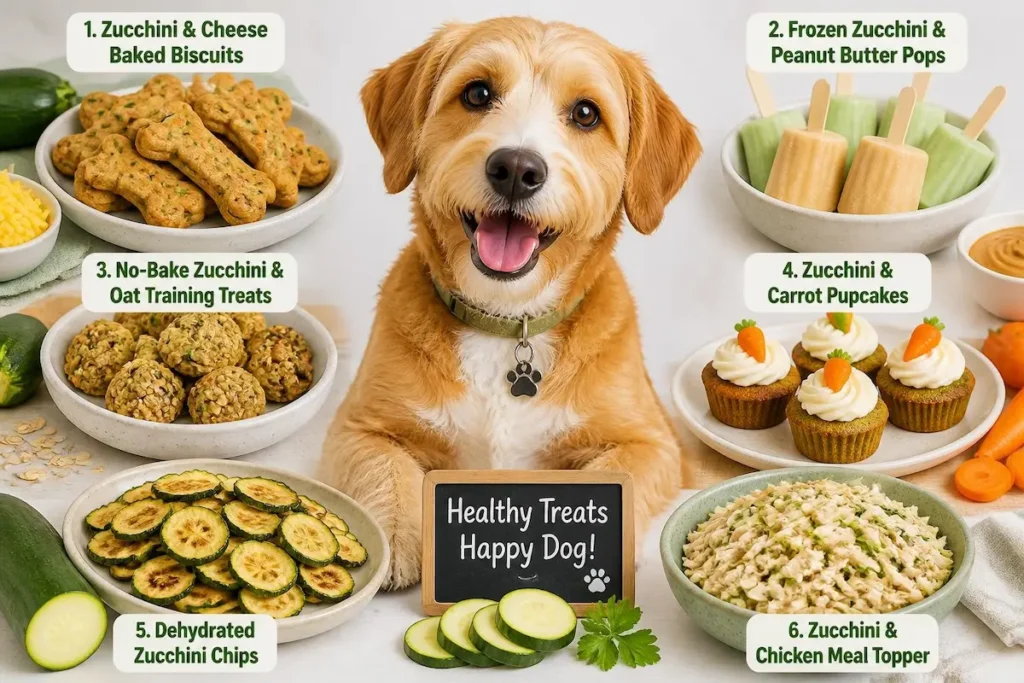
1. Zucchini & Cheese Baked Biscuits
Savory, crispy, and completely irresistible — these biscuits use zucchini’s natural moisture to create a texture that bakes up beautifully without needing extra liquid.
The cheese adds a flavor punch that makes even skeptical dogs enthusiastic about vegetables.
Zucchini & Cheese Baked Biscuits
Savory, crispy biscuits that sneak in veggies. Dogs love the cheese; you love the nutrition.
Ingredients
1 medium zucchini, grated (~1 cup packed)
✦ Squeeze out excess moisture before mixing — this is the key to a crisp texture
1 cup whole wheat flour (or oat flour for sensitive dogs)
½ cup grated cheddar cheese
plain, no additives
1 egg
2 tbsp plain Greek yogurt
¼ tsp dried parsley (optional)
✦ Safe for dogs and adds a pop of color
Instructions
Preheat oven to 350°F (175°C) and line a baking sheet with parchment paper.
Grate zucchini and squeeze out excess moisture using a clean kitchen towel — this step is crucial for a firm, crispy biscuit.
Combine grated zucchini, egg, cheese, and yogurt in a large bowl. Mix well.
Add flour gradually, mixing into a firm, workable dough.
Roll out to ¼ inch thickness on a lightly floured surface.
Cut into shapes and place on the lined baking sheet.
Bake for 20–25 minutes until golden and firm. Cool completely before serving.
Texture tip: Skipping the moisture-squeeze step results in a soft, doughy biscuit that won’t crisp. Take the extra 60 seconds — it makes all the difference.
Storage: Airtight container at room temperature for up to 2 weeks, or freeze for 3 months.
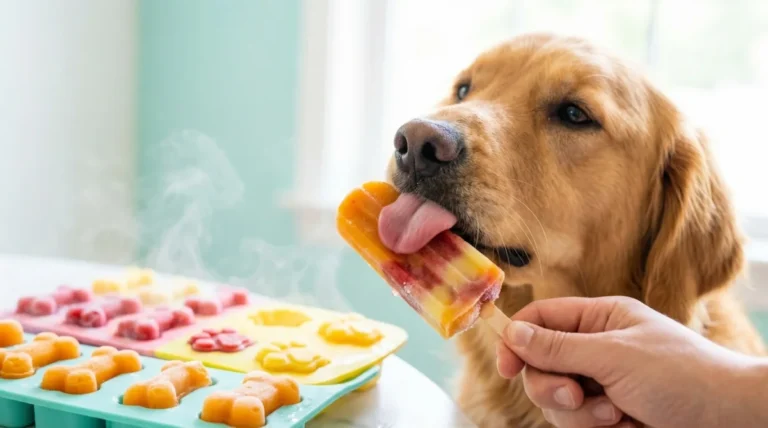
2. Frozen Zucchini & Peanut Butter Pops
Zucchini’s mild flavor disappears entirely when blended with peanut butter — which means these frozen pops taste exactly like a peanut butter treat while secretly delivering a vegetable serving. The dog has no idea. The dog parent feels extremely clever. 🙂
Frozen Zucchini & Peanut Butter Pops
Cool, creamy pops that sneak in veggies. Dogs love the peanut butter; you love how easy they are to make.
Ingredients
1 medium zucchini, roughly chopped
✦ Adds hydration, fiber & vitamins — without changing the flavor at all
½ cup peanut butter (xylitol-free)
✦ Always check the label — natural peanut butter with just peanuts is safest
½ cup plain Greek yogurt
¼ cup water
Instructions
Blend zucchini and water until completely smooth.
Add peanut butter and yogurt. Blend again until fully combined.
Check texture — it should be pourable but not watery.
Pour into silicone molds or an ice cube tray.
Freeze for a minimum of 4 hours or overnight.
Pop out and serve immediately, or store in a freezer-safe bag for up to 2 months.
⚠️ Xylitol warning: This sweetener is toxic to dogs and appears in some peanut butter brands. Always read the label. Natural peanut butter with just peanuts (and possibly salt) is the safest choice.
3. No-Bake Zucchini & Oat Training Treats
Soft, bite-sized, and fast to make — these training treats come together in under 15 minutes and are the right consistency for breaking into even smaller pieces for very small dogs.
IMO this is the most practical zucchini treat recipe for everyday use.
No-Bake Zucchini & Oat Training Treats
Soft, bite-sized balls perfect for training sessions. Ready in under an hour — no oven needed.
Ingredients
1 small zucchini, grated (squeezed dry)
✦ Squeeze out as much moisture as possible — key to a firm dough
1 cup rolled oats
add more 1 tbsp at a time if dough is too wet
2 tbsp peanut butter (xylitol-free)
1 egg
1 tbsp plain Greek yogurt
Instructions
Combine all ingredients in a mixing bowl. Mix until a sticky, moldable dough forms.
If too wet, add oats 1 tablespoon at a time until the dough holds its shape.
Roll into small balls approximately ¾ inch in diameter — training treat size.
Place on a parchment-lined tray and refrigerate for 1 hour to firm up.
Store in an airtight container in the fridge.
Storage: Keeps in the fridge for up to 5 days. Freeze for up to 2 months — portion into bags before freezing for easy grab-and-go training sessions.
Training tip: These are slightly softer than baked biscuits, which actually makes them better for training sessions — soft treats are faster to eat between repetitions, which keeps training momentum going without long chewing breaks.
4. Zucchini & Carrot Pupcakes
Celebration-worthy mini cakes that combine two of the most dog-friendly vegetables available.
Moist, lightly savory, and impressive enough for any birthday or gotcha day spread — the frosting is optional but strongly recommended for full visual effect.
Zucchini & Carrot Pupcakes
Mini muffins packed with vitamins A, C, K & fiber. One of the most micronutrient-dense treats on the list.
Ingredients
1 small zucchini, grated (squeezed dry)
✦ Squeeze well — excess moisture will make the pupcakes dense
1 cup grated carrot
✦ Pairs with zucchini for a full vitamin A & C boost
1½ cups whole wheat flour
2 eggs
¼ cup unsweetened applesauce
replaces added sugar; keeps pupcakes moist
1 tbsp olive oil
1 tsp baking powder · ¼ cup water
½ cup plain cream cheese or Greek yogurt, softened
Instructions
Preheat oven to 350°F (175°C) and line a mini muffin tin.
Whisk together eggs, applesauce, olive oil, and water in a large bowl.
Stir in grated zucchini and carrot.
Add flour and baking powder. Mix until just combined — don’t overstir.
Spoon into muffin tin, filling each cup about ¾ full.
Bake for 14–16 minutes until a toothpick comes out clean.
Cool completely before adding a small dollop of frosting.
Storage: Unfrosted pupcakes keep at room temperature for 5 days. Frosted versions refrigerate for up to 3 days.
💡 Applesauce keeps these moist without added sugar or oil — no substitutions needed for a healthier treat.
Nutrition note: The combination of zucchini and carrot together covers vitamins A, C, K, potassium, and fiber in a single recipe — one of the most micronutrient-dense treat batches on this list.
5. Dehydrated Zucchini Chips
The simplest recipe on the list and arguably the most impressive result — thin zucchini rounds dehydrated low and slow into crispy, shelf-stable chips that dogs treat as premium snacks. Zero added ingredients. Just zucchini. 🙂
Dehydrated Zucchini Chips
Two ingredients, zero guilt. Crispy, light chips that even weight-management dogs can snack on freely.
Ingredients
2–3 medium zucchinis
✦ Dehydrating concentrates nutrients — small chips pack the nutrition of much larger fresh portions
No salt, oil, or seasoning
zucchini only — nothing else needed
Instructions
Preheat oven to 200°F (93°C) — low and slow is essential for proper dehydration.
Slice zucchini into thin rounds, approximately ⅛ inch thick — thinner slices dehydrate faster and crisp up better.
Pat each slice dry with a paper towel to remove surface moisture.
Arrange in a single layer on parchment-lined baking sheets — no overlapping.
Bake for 2–2.5 hours, flipping halfway through, until completely dry and slightly curled at the edges.
Cool completely on a wire rack — they crisp up further as they cool.
Store in an airtight container at room temperature.
Storage: Airtight container at room temperature for up to 3 weeks.
💡 So low in calories that even dogs on strict weight management plans can have a few chips without any concern.
Nutrition note: Dehydrating concentrates nutrients while removing water weight — the chips look small but deliver the nutritional equivalent of much larger fresh zucchini portions.
6. Zucchini & Chicken Meal Topper
Not a treat in the traditional sense — a meal enhancement that works over kibble or homemade food.
This topper sneaks a full vegetable serving into every meal in a format that even the most food-selective dogs tend to accept enthusiastically.
Zucchini & Chicken Meal Topper
A savory, brothy topper that turns any meal into something special — great for picky eaters.
Ingredients
1 lb boneless chicken breast
1 medium zucchini, diced small
✦ Diced — not grated — so pieces stay visible and appealing in the bowl
½ cup grated carrot
½ cup frozen peas
2 cups low-sodium chicken broth
no onion, no garlic
Instructions
Add chicken and broth to a medium pot. Bring to a boil.
Reduce to a simmer, cover, and cook for 18 minutes.
Remove chicken and shred very finely.
Return chicken to the pot and add zucchini, carrot, and peas.
Simmer for a further 5 minutes until zucchini is tender but not mushy.
Cool completely and serve 2–3 tablespoons over regular food.
Storage: Refrigerate for up to 4 days, or freeze in small portions for up to 2 months.
💡 For picky eaters, visible vegetable pieces are more effective at normalizing vegetables in the diet than ones that disappear into the broth.
Quick Reference Guide
| Recipe | Type | Prep Time | Cook Time | Best For |
| Zucchini & Cheese Biscuits | Baked | 15 min | 22 min | Everyday treat, all dogs |
| Frozen PB Pops | Frozen | 5 min | 4+ hrs freeze | Summer, picky eaters |
| No-Bake Oat Training Treats | No-bake | 10 min | 1 hr chill | Training rewards |
| Zucchini & Carrot Pupcakes | Baked | 15 min | 15 min | Birthdays, celebrations |
| Dehydrated Zucchini Chips | Dehydrated | 10 min | 2–2.5 hrs | Long shelf life, travel |
| Chicken Meal Topper | Cooked | 5 min | 23 min | Picky eaters, daily nutrition |
Can Dogs Eat Zucchini? Everything Worth Knowing
The Short Version
Yes — zucchini is one of the safest, most nutritionally appropriate vegetables for dogs. No toxic compounds, no concerning sugar content, no known risk factors for any dog population. It’s genuinely one of the most uncomplicated “can dogs eat this?” answers in the entire vegetable kingdom.
Why Zucchini Is Genuinely Good for Dogs
Zucchini earns its place in homemade dog treats and food not just because it’s safe, but because it actively contributes to a dog’s nutritional profile in ways that matter.

✅ Low calorie density is the headline benefit for many dog parents. Zucchini is approximately 95% water by weight — one cup of raw zucchini contains roughly 20 calories.
For dogs managing their weight or those prone to obesity (Labrador Retrievers and Beagles, the community knows who they are), zucchini adds genuine volume to meals and treats without meaningfully impacting caloric intake.
It fills the bowl and fills the stomach without filling the calorie budget.
✅ Hydration support comes naturally from zucchini’s water content. Dogs that are reluctant drinkers or those in warmer climates benefit from food and treats with high moisture content. Zucchini adds to total daily fluid intake in a small but consistent way — particularly useful in the dehydrated chip or frozen pop formats where the water content is preserved.
✅ Vitamin C supports immune function and collagen production.
Dogs synthesize their own vitamin C, but additional dietary sources provide antioxidant support that’s particularly valuable for aging or highly active dogs.
✅ Vitamin B6 plays a role in protein metabolism, glucose regulation, and nervous system function — all relevant for dogs across every life stage.
✅ Potassium supports heart function, muscle contraction, and fluid balance.
Zucchini provides a meaningful amount of potassium in a low-sodium package — relevant for dogs with heart conditions where sodium management matters.
✅ Manganese supports bone development, enzyme function, and nutrient metabolism. Often overlooked in dog nutrition discussions, it’s a micronutrient that zucchini provides reliably.
✅ Dietary fiber supports digestive regularity and feeds beneficial gut bacteria.
The fiber in zucchini is gentle enough for dogs with sensitive stomachs — it doesn’t have the aggressive fiber effect that some other vegetables produce.
Raw vs. Cooked Zucchini for Dogs
Both are safe — the choice comes down to the recipe and the dog’s preferences.
| Form | Best For | Benefits | Things to Note |
|---|---|---|---|
| Raw | Fresh snacks, sliced rounds, low-calorie treats | Retains maximum water content and vitamin C. The crunchy texture may also appeal to dogs that enjoy chewing. | Cut into manageable pieces and start small. Some dogs digest cooked zucchini more easily than raw. |
| Cooked | Baked treats, meal toppers, soft treats, sensitive stomachs | Softer texture and generally easier to digest. It also blends more smoothly into homemade recipes. | Serve plain only. Avoid garlic, onion, salt, butter, and heavy oil. Light steaming or simmering works best. |
Helpful Notes
- Grated zucchini blends almost invisibly into baked recipes, making it especially useful for dogs that pick around visible vegetable pieces.
- Remove the seeds from very large zucchinis before feeding. Standard grocery-store zucchini seeds are harmless, but oversized zucchini can develop tougher, more fibrous seeds that are harder to digest.
How Much Zucchini Can a Dog Eat?
Zucchini is low enough in calories and free enough of concerning compounds that the standard 10% treat rule applies without strict enforcement for most dogs. That said, sensible portions are always the starting point:
| Dog Size | Suggested Serving |
|---|---|
| Small dogs (under 20 lbs) | A few thin rounds or 2–3 tablespoons grated |
| Medium dogs (20–50 lbs) | Up to ¼ cup raw or cooked |
| Large dogs (50+ lbs) | Up to ½ cup raw or cooked |
The most common issue with too much zucchini is digestive upset from excess fiber — loose stools rather than anything serious. Start conservatively with dogs new to zucchini and build up over a few days.
Zucchini Preparations to Avoid
Zucchini in its natural state is safe — the problems arise from how it’s prepared for humans:
- Seasoned zucchini — garlic, onion, salt, and other seasonings used in human cooking are all problematic for dogs
- Zucchini cooked in butter or oil — excess fat is unnecessary and can trigger digestive upset or pancreatitis
- Zucchini bread — contains sugar, often nutmeg, sometimes chocolate or raisins, and frequently xylitol in sugar-free versions
- Pickled zucchini — high sodium content; avoid entirely
- Battered or fried zucchini — excess fat and often seasoning; not appropriate for dogs
Plain is always the safest preparation. Everything in the recipes above uses zucchini in its cleanest, most beneficial form.
A Note on Bitter Zucchini
Occasionally, zucchini — particularly homegrown varieties — can taste extremely bitter. This bitterness comes from cucurbitacins, compounds that cause gastrointestinal distress in humans and dogs when consumed in significant amounts.
Commercial grocery-store zucchini has been bred to contain very low cucurbitacin levels and is essentially never bitter.
If a zucchini tastes bitter when tasted raw, don’t use it for dog treats. The taste test is the reliable safety check — a zucchini that tastes normal to a human is safe for dogs.
Feeding Guide: Zucchini Treat Portions by Dog Size
| Dog Size | Weight | Raw Zucchini | Baked Biscuits | Frozen Pops |
| Extra Small | Under 10 lbs | 1–2 thin rounds | 1–2 small biscuits | ½ small pop |
| Small | 10–20 lbs | 2–3 rounds or 2 tbsp | 2–3 biscuits | 1 small pop |
| Medium | 20–50 lbs | ¼ cup rounds or grated | 3–5 biscuits | 1 standard pop |
| Large | 50+ lbs | Up to ½ cup | 5–7 biscuits | 1–2 standard pops |
Storage Guide
- Baked biscuits — airtight container at room temperature for 2 weeks; freeze for 3 months
- Frozen pops — freezer-safe bag for up to 2 months; label with the date
- No-bake training treats — refrigerator for 5 days; freeze for 2 months
- Pupcakes (unfrosted) — room temperature for 5 days; frosted versions refrigerate for 3 days
- Dehydrated chips — airtight container at room temperature for 3 weeks
- Meal topper — refrigerate for 4 days; freeze in small portions for 2 months
Final Thoughts
Zucchini dog treats solve one of the most persistent challenges in dog nutrition — getting vegetables into a dog that would rather eat literally anything else.
The recipes here cover every format and every skill level, and they all share the same outcome: a dog eating more vegetables without knowing or caring about it.
Start with the frozen peanut butter pops if the goal is maximum ease, the baked biscuits for a longer-lasting everyday treat, or the dehydrated chips for something genuinely impressive with zero effort beyond slicing and waiting.
All six deliver the same result — a dog eating zucchini and being completely fine with it.
Pick a recipe, grab a zucchini, and sneak those vegetables in. The dog will never suspect a thing — and that’s exactly the point. 🙂