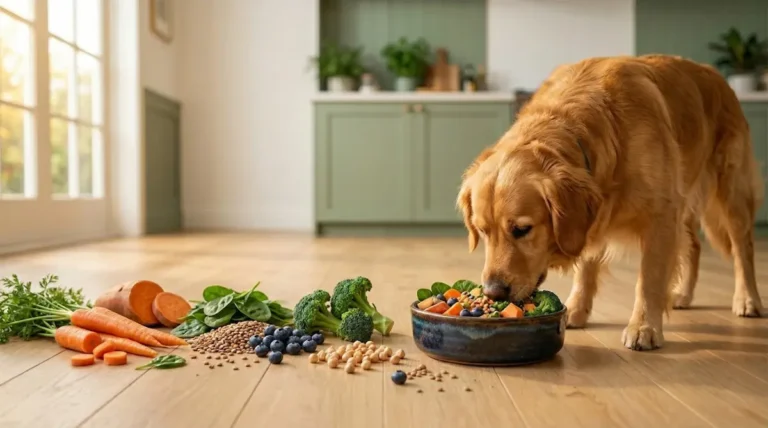
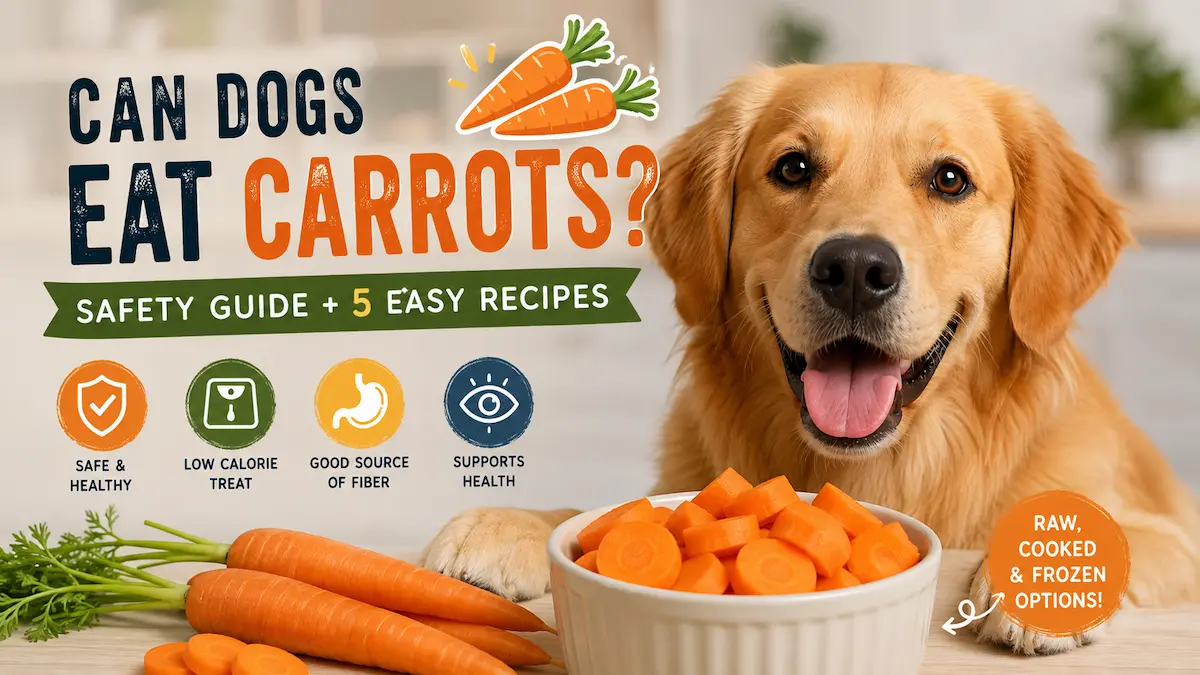
Yes, dogs can eat carrots. Both raw and cooked carrots are safe for most healthy dogs when served plain and cut into pieces appropriate for your dog’s size.
Carrots are also unusually practical as dog treats. They’re inexpensive, easy to find, naturally crunchy, and lower in calories than many packaged treats.
You can serve them straight from the fridge, steam them into a soft meal topper, or turn them into simple homemade dog treats.
The bigger question isn’t really can dogs eat carrots?
It’s how should you serve them, how much is enough, and when is a raw carrot not the best choice?
Here’s what to know, plus five easy carrot recipes to try.
🥕 Can Dogs Eat Carrots? The Quick Answer
| Question | Answer |
|---|---|
| Can dogs eat raw carrots? | ✅ Yes, cut into bite-size pieces |
| Can dogs eat cooked carrots? | ✅ Yes, served plain |
| Can dogs eat frozen carrots? | ✅ Yes, if appropriately sized and your dog can safely chew them |
| Can puppies eat carrots? | ✅ Yes, with careful sizing and supervision |
| Can senior dogs eat carrots? | ✅ Yes, although soft cooked carrots may be easier to chew |
| Can dogs eat carrot skin? | ✅ Yes, after washing thoroughly |
| Can dogs eat canned carrots? | ⚠️ Yes, but choose plain and preferably no-salt-added |
| Can dogs eat carrot cake? | ❌ Skip it |
| Can dogs eat seasoned carrots? | ❌ Stick with plain carrots |
| Can dogs drink carrot juice? | ⚠️ A whole carrot is usually the more practical choice |
Both raw and cooked carrots can work as occasional treats or meal additions. The biggest everyday safety issue is size. Whole carrots and large carrot sticks can become choking hazards, so smaller pieces are the safer default.
Carrots are only one of many everyday foods dogs can safely share with us. If you’re ever unsure about something else in the kitchen, this 50 human foods dogs can and cannot eat chart makes a handy reference.
🥕 Are Carrots Good for Dogs?
Carrots aren’t a nutritional miracle, but they tick several useful boxes for a dog treat.
A Lower-Calorie Treat
Carrots are commonly used as a lower-calorie vegetable treat for dogs.
That makes them especially handy if your dog believes every trip you make to the kitchen deserves a reward.
A few carrot coins are much easier to work into the day than repeatedly handing out chunks of cheese, peanut butter, or calorie-dense biscuits.
They still count as treats, though, so portion size matters.
A Naturally Crunchy Treat
For dogs that enjoy crisp textures, raw carrots can be a satisfying crunchy snack without relying on a packaged biscuit.
That makes them especially handy as quick refrigerator treats or small training rewards.
Just keep chewing ability in mind. Puppies, senior dogs, and dogs with dental problems may do better with softer cooked carrots.
Fiber
Carrots provide dietary fiber, which is one reason they also appear in many commercial dog foods and treats.
But more isn’t automatically better.
If your dog normally gets very little extra fiber and suddenly eats half a bag of carrots, you may end up dealing with gas, loose stool, or an upset stomach.
Introduce carrots gradually rather than treating the vegetable drawer like an all-you-can-eat buffet.
Beta-Carotene and Vitamin A
The orange color of carrots comes partly from beta-carotene, which the body can convert to vitamin A.
Vitamin A plays important roles in normal health, including vision.
But this is also where carrot marketing can get a little carried away.
Feeding your dog piles of carrots won’t suddenly give them superhero eyesight. The connection between carrots and vision has a real nutritional basis, but eating more carrots doesn’t simply keep improving vision beyond normal nutritional needs.
Think useful food, not miracle supplement.
🥕 Raw vs. Cooked Carrots: Which Is Better for Dogs?
There’s no universal winner.
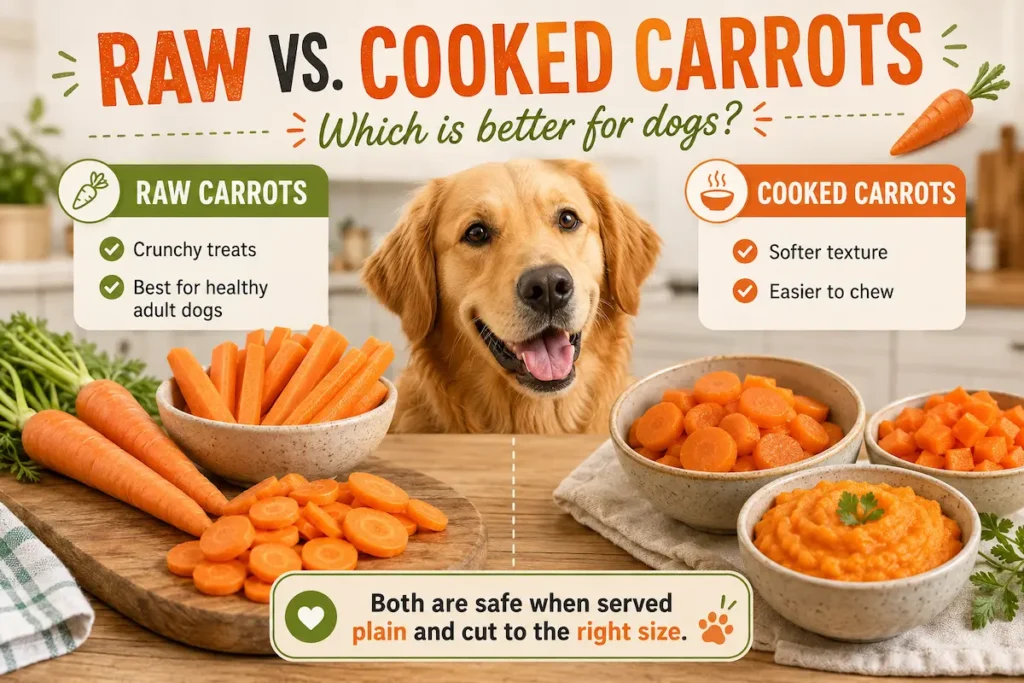
Dogs can eat carrots raw or cooked, so the better option depends mostly on how you plan to use them and how comfortably your dog can chew.
Raw Carrots
Raw carrots win on convenience.
Wash one, cut it into appropriately sized pieces, and you have a crunchy treat with practically no preparation.
They work especially well as:
- Small training rewards
- Crunchy snacks for healthy adult dogs
- Lower-calorie treats between meals
- A quick refrigerator snack
Raw carrots are firm, so they may not be the best option for dogs with dental problems or difficulty chewing.
And portion size should match the dog. A Chihuahua shouldn’t be handed the same thick carrot chunk you might offer a Labrador.
Cooked Carrots
Cooked carrots lose the satisfying crunch, but gain versatility.
Plain steamed or boiled carrots can be:
- Diced into meals
- Mashed into a soft topper
- Blended into frozen treats
- Mixed into homemade dog treat recipes
- Easier for puppies, seniors, or dogs with dental issues to chew
Cooked carrots may also be easier on the stomach for some dogs.
Keep them plain. Avoid butter, sugary glazes, garlic, onion, excessive salt, and rich seasoning blends.
The carrot itself may be dog-friendly. The recipe surrounding it may not be.
So Which Should You Choose?
For a healthy adult dog who loves crunch?
Raw wins for convenience.
For homemade meals, soft toppers, puppies, seniors, or dogs that struggle with hard vegetables?
Cooked wins on texture.
🎯 There’s no need to choose one permanently. Your dog can enjoy both.
🐾 How Much Carrot Can a Dog Eat?
There isn’t one universal carrot serving size that works for every dog.
A 7-pound Yorkie and a 90-pound Labrador obviously shouldn’t get identical portions.
A sensible approach is to start small:
| Dog Size | Practical Starting Amount |
|---|---|
| Extra small | 1–2 thin slices |
| Small | 2–3 small pieces |
| Medium | A few carrot coins |
| Large | Several bite-size pieces |
| Extra large | A small handful of bite-size pieces |
These aren’t veterinary dosages. They’re simply conservative starting portions for an occasional treat.
When carrots are new to your dog, start with less and watch for digestive changes.
More importantly, carrots belong inside your dog’s overall treat allowance.
A commonly used nutrition guideline is to keep treats and extras to no more than about 10% of your dog’s daily calories, with most nutrition coming from a complete and balanced diet.
That rule still applies to healthy foods.
A carrot coin and an entire bowl of carrots are both technically dog-safe, but they’re not the same feeding decision.
🍪 5 Easy Carrot Recipes for Dogs
You don’t need to turn every carrot into a recipe. Sometimes a crunchy slice straight from the fridge is perfect.
But carrots also work particularly well in homemade dog treats because they pair easily with ingredients like chicken, pumpkin, oats, eggs, and plain yogurt.
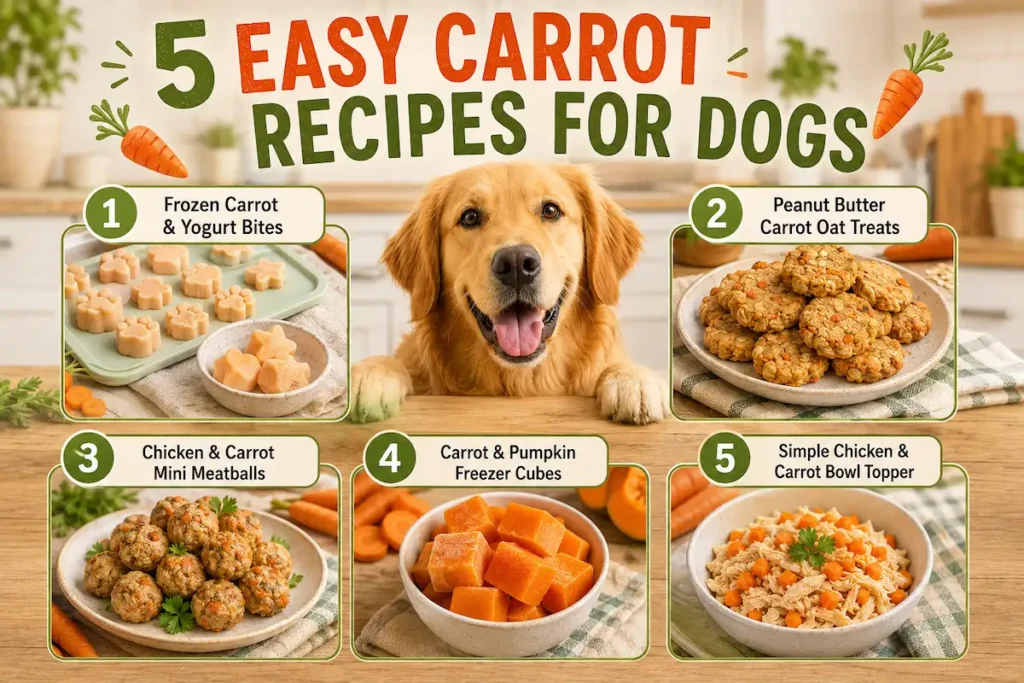
1. Frozen Carrot & Yogurt Bites
⭐️ Best for: Hot days and freezer treats
🥣 Ingredients
- 1 cup cooked carrots
- ½ cup plain unsweetened yogurt
- 2–4 tablespoons water, as needed
👩🍳 Instructions
- Steam or boil the carrots until soft, then cool completely.
- Blend the carrots and yogurt until smooth.
- Add a little water if needed to help the mixture blend.
- Spoon into small silicone molds.
- Freeze until firm.
- Pop out one treat at a time as needed.
Use plain yogurt without added sugar or artificial sweeteners.
If your dog doesn’t tolerate dairy well, skip this recipe and try one of the dairy-free options below.
2. Peanut Butter Carrot Oat Treats
⭐️ Best for: A simple baked treat
🥣 Ingredients
- 1 cup finely grated carrot
- 1½ cups oat flour
- 1 egg
- ¼ cup xylitol-free peanut butter
- A little water, if needed
👩🍳 Instructions
- Preheat the oven to 350°F.
- Mix the carrot, egg, and peanut butter.
- Stir in the oat flour until a soft dough forms.
- Add a small splash of water if the mixture feels too dry.
- Roll out the dough and cut into small shapes, or form small flattened bites.
- Bake for about 15–20 minutes, depending on thickness.
- Cool completely before serving.
Always check the peanut butter ingredient list before using it in dog treats. Never use peanut butter containing xylitol.
If simple ingredient lists are your thing, these easy 3 ingredient dog treats are another great way to turn everyday pantry staples into homemade rewards.
3. Chicken & Carrot Mini Meatballs
⭐️ Best for: High-value rewards and freezer meal prep
🥣 Ingredients
- 1 pound lean ground chicken
- ½ cup finely grated carrot
- 1 egg
- ¼ cup rolled oats
👩🍳 Instructions
- Preheat the oven to 375°F.
- Combine all ingredients in a bowl.
- Form into small meatballs sized for your dog.
- Arrange on a parchment-lined baking sheet.
- Bake for about 15–20 minutes, depending on size, until the chicken is completely cooked through.
- Cool before serving.
These are much richer than plain carrot slices, so think of them as high-value rewards rather than an unlimited snack.
For training, make the meatballs extra small.
4. Carrot & Pumpkin Freezer Cubes
⭐️ Best for: Easy meal toppers
🥣 Ingredients
- ½ cup cooked carrot
- ½ cup plain pumpkin puree
- ½ cup water
👩🍳 Instructions
- Blend the cooked carrot, pumpkin, and water until smooth.
- Spoon into small silicone molds or ice cube trays.
- Freeze until solid.
- Transfer the cubes to a covered freezer container.
Use 100% plain pumpkin, not pumpkin pie filling.
Thaw a small cube and spoon it over your dog’s regular meal, or serve it frozen if the size and texture are appropriate for your dog.
Have extra pumpkin left after making these cubes? Try one of these pumpkin recipes for dogs for more easy ways to use it without letting the rest of the can go to waste.
5. Simple Chicken & Carrot Bowl Topper
⭐️ Best for: Picky eaters
🥣 Ingredients
- Plain cooked chicken
- Soft steamed carrot
- A small amount of warm water
👩🍳 Instructions
- Shred a small portion of cooked boneless, skinless chicken.
- Dice or mash the steamed carrot.
- Mix the chicken and carrot together.
- Add a spoonful of warm water for extra moisture.
- Spoon a small amount over your dog’s regular food.
The warm water helps release some aroma from the chicken, which can make a bland-looking bowl considerably more interesting to a picky dog.
Just remember what this recipe is:
A topper, not a complete homemade diet.
Chicken and carrots alone don’t provide everything a dog needs nutritionally, so this mixture shouldn’t replace a complete and balanced diet unless the full homemade diet has been appropriately formulated.
Want more easy ways to make your dog’s regular dinner more exciting? These homemade dog food toppers are packed with simple ideas for picky eaters and everyday meals.
How to Safely Prepare Carrots for Dogs
Carrots don’t require complicated preparation, but a few simple choices make them considerably safer.
Wash Them First
Wash fresh carrots thoroughly before serving, particularly if you’re leaving the peel on.
You don’t have to peel carrots for most dogs. The skin is edible, so washing matters more than making the carrot look perfect.
Cut Them to Match Your Dog
This is probably the most important carrot safety rule.
Whole carrots and large carrot sticks can pose a choking risk, especially for small dogs or dogs that tend to gulp food.
For small dogs, use thin slices or small dice.
Larger dogs may comfortably handle bigger pieces, but the goal is still the same: pieces your dog can chew and swallow safely.
If your dog tends to inhale food without chewing, go smaller.
Keep Carrots Plain
Plain carrots are easy.
Human carrot dishes can be much less predictable.
⚠️ Skip carrots prepared with:
- Lots of butter
- Sugary glaze
- Garlic
- Onion
- Heavy salt
- Rich sauces or seasonings
Carrot cake deserves special mention because the word carrot can make it sound healthier than it is.
It’s still cake, and recipes may contain large amounts of sugar and fat or other ingredients that aren’t appropriate for dogs.
Steam, Boil, or Bake Without Seasoning
If your dog prefers softer carrots, steam, boil, or bake them plainly.
Let cooked carrots cool before feeding.
You can serve them diced, mash them with a fork, or puree them depending on how you want to use them.
Introduce Them Gradually
Your dog doesn’t need a full serving the first time.
Offer a small piece, see how their stomach responds, then gradually increase the amount if everything looks normal.
Even dog-safe foods can cause digestive upset when introduced too quickly.
🐾 Can Puppies Eat Carrots?
Yes. Puppies can have small amounts of carrot once they’re eating solid food and getting an appropriate complete diet for growth.
The main considerations are size, texture, and supervision.
For young or tiny puppies, soft cooked carrot may be easier to manage than a thick, hard raw chunk.
Some puppies also enjoy chewing chilled vegetables, but an oversized or frozen carrot shouldn’t be treated as a completely risk-free teething toy.
Choose an appropriate size and supervise while your puppy eats.
And keep carrots as extras.
Growing dogs have specific nutritional requirements, so treats shouldn’t crowd out properly balanced puppy food.
If you’re planning more than occasional treats, these homemade puppy food recipes can give you more ideas for age-appropriate meals while keeping carrots in the “extra” category.
🦴 Can Senior Dogs Eat Carrots?
Yes. Senior dogs can eat carrots too, and lower-calorie treats may be useful when weight management becomes more important.
But with an older dog, texture often matters more than preserving that famous carrot crunch.
If your senior dog has missing teeth, dental disease, or difficulty chewing hard foods, try:
- Steamed carrot coins
- Finely diced cooked carrots
- Mashed carrots
- Carrot puree mixed into food
Senior dogs are also more likely to be managing chronic conditions or eating therapeutic diets.
If your dog has kidney disease, diabetes, pancreatitis, digestive disease, or another condition requiring a specific feeding plan, check with your veterinarian before regularly adding new toppers or treats.
For more everyday feeding and lifestyle ideas for older dogs, explore our senior dog care guide for practical ways to support them as their needs change.
⚠️ When Carrots Aren’t a Great Choice
Carrots are safe for most healthy dogs, but that doesn’t mean every dog needs them.
Your Dog Eats Too Much at Once
Suddenly adding a large amount of fiber can lead to digestive upset.
If carrots are new to your dog, start with a few small pieces instead of half the bag.
Your Dog Struggles With Hard Foods
Raw carrots may be uncomfortable for dogs with dental disease, missing teeth, or difficulty chewing.
In that case, switch to steamed, mashed, or pureed carrots rather than forcing the crunch.
Your Dog Is on a Prescription Diet
One carrot probably doesn’t look significant.
But carrots in the morning, cheese for pills, peanut butter in a toy, chicken at dinner, and several biscuits during training can quickly turn “just a few extras” into a meaningful part of the diet.
If your dog is being managed for a medical condition, follow the feeding plan recommended by your veterinarian.
The Carrots Came From Your Dinner Plate
This is one of the easiest mistakes to make.
The carrot may be safe. The recipe may not be.
Plain steamed carrots? Easy.
Carrots roasted with garlic, butter, salt, and a sweet glaze? Completely different snack.
When sharing human food with dogs, simpler usually wins.
5 Easy Ways to Serve Carrots Without a Recipe
No baking required.
1. Carrot coins: Slice a washed raw carrot into small rounds for quick treats.
2. Tiny training pieces: Dice carrots into smaller pieces when you want lots of rewards without handing out a large treat every time.
3. Steamed carrot mash: Steam until soft, mash with a fork, and use a small spoonful as a topper.
4. Grated carrot: Finely grate a little raw carrot over your dog’s regular meal for extra texture.
5. Carrot puree cubes: Puree cooked carrot with water, freeze in small molds, and serve occasionally as a simple freezer treat.
The best method isn’t necessarily the fanciest one.
If your dog thinks a plain carrot slice is exciting, take the win.
Bottom Line: Yes, Dogs Can Eat Carrots
Carrots earn an easy spot on the dog-friendly side of the refrigerator.
Most healthy dogs can eat them raw or cooked, and they’re inexpensive, lower in calories than many traditional treats, and versatile enough to use as crunchy rewards, soft meal toppers, or homemade dog treats.
The main rules are simple:
- 🥕 Best everyday option: Plain raw or cooked carrots
- 🔪 Biggest safety concern: Pieces that are too large
- 🍲 Easier to chew: Soft steamed carrots
- 🐾 For puppies: Keep pieces small and supervise
- 🦴 For seniors: Adjust the texture to their chewing ability
- ⚠️ Skip: Butter, sugar, salt, garlic, onion, and rich seasonings
- 🍽️ Remember: Carrots are treats, not a replacement for a complete diet
And if your dog already comes running when the vegetable drawer opens, you’ve got five carrot recipes above to put that enthusiasm to good use.