
A warm spoonful of bone broth can make an ordinary dog bowl much more exciting. It adds moisture, brings plenty of savory flavor, and can be poured over kibble, mixed into homemade food, or frozen into convenient little cubes.
The best part is that homemade bone broth for dogs is surprisingly simple. You do not need fancy ingredients, and making it yourself gives you control over exactly what goes into the pot.
In this guide, you’ll find five easy bone broth recipes designed for different needs, from extra hydration and appetite support to collagen-rich, pumpkin, and turmeric-and-ginger variations. Each recipe includes both stovetop and slow cooker instructions.
Before getting started, remember that bone broth is an extra or topper, not a complete and balanced meal.
🦴 Is Bone Broth Good for Dogs?
Yes, dogs can have bone broth when it’s prepared with dog-safe ingredients and served appropriately.
One of its biggest practical advantages is moisture. Adding a little broth to your dog’s regular food increases the amount of liquid in the bowl while adding savory flavor and aroma.
Bone broth may also contain gelatin, amino acids, and other compounds released from the ingredients during cooking. Exactly what ends up in the finished broth varies depending on the bones, other ingredients, water, and cooking method.
However, bone broth shouldn’t replace your dog’s normal complete and balanced diet or be treated as a remedy for a health condition.
It also shouldn’t be relied on as a primary protein source, so it’s worth understanding how much protein dogs actually need as part of their overall diet.
And dog-friendly bone broth isn’t necessarily the same as the carton in your pantry. Human broths and stocks may contain onion, garlic, lots of sodium, or seasoning blends, which is one reason making your own can be useful.
🍲 5 Easy Bone Broth Recipes for Dogs
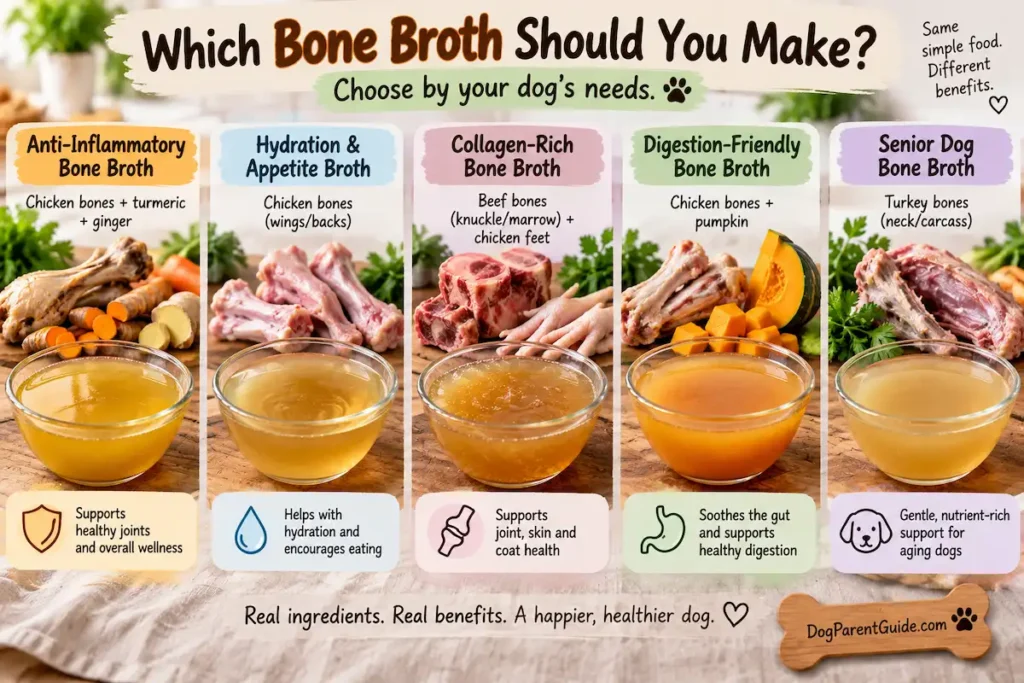
Not every bone broth needs to serve the same purpose. Some recipes keep things simple for extra moisture and flavor, while others use ingredients such as pumpkin, turmeric, ginger, or connective-tissue-rich bones to offer something different.
Which Bone Broth Recipe Should You Make?
| Recipe | Best For | Stovetop | Slow Cooker |
|---|---|---|---|
| 🌿 Anti-Inflammatory Bone Broth | Turmeric + ginger wellness blend | 8–10 hr | 20–24 hr |
| 💧 Hydration & Appetite Bone Broth | Extra moisture + picky eaters | 4 hr | 8 hr |
| 🦴 Collagen-Rich Bone Broth | Thick, gelatin-rich broth | 10–12 hr | 20–24 hr |
| 🎃 Digestion-Friendly Pumpkin Broth | Fiber + gentle digestive support | 4 hr | 8 hr |
| 👴 Senior Dog Bone Broth | Softer, moisture-rich meals | 6–8 hr | 10–12 hr |
Whichever recipe you choose, the finished broth is the part your dog gets. Always remove and discard the cooked bones and strain the broth thoroughly before serving.
🌿 1. Anti-Inflammatory Bone Broth for Dogs
Best for: A wellness-focused broth made with turmeric and fresh ginger.
Turmeric and ginger give this golden broth its anti-inflammatory angle. Turmeric contains curcumin compounds that have been studied for their effects on inflammatory pathways, while ginger is also commonly used for its anti-inflammatory properties.
That doesn’t make homemade broth a treatment for inflammatory disease, but these ingredients give this variation a clear purpose beyond simply adding flavor.
Ingredients
- 2 pounds plain raw meaty beef or chicken bones
- 2 chicken feet, optional
- 1–2 tablespoons apple cider vinegar
- 1 teaspoon ground turmeric
- 1–2 teaspoons finely grated fresh ginger
- Water, enough to cover the bones
Step-by-Step Instructions
1. Add the bones.
Place the bones and optional chicken feet in a large stockpot or slow cooker.
2. Add the remaining ingredients.
Add the apple cider vinegar, turmeric, ginger, and enough water to comfortably cover the bones.
3. Cook the broth.
- Stovetop: Bring to a boil, then reduce to a very gentle simmer. Partially cover and cook for 8–10 hours, checking the water level occasionally and adding more if needed.
- Slow cooker: Cook on LOW for 20–24 hours, keeping the bones covered with liquid.
4. Remove the solids.
Remove all large bones and other solids.
5. Strain carefully.
Pour the broth through a fine-mesh strainer to catch smaller fragments.
6. Cool and chill.
Once chilled, remove excess hardened fat from the surface if needed.
7. Portion for serving or freezing.
💡 Medication note: Ginger may not be appropriate for every dog, particularly dogs taking certain medications or those with bleeding disorders. Check with your veterinarian before regularly using a ginger-containing recipe if this applies to your dog.
💧 2. Hydration & Appetite Bone Broth for Dogs
Best for: Adding moisture and savory flavor to meals, especially when plain dry food could use a little encouragement.
This is intentionally the simplest recipe of the five. The goal is a mild chicken broth that adds liquid, aroma, and flavor without lots of extras.
Ingredients
- 4–4½ pounds plain chicken backs, wings, drumsticks, thighs, or a combination
- 2 carrots, roughly chopped
- 2 celery stalks, roughly chopped
- About 1½ quarts water, or enough to cover the ingredients appropriately
Step-by-Step Instructions
1. Add the chicken to your pot.
Arrange the chicken pieces without packing them too tightly.
2. Add the vegetables and water.
Add the carrots and celery, then pour in enough water to cover the ingredients.
3. Cook the broth.
- Stovetop: Bring to a boil, reduce to a gentle simmer, partially cover, and cook for about 4 hours.
- Slow cooker: Cook on LOW for about 8 hours.
4. Remove all chicken and bones.
5. Strain thoroughly.
Make sure no small bone fragments remain in the liquid.
6. Cool and refrigerate.
Once chilled, skim excess hardened fat from the surface if needed.
7. Portion the broth.
Use a little over regular food and freeze the rest in convenient portions.
If your dog suddenly or persistently loses interest in food, contact your veterinarian rather than relying on increasingly tempting toppers.
🦴 3. Collagen-Rich Bone Broth for Dogs
Best for: A thick, gelatin-rich broth made with bones and connective tissues naturally rich in collagen.
If you want a broth that’s more likely to turn jiggly after chilling, this is the recipe to choose.
Beef joint or knuckle bones provide connective tissue, while optional chicken feet can help create an especially gelatinous broth.
Ingredients
- 2 pounds beef knuckle, joint, or other connective-tissue-rich bones
- 2–3 plain chicken feet, optional
- 1–2 tablespoons apple cider vinegar
- Water, enough to cover the bones
Step-by-Step Instructions
1. Place the bones in the pot.
Add the beef bones and chicken feet, if using.
2. Add the vinegar and water.
Pour in the apple cider vinegar, then add enough water to cover the bones.
3. Cook the broth.
- Stovetop: Bring to a boil, reduce to a very gentle simmer, partially cover, and cook for 10–12 hours, checking the water level periodically.
- Slow cooker: Cook on LOW for 20–24 hours.
4. Remove every bone and solid piece.
5. Strain the broth thoroughly.
6. Cool and refrigerate.
This version may become jelly-like once cold, which is normal for a gelatin-rich broth.
7. Remove excess hardened fat if needed, then portion or freeze.
A gelatin-rich homemade broth isn’t equivalent to a standardized collagen supplement, so think of this as a food-based topper rather than a joint treatment.
🎃 4. Digestion-Friendly Pumpkin Bone Broth
Best for: A gentle chicken broth with plain pumpkin for added fiber.
Plain pumpkin adds fiber to this simple broth, making it a useful variation when you’re looking for a digestion-friendly topper. The pumpkin goes in after cooking, so there’s no need to simmer it with the bones for hours.
Ingredients
- 2–3 pounds plain chicken bones or meaty chicken pieces
- 1 carrot, roughly chopped, optional
- Water, enough to cover the chicken
- ½ cup 100% plain pumpkin puree
Step-by-Step Instructions
1. Add the chicken to the pot.
2. Add the carrot, if using, and cover with water.
3. Cook the broth.
- Stovetop: Bring to a boil, reduce to a gentle simmer, partially cover, and cook for about 4 hours.
- Slow cooker: Cook on LOW for about 8 hours.
4. Remove all bones and solids.
5. Strain thoroughly and let the broth cool slightly.
6. Stir in the pumpkin puree.
Use plain pumpkin, not pumpkin pie filling containing added sugar and spices.
7. Chill and portion.
This recipe also works well portioned into small silicone molds or ice cube trays for freezing.
👴 5. Senior Dog Bone Broth
Best for: Adding moisture, aroma, and a softer texture to an older dog’s regular meals.
This recipe uses turkey for a different savory flavor while keeping the ingredient list simple. The finished broth can be spooned over food or used to soften dry kibble.
Ingredients
- 2–3 pounds plain turkey bones or an unseasoned turkey carcass
- 1–2 chicken feet, optional
- 1 carrot, roughly chopped
- 1 tablespoon apple cider vinegar
- Water, enough to cover the bones
Step-by-Step Instructions
1. Check the turkey carefully.
Use only plain, unseasoned turkey bones. Avoid carcasses prepared with onion, garlic, salty brines, stuffing, sauces, or heavy seasoning.
If you also have extra plain turkey meat, try these safe ways to use leftover turkey for dogs instead of letting it go to waste.
2. Add the ingredients.
Place the turkey bones, optional chicken feet, carrot, and apple cider vinegar in the pot, then cover with water.
3. Cook the broth.
- Stovetop: Bring to a boil, reduce to a gentle simmer, partially cover, and cook for 6–8 hours.
- Slow cooker: Cook on LOW for 10–12 hours.
4. Remove all bones and solids.
5. Strain the broth carefully.
6. Chill and skim.
Once cold, remove excess hardened fat from the surface if needed.
7. Portion and store.
Try a little over your senior dog’s usual food or use it to soften dry food. For more options beyond broth, these homemade meals for senior dogs offer additional soft, practical meal ideas.
A sudden loss of appetite or new difficulty chewing or swallowing deserves veterinary attention rather than being dismissed as normal aging.
Prefer hands-off cooking? If the slow cooker method fits your routine, these slow cooker dog food recipes offer more easy homemade meal ideas.
🦴 Which Bones Should You Use for Dog Bone Broth?
The best bones depend on what you want from the finished batch. Bones with plenty of joints, cartilage, and connective tissue are particularly useful when you want a broth that gels after chilling.
| What You Want | Bones to Consider | Why They Work |
|---|---|---|
| Rich, gelatinous broth | Beef knuckle and joint bones | Plenty of cartilage and connective tissue |
| Lighter everyday broth | Chicken backs, wings, necks, or carcass | Useful for a lighter poultry broth |
| Turkey-based broth | Plain turkey carcass, neck, or other bones | Savory poultry option |
| Extra gelatin | Chicken feet | Rich in skin, cartilage, and connective tissue |
| A balanced mix | Joint bones + meaty bones | Combines connective tissue with flavor |
For a broth that gels well when chilled, prioritize joint, knuckle, and other connective-tissue-rich bones. Chicken feet are another useful addition when you want extra gelatin.
Marrow bones can add richness and flavor, but they don’t need to make up the entire batch. You can also combine meaty bones with joint bones.
And don’t worry if your broth doesn’t set into a firm jelly. Gel formation varies with the bones, amount of water, and concentration of the finished broth.
🚫 Bone Broth Safety: What to Leave Out
A homemade dog broth should be simpler than the stock you might make for yourself. Ingredients that are normal in human soups aren’t always appropriate for dogs.
🧅 No Onion or Garlic
Leave out onion and garlic, including powders and seasoning blends containing them. Both can be toxic to dogs and may also appear in packaged broths, bouillon, and flavor bases.
Onion and garlic aren’t the only kitchen ingredients to watch for. This guide to foods that can be dangerous for dogs covers other common foods worth keeping out of your dog’s bowl.
🧂 Skip Added Salt and Seasonings
There’s no need to season your dog’s broth like human soup. Skip added salt, bouillon cubes, salty sauces, spice blends, and heavily seasoned ingredients.
🍗 Be Careful With Leftover Carcasses
A leftover chicken or turkey carcass may seem perfect for broth, but how it was prepared matters. Avoid carcasses cooked with onion, garlic, salty brines, stuffing, sauces, marinades, or heavy seasoning.
🌿 Use Turmeric and Ginger Thoughtfully
Stick with the modest amounts in the Anti-Inflammatory recipe rather than adding large spoonfuls. If your dog takes medications or has a bleeding disorder, check with your veterinarian before regularly serving a ginger-containing broth.
🦴 Never Serve the Cooked Bones
The broth is for your dog. The cooked bones are not.
Cooking makes bones more prone to breaking and splintering. Bone pieces can cause choking, injuries, or gastrointestinal obstruction.
Remove every bone when cooking is finished, then strain the broth through a fine-mesh strainer. The same rule applies to chicken feet used in these recipes.
🛒 Check Store-Bought Bone Broth Carefully
If you buy bone broth instead, read the entire ingredient list. Look for products without onion, garlic, excessive sodium, or unnecessary seasoning.
Don’t assume labels such as “natural,” “organic,” or “low sodium” automatically mean a broth is dog-friendly.
💚 Potential Benefits of Bone Broth for Dogs
Bone broth is often promoted with a long list of health claims, but its actual value depends on how it’s made and what goes into it. Some of its most useful benefits are also the simplest.
💧 Adds Moisture and Makes Meals More Appealing
A splash of broth over kibble or another meal adds liquid while changing the aroma, flavor, and texture of the food.
That can be particularly useful when you want to add moisture or make an ordinary meal more enticing. Bone broth doesn’t replace access to fresh drinking water, and persistent appetite loss still deserves veterinary attention.
🌿 Lets You Add Purposeful Ingredients
Homemade broth gives you control over the ingredients, allowing different recipes to serve different purposes.
Turmeric and ginger provide the wellness angle in the Anti-Inflammatory Bone Broth, while plain pumpkin adds fiber to the Digestion-Friendly version.
The distinction matters. A turmeric-and-ginger broth isn’t a treatment for inflammatory disease, and the digestive value of the pumpkin recipe comes primarily from the pumpkin rather than from a claim that bone broth itself can “heal the gut.”
🦴 Provides Collagen and Gelatin
Bones, cartilage, skin, and connective tissues contain collagen. During prolonged cooking, some of that collagen breaks down into gelatin, which is why concentrated broth may become jelly-like in the refrigerator.
Joint and knuckle bones and chicken feet are particularly useful when a gelatin-rich broth is the goal.
Collagen products have been studied in dogs in relation to joint health, but homemade bone broth isn’t equivalent to a standardized collagen supplement and doesn’t provide a predictable therapeutic dose.
🍲 Adds Variety to Regular Meals
Bone broth offers an easy way to vary the moisture, aroma, flavor, and texture of your dog’s usual food without preparing an entirely different meal.
The key is remembering that it’s still a complementary food or topper, not a complete and balanced diet.
🥄 How Much Bone Broth Can Dogs Have?
There’s no need to turn your dog’s dinner into a bowl of soup.
When introducing bone broth, start with a small amount mixed into food and see how your dog responds.
The appropriate amount depends on your dog’s size, regular diet, the richness of the broth, other treats and toppers, and individual health needs.

As a practical starting point, use these amounts as a general reference rather than a strict daily serving rule:
| Dog Size | Example Starting Amount |
|---|---|
| Small dogs (under 20 lb) | 1–2 teaspoons |
| Medium dogs (20–50 lb) | 1–2 tablespoons |
| Large dogs (50–90 lb) | 2–4 tablespoons |
| Extra-large dogs (90+ lb) | Up to 1/4 cup |
You don’t need to serve bone broth every day. Remember that broth, treats, chews, and other toppers all count as extras and shouldn’t displace a complete and balanced diet.
If your dog has a medical condition or follows a prescribed veterinary diet, ask your veterinarian before making bone broth a regular addition.
🐶 5 Easy Ways to Serve Bone Broth
- Pour it over kibble for extra moisture, aroma, and flavor.
- Mix it into homemade dog food when you want to add liquid without using seasoned human stock.
- Freeze it into broth cubes for easy, portion-sized servings.
- Use it to soften dry food, especially when a softer texture is helpful.
- Add a small amount as a topper to make a regular meal more interesting without overwhelming it.
Bone broth is only one way to make an everyday meal more interesting. For more variety, explore these healthy dog food topper ideas you can rotate into your dog’s regular meals.
❄️ How to Store and Freeze Bone Broth
Let homemade bone broth cool promptly before transferring it to clean, covered containers.
Keep a small amount in the refrigerator and freeze the rest in portion-sized containers, ice cube trays, or silicone molds so you can thaw only what you need.
Once frozen, broth cubes can be transferred to a labeled freezer container or bag. Discard broth that develops an unusual odor, visible mold, or other signs of spoilage, and avoid repeatedly leaving refrigerated broth at room temperature.
🐾 Can Puppies Have Bone Broth?
Healthy puppies can have small amounts of appropriately prepared bone broth as an extra, but it shouldn’t replace a nutritionally complete puppy diet.
Growth is an especially important life stage for nutrition, so broth and other homemade additions should remain extras rather than crowding out food formulated to provide the nutrients a growing puppy needs.
Start with a small amount, keep the ingredients simple, and check with your veterinarian if your puppy has digestive issues, food sensitivities, or other health concerns.
⚠️ When to Check With Your Vet First
Bone broth isn’t automatically appropriate for every dog just because it’s homemade.
Talk with your veterinarian before making it a regular addition if your dog:
- Has kidney, heart, pancreatic, or another significant medical condition
- Needs a low-fat or sodium-restricted diet
- Has known food allergies or sensitivities
- Has recurring digestive problems
- Eats a veterinary therapeutic diet
- Has recently developed a poor appetite
- Has specific dietary restrictions
You should also stop serving a new food and seek veterinary guidance if your dog develops concerning symptoms after eating it.
🦴 Final Thoughts
Homemade bone broth can be an easy way to add moisture, flavor, and variety to your dog’s meals. Choose the recipe that best fits what you’re looking for, whether that’s a simple hydration broth, a gelatin-rich batch, or a pumpkin or turmeric-and-ginger variation.
Keep the ingredients dog-safe, always remove and discard the cooked bones, and treat bone broth as a useful topper rather than a complete meal.