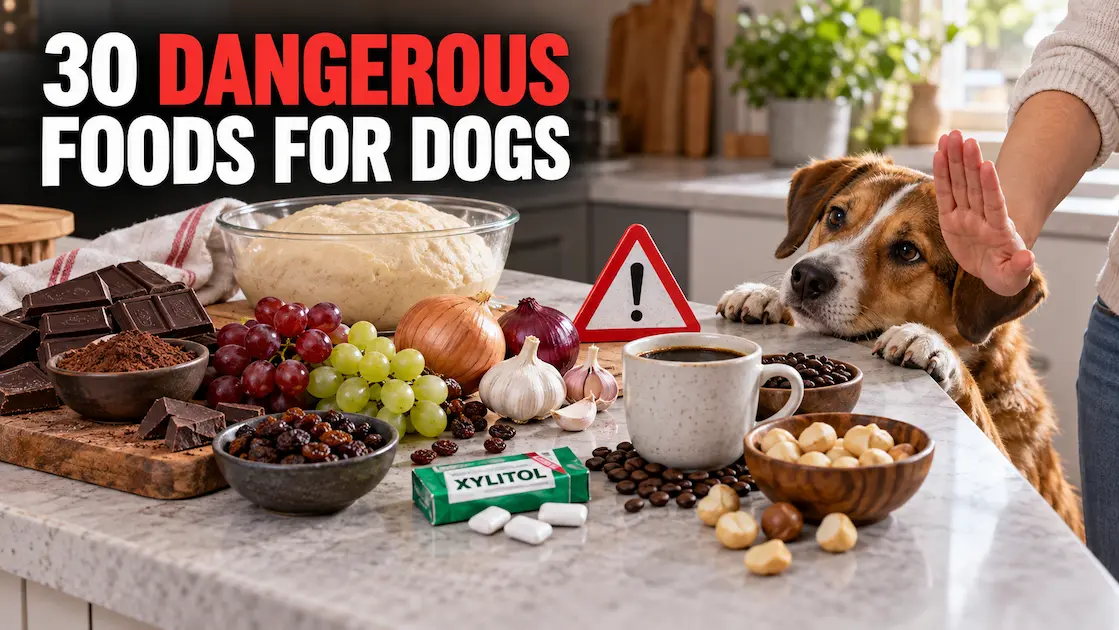
Dogs are curious, fast, and often willing to swallow food before you can stop them. Unfortunately, several everyday foods can poison a dog, damage internal organs, or cause a life-threatening blockage.
Some foods on this list are dangerous even in small amounts. Others become hazardous because of the quantity eaten, the part of the food swallowed, or the way it was prepared. Do not assume a food is safe because your dog ate it once without becoming sick.
The ASPCA’s guide to people foods pets should avoid specifically identifies common hazards such as chocolate, xylitol, grapes, raisins, onions, garlic, alcohol, caffeine, macadamia nuts, and raw yeast dough.
Emergency warning: If your dog eats xylitol, grapes, raisins, chocolate, alcohol, raw yeast dough, concentrated caffeine, or another potentially toxic food, contact a veterinarian or animal poison control immediately. Do not wait for symptoms.
This article is for general educational purposes and is not a substitute for veterinary diagnosis or treatment. If your dog may have eaten a dangerous food, contact a veterinarian or animal poison control immediately.
🚨 What to Do If Your Dog Eats a Dangerous Food
Act quickly, but do not try home remedies.
- Remove the remaining food. Prevent your dog from eating more and keep other pets away.
- Save the package. The ingredient list, product name, and remaining quantity can help determine the risk.
- Write down the details. Note what your dog ate, approximately how much, when it happened, and your dog’s weight.
- Call a veterinarian immediately. You can also contact the ASPCA Animal Poison Control Center at (888) 426-4435 or the Pet Poison Helpline at (855) 764-7661. Consultation fees may apply.
- Do not induce vomiting unless a veterinary professional tells you to. Making a dog vomit is not safe in every situation and can cause additional injury.
Weakness, repeated vomiting, tremors, seizures, breathing difficulty, collapse, a swollen abdomen, pale gums, or loss of coordination require emergency veterinary care. However, the absence of symptoms does not mean the danger has passed.

📋 Quick Reference: 30 Foods to Keep Away From Dogs
| # | Food or ingredient | Main danger | Response |
|---|---|---|---|
| 1 | Chocolate and cocoa | Heart and nervous system toxicity | Call now |
| 2 | Xylitol | Severe low blood sugar, liver injury | Emergency |
| 3 | Grapes | Acute kidney injury | Call now |
| 4 | Raisins | Acute kidney injury | Call now |
| 5 | Zante currants | Same concern as raisins | Call now |
| 6 | Onions | Red blood cell damage | Call a vet |
| 7 | Garlic | Red blood cell damage | Call a vet |
| 8 | Leeks and scallions | Red blood cell damage | Call a vet |
| 9 | Chives | Red blood cell damage | Call a vet |
| 10 | Alcohol | Nervous system and breathing problems | Emergency |
| 11 | Coffee and espresso | Caffeine toxicity | Call now |
| 12 | Caffeinated tea | Caffeine toxicity | Call now |
| 13 | Energy drinks and caffeine powders | Concentrated caffeine toxicity | Emergency |
| 14 | Macadamia nuts | Weakness, tremors, overheating | Call a vet |
| 15 | Raw yeast dough | Stomach expansion, alcohol production | Emergency |
| 16 | Hops | Dangerous rise in body temperature | Emergency |
| 17 | Moldy food | Tremorgenic toxins | Emergency if symptomatic |
| 18 | Wild mushrooms | Possible liver or nervous system toxicity | Call now |
| 19 | Nutmeg | Nervous system effects | Call a vet |
| 20 | Blue cheese | Possible tremors or seizures | Call a vet |
| 21 | Very salty foods | Sodium poisoning | Depends on amount |
| 22 | Cooked bones | Choking, splintering, blockage | Urgent if swallowed |
| 23 | Corn cobs | Intestinal blockage | Call a vet |
| 24 | Peach, plum, cherry, and apricot pits | Choking, blockage, toxic kernel | Call a vet |
| 25 | Avocado pit, skin, and leaves | Choking, blockage, digestive upset | Call a vet |
| 26 | Black walnuts and moldy nuts | Tremors, digestive upset, obstruction | Call a vet |
| 27 | Rhubarb leaves | Oxalate toxicity | Call a vet |
| 28 | Green potatoes and sprouts | Glycoalkaloid toxicity | Call a vet |
| 29 | Tomato leaves, stems, and unripe fruit | Glycoalkaloid exposure | Call a vet |
| 30 | Citrus peels and concentrated citrus oils | Irritation and possible nervous system effects | Call a vet |
Not every food below causes harm in the same way.
- Some contain true toxins that can affect the kidneys, liver, blood, heart, or nervous system.
- Others become dangerous because they expand, splinter, or block the digestive tract.
Understanding the difference can help you recognize why a quick response matters.
The response depends on the amount eaten, your dog’s size, the product concentration, and the time since exposure. When in doubt, call rather than watch and wait. The Merck Veterinary Manual explains many of these major food hazards in more detail.

☠️ Foods That Can Poison Dogs
These are the foods and ingredients that deserve the fastest response. Several can cause serious damage before a dog looks obviously sick.
1. Chocolate and Cocoa
A chocolate bar left on the coffee table can become a serious problem within minutes. Chocolate contains theobromine and caffeine, two stimulants that dogs cannot process efficiently.
They can push the heart and nervous system into overdrive, causing vomiting, restlessness, a racing heartbeat, tremors, seizures, or collapse.
Cocoa powder, baking chocolate, and dark chocolate are the most concentrated, but any chocolate exposure should be assessed based on the type, amount eaten, and your dog’s weight.
2. Xylitol
Xylitol can hide in sugar-free gum, candy, toothpaste, baked goods, supplements, protein products, and even some nut butters.
Always check the ingredient label before using peanut butter in homemade treats for your dog, even if you have purchased the same brand before.
In dogs, this sweetener can trigger a sudden release of insulin, causing blood sugar to fall to a dangerously low level. Larger exposures may also damage the liver.
Weakness, vomiting, difficulty walking, shaking, seizures, or collapse can appear quickly. Treat suspected xylitol ingestion as an emergency even if your dog still seems completely normal.
3. Grapes
One grape rolling off the kitchen counter may not look like an emergency. The problem is that dogs react unpredictably to grapes.
One dog may eat several without obvious trouble, while another can develop acute kidney injury after a much smaller exposure.
Seedless, organic, red, and green grapes are not safer alternatives. Vomiting and lethargy may appear first, followed by loss of appetite, abdominal pain, and reduced urination. Call after any known ingestion rather than waiting to see what happens.
4. Raisins
Raisins carry the same kidney risk as grapes, but their small size makes it easy for a dog to swallow many at once. They are also easy to miss in bread, cereal, granola, trail mix, cookies, stuffing, and holiday desserts.
Because kidney damage may develop after the initial stomach symptoms, a dog that seems better after vomiting is not necessarily out of danger. Contact a veterinarian promptly if raisins are eaten.
5. Zante Currants
Zante currants may sound like ordinary berries, but they are actually small dried grapes. That means they carry the same unpredictable risk of acute kidney injury as raisins.
They frequently appear in baked goods, cereals, sauces, and dried-fruit mixes. True black, red, and white currants are different fruits, so check the package carefully. If the product contains Zante currants or dried grapes, call for guidance.
6. Onions
A piece of onion may look harmless once it has been cooked into soup or gravy, but cooking does not remove the danger.
Onions contain compounds that damage a dog’s red blood cells, making it harder for the blood to carry oxygen.
The effects may build over time, so symptoms are not always immediate. Weakness, pale gums, rapid breathing, dark urine, or collapse can indicate anemia.
Raw, cooked, dried, fried, and powdered onion should all be kept out of your dog’s meals.
7. Garlic
Garlic belongs to the same Allium family as onions and can also damage red blood cells. Powders, extracts, and supplements are especially concerning because they may deliver a concentrated amount in a small serving.
A dog may initially have vomiting or diarrhea, while signs of anemia can take longer to appear. Garlic should not be added to homemade dog food, broth, or treats, and it should never be relied on as a home flea remedy.
8. Leeks and Scallions
Leeks, scallions, and green onions do not become dog-safe because they taste milder than regular onions. They contain similar compounds that can damage red blood cells and potentially lead to anemia.
They often hide in stock, soup, dips, sauces, eggs, and savory leftovers. Keep the entire Allium family out of food prepared for your dog, whether the ingredients are raw, cooked, dried, or powdered.
9. Chives
A small sprinkling of chives can be easy to overlook on potatoes, eggs, cream cheese, or soup. However, chives are another member of the Allium family and can contribute to red blood cell damage.
Repeated smaller exposures may matter as well as a single large serving. If your dog eats chives and later appears weak, breathes rapidly, develops pale gums, or produces unusually dark urine, veterinary care is needed.
Onions, garlic, leeks, and chives are especially easy to overlook when they appear in broth, seasoning blends, sauces, or table scraps. Using seasoned human ingredients is one of several common homemade dog food mistakes that can turn an otherwise thoughtful meal into an unsafe one.
10. Alcohol
Dogs do not need to drink directly from a wineglass to be exposed to alcohol. Beer, cocktails, fermented fruit, alcoholic desserts, unbaked dough, and spilled drinks can all become sources.
Alcohol depresses the brain and nervous system while lowering blood sugar, blood pressure, and body temperature. Poor coordination, vomiting, unusual sleepiness, slow breathing, tremors, coma, and death are possible.
Any meaningful exposure deserves an immediate call.
11. Coffee and Espresso
A few drops left in a cup are different from eating coffee beans or raiding a container of used grounds. Beans, espresso grounds, coffee pods, and dry coffee contain enough caffeine to overstimulate a dog’s heart and nervous system.
A poisoned dog may become restless, pant heavily, vomit, develop a rapid heartbeat, or begin shaking. Severe cases can lead to overheating, seizures, or collapse. Keep coffee waste out of both the trash and compost.
12. Caffeinated Tea
Black tea, green tea, matcha, and many bottled teas contain caffeine. A used tea bag may appear harmless, but the leaves can still hold a concentrated amount, especially for a small dog.
Caffeine may cause agitation, vomiting, panting, rapid heartbeat, tremors, or seizures. Herbal tea is not automatically safe either because blends may contain chocolate, spices, sweeteners, or plants that are unsuitable for dogs.
13. Energy Drinks and Concentrated Caffeine
A spilled energy shot or scoop of pre-workout powder is much more concerning than a dog licking a few drops of coffee. These products can pack a large dose of caffeine into a very small serving.
Caffeine pushes the heart and nervous system into overdrive. Restlessness, panting, vomiting, overheating, a dangerously fast or irregular heartbeat, tremors, seizures, and collapse can follow. Contact a veterinarian or poison-control service immediately after exposure.
14. Macadamia Nuts
Macadamia nuts contain an unidentified toxin that can temporarily affect a dog’s muscles and nervous system. Affected dogs may vomit, become weak in the back legs, walk stiffly, shake, or develop an elevated temperature.
The nuts are often baked into cookies or mixed with chocolate, raisins, or xylitol-containing ingredients, which can make the exposure even more dangerous. Check the complete ingredient list before calling.
15. Raw Yeast Dough
Raw yeast dough does not stop rising after a dog swallows it. Inside the warm stomach, it can expand into a large mass, causing painful pressure and potentially contributing to life-threatening bloat.
At the same time, fermenting yeast produces alcohol that enters the bloodstream. A swollen abdomen, repeated retching, poor coordination, weakness, or unusual drowsiness may follow. Do not wait for these signs before seeking emergency guidance.
16. Hops
Home brewers need to be especially careful with fresh, dried, pelletized, and spent hops. In some dogs, hops can trigger malignant hyperthermia, causing body temperature to rise rapidly and dangerously.
Panting, restlessness, vomiting, rapid heartbeat, and overheating can progress to organ damage and death. Brewing waste is not safe simply because it has already been used. Any hops ingestion should be treated as an emergency.
17. Moldy Food
Moldy food belongs in a secured trash or compost container, not in a dog’s bowl. Certain molds produce tremorgenic mycotoxins that overstimulate the nervous system.
A dog may begin vomiting, stumbling, shaking violently, overheating, or having seizures. The amount of toxin cannot be judged by how much mold is visible, so do not wait for tremors to start before contacting a veterinarian.
18. Wild Mushrooms
Even experienced foragers can have difficulty identifying some wild mushrooms, and the consequences of a mistake can be severe.
Depending on the species, mushroom toxins may attack the liver, kidneys, digestive tract, or nervous system.
If your dog eats a wild mushroom, photograph it and collect a sample safely if possible. Vomiting, drooling, weakness, abnormal behavior, tremors, or seizures may appear quickly, while organ damage can be delayed.
19. Nutmeg
A light dusting of nutmeg in one baked treat is not the same as eating the spice directly. Concentrated nutmeg contains myristicin, which can disturb the nervous and cardiovascular systems.
A significant exposure may cause disorientation, agitation, vomiting, abnormal heart rate, high blood pressure, tremors, or seizures. Nutmeg-containing desserts may also include chocolate, raisins, alcohol, or other dangerous ingredients.
20. Blue Cheese
Blue cheese can contain roquefortine C, a fungal substance to which dogs may be especially sensitive. Eating enough may cause vomiting, diarrhea, restlessness, tremors, overheating, or seizures.
The cheese is also rich in fat and salt, creating additional digestive and pancreatitis concerns. A tiny crumb is different from stealing a wedge, but a meaningful exposure should still be discussed with a veterinarian.
⚠️ Foods That Can Cause Serious Illness or Injury
The next foods are not all poisonous in the traditional sense, but that does not make them harmless. Their shape, fat content, salt level, or tendency to splinter can create a different kind of emergency.
21. Very Salty Foods
A dog’s salt exposure can add up quickly from chips, pretzels, cured meat, salted nuts, bouillon, seasoning, or homemade salt dough. Drinking seawater can create the same problem.
Excess sodium pulls water out of the body’s cells and disrupts normal brain and nerve function. Intense thirst, vomiting, weakness, poor coordination, tremors, or seizures can follow. Large salt exposures need urgent professional guidance.
22. Cooked Bones
Giving your dog a leftover chicken or rib bone may feel natural, but cooking makes bones brittle. Once chewed, they can crack into sharp fragments instead of breaking down safely.
Those pieces can lodge in the throat, cut the mouth, puncture the digestive tract, or create an intestinal blockage. Some dogs seem fine immediately and develop vomiting, pain, or difficulty passing stool later. Cooked bones should never be offered as chews.
23. Corn Cobs
The corn kernels left on a cob are not the main concern. The tough cob cannot be digested and is just the right shape to become lodged in a dog’s stomach or intestines.
An obstruction can cut off the movement of food and damage the affected tissue. Vomiting, refusal to eat, abdominal pain, lethargy, or straining may not appear until later. Call promptly because surgical removal may be necessary.
24. Peach, Plum, Cherry, and Apricot Pits
Stone-fruit pits create two separate dangers. Swallowed whole, they can cause choking or block the digestive tract. When crushed or chewed open, the kernel may release cyanogenic compounds that interfere with the body’s ability to use oxygen.
Remove pits completely before sharing any safe fruit flesh. Breathing difficulty, bright-red gums, weakness, collapse, repeated vomiting, or abdominal pain require immediate care.
25. Avocado Pits, Skin, and Leaves
The avocado pit is far more dangerous to a dog than a tiny piece of the flesh. Its size and shape make it a serious choking and intestinal blockage hazard.
The skin and leaves contain more persin, while the fatty flesh may cause vomiting, diarrhea, or pancreatitis in susceptible dogs. Avocado is not the worst toxin on this list, but it is still an unnecessary and avoidable risk.
26. Black Walnuts and Moldy Nuts
Fallen black walnuts can become moldy while lying in the yard. That mold may produce tremorgenic toxins capable of causing vomiting, loss of coordination, severe shaking, overheating, or seizures.
Hard shells can also obstruct the digestive tract, and the high fat content of nuts may trigger digestive upset or pancreatitis. Remove fallen nuts regularly if your dog has access to walnut trees.
🌿 Plant Foods With Dangerous Parts
With some plants, the familiar food is not the biggest problem. The peel, pit, leaf, stem, sprout, or unripe portion may carry a much higher risk than the part people normally eat.
27. Rhubarb Leaves
The edible-looking leaves on a rhubarb plant contain soluble oxalates that can bind calcium and interfere with normal muscle, nerve, and kidney function.
A significant exposure may cause drooling, vomiting, weakness, tremors, changes in urination, or an abnormal heart rhythm. Keep discarded leaves out of accessible compost and prevent dogs from chewing plants in the garden.
28. Green Potatoes and Potato Sprouts
A plain cooked potato and a green, sprouted potato are not the same risk. Green skin, sprouts, and spoiled raw potatoes may contain elevated glycoalkaloids such as solanine.
These compounds irritate the digestive system and may interfere with the nervous system, causing drooling, vomiting, diarrhea, weakness, confusion, or tremors. Never use green, sprouted, or spoiled potatoes in homemade dog food.
29. Tomato Leaves, Stems, and Unripe Tomatoes
A small piece of ripe tomato is very different from chewing the tomato plant. Leaves, stems, and green unripe tomatoes contain higher concentrations of glycoalkaloids, including tomatine.
Eating enough plant material may cause drooling, vomiting, diarrhea, weakness, tremors, or an abnormal heartbeat. Fence off tomato plants if your dog likes to investigate or chew garden vegetation.
30. Citrus Peels and Concentrated Citrus Oils
The juicy flesh of an orange is not the same as the peel or concentrated citrus oil. Peels, leaves, and oils contain compounds that can irritate the mouth and digestive tract, while larger or concentrated exposures may affect the nervous system.
Drooling, vomiting, diarrhea, weakness, tremors, or skin irritation can occur. Never add citrus essential oils to a dog’s food or apply them where the dog can lick them.
🔎 Hidden Food Hazards Dog Parents Often Miss
Many food emergencies do not begin with someone deliberately handing a dog a dangerous snack.
They happen when a dog finds gum inside a purse, steals stuffing from a holiday plate, reaches the compost bin, or licks spilled pre-workout powder from the floor. These are the places where risky ingredients often hide.
- Sugar-free products: Look for xylitol in gum, candy, mints, baked goods, toothpaste, supplements, and nut butter.
- Savory leftovers: Soup, gravy, stuffing, meat rubs, sauces, and casseroles may contain onion or garlic powder.
- Holiday desserts: Chocolate, raisins, macadamia nuts, nutmeg, raw dough, and alcohol often appear together.
- Protein and fitness products: Bars, powders, drinks, and supplements may contain xylitol, caffeine, chocolate, or raisins.
- Trash and compost: Coffee grounds, moldy food, corn cobs, cooked bones, fruit pits, and spoiled leftovers are common hazards.
Ingredient labels can be confusing, especially when familiar foods contain seasonings, sweeteners, or concentrated additives.
If you are unsure whether something belongs in your dog’s bowl, use this printable guide to human foods dogs can and cannot eat before sharing it.
🥕 Safer Foods to Share Instead
When you want to offer a small treat, choose plain food without salt, butter, seasoning, sweeteners, pits, or bones.
If you want to add more fresh produce to your dog’s bowl, this guide to dog-safe vegetables and simple preparation methods can help you choose options that support hydration, digestion, weight management, and everyday variety.
| Avoid sharing | Safer small alternative |
|---|---|
| Grapes and raisins | Blueberries |
| Chocolate desserts | A dog treat made without chocolate or xylitol |
| Salty chips | Plain cucumber slices |
| Seasoned meat | Plain, fully cooked lean chicken or turkey |
| Macadamia cookies | A plain dog biscuit |
| Fruit with pits | Seedless watermelon or a small banana piece |
| Cooked bones | A dog chew selected for your dog’s size and chewing style |
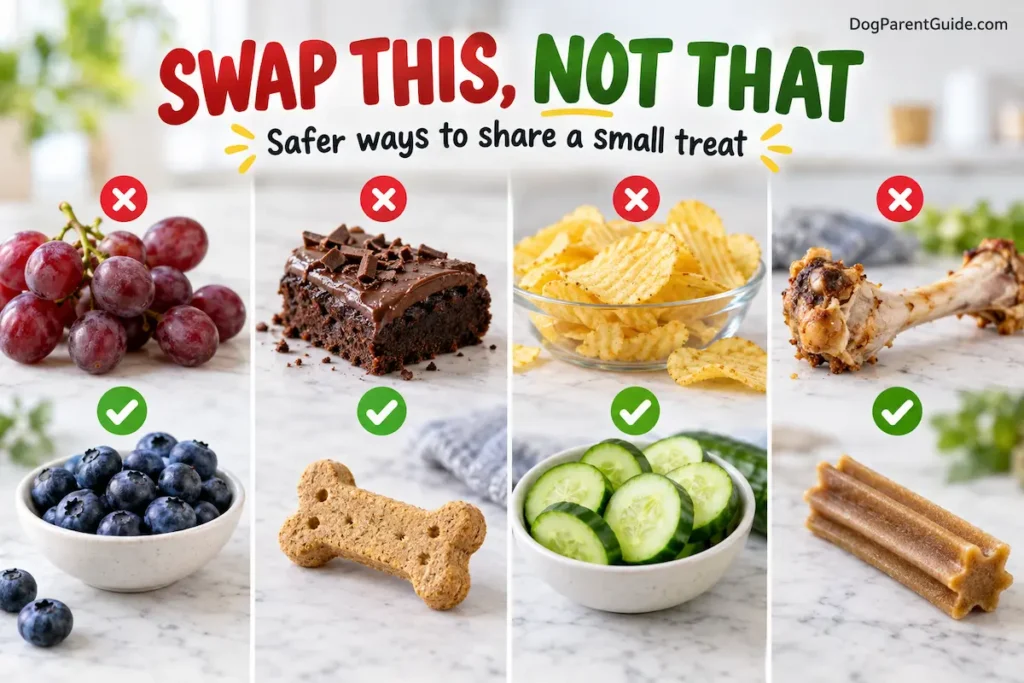
Safe swaps are helpful for occasional sharing, but they are not a complete meal on their own. If you want to move beyond treats and build a full bowl, start with these homemade dog food recipes made with dog-safe ingredients and review the nutritional guidance before feeding them regularly.
Even safe extras add calories and should not replace a complete, balanced diet.
🏠 How to Prevent Food Poisoning at Home
- Store chocolate, gum, coffee, baking ingredients, and supplements in closed cabinets.
- Keep purses, backpacks, and coat pockets off the floor. They often contain gum or candy.
- Use trash and compost containers with secure lids.
- Clear plates, bones, corn cobs, and drink glasses immediately after meals.
- Keep dogs out of the kitchen while baking with yeast dough.
- Check your yard for wild mushrooms, fallen nuts, and accessible tomato or rhubarb plants.
- Tell children and guests not to feed the dog without asking.
- Keep your veterinarian’s number and a poison-control number saved in your phone.
The Bottom Line
You do not need to be afraid of every ingredient in your kitchen. What matters is knowing which foods should stay completely out of reach, recognizing the everyday places where they hide, and acting quickly when an accident happens.
Keep the poison-control numbers in your phone, secure high-risk foods before your dog can reach them, and check labels before sharing anything packaged. A few simple habits can prevent many of the food emergencies on this list.