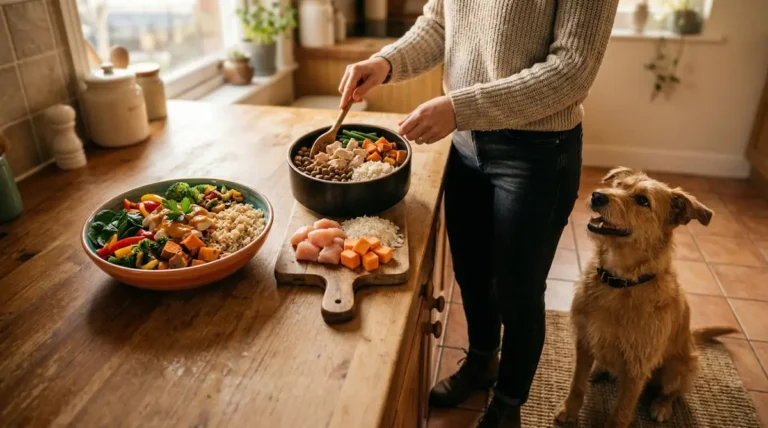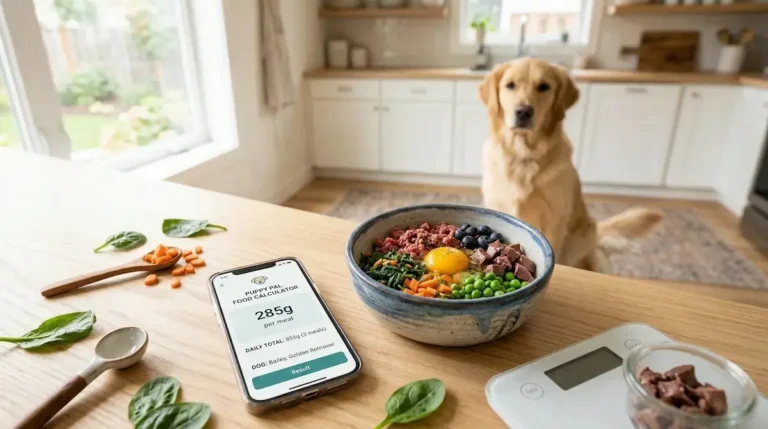
As dogs get older, the food that worked perfectly for years may not fit quite as well. Some senior dogs become less active, some lose muscle or weight, and others start preferring softer, more aromatic meals.
There is no single diet that every senior dog needs. In fact, there is no separate AAFCO nutrient profile specifically for senior dogs.
The right approach depends on your dog’s body condition, activity, appetite, health, and the nutritional balance of the complete diet.
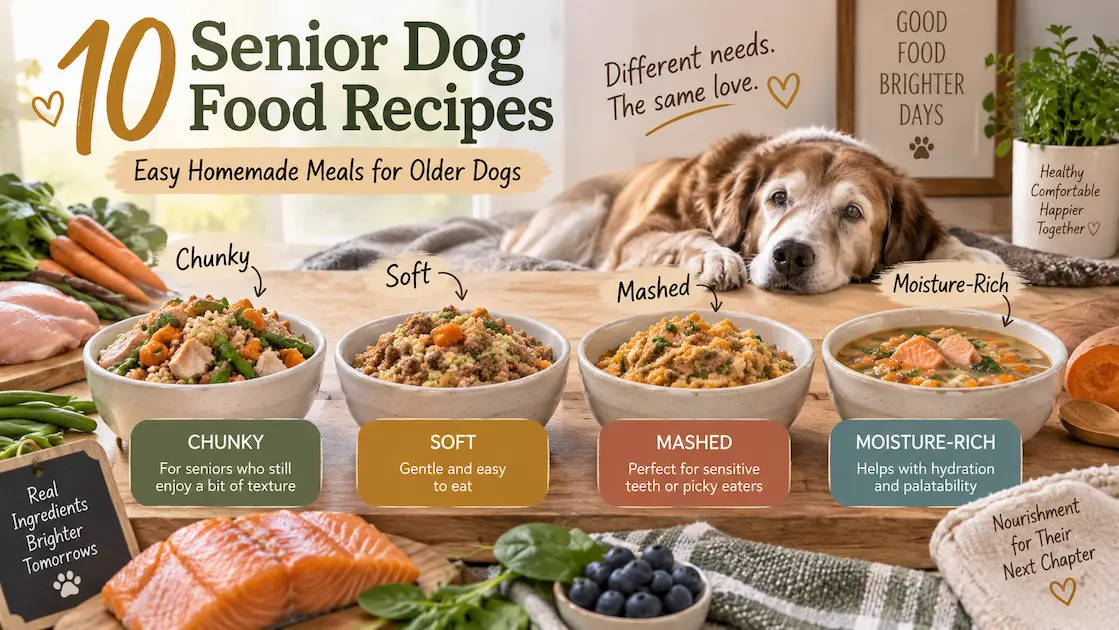
These senior dog food recipes give you 10 practical homemade meal ideas with different proteins, textures, and nutrition highlights, plus guidance for portioning and balancing homemade food safely.
🎯 Important: The recipes below are homemade meal ideas, not automatically complete and balanced diets for long-term feeding.
If homemade food will make up most or all of your dog’s diet, the final recipe should be properly formulated to supply calcium, essential fatty acids, vitamins, minerals, and other required nutrients.
Which Senior Dog Food Recipe Should You Try?
An older dog does not need a recipe simply because it has “senior” in the name.
Start with what your dog actually needs. Does your dog prefer very soft food? Love fish? Get bored with chicken? Need something that is practical to batch cook?
Use this quick guide to narrow down your first recipe.
| Recipe | Texture | Best For | Key Nutrition Highlight |
|---|---|---|---|
| Chicken & White Rice Soft Bowl | Very soft | A familiar, simple meal | High-quality protein + easy-to-cook carbohydrate |
| Salmon & Sweet Potato Bowl | Soft | Fish lovers and protein variety | EPA/DHA omega-3 fatty acids |
| Turkey & Pumpkin Oatmeal Bowl | Spoonable | Softer meals and added fiber | Lean protein + fiber |
| White Fish & Vegetable Bowl | Very soft | A mild, lean option | Lean protein + vegetable variety |
| Beef & Bone Broth Soft Bowl | Moist and soft | Dogs attracted to richer aromas | Protein + added moisture |
| Turkey, Blueberry & Brown Rice Bowl | Soft | More ingredient variety | Protein + antioxidant-rich blueberries |
| Chicken & Egg Oatmeal Bowl | Soft | More animal-protein variety | High-quality protein from chicken and egg |
| Sardine & Sweet Potato Budget Bowl | Soft | A lower-cost fish option | EPA/DHA + protein |
| Ground Chicken & Cottage Cheese Bowl | Very soft | Palatability and soft texture | Protein + dairy variety |
| Senior Weekly Meal-Prep Batch | Soft | Convenient batch cooking | A practical whole-food base |
10 Senior Dog Food Recipes
1. Chicken & White Rice Soft Bowl
This is a useful place to start when you want something uncomplicated and very soft.
Chicken provides high-quality animal protein, while thoroughly cooked rice and vegetables create a texture that is easy to portion, mash, or thin with extra water.
🐾 Best for: Senior dogs that prefer familiar flavors and softer meals.
🥕 Ingredients:
- 2 pounds boneless, skinless chicken breast or thigh, excess fat removed
- 1 cup white rice
- 1 cup finely chopped carrots
- 1 cup chopped green beans
- 4 cups water or plain dog-safe broth with no onion or garlic
- Extra warm water as needed for serving
👩🍳 Instructions:
- Add the chicken, rice, carrots, and water to a large pot.
- Bring to a gentle boil, then reduce the heat and cover.
- Simmer until the rice is very soft and the chicken is completely cooked.
- Remove the chicken and shred it into small pieces.
- Return it to the pot and add the green beans.
- Cook for another 5 minutes, then allow everything to cool.
- For dogs that prefer a softer consistency, mash lightly and stir in warm water before serving.
💡 Why This Bowl Makes Sense:
Chicken supplies high-quality protein, which remains important as dogs age and may begin losing lean body mass.
White rice also cooks to a particularly soft texture. It is not inherently “better for seniors” than brown rice, but it can be useful when texture and simplicity are priorities.
2. Salmon & Sweet Potato Bowl
Salmon gives this recipe a completely different nutrition profile from the poultry bowls.
It naturally provides the long-chain omega-3 fatty acids EPA and DHA, while sweet potato creates a soft base with fiber and beta-carotene.
🐾 Best for: Senior dogs that enjoy fish or need more protein variety.
🥕 Ingredients:
- 2 pounds boneless salmon
- 2 medium sweet potatoes, peeled and cubed
- 1 cup chopped zucchini
- 1 cup chopped green beans
- 3 cups water
👩🍳 Instructions:
- Add the sweet potato and water to a pot and simmer for about 10 minutes.
- Place the salmon over the sweet potato.
- Add the zucchini and green beans.
- Cover and cook gently until the salmon is fully cooked and flakes easily.
- Check carefully for bones.
- Break the salmon into small pieces and lightly mash the sweet potato.
- Stir everything together and cool before serving.
💡 Why This Bowl Makes Sense:
EPA and DHA from oily fish are among the dietary fats studied in senior and joint-health nutrition.
That does not make a general salmon meal an arthritis treatment. Salmon is simply a useful whole-food source of these omega-3 fatty acids.
Long-chain omega-3s such as EPA and DHA also have documented roles in nutritional management of conditions such as osteoarthritis when used appropriately as part of the overall diet.
3. Turkey & Pumpkin Oatmeal Bowl
Ground turkey, pumpkin, and oats naturally produce a soft, spoonable meal without needing to blend it.
🐾 Best for: Older dogs that enjoy softer meals and owners who want to include more fiber variety.
🥕 Ingredients:
- 2 pounds lean ground turkey
- 1 cup plain canned pumpkin, not pumpkin pie filling
- 1 cup rolled oats
- 1 cup finely chopped carrots
- 1 cup chopped green beans
- 4 cups water
👩🍳 Instructions:
- Cook the ground turkey thoroughly in a large pot.
- Drain excess fat if needed.
- Add the oats, carrots, and water.
- Simmer until the oats are fully softened.
- Add the green beans for the final 5 minutes.
- Remove from the heat and stir in the pumpkin.
- Cool completely before portioning.
💡 Why This Bowl Makes Sense:
Pumpkin and oats both contribute fiber, while turkey supplies high-quality animal protein.
The combination also creates a naturally moist, porridge-like texture that can be easier to serve to a dog that no longer enjoys chunky meals.
If your senior dog has recurring vomiting, diarrhea, or other digestive problems, however, do not assume pumpkin is the entire solution.
Persistent digestive symptoms deserve investigation. A more targeted homemade dog food for sensitive stomachs approach may also be more appropriate than a general senior recipe.
4. White Fish & Vegetable Bowl
White fish such as cod or pollock has a mild flavor, tender texture, and relatively lean nutritional profile.
🐾 Best for: Senior dogs that prefer a mild protein or owners looking for an alternative to chicken and turkey.
🥕 Ingredients:
- 2 pounds boneless cod, pollock, or another plain white fish
- 2 medium potatoes, peeled and diced
- 1 cup chopped zucchini
- 1 cup chopped green beans
- ½ cup grated carrot
- 3 cups water
👩🍳 Instructions:
- Add the potatoes, carrots, and water to a pot.
- Simmer until the potatoes begin to soften.
- Add the zucchini and green beans.
- Place the fish on top, cover, and cook gently until completely done.
- Check the fish carefully for bones.
- Flake it into small pieces.
- Lightly mash the potatoes and combine everything.
💡 Why This Bowl Makes Sense:
White fish adds protein variety without creating a particularly rich meal.
It is also easy to flake into tiny pieces, which can be helpful for senior dogs that prefer softer textures.
This is intentionally not labeled a “kidney-friendly” recipe.
A healthy senior dog and a dog with chronic kidney disease do not automatically need the same nutrient profile. Once kidney function is compromised, protein, phosphorus, sodium, calories, and other nutrients may need to be evaluated together.
5. Beef & Bone Broth Soft Bowl
Some older dogs become more selective about food.
A moist beef bowl with a stronger aroma may be more appealing than a dry or lightly scented meal.
🐾 Best for: Seniors that enjoy beef and are drawn to moist, aromatic food.
🥕 Ingredients:
- 2 pounds lean ground beef
- 1 cup rolled oats
- 1 cup plain pumpkin
- 1 cup chopped green beans
- ½ cup grated carrot
- 4 cups plain dog-safe bone broth with no onion, garlic, or added seasoning
👩🍳 Instructions:
- Brown the beef thoroughly and drain excess fat.
- Add the oats, carrots, and broth.
- Simmer until the oats become soft.
- Add the green beans for the final 5 minutes.
- Remove from the heat and stir in the pumpkin.
- Cool before serving.
💡 Why This Bowl Makes Sense:
Lean beef provides protein, iron, zinc, and other nutrients, while the broth increases the moisture and aroma of the finished meal.
Bone broth may contain gelatin and collagen-derived proteins, but the amount varies considerably depending on how it is prepared.
Its most practical value in this recipe is making the meal moist, soft, and appealing.
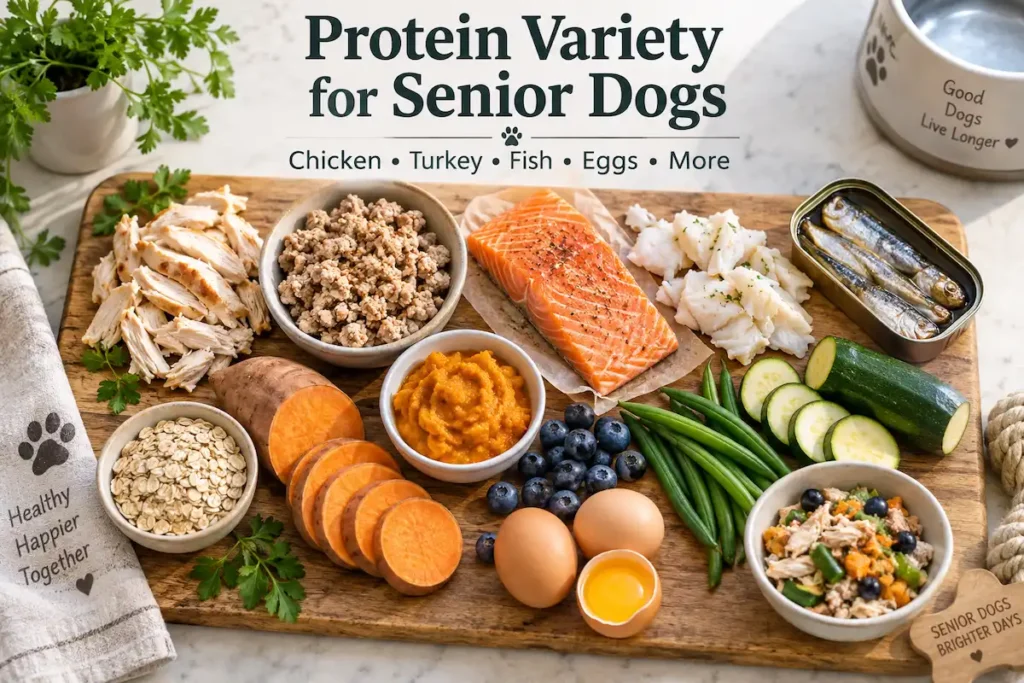
6. Turkey, Blueberry & Brown Rice Bowl
Fruit does not need to dominate a dog’s meal to add variety.
A small amount of blueberries can be mixed into a familiar turkey-and-rice base.
🐾 Best for: Dogs that tolerate a wider range of ingredients and owners who want a little more plant-food variety.
🥕 Ingredients:
- 2 pounds lean ground turkey
- 1 cup cooked brown rice
- ½ cup blueberries, fresh or frozen
- 1 cup finely chopped broccoli
- ½ cup grated carrot
- ½ cup plain pumpkin
- 3 cups water
👩🍳 Instructions:
- Cook the turkey thoroughly and drain excess fat.
- Add the cooked rice, carrot, and water.
- Simmer gently for 10 minutes.
- Add the broccoli and blueberries for the final few minutes.
- Remove from the heat.
- Stir in the pumpkin and cool before serving.
💡 Why This Bowl Makes Sense:
Blueberries contain anthocyanins and other antioxidant compounds.
Antioxidant-containing balanced diets have been studied as part of nutritional strategies for aging and cognitive health. That does not mean a handful of blueberries should be treated as a therapy for canine cognitive dysfunction.
The practical benefit here is simpler. This bowl combines high-quality animal protein with a small amount of antioxidant-rich fruit and vegetable variety.
7. Chicken & Egg Oatmeal Bowl
Chicken and eggs create a protein-focused combination while oatmeal keeps the finished texture soft.
🐾 Best for: Seniors that enjoy eggs and owners looking to rotate animal-protein sources within the same meal.
🥕 Ingredients:
- 1½ pounds boneless chicken
- 3 large eggs
- 1 cup rolled oats
- 1 cup chopped zucchini
- ½ cup grated carrot
- 3½ cups water
👩🍳 Instructions:
- Add the chicken, oats, carrots, and water to a pot.
- Simmer until the chicken is fully cooked and the oats are soft.
- Remove the chicken and shred it finely.
- Return it to the pot with the zucchini.
- Beat the eggs in a bowl.
- Stir them into the hot mixture over low heat until fully cooked.
- Cool before serving.
💡 Why This Bowl Makes Sense:
Protein remains important in older dogs because lean body mass can decline with age.
Healthy senior diets may use modestly higher protein content or improved protein quality to help compensate for this loss. Protein should not automatically be restricted simply because a dog has reached a certain birthday.
Chicken and eggs both provide high-quality animal protein, making this bowl a useful option when you want more protein variety.
If you notice the muscles over your dog’s spine, hips, or shoulders becoming noticeably thinner, discuss that change with your veterinarian rather than simply increasing portions.
8. Sardine & Sweet Potato Budget Bowl
Salmon is not the only way to add oily fish to homemade dog food.
Plain sardines can be a more affordable option and still provide EPA and DHA.
🐾 Best for: Fish-loving senior dogs and owners looking for a budget-friendly oily fish.
🥕 Ingredients:
- 5 to 6 small cans sardines packed in water with no added salt
- 2 medium sweet potatoes, peeled and cubed
- 1 cup chopped green beans
- ½ cup grated carrot
- ½ cup chopped spinach
- 3 cups water
👩🍳 Instructions:
- Add the sweet potatoes, carrots, and water to a pot.
- Simmer until the sweet potato becomes very soft.
- Add the green beans for the final 5 minutes.
- Remove from the heat.
- Drain the sardines and fold them into the vegetables.
- Stir in the spinach while the mixture is still warm.
- Cool completely.
💡 Why This Bowl Makes Sense:
Sardines provide animal protein plus naturally occurring long-chain omega-3 fatty acids.
They also give you a completely different flavor profile from poultry-based meals, which can be useful for dogs that lose interest when every batch tastes the same.
Because sardines already provide oily fish fats, there is no reason to automatically add fish oil to this meal without considering the rest of the diet.
9. Ground Chicken & Cottage Cheese Bowl
Ground meat and cottage cheese create one of the softest textures in this collection.
🐾 Best for: Older dogs that prefer very soft food and tolerate dairy well.
🥕 Ingredients:
- 1½ pounds ground chicken
- ½ cup plain low-fat cottage cheese
- 1 cup rolled oats
- 1 cup chopped green beans
- ½ cup grated carrot
- ½ cup peas
- 3 cups water
👩🍳 Instructions:
- Cook the ground chicken thoroughly.
- Add the oats, carrots, and water.
- Simmer until the oats are very soft.
- Add green beans and peas for the final 5 minutes.
- Allow the mixture to cool.
- Stir a small amount of cottage cheese into each portion before serving.
💡 Why This Bowl Makes Sense:
Ground chicken requires almost no chewing once cooked, and cottage cheese adds another source of protein while making the mixture creamy and palatable.
Not every dog tolerates dairy equally well.
Start with a small amount if cottage cheese is new to your dog, and skip it if it causes loose stools or digestive discomfort.
10. Senior Weekly Meal-Prep Batch
This final recipe is less about a particular ingredient and more about making homemade feeding practical.
It creates a large, soft base that can be portioned and frozen.
🐾 Best for: Owners who want to prepare several days of food at once.
🥕 Ingredients:
- 3 pounds lean ground turkey
- 1 pound boneless chicken
- 1½ cups rice
- 1 cup rolled oats
- 2 cups finely chopped carrots
- 2 cups green beans
- 1 cup zucchini
- 1 cup plain pumpkin
- 7 cups water
👩🍳 Instructions:
- Cook the turkey thoroughly in a large stockpot.
- Add the chicken, rice, oats, carrots, and water.
- Simmer until the grains are soft and the chicken is fully cooked.
- Remove and finely shred the chicken.
- Return it to the pot.
- Add the green beans and zucchini for the final 5 to 8 minutes.
- Remove from the heat and stir in the pumpkin.
- Cool quickly and portion into individual containers.
- Refrigerate the portions you will use soon and freeze the rest.
💡 Why This Bowl Makes Sense:
Batch cooking makes portion control much easier than scooping randomly from a large container each day.
It also allows you to freeze meals in consistent amounts and keep several days of food ready without cooking from scratch every evening.
How many days this batch lasts cannot be determined from your dog’s weight alone.
You first need to know your dog’s approximate calorie target and how many calories the finished recipe provides per cup.
What Should Be Different About Food for a Senior Dog?
Nutrition is only one part of caring for an older dog. Our senior dog care guide also covers health monitoring, mobility, exercise, dental care, and everyday comfort.
A healthy 8-year-old Labrador, a thin 15-year-old Chihuahua, and a 12-year-old dog with chronic kidney disease should not all be fed according to the same “senior dog” rules.
There are, however, a few things worth paying closer attention to as dogs age.
Calories Depend on the Dog, Not Just Age
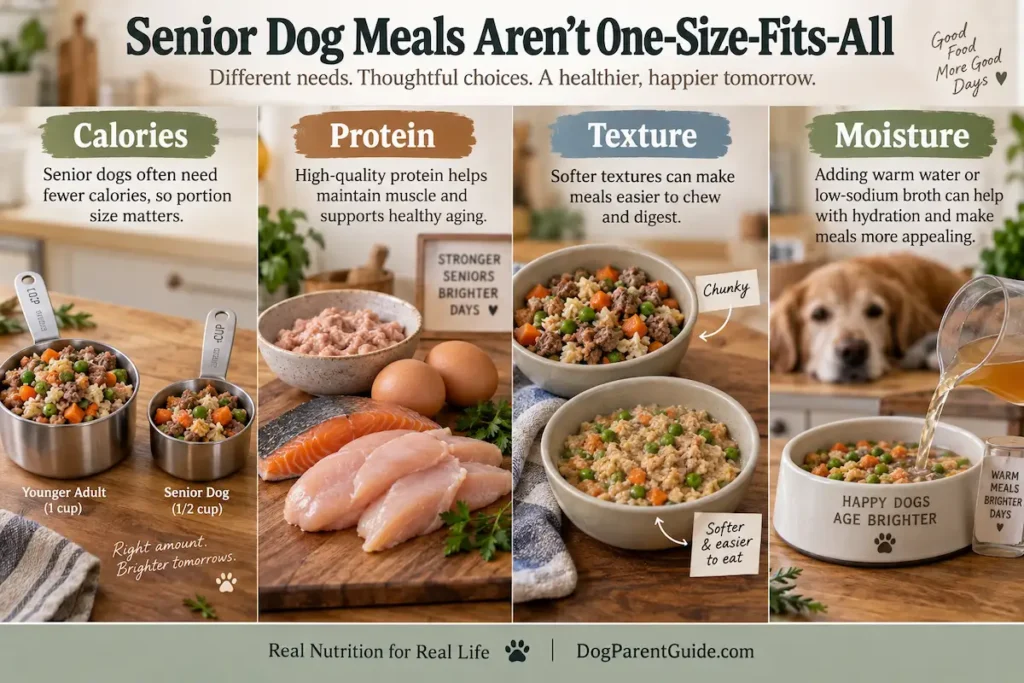
Many dogs become less active with age, and maintenance energy requirements can decline over a dog’s lifetime.
That can make weight gain easier if portions stay exactly the same even as activity decreases.
But that pattern can reverse in advanced age.
Very old dogs that begin losing body condition may need more calories, more attention to protein intake, or a different feeding strategy to help maintain a healthy physique.
That is why a rule such as “senior dogs need 20% fewer calories” is too simple.
Watch the dog in front of you:
- Is weight creeping upward?
- Are the ribs becoming difficult to feel?
- Is your dog losing weight?
- Are the muscles over the hips or spine becoming thinner?
- Has activity changed?
Body condition and muscle condition usually tell you more than age alone.
Protein Still Matters
Healthy senior dogs should not automatically be switched to a low-protein diet.
Protein provides amino acids needed to maintain body tissues, and older dogs commonly lose lean body mass as they age.
For healthy seniors, maintaining good protein quality and an appropriate amount can therefore become especially important.
If you want a clearer breakdown of daily protein needs, protein quality, and why more meat does not automatically mean a better diet, see our guide to how much protein does a dog need.
Protein restriction is a different conversation when certain medical conditions are present.
For example, chronic kidney disease may require evaluation of protein together with phosphorus, calories, sodium, and the dog’s overall stage of disease rather than simply applying a generic senior-food rule.
Softer Textures Can Make Meals Easier
Not every senior dog needs soft food.
Texture can become more important, however, if a dog has missing teeth, dental discomfort, reduced appetite, or simply begins preferring moist meals.
You can adjust most of the recipes above by:
- cutting meat into smaller pieces,
- shredding rather than cubing,
- cooking vegetables until tender,
- lightly mashing starches,
- or adding warm water before serving.
A dog suddenly struggling to chew, dropping food, chewing on one side, or avoiding meals should also have its mouth and teeth checked.
Softening the food can help with texture, but it should not hide an underlying dental problem.
Moisture Can Be Useful
Adding moisture is one of the easiest ways to change a senior dog’s meal without changing the entire ingredient list.
Higher-moisture food may also be useful for dogs that prefer softer textures or are less enthusiastic about dry meals.
Warm water or an appropriate plain broth can make food more aromatic as well as more moist.
If your senior consistently prefers soft, moisture-rich meals, you can explore more homemade wet dog food recipes rather than turning every senior recipe into the same stew.
How Much Homemade Food Should a Senior Dog Eat?
Measuring homemade dog food only in “cups by body weight” can be misleading.
One cup of a lean white-fish-and-vegetable recipe may contain far fewer calories than one cup of a beef, rice, and egg recipe.
Two dogs that weigh exactly the same can also have different energy needs because of activity, body condition, muscle mass, age, and health.
✔️ A better starting point is:
| Daily calorie target ÷ calories per cup of the finished recipe = approximate cups per day |
Then adjust according to changes in body weight and body condition.
A Simple Portion Example
Suppose a senior dog’s individualized target has been estimated at 600 calories per day.
The amount of food changes substantially depending on the recipe’s calorie density:
| Example Recipe Calorie Density | Approx. Food Per Day | If Split Into 2 Meals |
|---|---|---|
| 250 kcal per cup | 2.4 cups | 1.2 cups per meal |
| 300 kcal per cup | 2 cups | 1 cup per meal |
| 400 kcal per cup | 1.5 cups | ¾ cup per meal |
| 500 kcal per cup | 1.2 cups | 0.6 cup per meal |
This is a calculation example, not a feeding recommendation.
Your dog may not need 600 calories, and the homemade recipe you prepare may not match any of these calorie densities.
That is exactly why “feed a 30-pound senior dog 2 cups per day” can be misleading without knowing what is actually in those cups.
Once you have an appropriate starting amount, monitor weight, body condition, and muscle condition rather than treating the first calculation as permanent.
How to Make Homemade Senior Dog Food Complete and Balanced
A bowl can contain excellent ingredients and still be nutritionally incomplete.
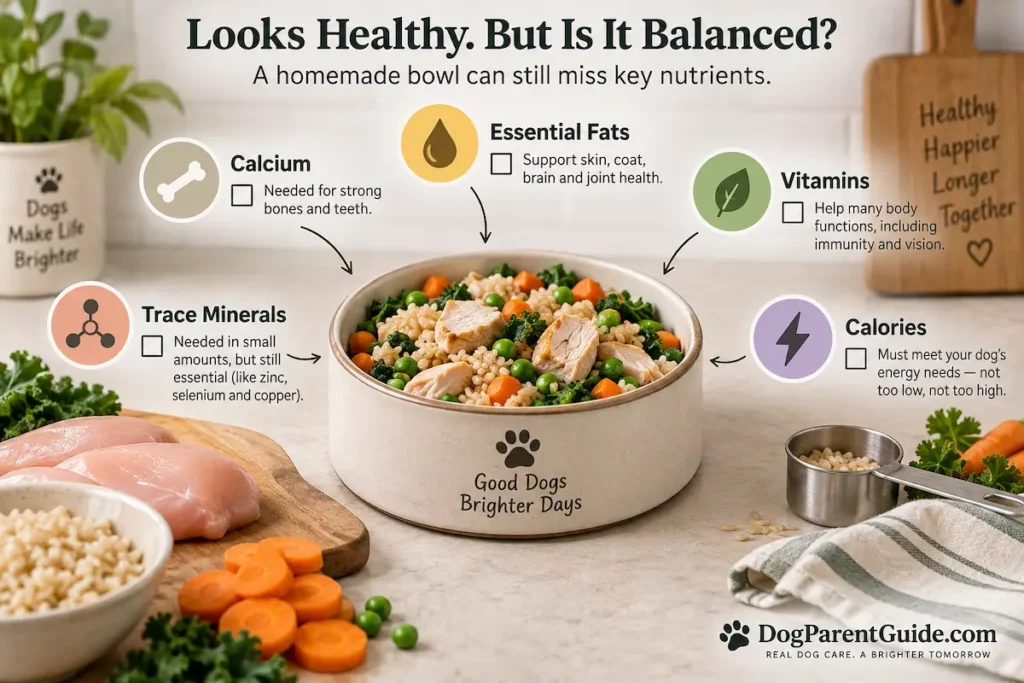
Chicken, rice, carrots, and pumpkin provide protein, carbohydrate, fiber, vitamins, and other nutrients. That does not guarantee the finished diet contains every required nutrient in the correct amount and ratio.
A complete diet has to account not only for whether a nutrient is present, but also how much is supplied relative to calories and to other nutrients.
Common areas that need attention include:
- calcium and phosphorus,
- essential fatty acids,
- zinc, copper, iodine, and other trace minerals,
- fat-soluble and water-soluble vitamins,
- total calories,
- and the overall nutrient-to-calorie ratio.
This is why simply adding eggshell powder, fish oil, or a human multivitamin does not automatically balance a homemade dog food recipe.
If homemade food will be fed as your dog’s main long-term diet, use a recipe specifically formulated for your dog by a veterinary nutrition professional or another appropriately qualified source.
For a deeper look at this, see our guide to balanced homemade dog food recipes.
When a Senior Dog Needs More Than a General Recipe
A homemade senior recipe can help you vary proteins, adjust texture, increase moisture, or make meal prep easier.
It should not replace condition-specific nutrition when a dog has a diagnosed medical problem.
Talk with your veterinarian before relying on a general homemade recipe if your senior dog has:
- chronic kidney disease,
- heart disease,
- diabetes,
- pancreatitis,
- recurrent vomiting or diarrhea,
- unexplained weight loss,
- rapid weight gain,
- substantial muscle loss,
- difficulty swallowing,
- significant dental pain,
- or a sudden change in appetite.
Therapeutic diets may control levels of nutrients such as phosphorus, sodium, fat, protein, fiber, or carbohydrates in ways a general senior recipe does not.
A dog with chronic kidney disease, for example, may need a completely different nutritional strategy from a healthy dog of the same age.
If digestive sensitivity is the main concern rather than age itself, our homemade dog food recipes for sensitive stomachs are the more relevant place to start.
Batch Cooking and Storing Senior Dog Food
Homemade food becomes much easier when you treat it like meal prep rather than cooking from scratch twice a day.
Cook a Large Base
Prepare enough protein, starch, and vegetables for several portions at once.
Keep seasonings, onion, garlic, sauces, and other unnecessary additions out of the pot.
Cool Before Portioning
Do not leave a large stockpot of warm food sitting at room temperature for hours.
Transfer the cooked food into shallower containers so it cools more efficiently. Then portion it into amounts that match your dog’s feeding plan.
Refrigerate Only What You Will Use Soon
Keep a few days of food refrigerated and freeze the rest in meal-sized portions.
Thaw frozen portions safely in the refrigerator.
Fish-based recipes can be especially useful to prepare in smaller batches if you do not plan to freeze much of the food.
Adjust Texture When You Serve
You do not have to freeze every portion at the exact final consistency.
At mealtime, you can:
- add warm water,
- mash the portion,
- shred larger meat pieces,
- or warm the food slightly to increase aroma.
That allows one batch to stay practical even if your senior dog’s preferences change from day to day.
Final Thoughts
The best homemade food for a senior dog is not necessarily the lowest-calorie bowl, the softest bowl, or the recipe with the longest list of “superfoods.”
It is the meal that fits the dog in front of you.
Pay attention to body condition, muscle condition, appetite, activity, chewing comfort, stool quality, and health status.
Use chicken, turkey, fish, beef, eggs, grains, vegetables, and other dog-safe foods to create variety. Just remember that ingredient quality and nutritional completeness are two different things.
Start with one of the recipes that best matches your dog’s preferences and introduce changes gradually.
If homemade food becomes the main diet, make sure the final recipe is properly balanced for long-term feeding.