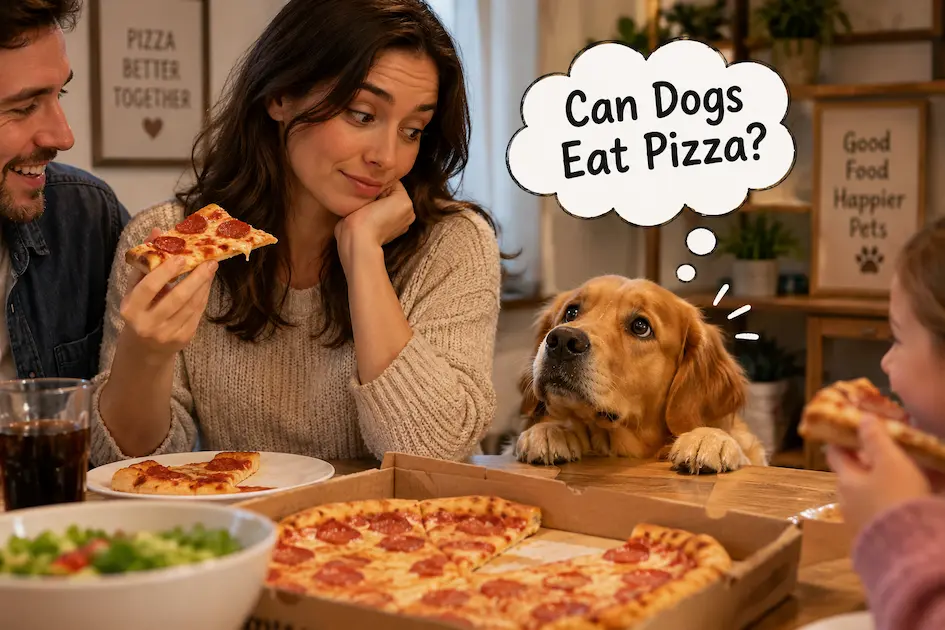
Pizza smells incredible to dogs. Unfortunately, the same toppings that make it so tempting can also make it a poor choice for them.
Dogs should not be intentionally fed pizza. A small bite of plain cooked crust is unlikely to cause trouble for many healthy dogs, but a full slice can contain onion, garlic, fatty cheese, salty processed meat, and seasonings that range from upsetting to genuinely unsafe.
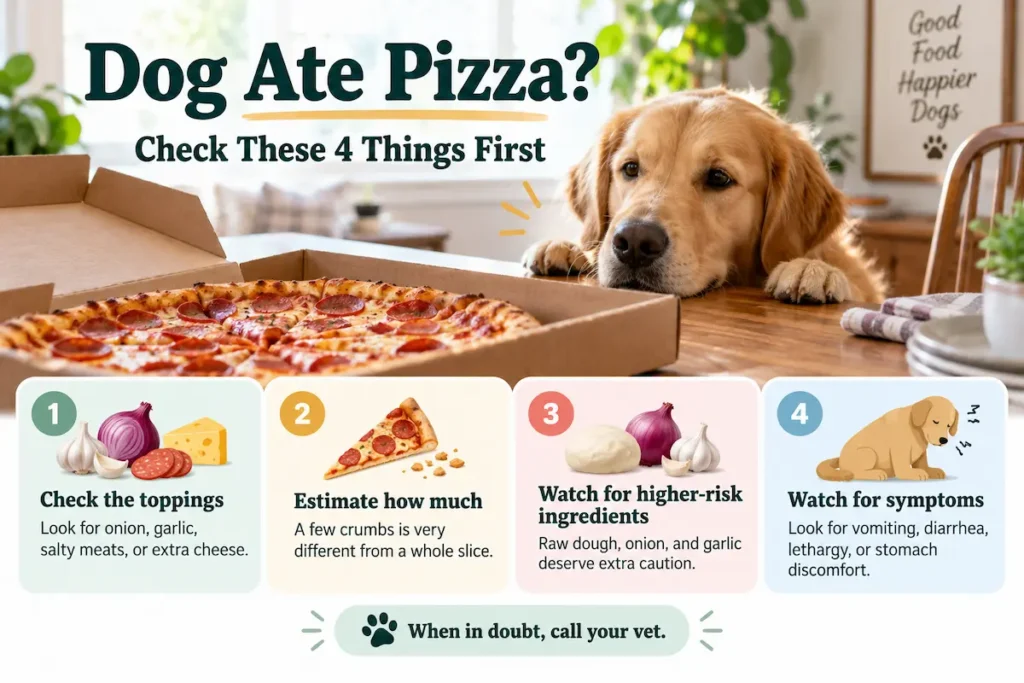
If your dog already stole some pizza, the important question is not simply “Was it pizza?” You need to know how much they ate, what was on it, whether the dough was fully cooked, and how your dog is acting now.
Quick Answer: Can Dogs Eat Pizza?
| Pizza Part | Good for Dogs? | Main Concern |
|---|---|---|
| Plain cooked crust | Not recommended | Extra calories, salt, possible seasonings |
| Tomato sauce | Usually best avoided | Onion, garlic, salt, spices |
| Cheese | Small amounts may be tolerated | Fat, calories, dairy sensitivity |
| Pepperoni | Avoid | High fat, salt, spices |
| Sausage | Avoid | Fat, salt, onion or garlic seasoning |
| Onion | No | Toxic to dogs |
| Garlic | No | Toxic to dogs |
| Raw yeast dough | No, potentially serious | Dough expansion and alcohol production |
A healthy dog stealing a tiny piece of plain cooked crust is very different from a small dog eating several slices of pepperoni pizza or getting into a bowl of raw pizza dough.
That distinction matters.
My Dog Ate Pizza. What Should I Do?
Start by checking the pizza itself before focusing on the dog.
1. Figure Out What Was on the Pizza
Look for ingredients such as:
- Onion
- Garlic
- Garlic powder
- Onion powder
- Pepperoni
- Sausage
- Very salty meats
- Spicy toppings
- Extra cheese
- Unusual sauces
- Raw or undercooked yeast dough
If you still have the box, ingredient list, recipe, or leftover pizza, keep it nearby. It can help you give your veterinarian more useful information.
2. Estimate How Much Your Dog Ate
A few crumbs and an entire large slice are not equivalent.
Try to estimate:
- A bite
- Part of the crust
- Half a slice
- One full slice
- Several slices
- Most of a pizza
Also consider your dog’s size. The same amount of pizza represents a much larger portion for a 10-pound dog than for a 70-pound dog.
3. Check for Higher-Risk Ingredients
Contact your veterinarian or a pet poison service promptly if the pizza contained a significant amount of onion, garlic, concentrated onion or garlic powder, or raw yeast dough.
Onions and garlic belong to the Allium family and can damage red blood cells in dogs. Importantly, cooked, dried, and powdered forms are not automatically safe.
Raw yeast dough creates a different problem. It can continue expanding inside the stomach while yeast fermentation produces ethanol.
4. Watch Your Dog Closely
🎯 After eating rich or greasy pizza, some dogs may develop:
- Vomiting
- Diarrhea
- Drooling
- Gas
- Abdominal discomfort
- Reduced appetite
- Restlessness
🎯 More concerning signs include:
- A swollen or painful abdomen
- Repeated attempts to vomit without bringing anything up
- Severe weakness
- Collapse
- Pale gums
- Trouble walking normally
- Tremors
- Difficulty breathing
- Unusual sleepiness or disorientation
Seek veterinary help if your dog develops significant symptoms, ate a large amount, ate raw yeast dough, or consumed a known toxic ingredient.
Do not try to make your dog vomit unless a veterinarian or animal poison professional specifically instructs you to do so.
Why Is Pizza Bad for Dogs?
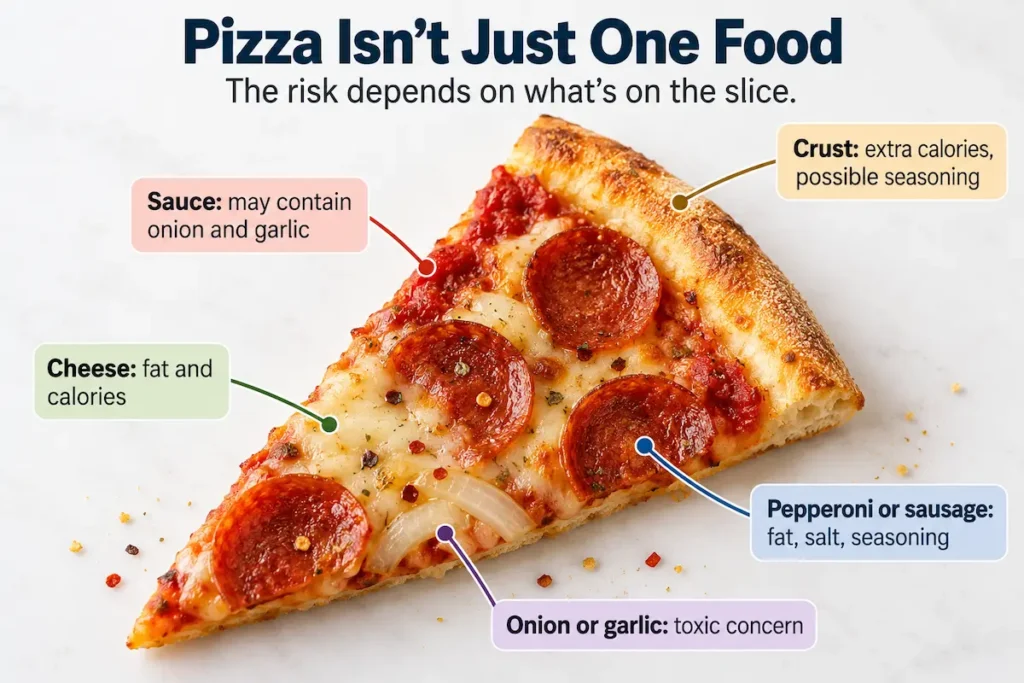
Pizza is difficult to label simply “toxic” or “safe” because it is not one food.
It is a combination of ingredients.
A basic slice may contain bread, tomato sauce, cheese, oil, garlic, onion powder, salt, herbs, and toppings. Each part creates a different concern.
That is why one stolen bite may result in nothing more than a slightly upset stomach while another pizza exposure deserves much faster veterinary attention.
Onion and Garlic Are the Biggest Ingredient Concerns
Onions and garlic can damage a dog’s red blood cells and may lead to hemolytic anemia.
The problem is not limited to visible onion rings.
Pizza can contain Allium ingredients in:
- Tomato sauce
- Garlic butter
- Seasoning blends
- Sausage
- Meat toppings
- Dipping sauces
- Garlic powder
- Onion powder
Concentrated powders are especially important to notice because a pizza may contain onion or garlic even when you cannot see pieces of either ingredient.
Signs associated with Allium poisoning may not always appear immediately. Weakness, pale gums, rapid breathing, lethargy, and collapse can develop later.
If you know your dog ate a meaningful amount of onion or garlic, do not rely only on whether they currently look normal.
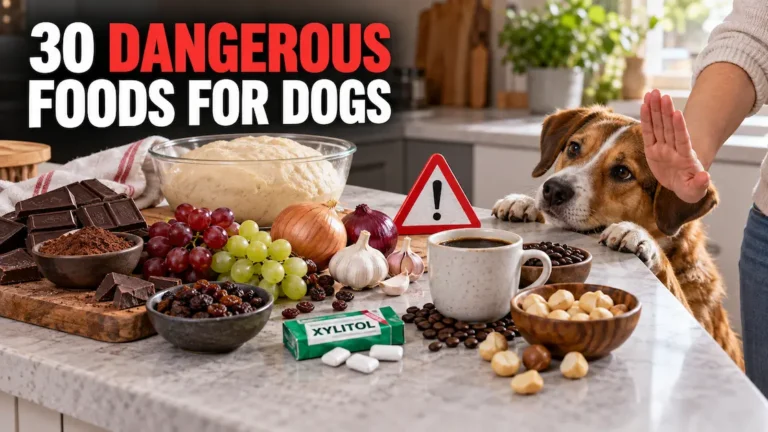
For a broader kitchen-safety reference, see this guide to foods and ingredients that can be dangerous for dogs, including several common hazards that may show up in everyday meals and snacks.
Can Dogs Eat Pizza Crust?
A small bite of plain, fully cooked pizza crust is generally less concerning than the toppings, but that does not make pizza crust a useful dog treat.
Crust mainly adds calories and carbohydrates without offering much your dog needs.
It can also pick up:
- Garlic butter
- Cheese
- Oil
- Salt
- Onion powder
- Seasoning
So before assuming the crust is plain, look at how the pizza was prepared.
What If My Dog Ate One Pizza Crust?
For many healthy adult dogs, accidentally eating one small piece of ordinary cooked crust may only require observation.
Watch for digestive upset, particularly if your dog has a sensitive stomach.
A heavily seasoned stuffed crust, garlic crust, or cheese-filled crust is different and should be judged by its ingredients rather than by the fact that it is “just crust.”
Can Dogs Eat Pizza Sauce?
Pizza sauce is one of the easiest parts of a pizza to underestimate.
Tomatoes themselves are not necessarily the main issue. Commercial and homemade pizza sauces frequently include:
- Garlic
- Onion
- Onion powder
- Garlic powder
- Salt
- Oil
- Sugar
- Herbs and spice blends
That makes it difficult to treat pizza sauce as a dog-safe tomato product.
If your dog licked a tiny amount of ordinary sauce, check the ingredient list rather than panicking. If they consumed a larger quantity or the sauce contains concentrated onion or garlic, contact your veterinarian for advice.
Can Dogs Eat Cheese Pizza?
Cheese pizza removes some of the risks associated with pepperoni or sausage, but it still is not a good dog treat.
The cheese can make the slice high in:
- Fat
- Calories
- Sodium
Some dogs also tolerate dairy poorly and may develop diarrhea, gas, or stomach discomfort.
There is another problem too: cheese pizza still usually contains pizza sauce, which may contain onion or garlic.
So “plain cheese pizza” does not necessarily mean “plain” from your dog’s perspective.
Can Dogs Eat Pepperoni Pizza?
Pepperoni pizza is best kept away from dogs.
Pepperoni is typically high in fat and salt and often contains seasonings such as garlic.
A tiny stolen piece of pepperoni does not automatically mean a medical emergency, but feeding pepperoni intentionally is unnecessary, and larger amounts can cause digestive problems.
High-fat foods can also be a concern for pancreatitis, particularly in dogs that are susceptible to it.
If your dog ate several pepperoni slices or a substantial amount of pepperoni pizza, contact your veterinarian for guidance based on your dog’s size, health history, and the quantity eaten.
Can Dogs Eat Sausage Pizza?
Sausage creates many of the same problems as pepperoni.
Depending on the recipe, pizza sausage may contain:
- Large amounts of fat
- Salt
- Garlic
- Onion
- Pepper
- Other seasonings
The actual ingredient list matters more than the word “sausage.”
Plain, unseasoned cooked meat is very different from highly seasoned pizza sausage.
If you want to share meat with your dog, a small amount of plain cooked lean meat without onion, garlic, sauce, or heavy seasoning is a much simpler option.
Can Dogs Eat Hawaiian Pizza?
Hawaiian pizza usually combines ham, cheese, sauce, and pineapple.
The pineapple is not the main concern.
The bigger issues are the salty processed ham, rich cheese, sauce, and any onion or garlic used in the recipe.
A small fresh piece of plain pineapple can be a much better occasional treat than giving your dog part of the pizza itself.
Can Dogs Eat Mushroom Pizza?
This depends on what mushrooms were used, but pizza is not a useful way to offer mushrooms to your dog.
Common edible supermarket mushrooms are different from toxic wild mushrooms. However, mushroom pizza still comes with cheese, sauce, oil, salt, and seasonings.
If you do not know what type of mushroom your dog ate, particularly if there is any possibility it was a wild mushroom rather than a commercial pizza topping, contact your veterinarian.
Can Dogs Eat Raw Pizza Dough?
Raw yeast pizza dough is much more concerning than cooked pizza crust.
Do not feed it to a dog.
When raw yeast dough reaches the warm environment of the stomach, it can continue to expand. The yeast can also ferment carbohydrates and produce ethanol.
This creates two potential problems:
- The expanding dough can cause dangerous stomach distension.
- Fermentation can expose the dog to alcohol.
Signs can include:
- Bloated abdomen
- Abdominal pain
- Unproductive retching
- Weakness
- Poor coordination
- Disorientation
- Excessive sleepiness
- Collapse
If your dog ate raw yeast pizza dough, contact a veterinarian or animal poison service promptly rather than waiting for symptoms to appear.
Which Pizza Ingredients Are Most Dangerous for Dogs?
Not every undesirable pizza ingredient has the same level of risk.
Higher Concern
🐾 Onion and garlic
These can damage red blood cells. They may appear fresh, cooked, dried, or powdered.
🐾 Raw yeast dough
It can expand in the stomach and produce ethanol.
🐾 Unusual toxic toppings
Some specialty pizzas may contain ingredients that deserve separate attention, so do not assume every pizza has the same risk profile.
Usually More of a Digestive or Nutrition Concern
🐾 Cheese
High in fat and calories, and some dogs do not tolerate dairy well.
🐾 Pepperoni and sausage
Often fatty, salty, and heavily seasoned.
🐾 Greasy crust
Can contribute additional fat, calories, and digestive upset.
🐾 Very salty toppings
Dogs do not need the large sodium load found in many processed human foods.
This distinction is helpful because it prevents two mistakes: dismissing genuinely dangerous ingredients and panicking over every stolen crumb.
How Much Pizza Is Too Much for a Dog?
There is no single number of slices that is safe for every dog.
Risk depends on:
- Your dog’s body size
- The amount eaten
- The toppings
- Onion and garlic content
- Fat content
- Sodium content
- Whether the dough was cooked
- Your dog’s health history
For example, one bite of plain cooked crust from the floor is usually a very different situation from a small dog eating half a pepperoni pizza covered in garlic seasoning.
Instead of asking only, “How many slices?”, ask:
What exactly did my dog eat, and how much did that represent for this dog?
🐶 What About Puppies?
Pizza is an especially poor choice for puppies.
Puppies are smaller, so even part of a slice can represent a much larger amount of food relative to their body size than it would for an adult dog. Rich, greasy food may also be harder on a young stomach.
More importantly, puppies are growing and need a complete and balanced diet formulated for growth. Pizza takes up calories without providing the carefully balanced nutrition they need.
If your puppy steals pizza, use the same checklist as you would for an adult dog: identify the toppings, estimate the amount eaten, check for onion, garlic, or raw yeast dough, and watch for symptoms. Because puppies can be very small, contact your veterinarian sooner if the amount eaten was substantial or you are unsure about an ingredient.
What Should You Give Your Dog Instead of Pizza?
If your dog is staring at your plate while everyone else gets pizza, there are much easier foods to share.
Depending on your dog’s individual dietary needs, small amounts of foods such as these may work better:
- Plain cooked chicken
- Plain cooked turkey
- Plain lean beef
- Carrot
- Green beans
- Cucumber
- A small piece of plain cooked sweet potato
- A few pieces of your dog’s regular food
- A dog treat made specifically for them
If your dog enjoys fresh produce, you can also explore vegetables that are safe for dogs for more simple snack and meal-topper ideas.
Keep shared foods plain, without garlic, onion, heavy salt, sauces, butter, or seasoning.
Even healthier extras still count toward the day’s calories, so it helps to know how treats should fit into your dog’s daily intake.
For dogs that love participating in family food time, enrichment can work too. Put part of their normal meal into a puzzle feeder or food toy while everyone else eats.
That gives them something interesting to do without turning your pizza into their snack.
And if your dog mainly wants something crunchy while everyone else eats, try one of these homemade baked dog treats instead.
Can You Make Dog-Friendly Pizza?
You can make a pizza-inspired dog treat, but there is no need to recreate every part of human pizza.
Keep it simple.
A dog-friendly version could use:
- A small plain baked base
- Plain cooked lean meat
- A dog-safe vegetable your dog already tolerates
- No onion
- No garlic
- No highly seasoned sauce
- No processed pizza meat
Treat it as an occasional extra rather than a replacement for a complete and balanced diet.
If homemade food is becoming a regular part of your dog’s routine, it is also worth reviewing these common homemade dog food mistakes before turning occasional recipes into everyday meals.
For many dogs, an even simpler option is better: put a few pizza-shaped pieces of plain dog-safe food on a plate and let the novelty come from the presentation instead of loading the food with cheese and toppings.
If you would rather make something designed for dogs from the start, these homemade dog food recipes are a better place to begin than adapting a regular pizza.
The Bottom Line
Dogs do not need pizza, and intentionally feeding them a slice is not worth the mix of fat, salt, seasonings, and potentially unsafe ingredients.
But if your dog steals pizza, the situation is not automatically an emergency either.
Start with four questions:
- How much did they eat?
- What toppings and seasonings were on it?
- Was the dough fully cooked?
- How is your dog acting now?
A tiny piece of plain cooked crust may only need observation. Onion, garlic, raw yeast dough, large quantities, or concerning symptoms deserve much more attention.
When you are uncertain about what your dog ate or how much risk it creates, call your veterinarian or a pet poison service with the ingredient list and your dog’s approximate weight.
The pizza can stay on your plate. Your dog has plenty of better ways to get a treat.